
Music games are something else, since they often come in two variants. The kind that takes you back to tapping circles in Osu! until your wrist begged for mercy, or frantically flicking your stylus across a Nintendo DS screen in Elite Beat Agents as your life depended on it. All the games you play can be placed into those two genres; try it. It’s a genre built on instinct, repetition, and that strange, almost meditative flow state where failure feels like your fault, and success feels almost transcendent (like getting a perfect score on “Through the Fire And The Flames” by DragonForce in Guitar Hero). Back then, if you had told me we’d one day get a game that fuses that razor-sharp rhythm DNA with stylish, bone-crunching combat and a neon-drenched identity of its own, I probably would’ve laughed it off as wishful thinking. And yet, here we are. Dead as Disco is exactly that kind of fever dream made playable. Ready for some Pulp Fiction meets No More Heroes? Let’s dive in.
Disco ain’t dead
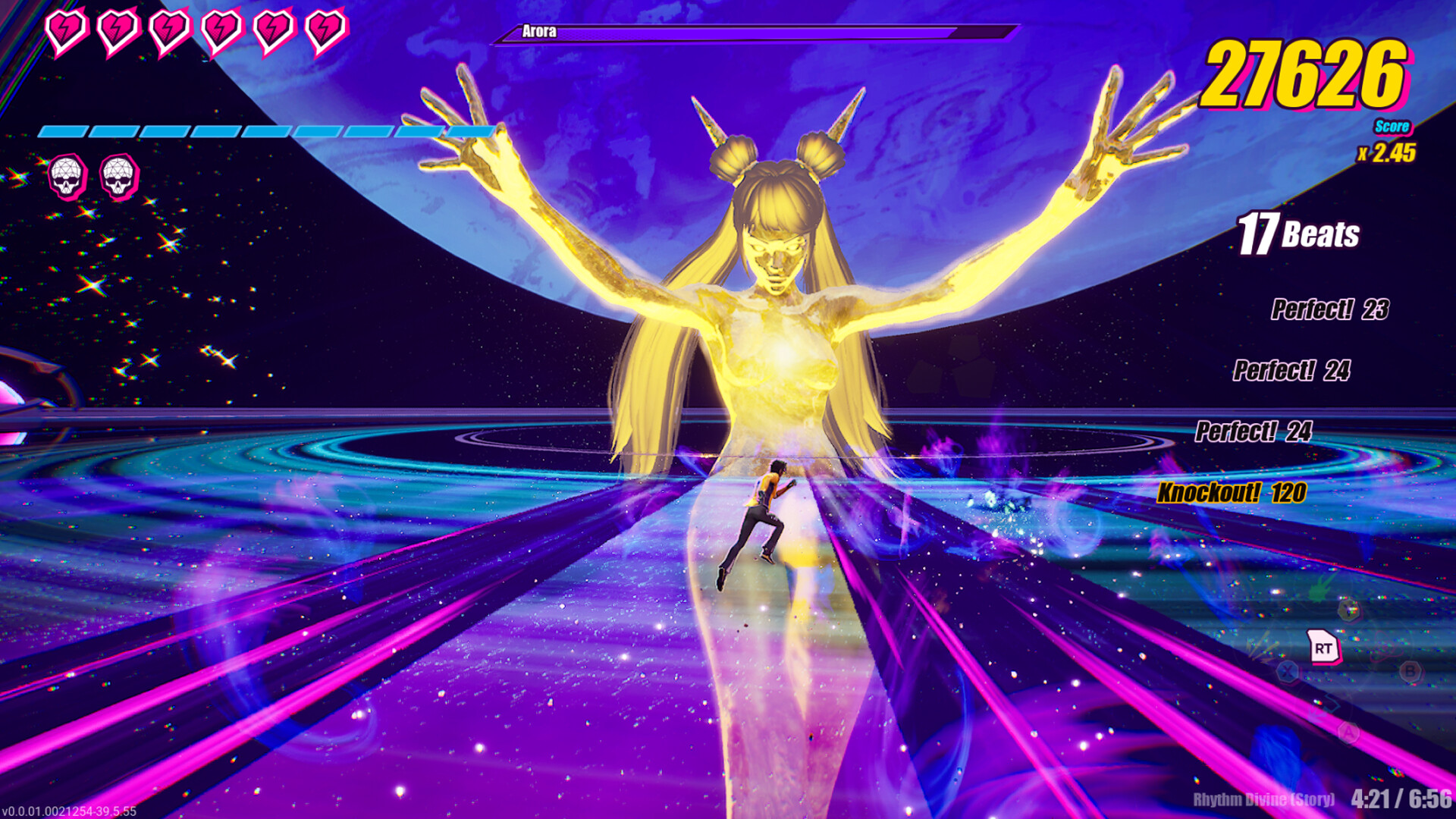
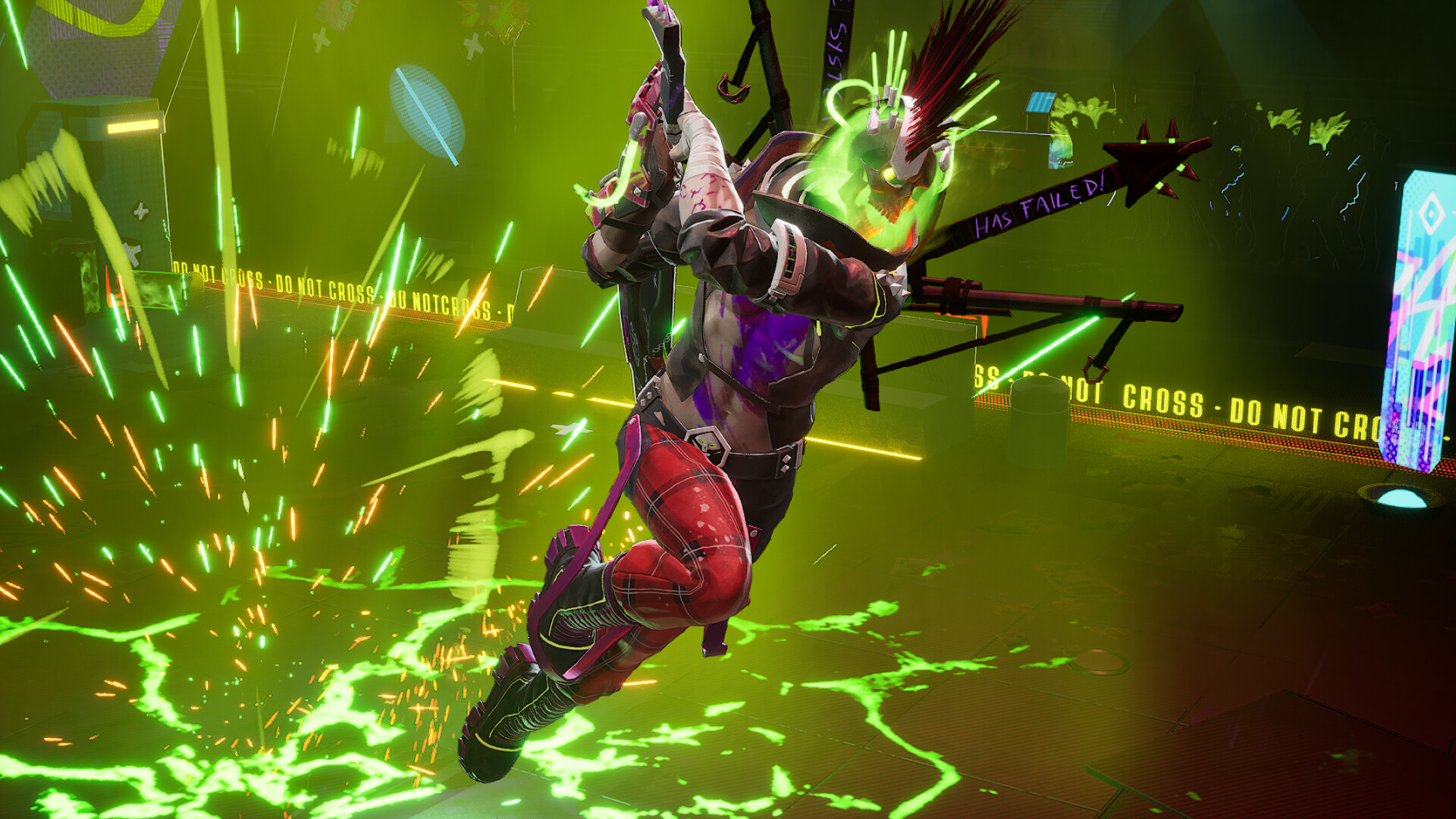
The preview version of the game I played wastes little time setting the tone. You step into a world that feels like it runs on basslines and attitude, where every punch, dodge, and finisher is part of a larger (almost godly?) choreography. While the narrative only gets room to stretch its legs briefly here, it’s already clear that style and personality are front and center. The demo offers two distinct “boss sequences,” each serving as a rhythmic gauntlet where your timing, awareness, and ability to stay cool under pressure are pushed to their limits. These encounters don’t just test your mechanical skill; they demand performance. You’re not just fighting; you’re putting on a show, since landing punches on the beat gets the best score. One boss-sequence pits you against a punkish hellraiser with a saw-guitar (because, why not?), and throws a punk rendition of Maniac at your feet (perfect choice for a game like this). While another boss sequence puts you against a divinity straight out of a Hinduist’s fever dream, making your K-pop music dreams (with neon light sticks and all) come through. And those are just the first two demos you play through, without context, just pure music and beat ’em up action.
Then there’s the Infinite Disco mode, which might quietly steal the spotlight if you let it. This is where the game opens up into something more freeform: an endless brawler set to tracks of your choosing. In the demo, the selection is understandably limited, but even within that small pool, the variety is striking. Upbeat classics sit comfortably alongside heavier metal tracks and high-energy K-pop, each bringing its own tempo, rhythm patterns, and combat feel. It’s the kind of system that immediately sparks imagination, what happens when the full game drops with a broader library, or even the option to add your own tracks? I want to kick baddies in the head to BBNO$ and the Saja Boys, so will you please let me? If this is the foundation, the ceiling is absurdly high, and so are my expectations after playing the demo.
Slappin’ ryhtym
What truly elevates Dead as Disco, though, is how absurdly tight the gameplay feels. Rhythm-based mechanics live and die by responsiveness, and here it’s nothing short of remarkable. Every strike lands exactly when it should, every dodge snaps into place with surgical precision, and the entire combat loop feels like it’s wired directly into your nervous system, which is something for a person like me, whose rhythm qualities are definitely not tracked by a metronome. There’s a moment, usually after a few failed attempts, where everything clicks. Suddenly, you’re no longer reacting; you’re anticipating. Inputs blur into instinct, and fights start to feel less like encounters and more like performances you’ve rehearsed a hundred times, with the feeling that you can broaden your skillset even more (which the game promises will happen if you beat up more bosses along the way, inheriting their power).
It’s not just that the combat syncs with the music, it’s that it becomes the music. Hits accentuate beats, combos create rhythm within rhythm, and enemy patterns start to resemble musical phrases. The result is something that borders on hypnotic (Oh, hope we can dance to Hypnodancer by Little Big). It’s rare for a game to feel this cohesive in its design, where mechanics and audio aren’t just complementary but inseparable. Even in its early stages, Dead as Disco gives the impression that it understands exactly what it wants to be and, more importantly, how to get there. And it’s not just musical. Visually, the game doubles down on that confidence. The art direction is a full-on assault of color, contrast, and stylized flair, blending a high-saturation palette with sharp, graphic design sensibilities. There’s a clear lineage here, echoing the punk-infused aesthetic of No More Heroes while also channeling the rhythmic, almost comic-book-like structure associated with Scott Pilgrim vs. the World. That “rule of seven” energy, quick cuts, exaggerated impacts, and a kind of visual rhythm that mirrors the audio, give the whole experience a kinetic, almost explosive identity.
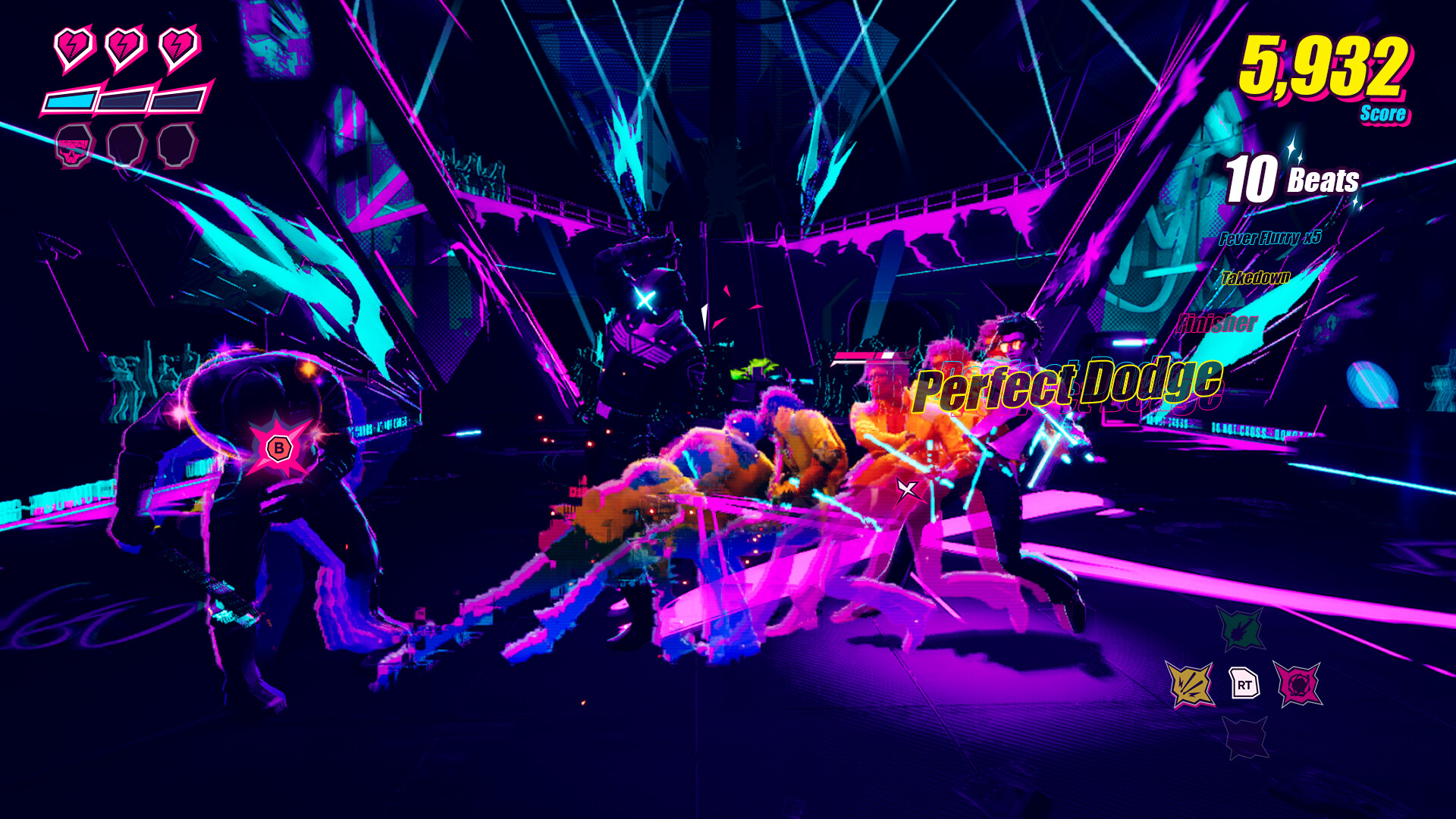
Characters pop off the screen with bold outlines and expressive animation; environments pulse with color and movement; and every hit leaves a visual imprint. It’s chaotic, but never messy. There’s a deliberate clarity to the presentation that ensures you’re always able to read what’s happening, even as the screen lights up like a disco ball mid-breakdown. It’s the kind of visual design that doesn’t just support the gameplay, it amplifies it, turning every encounter into something that feels larger than life.
Early conclusion
What’s perhaps most impressive is how cohesive everything feels, even at this early stage. Demos are often rough around the edges, glimpses of potential rather than proof of execution. Dead as Disco already feels like it has its identity locked in. The core loop is addictive, the presentation is striking, and the fusion of rhythm and combat feels less like a gimmick and more like a natural evolution of both genres. Of course, there are still questions. How deep will the tracklist go? Will the narrative expand into something memorable, or remain a stylish backdrop? Can the game maintain this level of precision and creativity across a full-length experience? These are all open-ended, and rightfully so. But if this demo is anything to go by, Dead as Disco is executing a very impressive promise.
And there’s a certain irony in how something so mechanically demanding can feel so effortless once it clicks. That’s the magic rhythm games have always chased, and it’s the same magic that Dead as Disco taps into, just with a whole lot more attitude, flair, and impact behind every beat. It’s the kind of game that reminds you why you fell in love with the genre in the first place, while simultaneously pushing it into territory you didn’t quite expect. And maybe that’s the biggest takeaway here. Not just that Dead as Disco works, but that it feels like something we didn’t know we were missing until now.
