
When the Wii was released in 2006, Nintendo introduced the now iconic player avatars that we know and love as Miis. However, the focus on these player alter egos diminished over subsequent generations, with the option to create a Mii hidden away in menus from the Nintendo Switch onwards. There hasn’t been much incentive to create one anymore, except when you want to play as a cartoony version of yourself in Mario Kart or Super Smash Bros., for example.
But now, the Miis are getting their time in the spotlight once again with the return of a beloved, albeit somewhat niche, series of games: Tomodachi Life.
Big Brother is watching you
Tomodachi Life: Living the Dream is the latest instalment in Nintendo’s series of life-sim games. It has been a while since the quirky Mii avatars had the chance to live their lives to the fullest on the 3DS. In this game, you are given an uninhabited island. The goal is simple: populate the area with Miis and customise it to create your own personal paradise. However, the twist on Nintendo’s classic approach is that you aren’t a playable character living among the Miis, but rather an eye in the sky watching over them and managing their interpersonal relations. Think of it as The Sims, except the characters can talk to you and ask for advice. But Nintendo wouldn’t be Nintendo without including wacky interactions, mini-games, and fun twists on the formula. It’s difficult to explain what makes the series unique. From an outside perspective, it might seem weird and random. This is especially true if, like me, your only previous experience of the game is seeing memes on the internet or watching someone play it. So, let me break down the game’s mechanics by telling you about my life as the supreme regent of Pastrami Island.
Mii?
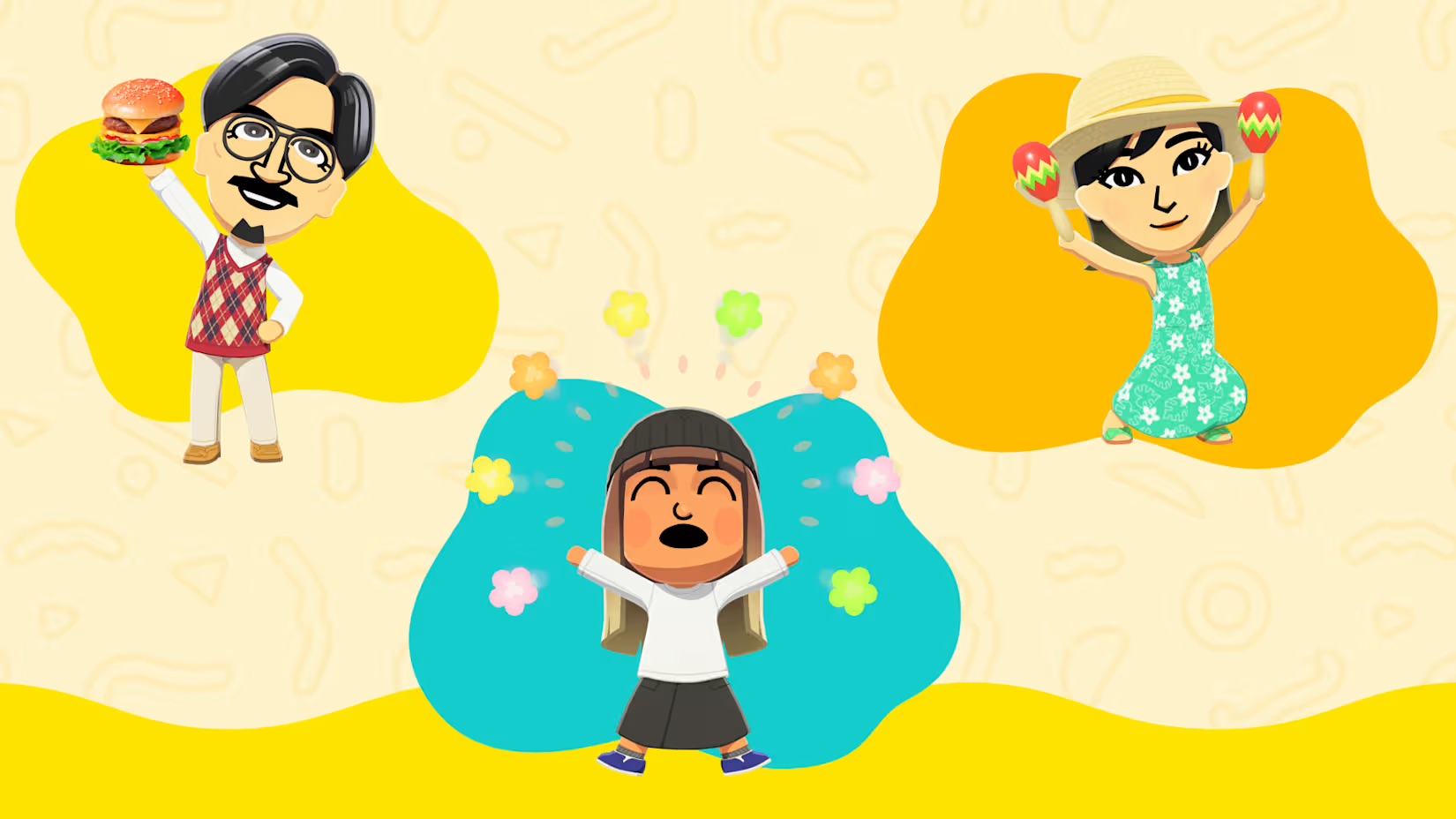
Before opening up completely, Tomodachi Life – Living the Dream gradually introduces the mechanics that make up this island. You start by naming the location of your future dream town and creating its first resident. Who will it be? That’s completely up to you. Will it be someone you know or a random stranger? Let your creativity run free and do whatever feels best to you. Miis can be created from scratch or using the prompt system. If you use prompts, you can see the end result and modify it as much as you like. Once you have designed the Mii, you can select a voice and character traits to define its personality. New to this instalment are same-sex relationships and a non-binary status for Miis. This was absent from the 3DS version and heavily criticised by fans, even inspiring some unofficial mods. It’s great that an even bigger number of gamers can now feel represented on the Tomodachi Life islands. Some people, like me, recreate their own family and friends in the game, and now you can represent everyone as they are. Another cool feature of Tomodachi Life is that it asks at the end of the creation process if the Mii is based on a real-life person. If so, you can enter family relationships in a grid so that the game can keep track of them and avoid creating weird relationships.

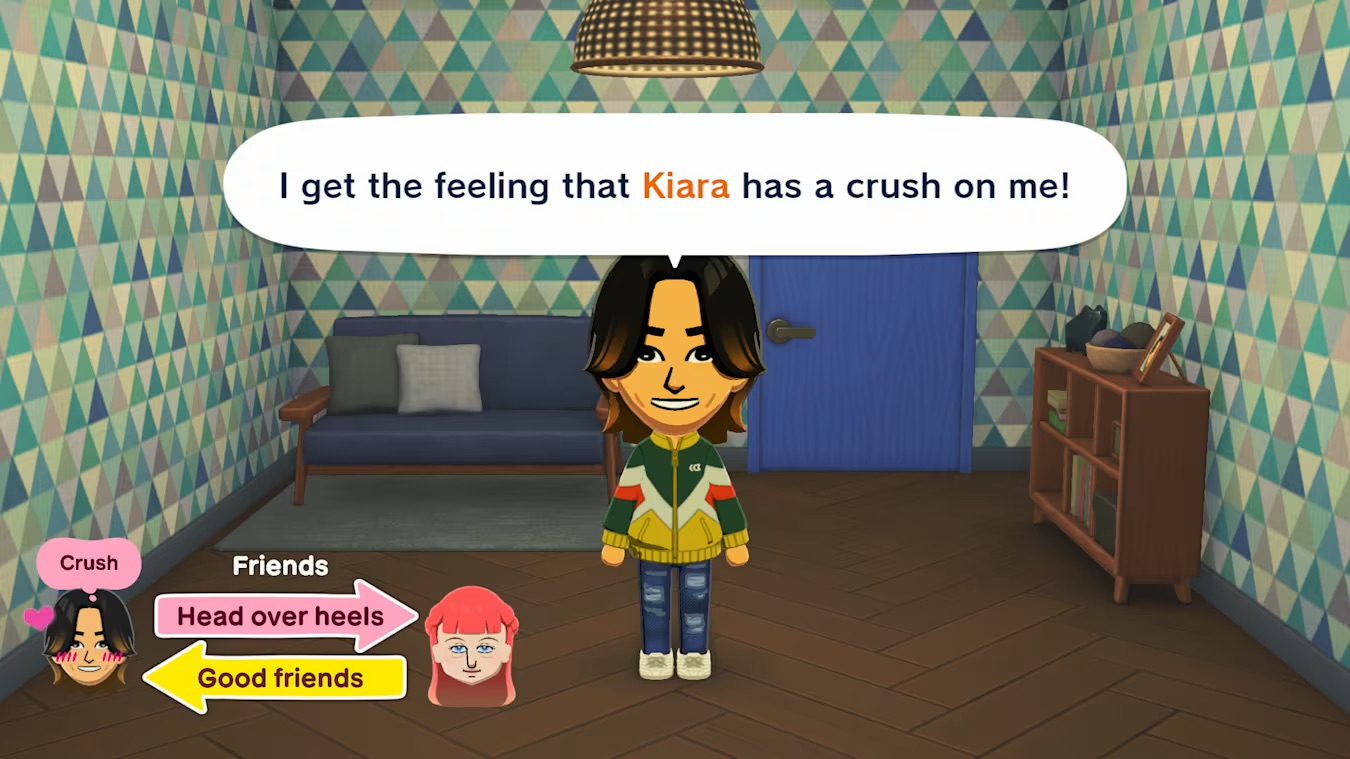
Once you have created and assembled a couple of Miis, you can watch their lives play out. They will become more familiar with each other, become friends, start dating, and even have children. They also take steps independently of you. I had the most fun in this game when I came back after a few hours and found that the scenario had differed from what I had intended. I created my family as Miis in the game, but as I couldn’t fill all 70 spaces with family members alone, I decided to get creative. I created a fictional best friend for my grandmother called Gertrude, and I made a weird old man who lived on the outskirts of town into a creep: enter Teddy the Vampire. I turned the game off after creating them. What did I see when I reloaded my save the next day? Teddy was now best friends with Gertrude, and my grandma disliked them both. These moments made me realise that Tomodachi Life was like a personal canvas, but the Miis would decide how their lives turned out. I could only nudge them in a certain direction.

But it doesn’t stop at creating Miis; as you feed them, give them new clothes, and restyle their homes, they become happier and level up. This allows you to give the Mii in question a present, such as a new item for a hobby, like a laptop, bubble blower, guitar or aerobics DVD, or a new personality trait, such as a quote they use, mannerism or way of walking or behaving. Making them happy also gives you another resource: warm fuzzies. If you gather enough, you can take them to the wishing well in the town centre. This will earn you extra unlocks to customise the town and benefits for your Miis, such as holidays for them to enjoy. The world is your oyster. So go and make everyone happy and express yourself!
Shopping and mini-gaming
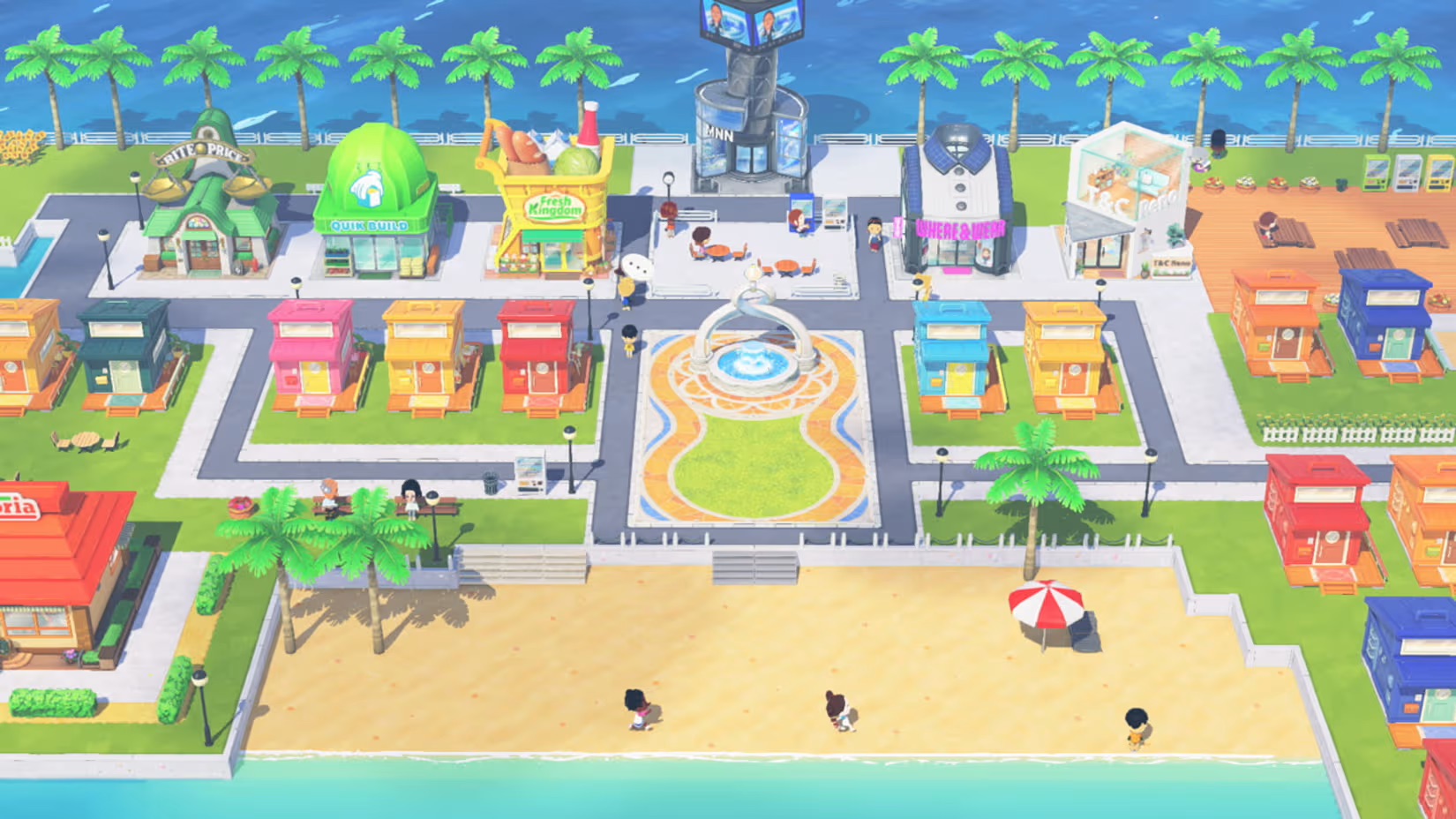
To keep your residents happy, you have access to a selection of island shops. They sell items that can be used to make your islanders as happy as possible. Initially, there is a grocery store, a clothing store, a home décor shop, and an island building centre. These are just the basics, though. As you play, you unlock buildings with more elaborate offerings. These include a restaurant where Miis go to eat together and grow closer, a news tower where you can receive an hourly news broadcast that gives you more insight into your Miis’ lives, and a pawn shop. The coolest shop by far, though, is the Crafting Centre, where you can create personalised items using a pixel colouring grid.
Just like in past Tomodachi Life games, you can also earn rewards by playing games with your Miis. It’s nothing too fancy, just some micro-game quizzes and time attack mini-games. But they do provide some cool items for your Miis to interact with. Even the duller ones can steal the show in unexpected ways. For example, I gave the Mii who resembles my dad an antique vase as a gift. He can’t stop taking it out of his pocket at random to look at it in the middle of the road or show it to other Miis. The fact that they are all just PNGs of realistic objects in this video game world makes it even funnier.

Island Management
However, living the dream wouldn’t be possible without the ability to fully customise your island. As well as community management, you will also need to do your fair share of construction work. This includes building homes for your Miis, creating roads and bridges, and designing other features for them to interact with. You can place buildings and roads wherever you like, as a form of terraforming is unlocked fairly early on, so there are no real restrictions on what you can place and how. Your Mii characters can request the odd item here or there, but that will only make you feel good and make them happier in the long run. The gameplay loop is entirely centred around making people happy and making their dream life a reality.
Initially, I really liked this loose approach, but after a few hours of doing my own thing, I started to get a bit bored. Watching the Miis interact and triggering cutscenes was pretty fun and always made me smile. But afterwards, I always asked myself: What now? Should I just create another Mii? Was that even worth it? I think it was the lack of a goal that made me feel like I was doing things without purpose. It was as if I was investing time in something without a clear end goal. Maybe it’s just me, but I think a quest board with community tasks or something else to work towards would have made me feel like the time I invested in Tomodachi Life was more worthwhile. But perhaps that would have gone against the nature of the game.
Motivation
I had a good time playing the latest Tomodachi Life. The personal interactions with the Miis and the cutscenes, which were sometimes downright silly, consistently had me smiling or laughing out loud. However, I found the sandbox nature of this simulation game left me wanting more from time to time. I think this game is better suited to the kind of gamer who is intrinsically motivated. Someone who isn’t motivated by a scoreboard or high score counter. Someone who can set their own goals and feel a sense of accomplishment when they achieve them, without the game constantly telling them they did a good job. Because that is what Tomodachi Life: Living the Dream is, and it’s clear that’s what it wants to be. It’s a sandbox where you can make your creative dreams a reality without progression goals getting in the way. Judging by the number of memes and videos I have already seen on Reddit and Instagram, I think other players are already connecting with this design philosophy.
Conclusion
Tomodachi Life: Living the Dream delivers on its promises. It’s a fun way to design a world with characters you’ve envisioned. Whether you want to base your creations on existing people or make something original, the Mii creation screen is detailed enough to make your wildest dreams come true. The city builder is also intuitive and easy to use, making city management feel great in practice. While interaction between Miis is clearly the star of the show, the lack of goals or quests can sometimes make the game feel a bit repetitive. However, if you are intrinsically motivated and able to set your own goals in a sandbox world, I have no doubt that you will be able to lose yourself in Tomodachi Life for hours on end.