
It’s been almost four years since season one of the Dark Pictures Anthology came to an end with The Devil in Me but now season two finally kicks off with Directive 8020. By far the most ambitious entry in the series so far, but was it worth the wait, or was this one better left in orbit? Let’s crawl through some vents.
In space, nobody can hear you…
Just like the other entries in The Dark Pictures Anthology, Directive 8020 is first and foremost a narrative-driven game, which means the story is absolutely crucial. The series originally started as a collection of something that was way closer to interactive movies, but over time, the games have embraced more traditional gameplay mechanics as part of the overall experience. Directive 8020 follows that same blueprint. It offers surprisingly convincing gameplay segments, but the story remains the main reason to play. This time, the franchise heads to space aboard the colony ship Cassiopeia, which is en route to Tau Ceti f, a planet located twelve light-years away from Earth. The Cassiopeia serves as a recon vessel tasked with orbiting Tau Ceti f to determine whether the planet is suitable for human life. Needless to say, things go south pretty quickly when the ship suffers a hull breach, allowing an unwanted guest to come aboard.
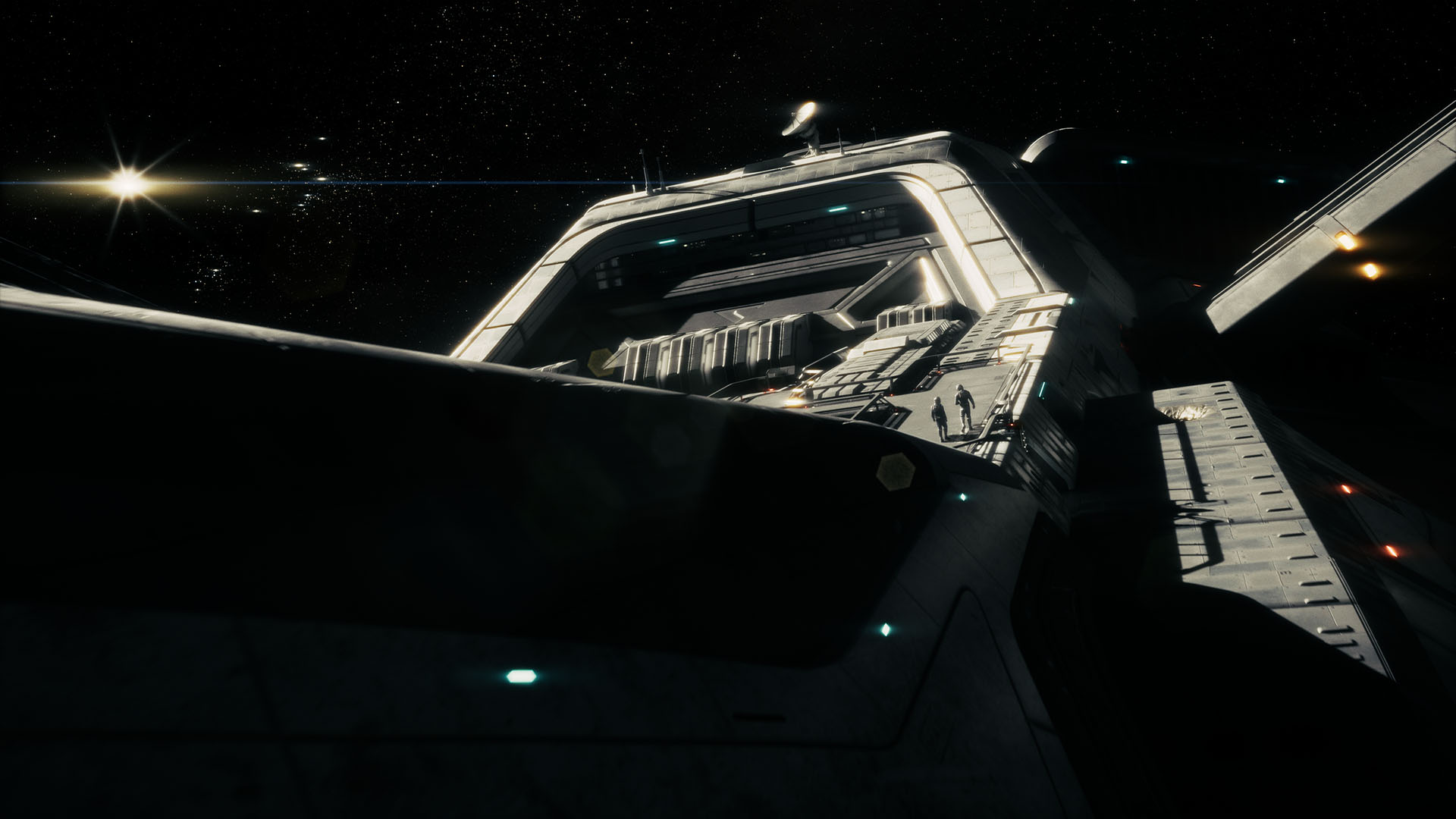
Since the story is such a major part of the experience, I won’t go too deep into spoiler territory, but the central premise is excellent. The hull breach eventually leads to the Cassiopeia crash-landing on Tau Ceti f, while the alien lifeform aboard begins mimicking crew members. This triggers emergency protocols as more and more crew members are forced to wake from cryosleep. The story itself is compelling and brought to life by a very talented cast. There were a few moments where certain performances felt slightly off, but overall, this is easily the most impressive narrative Supermassive has delivered within the anthology so far. The game clearly draws inspiration from films like The Thing, Prometheus, Life, Sputnik, and of course, Alien, but it still manages to tell its own engaging story. Of all the Dark Pictures games, this is the most cohesive and cinematic one yet. The production values have clearly gone up, and you can tell Supermassive Games had more room to fully explore their ideas this time around.
The survival horror influence
I like how the story unfolds across its eight episodes, and there are some surprises and twists later on that really shake things up and keep it entertaining until the very end. I’ll let you discover those for yourself, as experiencing those moments without knowing what was coming was one of the highlights for me. What I appreciate about the episodic structure is the freedom it gives you as a player. You can treat the game like a television series and play one or two episodes at a time, or you can keep going to see how the next cliffhanger resolves. Either way, the pacing works surprisingly well.
Just like the later entries in the franchise, Directive 8020 fully embraces the fact that it is a video game rather than just another interactive movie. The gameplay in this one comes closest to a survival horror experience, which makes perfect sense given the setting. As a crew member stranded on an unknown planet, you won’t be mowing down enemies with heavy weapons. Instead, you’ll need to sneak around, stay hidden, and use your utility belt and the environment to your advantage.
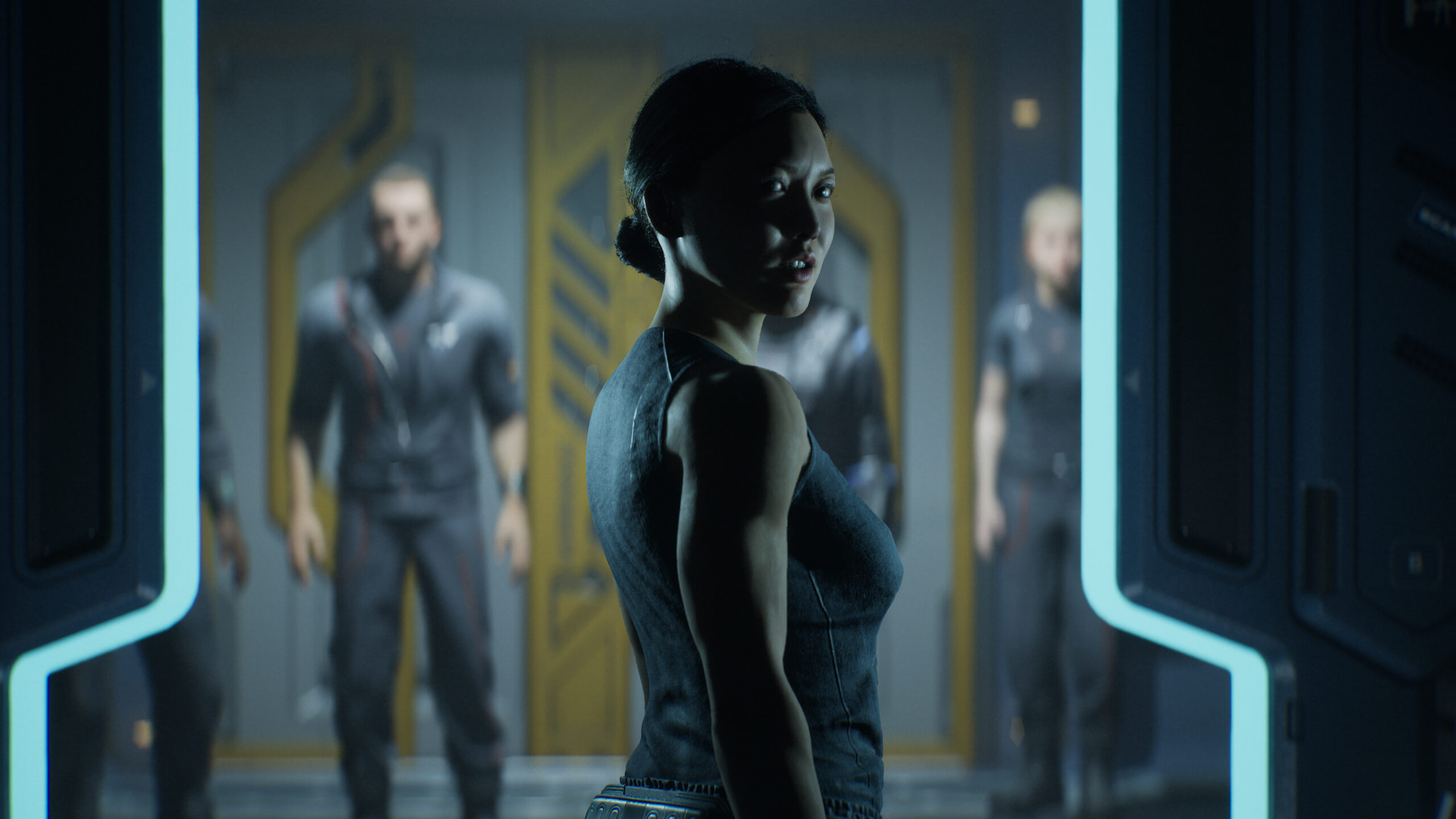
Your utility belt is arguably your most important tool. It can control electronic devices from a distance, allowing you to open doors or activate terminals to distract enemies. Speaking of those enemies, they reminded me a lot of the stalker-type creatures from Resident Evil or Alien: Isolation. They follow predictable routes, but they also react realistically to sound and light, so staying out of sight isn’t always easy. When you’re not hiding, you’ll mostly be solving environmental puzzles. By using your scanner, you can trace power cables to their source and figure out how to open locked doors. The puzzles themselves are fairly straightforward, but the constant tension makes them much more engaging than they would otherwise be. If I had to point out one weakness, it would be that the gameplay starts to repeat itself a little too quickly, especially during the first half of the story. There are a few surprises later on that help keep things fresh, but overall, you do spend a lot of time sneaking, scanning, and activating terminals. That never became a real issue for me, mainly because the story was more than engaging enough to keep me going.
It’s up to you
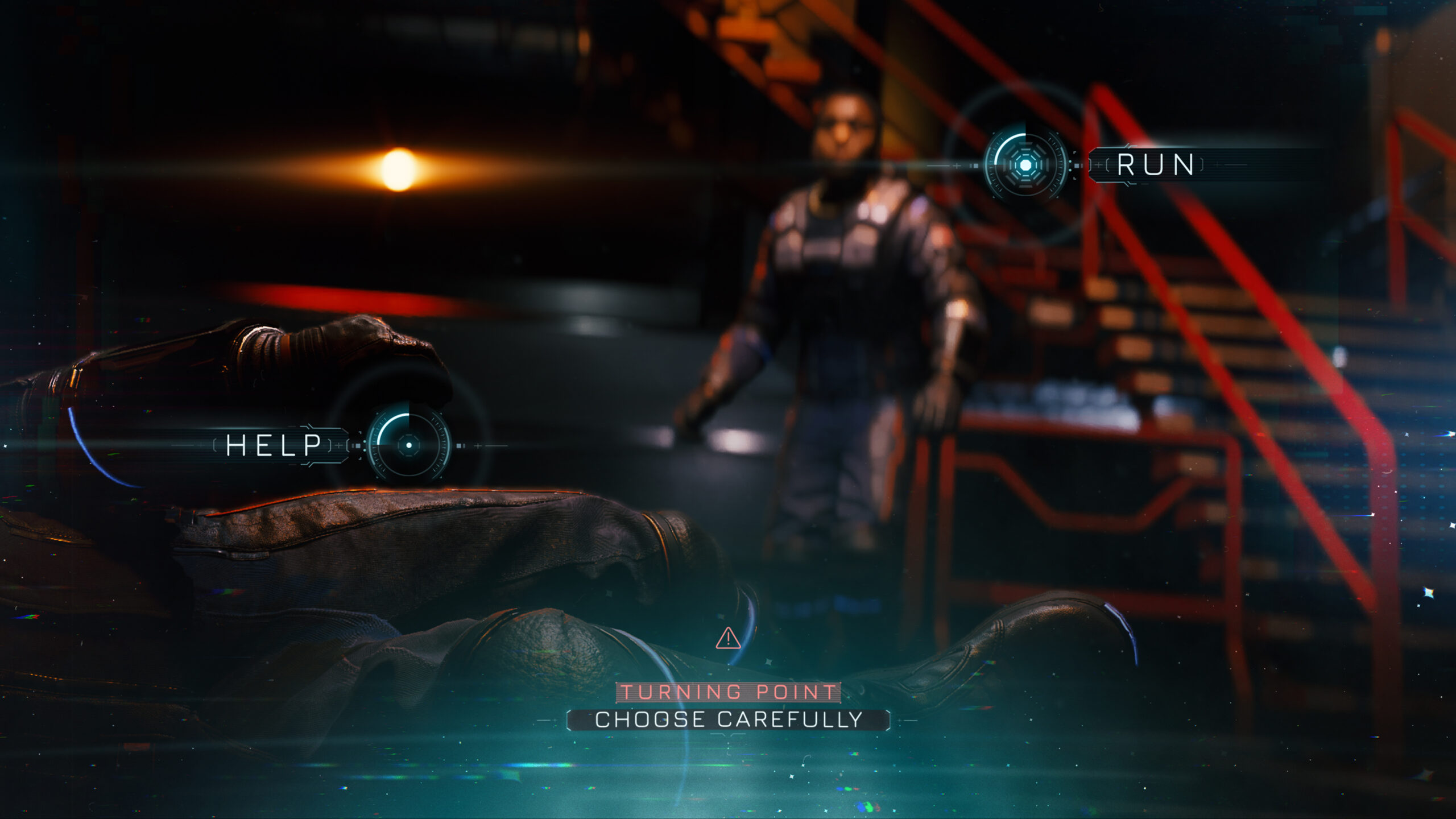
The way this story unfolds is entirely up to you. If you’ve played previous entries in the series, you know this isn’t just a narrative game. Your decisions can literally mean the end of one of the cast members.
Right from the start, your choices really matter, and it’s often chapters later that you’ll notice the consequences of your actions. Did you give clearance to use a gun? Did you ignore the onboard AI? Did you get out of your chair to flip a switch? Those choices impact you in the moment, but their consequences can ripple through the rest of the story.
It’s not just those big turning-point decisions that matter either. Smaller choices also influence your characters’ traits, which can affect certain options later on. I love how much attention to detail went into this branching story, and what I appreciate even more is how much freedom it gives players. You can play it the classic way, where there’s no second-guessing and you simply live with the consequences of your choices, even if that means losing characters forever. If you don’t want to carry that weight, the game also lets you rewind and change your decisions if you’re not happy with the outcome. Purists may not like that approach, but I enjoyed experimenting with different outcomes from time to time. It allowed me to see where certain branches would lead without having to replay the entire game.
If you want to make the experience even more entertaining, you can invite a few friends and jump into the Movie Night mode. Here, each player controls a different crew member, and you pass the controller whenever that character takes over the story. Since the narrative shifts between several members of the crew, you’re constantly switching perspectives, which keeps things interesting. And with an alien threat capable of mimicking anyone on board, this really is the kind of story where you can trust absolutely nobody.
When you decide to play it, I’m pretty sure this game will sink its teeth into you the moment you start. There are a few moments where the story loses a bit of momentum, and some consequences don’t always land as well as they could have, but overall, this is a very entertaining survival horror game that gives you a lot of control over its narrative. I also can’t stress enough how much this franchise has evolved over the years. Directive 8020 really feels like a tightly produced television series, complete with some excellent soundtrack choices both during the story and at the end of each episode. If you’re willing to forgive a few rough edges, you’re in for a great time.
Conclusion:
Directive 8020 is a major step forward for The Dark Pictures Anthology. The story is engaging, the production values are excellent, and the added gameplay mechanics make this the most interactive entry in the series so far. The stealth sections can become a bit repetitive, but they never get in the way of what is still a tense and highly entertaining sci-fi horror survival adventure.
