
I love stealth games since I grew up on old-school Splinter Cell. So when a game drops in our inbox, stating it’s centered around burglary, infiltration, and improvisation, I’m all ears. The idea of sneaking through dark corridors while guards patrol nearby remains a concept that continues to work decades after games like Thief and Dishonored refined the formula. Thick as Thieves clearly understands that appeal. The game that started as a stylish PvPvE stealth experience became a solo or co-op game where tension, timing, and risk-taking should create memorable stories. Unfortunately, while the foundation is there, the final experience struggles to convince.
Thick as Thieves
The latest project from OtherSide Entertainment has big shoes to fill because of the studio’s history. Founded by industry veterans associated with immersive sim classics, the studio has positioned itself as a developer focused on player freedom and innovative gameplay. From the very start, I felt those ambitions in Thick as Thieves. Instead of guiding you through fixed stealth scenarios, Thick as Thieves wants you to read the space yourself: find a way in, learn the patrols, grab what you can, and improvise when things go wrong. The result is a game that often feels unpredictable, but not always in a satisfying way.

At its core, Thick as Thieves revolves around infiltrating heavily guarded locations to complete contracts, steal valuables, and make it out alive before the clock runs out. As I mentioned earlier, earlier concepts for the game leaned more heavily toward competitive PvPvE elements, but the current structure focuses far more on solo and co-op play. You feel that shift almost immediately. Instead of worrying about rival thieves, you spend most of your time reading rooms, watching patrols, and learning how each location fits together. That works when the level design clicks. When it doesn’t, every vague objective or unclear route starts to drag the mission down.
Gameplay
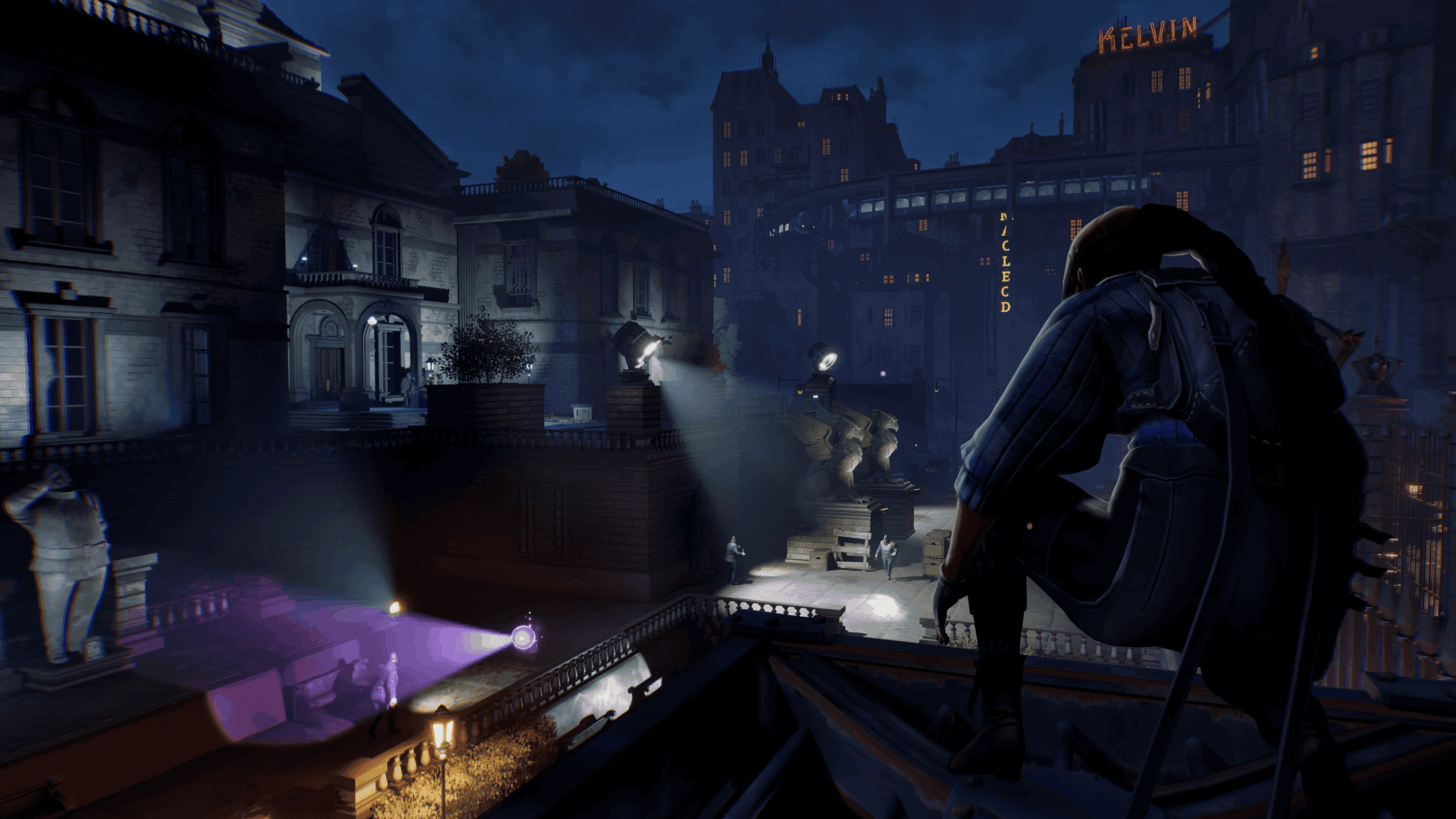
The first few missions actually leave a surprisingly strong impression. The atmosphere is tense, the lighting is spot on, and there is a constant feeling that one wrong move can ruin an entire run. For me, it did more than once. Sneaking through a mansion while hearing guards talk in nearby rooms genuinely creates moments where you start sneaking around naturally, almost afraid to make noise yourself. Thick as Thieves clearly understands how to create suspense through pacing, and it’s very clear that it understands how stealth, at its core, works. At the same time, the game struggles to turn that tension into something more rewarding. Missions often begin very strongly, only to slowly become more confusing the longer they continue. Some contracts are vague about where players need to go or what exactly they should be looking for, and because the maps are intentionally layered and vertical, it becomes easy to waste large chunks of time wandering around without really understanding whether you are making progress or not. That uncertainty can occasionally feel immersive, but more often it just becomes frustrating.

Co-op might be where Thick as Thieves starts to make more sense. The solo experience often feels lonely in the wrong way, especially when objectives are vague or a mission drags on longer than expected. With another player, I can imagine some of that frustration turning into communication and improvisation: one player distracting guards while the other slips into a restricted area, both trying to salvage the plan when something goes wrong. Sadly, co-op was not available in the review version we played, so that remains more of a hope than a conclusion. As it stands, solo play rarely delivers that heist fantasy on its own, mostly because the loop starts to feel repetitive once you are left alone with the game’s limited direction and lengthy missions.
Problematic patience
Gameplay in Thick as Thieves asks for a lot of patience. Each mission gives you 45 minutes to finish your objectives, followed by an eight-minute extraction phase where things can quickly fall apart. That setup can work. Carrying valuable loot while guards become more alert does create some properly tense moments, especially when you are hiding in the shadows and desperately trying to remember a safe way out. The problem is that the game often leaves you unsure for the wrong reasons. I don’t mind a stealth game that asks me to observe, experiment, and learn from mistakes, but Thick as Thieves regularly gives too little back. Contracts can be vague, important routes are easy to miss, and some mechanics feel underexplained rather than cleverly hidden. Yes, you can stash loot in the magical portals scattered around the heist locations, but even useful systems like that are part of a game that rarely makes newcomers feel confident. When a plan fails, I want to feel like I made the wrong call. Here, I too often felt like I had missed something the game never properly taught me.
Over time, the game starts to wear thin. Thick as Thieves currently has two main locations, and while they do open up with new layers, routes, and complications, I never felt excited enough to keep returning to them. Learning a shortcut or finding a safer escape path can be satisfying at first, but after a few missions, I was mostly seeing the same spaces again with objectives that did not change enough to keep things fresh. That becomes a real problem because missions are long. Spending almost 45 minutes sneaking through familiar hallways, only to lose everything during the final extraction, stops feeling tense after a while. It just feels draining. The eight-minute escape phase is clearly meant to create panic, and sometimes it does, but too many failures left me wondering what I had missed rather than what I had done wrong. A stealth game can be punishing, but here the punishment often comes before the game has properly taught you how its rules work.
Contracts & missed opportunities
That problem shows up most clearly in the contracts. Thick as Thieves often wants you to poke around until something works, but the missions are too slow and too long for that to feel fun. In a faster game, a failed experiment is easy to shrug off. Here, one wrong guess can cost you a huge chunk of time, so experimenting starts to feel more annoying than exciting. The world also becomes too predictable after a while. Guards have their routines, which makes sense for stealth, but once you know the safest routes, a lot of the tension fades. I kept wishing the game would throw in more surprises: a guard changing his path, an unexpected obstacle, something that forced me to rethink a plan I thought I had solved. Without enough of those moments, repeat runs start to feel more mechanical than dangerous.
Visually, the game has a strong atmosphere. Lighting plays a huge role in selling the fantasy of being a master thief moving through dangerous territory unnoticed. Dark corridors, candlelit interiors, and heavily guarded vaults all contribute to a convincing stealth aesthetic. Audio design deserves credit as well, particularly in how footsteps, guard conversations, and environmental noises help build tension. Thick as Thieves clearly understands how to create a mood. It just struggles to transform that mood into compelling gameplay consistently.
Conclusion:
Thick as Thieves annoyed me more than I wanted it to, because the good parts are easy to see. The atmosphere is strong, some escapes really do get tense, and the idea of learning a location piece by piece fits the thief fantasy well. But the game keeps getting in its own way. Too many objectives are vague, too many systems are left half-explained, and solo runs start to feel like you are wasting time rather than pulling off a clever heist. Co-op might help with that, but it was not available in the review build, so I can only judge what I played. And as a solo stealth game, Thick as Thieves has promise, but not enough direction or variety to make that promise pay off.
