
The Lord of Hatred expansion returns the player to a darker world than ever before. Focusing on more blood, more despair, and more Evil. The expansion for Diablo IV takes us back to a place where the Prime Evils take on the role as the main antagonists to push their darker scheme into the world, preying on the weak and corrupting the feeble minds of the people. Mephisto is back, and it’s a force to reckon with…

With the expansion released, it’s clear to see that the developers are trying to get Diablo IV back on track, not only story- wise but also going through a transition phase where interesting features and mechanics can keep the players’ attention a bit more than it used to. It looks like the expansion is focusing on making the tone of the game darker, and where the difficulty will play a major role in the replayability the game has to offer, going back to its roots.
“His evil presence is fracturing the good faith of the inhabitants and infecting the minds of all.”
Lord of Hatred, the title of this expansion, refers to Mephisto. Mephisto is one of the Prime Evils that will convince the player of its strengths as an evil force that will tear empires down. Not in a way we think… Mephisto is the Lord of Hatred, and this refers to the dark cloud that’s constantly hanging above your head or that little whisper in the back of your mind that can come out like an evil surprise. Mephisto manipulates the people and corrupts the institutions within the Sanctuary. By his spectral hand and using hatred as a weapon, he is able to turn people against each other. His evil presence is fracturing the good faith of the inhabitants and infecting the minds of all. The story is changing into a more psychological warfare instead of massacring monsters day by day. You’re battling Mephisto on mental grounds where the player is constantly feeling the presence of this insidious entity in every corner of the land, and the hero needs to do everything in his power to ward off the Lord of Hatred’s grasp.

This new expansion also opens the way to a never-before-seen zone within the Sanctuary: Skovos. This is an island where the first civilization started, and therefore also carries the name of “one of the oldest regions” that the player will explore within Diablo 4. The island is plagued by eruptions of active volcanoes and tremendous storms that help old, powerful ruins reach the surface. All of these elements build up towards the feeling that this region has more than what reaches the eyes of the hero… Within the lore of the universe, it is the region where Lilith and Inarius created the people of the Sanctuary. As a player, you will find out that this region is filled with ancient lore that gives hints that connect Mephisto’s existence to this old region. This region also includes a lot of new enemies the player has to face: Sinister Cultists that worship Mephisto, Oceanic horrors based on Amazon mythology, and lingering spawns out of the depths of hell. All of these new enemy types are a welcoming sight that makes the game a bit more amusing. They all bring new attacks to the table, and you have to be prepared to defeat these enemies.
“The dark and gruesome environment helps with the immersion of the tale that’s being told. “
You can probably tell that the Sanctuary will be a lot more hostile than before because of the festering of all these cultists who would like to see the Sanctuary burn, in honor of Mephisto. The land around you is still in decay, and rotten corpses are a more common thing than living creatures. The dark and gruesome environment helps with the immersion of the tale that’s being told. The weather system and the shadow above the region only add to this sense of danger and vulnerability. Every element adds to this eerie feeling of something looking over your shoulder, and it will make the player uneasy or will keep the player definitely on his/ her toes.
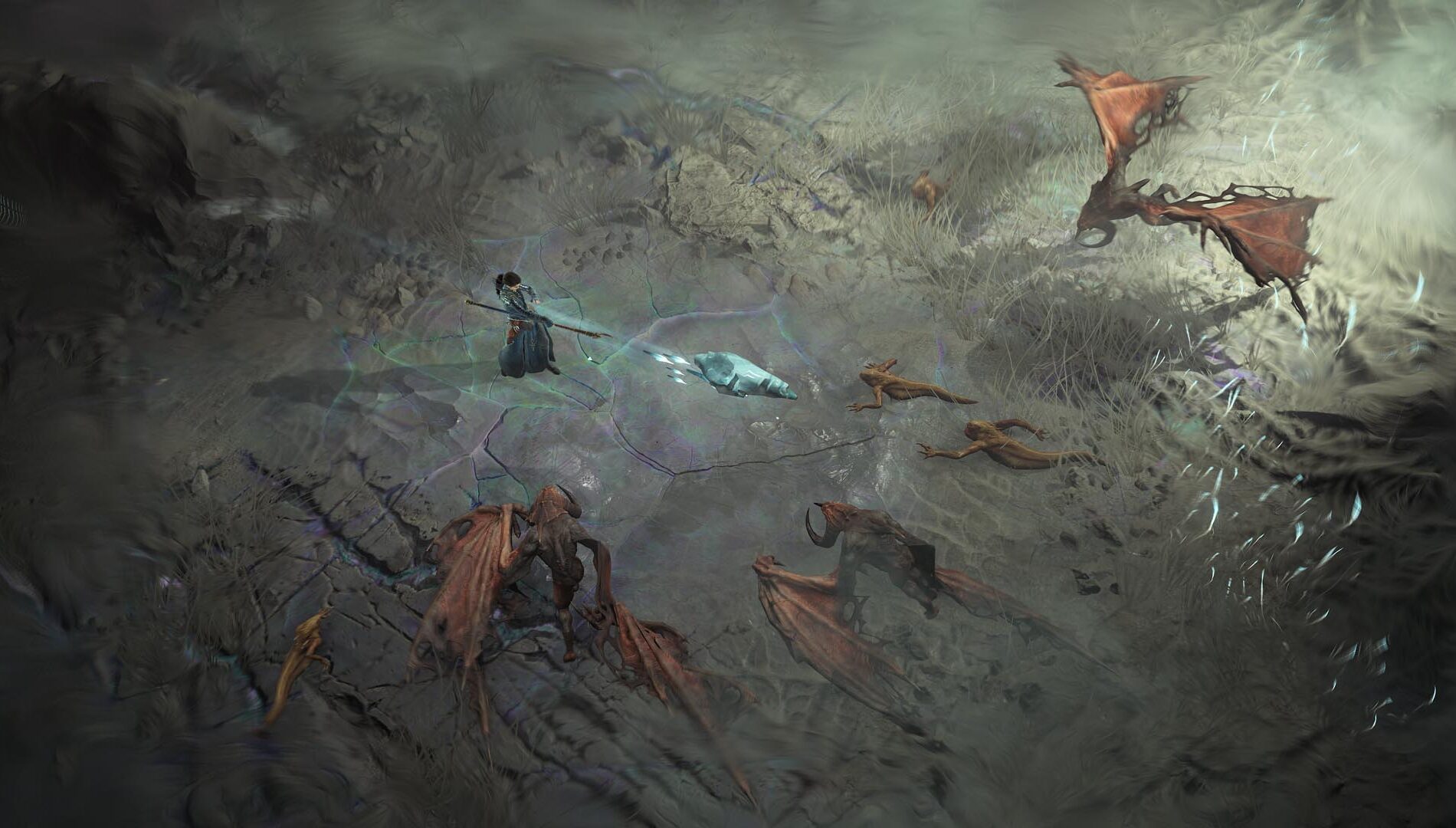
However, just like other expansions, there are also ruins or even places where the corruption is visible but minimal, places of beauty that give a sense of hope. The poisonous environment will allow the player to explore to their heart’s liking because the developers made sure they have more to tell than the cinematics. Across the regions are scattered journals, half-baked rituals, and unused shrines that hint at fragments of stories. These fragments aren’t just decorative but will give more information about the bigger picture that’s playing in the background. So as a player, you’re incentivized to explore if you want to see the total package of what the main story holds.
“It’s a class that likes to take the battle head-on and see the fear in the enemy’s eyes to gain pleasure out of it.”
But let’s speak about the new attacks, the expansion also offers two new classes to play around with: Paladin and Warlock. Paladin was one of those classes that players begged for at the beginning of Diablo IV’s release, and it seriously has some power that almost makes you a descendant of the Light itself, a companion of Inarius, fighting the endless Eternal Conflict. You truly feel like you’re being an Archangel yourself by enveloping yourself with a damaging glow and piercing your enemies to the ground with your spear of Light. It’s a class that likes to take the battle head-on and see the fear in the enemy’s eyes to gain pleasure out of it.

The Paladin, of course, is more than just the vessel of Angelic power. Paladins use the holy power of the Light to enhance their capabilities in a fight. At first glance, it’s a class that fits the description of a guardian that can stay hours on the battlefield battling day after day against the forces of evil. The class can combine close and mid-range attacks in the form of powerful auras and holy weapons.
The subclasses come in the form of oaths, and one of those oaths is called “Juggernaut”. This allows the player to build a style where they like to tank a lot of damage from the spawns of Hell. You will use a one-handed weapon alongside a shield, which allows you to activate a lot of shield-based abilities. This makes sure your defense is top-notch before going into the battle head-on.
“Your fast-paced attacks will also combine critical chance to pierce through the enemy’s armor.”
Another oath is called “The Judicator” and this brings the player to a more aura-of-effect playstyle that pushes holy damage onto your enemies. And like the oath’s name, you’re able to pass your judgment onto enemies and use this mark to perform abilities such as Blessed Hammer and Heaven’s Fury to damage your opponents greatly.
The Zealot oath is more oriented around the Zeal mechanic and an ultimate ability in the form of a holy blade. This is the most offensive subclass that allows you to increase your attack speed and stack it for more serious damage. Your fast-paced attacks will also combine critical chance to pierce through the enemy’s armor.

Last but not least is the subclass “The Disciple,” and in my eyes, this is the most fun one and is closer to the storytelling of Diablo IV because the subclass is based on the archangel Inarius. This oath allows the player to transform into an Arbiter with angelic power that gives special buffs to all of your stats, and while in this form, you will also emit an aura that damages nearby enemies. The Angelic Arbiter form also gives the player a lot of maneuverability that will allow you to close the distance between yourself and the enemy very quickly.
There’s also the adversary class “The Warlock” that uses all of Hell’s energy to become this demonic force that even Mephisto can’t control. The Warlock is a representation of a class that summons horrific creatures from beyond Hell’s boundaries and uses satanic sigils to empower themselves. The class isn’t built like your ranged sorcerer or even a horde-spawning skeleton master like your Necromancer. It is a class that offers 4 subclasses and focuses on diversity that can help the player to build the Warlock to his her own needs.
“The Warlock is a more aggressive version of the Necromancer.”
The class has a path called “The Vanguard” that allows the player to transform into a horrific, hellish creature that uses melee to massacre everyone and everything around it. It leaps from one enemy to another and unleashes devastating attacks that are filled with aggression. Of course, this is actually the ultimate ability. Your other abilities, for example, include fiery demon heads that spew flames around you or even abilities that cause a pathway of destruction along the way, which forces my enemies to explode when they leave their last breath.
You can also take on the pathway of “Legion,” which allows you to spit out different minions to do your bidding, and in this way, the Warlock plays a bit more like the Necromancer class, but with another style or vibe. The Warlock is a more aggressive version of the Necromancer. It is a class that uses its infernal henchman to do your bidding and that can feed off enemies to empower themselves even more. It’s a class that also uses satanic rituals to call for a Fiend of Abbadon, which obliterates your path forward with its massive claymore.

Then there’s also “The Ritualist,” which focuses on trapping enemies in shadow cages and using your lava-filled abilities to melt them. A demon can also be summoned to enhance your abilities or to refill resources to perform these abilities. This demon sacrifices itself to become your personal bag of unlimited resources. You will also create sigils on the ground that will give enemies disadvantageous status effects or even other traps that can help you in controlling the battlefield.
Last but not least, there’s “The Mastermind” that focuses on ranged attacks and being evasive to attack enemies from another angle. You can become invisible, which allows you to evade enemies’ attacks ( which is needed because you are very “breakable”) and eventually attack them with your Hell Bugs that swarm around the enemy devouring them on sight. It definitely feels like you’re spawning out of the dark corners yourself and repositioning yourself on the battlefield to get the best damage output.
“Take your combo-styled game plan to the enemy and conquer it.”
Don’t expect something groundbreaking when it comes to the core mechanics of this ARPG. The core package about exploring the environment, killing enemies, crawling in and out of dungeons, … all in search of loot to enhance your combat capabilities throughout the story, remains the same. The game is still about breaking your class with interesting combos and changing your items accordingly, only to benefit the build you’re playing. Take your combo-styled game plan to the enemy and conquer it.

However, the developers are definitely trying to give a sense to the players that their time investment is definitely worth it by revamping new progression paths that allow the player to experiment with a lot more playstyles than solely using the possible combo opportunities that are included within the subclass part. You will gain access to a new kind of “spec tree” in the form of an amulet. The amulet starts off with three slots that can be filled with amulet fragments that can give your stats a boost. This opens up ways to give that extra layer of depth. Throughout the story or grind, you will find other stronger or even more interesting fragments of the amulet that can even surpass the build you’re currently using. You can even unlock additional slots to keep the amulet versatile. This will definitely keep the players grinding for that next percentage of stat boost. It’s a great addition to even prolong the grind for “building your combo build” and will definitely be liked by veteran players. It will keep the game interesting.
“It’s now much easier to jump in and a lot simpler to keep an overview of what you’re able to do.”
In addition to the main story and the new progression system. You will also get your hands on endgame activities that you can start after the battle with Mephisto himself. This expansion adds to the endgame activities that the game currently has, and some new features even funnel all the activities into one system, which will help new and even veteran players to start grinding again. It’s now much easier to jump in and a lot simpler to keep an overview of what you’re able to do.

The expansion introduces the feature “War Plans,” which gives you a more summarized overview of the activities you have access to, to grind for that next-level equipment to hone your combo build. The War Plans give you the option to plan your existing endgame activities ahead, so you’ll have a smoother way of taking these endgame activities on. You select an activity from an array of options through a kind of branching tree, and then it’s just going from one activity to the other one, keeping the grind train fast and smooth. After an activity is done, you can teleport to the other planned activity. It’s an easy system that really helps a lot of players to smooth out the process of getting that better gear. You don’t have to waste time looking for that next portal or summoning in order to progress your grindy adventure. It’s also helpful for players who don’t really know how to approach the grind for the endgame loot. Definitely a nice quality of life option.
“Of course, there are limits on how many perks you can buy and activate.”
There is also an addition to the remaining trees that were already there, like for example: the Tree of Whispers. Each existing endgame features an upgradable tree where you can buy perks that allow you to modify the activity within this endgame feature. This can also influence the kind of reward you will be getting after the activity. For example, certain perks will double your threat level, or some perks might influence the drop rate of enemies. Of course, there are limits on how many perks you can buy and activate.

Next to the existing endgame activities, you also have a new mode called Echoing Hatred, and it comes in the form of a horde mode. It’s a mode where you have to do your best to survive as long as you can. You start very slowly, and where the enemies are almost harmless, the level of difficulty will increase after every round you survive. You will also be confronted with specific bosses to keep the mode challenging enough. To keep it even more challenging, there is also a meter that can end your round very quickly. This meter represents the level of “Overwhelming”. If this bar has been filled up, the game ends. You can keep the level down by killing enemies at a decent pace. In most ways, it feels like a mode where you race against the clock. The longer you survive, the better the rewards. It’s also a mode that keeps you invested because it can help you reflect if your build is up for the next world tier. Because Lord of Hatred also comes with a buff towards the maximum world tier of Torment. Instead of a maximum of Tier 4, we’re now presented with a maximum of Tier 12. This is a tremendous jump forward in difficulty. It’s also important to know that cooperation with friends or players is stimulated, as your progression is shared, and everyone gets their own loot when participating in group content.
“It’s not only damage numbers that count, but also mechanics or status effects that will influence your combat flow.”
Talking about the difficulty, I have noticed a decent change in the boss mechanics throughout your adventure. Bosses now rely more on tactical mechanics rather than raw damage. The way you position yourself towards the enemy boss will impact your survivability. It’s not only damage numbers that count, but also mechanics or status effects that will influence your combat flow. Foes are also more coordinated than before, so you’ll have to be aware of all of your surroundings and the attack patterns.

Conclusion:
Lord of Hatred successfully steers Diablo IV back toward its darker, more oppressive roots while introducing important improvements to both its narrative and gameplay systems. The expansion shines through its psychologically driven story centered around Mephisto, whose presence transforms the conflict into a constant mental struggle rather than a simple battle against evil. The newly introduced region of Skovos enriches the lore with a haunting atmosphere and rewarding exploration, while the addition of the Paladin and Warlock classes brings fresh and diverse playstyles that cater to both aggressive and strategic players.
Although the core gameplay loop remains familiar and doesn’t reinvent the ARPG formula, the expansion compensates with deeper progression systems, improved endgame structure, and quality-of-life features like the War Plans system. The increased difficulty, refined boss mechanics, and new endgame modes add longevity and challenge, especially for veteran players seeking a more demanding experience.
While not groundbreaking, Lord of Hatred is a strong step in the right direction for Diablo IV, offering a richer, darker, and more engaging experience that reinforces the game’s identity and replayability.
