
There are games that just take you by surprise. Games you don’t really know what to expect from or how they work until you pick up the controller and struggle to put it back down. Those games are pretty rare, and it’s been a while since I last encountered one… until Pragmata. Capcom’s newest and perhaps most experimental game shouldn’t work on paper, but once you get going, everything just clicks. Is it really that good? Let’s explore.
Hugh and Diana
At the heart of the game is Hugh and Diana’s story. Stranded on a desolate moon base, Hugh struggles to survive against relentless AI and rogue robots until he meets Diana, a high-tech Pragmata android who can hack into enemy systems. Without her, Hugh’s bullets barely make an impact, but with her, he can break through enemy defenses and start uncovering the truth behind the moon base.
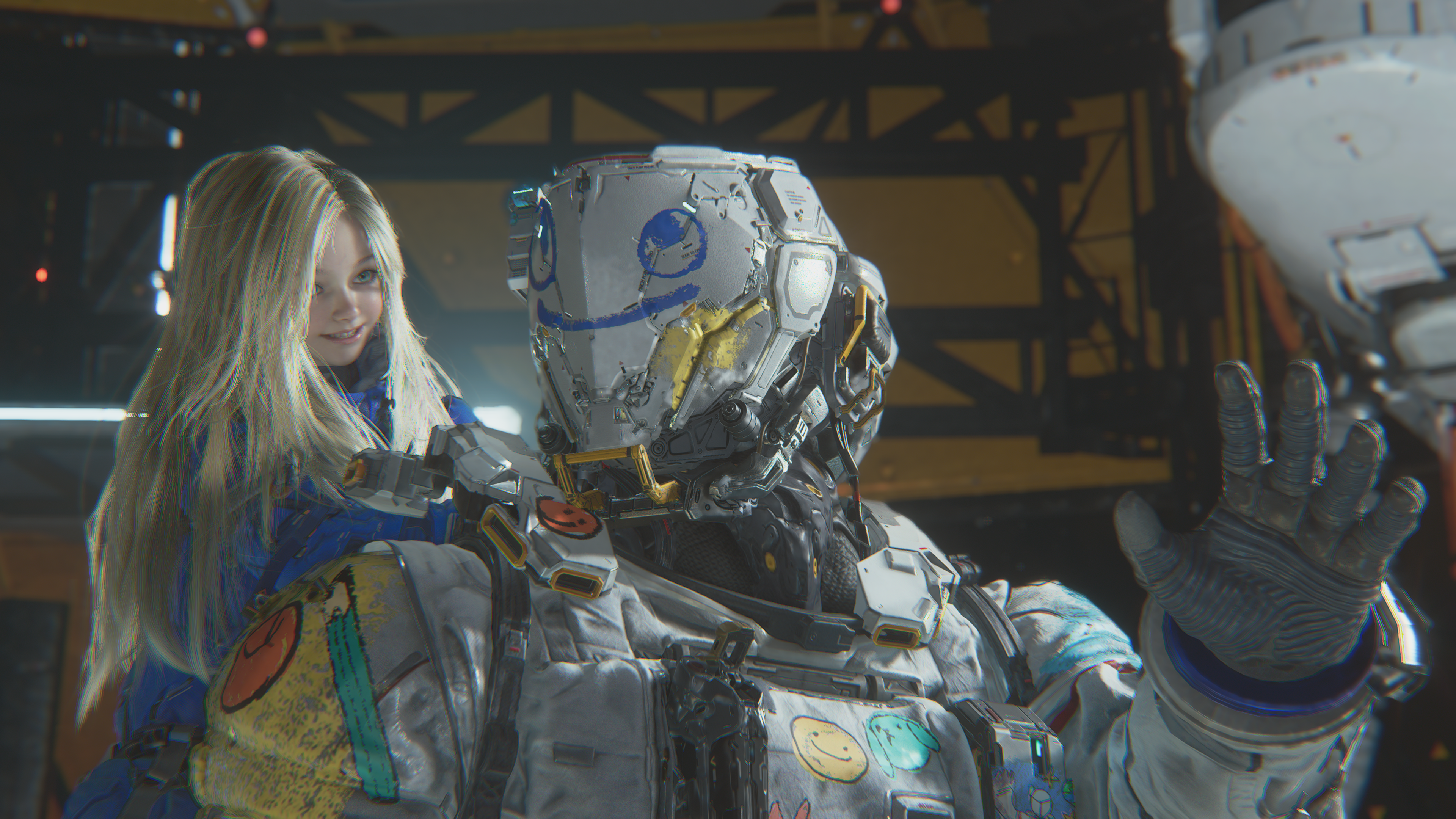
Diana is more than just a plot device. You connect with her, and it’s easy to forget she’s just a machine. The developers clearly knew what they were doing with her character. Where Hugh starts off distant and reserved, he gradually opens up to Diana, blurring the line between working together and genuinely caring for each other. I’m starting this review with Diana for a reason, she’s what makes this game stand out. During my time on that desolate base, I shared so many emotions with her that I felt closer to her than I have in a long time in a video game. The way everything is built around her character really elevates the experience.
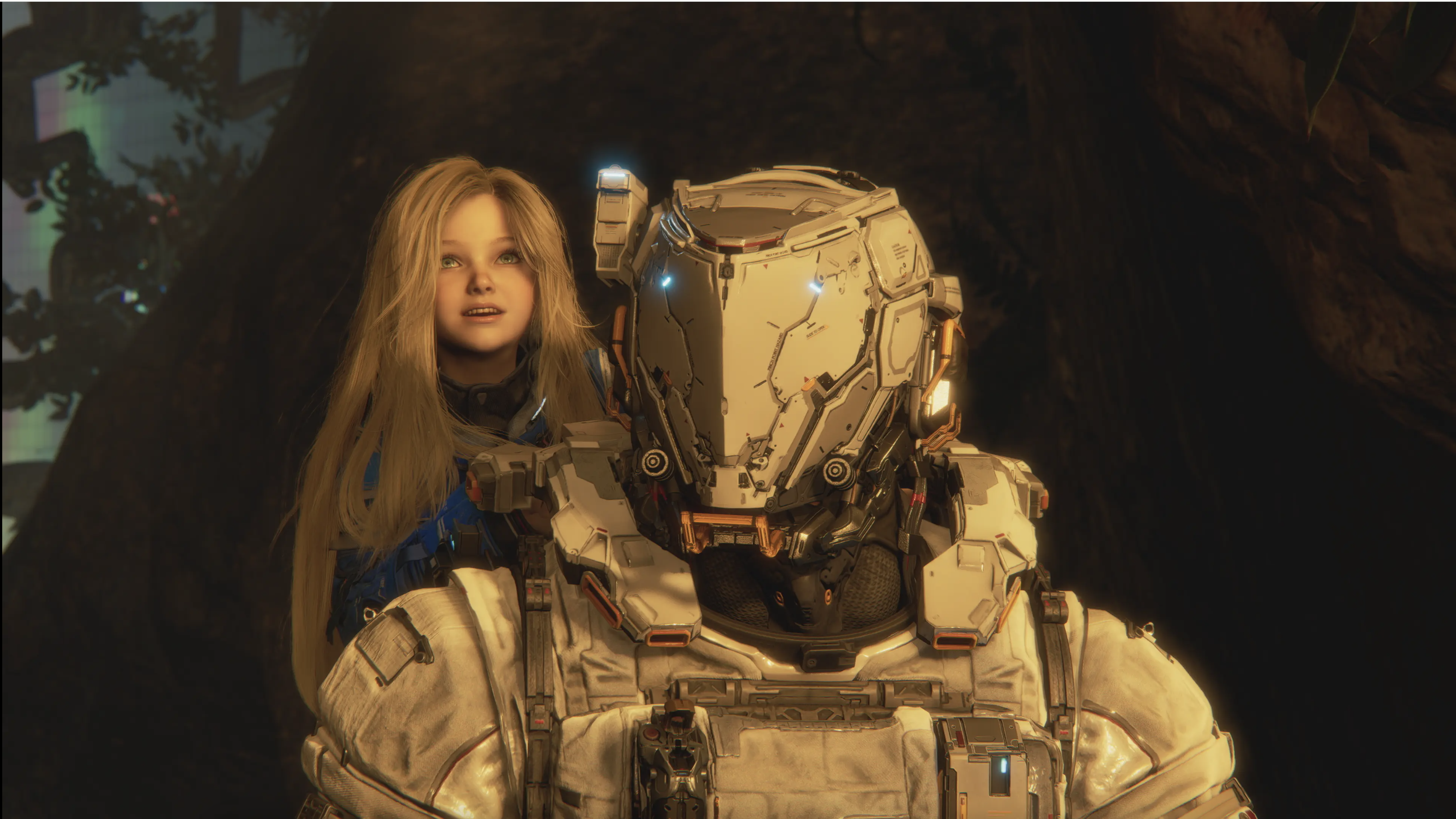
In between missions, you can return to your shelter to regroup, upgrade your stats, or craft new weapons. Or you can spend time with Diana by giving her holograms inspired by Earth, things like swings, tents or balloons. These are hidden throughout the levels, and once you bring them back, they trigger short scenes where Diana reacts to them. What starts as a simple collectible quickly turns into something more personal. I found myself going out of my way just to see her reactions. Combined with the way the story unfolds, it creates a kind of attachment I didn’t expect going in. Since the narrative is such a core part of the experience, I won’t go into spoilers, but it’s worth going in blind. From all the Capcom games I’ve played recently, this is easily one of the more memorable stories.
Hack & shoot
The story is only one part of the game. Its unique combat system is probably its biggest selling point, even if it’s very experimental. In combat, the game combines third-person action with hacking mini-games. On his own, Hugh can barely deal damage to robotic enemies, but once Diana successfully hacks them, he can hit their weak spots and deal real damage.
As the player, you’re controlling both characters simultaneously, and that’s where things get interesting. Using the shoulder buttons, you aim and shoot as Hugh, while the face buttons are used to solve a small maze as Diana to complete the hack. Reach the right node and the hack succeeds, opening up the enemy for damage. It’s hard to explain on paper, and it sounds like something that shouldn’t work, but somehow it does. During the first encounters, I had to actively think about the puzzles while also dodging incoming attacks, but after a while, it became second nature.

The system really shines once you start moving more freely, dodging, jumping, and repositioning while hacking at the same time. When everything clicks, there’s this immediate rush as you break through defenses and take enemies down. I also like how the game keeps introducing new enemy types and throws small groups at you to keep pushing your understanding of the system. There’s nothing quite like it, and I really appreciate how original it feels. More importantly, it goes beyond just being a clever idea; it actually plays incredibly well once you get used to it.
If you’re unsure about the complexity, there’s a demo available, which I’d definitely recommend. Even though the system worked for me, I can see it being a bit overwhelming at first. Still, it’s absolutely worth pushing through that initial learning curve.
So much more to do
Where a game like Pragmata could stumble a bit is in repetition and a lack of variation, but luckily, it keeps introducing new ideas throughout. At its core, the gameplay loop takes you to one of the moon base’s biomes, where you clear out enemies, solve the occasional environmental puzzle, and take on a boss before moving on to the next area. It sounds like a fairly standard action setup, but it goes further than you might expect.
Let’s start with the enemy types and bosses. Early on, you mostly face humanoid robots, but it doesn’t take long before the game starts mixing things up with hovering drones, invisible machines, grotesque giants, and enemies that feel like they came straight out of a nightmare. The pacing of these introductions keeps things fresh, and just when you feel like you’re getting comfortable, the game pushes you again. I also love how the game keeps you on your toes with its environments. During my first hour, I was a bit worried that the sterile white moon base would start to feel repetitive, but that quickly changed. One moment you’re inside a printed version of New York City, the next you’re walking along a beach. The game constantly plays with your expectations and embraces its variety in a way that keeps things interesting.
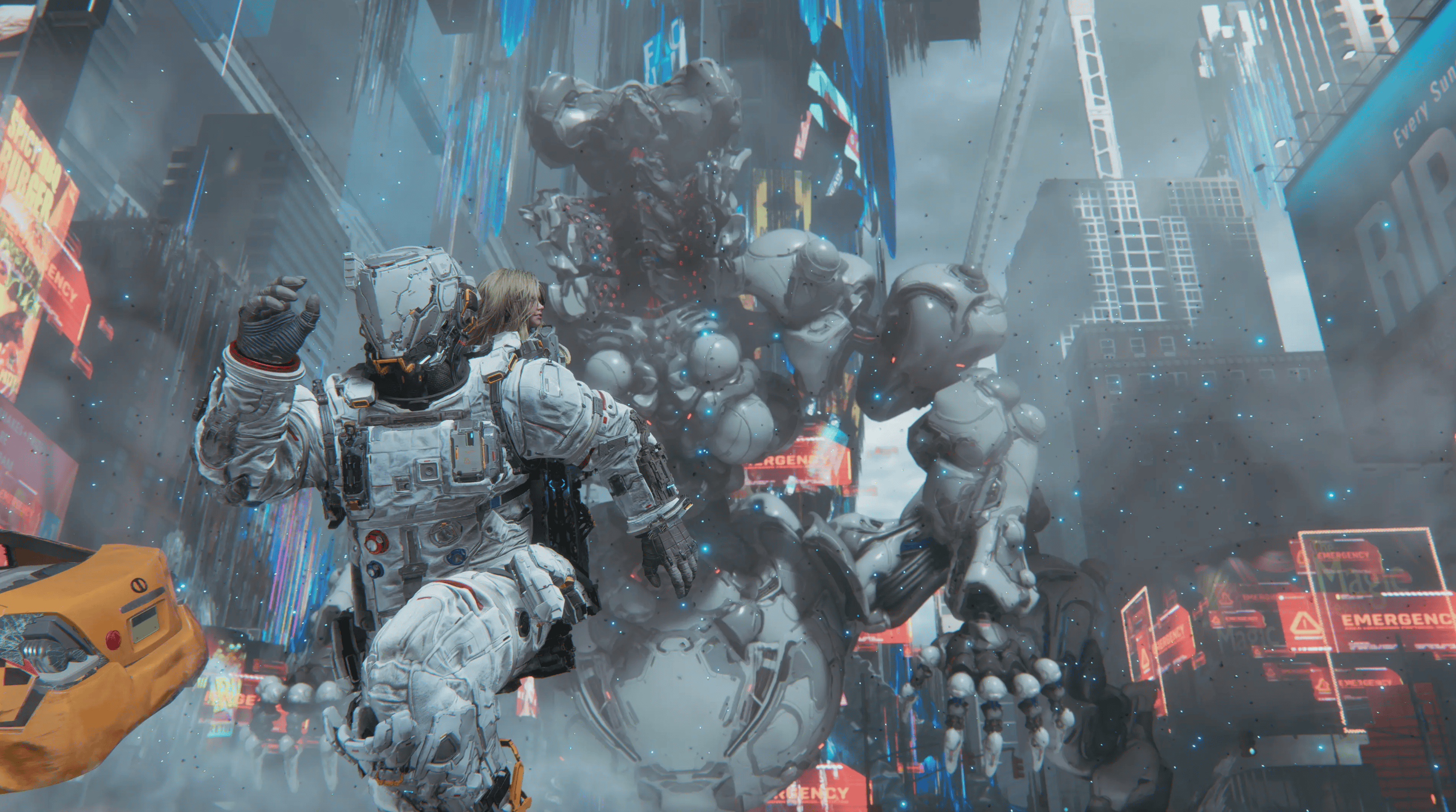
These areas are also packed with optional content. You can rush through and head straight for the bosses, but you’d be missing out on a lot. From story logs to holograms you can bring back to your shelter, there’s a good variety of collectibles that reward exploration. You’ll also come across upgrade materials and so-called red zones, which can only be accessed with specific keycards. These are some of the game’s tougher challenges, often rewarding you with upgrades that make a real difference. While the game might seem fairly linear at first, it opens up the more you explore. There’s a lot more to Pragmata than what you see on the surface.
Take shelter
I briefly mentioned the shelter before as a place where you can connect with Diana and upgrade your gear and weapons, but it’s a lot more than that. You can see it as your home on the moon and the only place where you’re truly safe between missions. In the shelter, you can upgrade your stats to gain more health, improve your firepower, or strengthen your hacking abilities. You can also craft and upgrade weapons, and that’s where things start to get interesting. Every new weapon or hacking node you unlock can be equipped before heading out on your next mission. The shelter acts as a sort of hub, allowing you to adjust your loadout before moving on.
Throughout the game, you’ll find plenty of upgrades, nodes, and weapons. These range from powerful lasers to defensive shields, decoys, or static traps. I initially focused on raw damage, but quickly realised that a more balanced loadout, mixing offense with defensive options, worked much better.
On the hacking side, things evolve nicely as well. Early on, you’re simply solving the mini-maze to complete a hack, but later you can add nodes that increase damage or apply effects like confusion. By routing through these nodes before reaching the final point, hacking becomes much more than just a requirement and turns into a core part of your offensive strategy. The shelter also plays an important role in how the game handles progression. There are no traditional save points. Instead, you can only save in the shelter, while shortcuts in the levels bring you back there quickly. If a boss takes you down, you can return, adjust your loadout and try again. It’s a smart system that encourages experimentation rather than frustration.
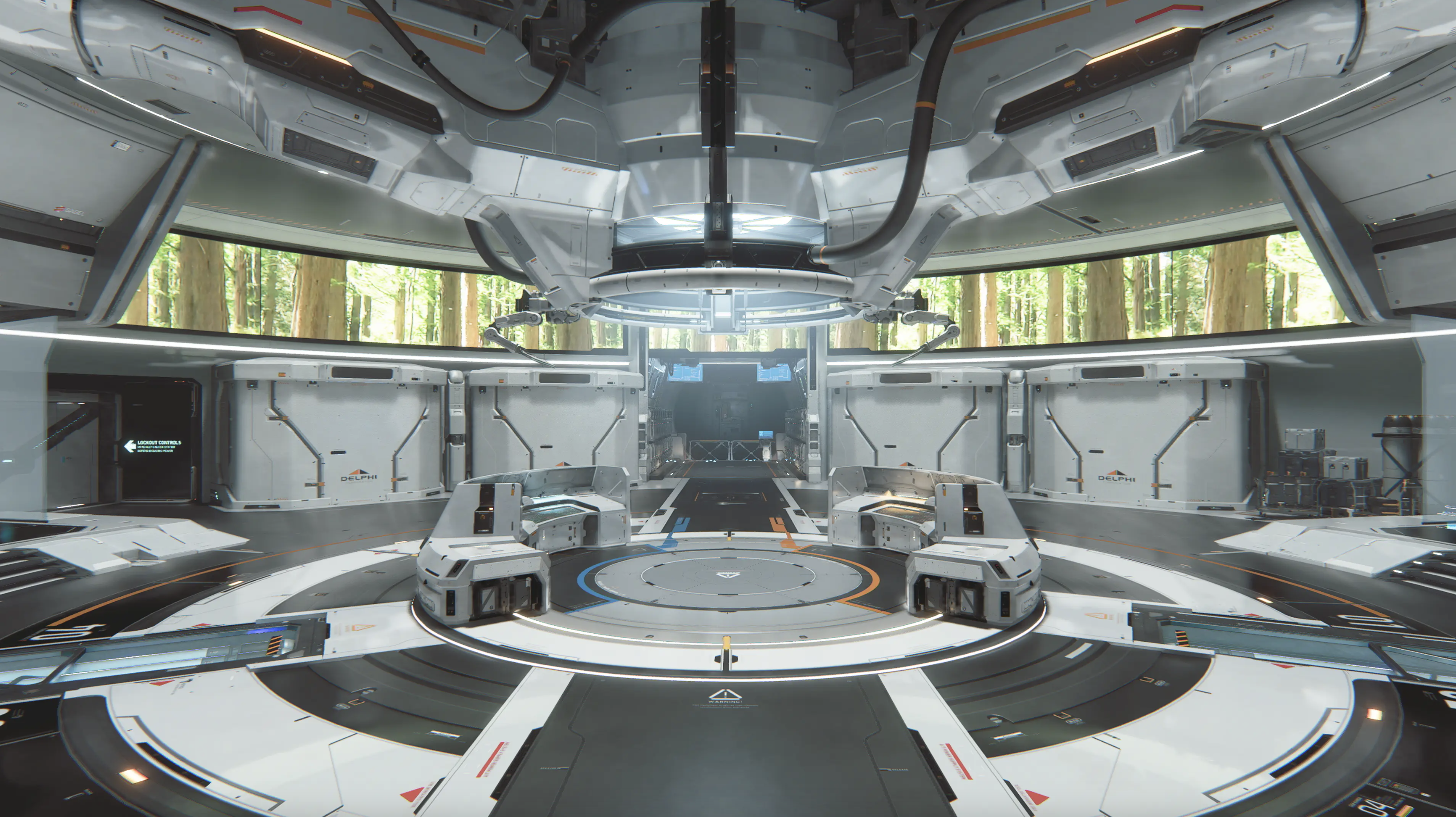
To top it off, the shelter also acts as an information hub where you can learn more about enemies, unlock new costumes or jump into virtual training challenges. These short trials test your skills and reward you with useful upgrades. As you can tell, the shelter is far more than just an upgrade station; it’s one of the core pillars of the game, and a big part of what makes Pragmata stand out.
A celebration of video games
I could go on about the smaller features or the many surprises the game keeps throwing at you, but that wouldn’t really serve this review. By now, it should be clear that Pragmata is different and probably an acquired taste. Its mechanics might scare some players off, and the difficulty can feel a bit uneven, being too punishing for newcomers while not always challenging enough for veterans.
Still, I found it easy to forgive those imperfections. To me, Pragmata feels like a celebration of video games and a reminder of what makes them so special: delivering the unexpected. It takes familiar ideas and pushes them in new directions, always putting fun at the center of the experience while constantly surprising you with new mechanics, collectibles, and memorable moments. Games like Pragmata remind me why I love playing and writing about video games in the first place. It’s been a long time since a game caught me off guard as this one did. Yes, it can be rough around the edges, and some might argue it leans too heavily on its combat system, but that doesn’t take away from the fact that this is one of the most unique experiences out there and absolutely worth your time.
Conclusion:
Pragmata dares to be different and commits to it from start to finish. Its blend of action and hacking creates something that feels fresh and surprisingly natural once it clicks. Combine that with memorable characters and plenty of hidden secrets, and you’re in for a wild ride. It’s not flawless, but it’s one of the most original and engaging games I’ve played in a long time.