
Last week, Supermassive Games invited me to London to try Directive 8020, the next entry in The Dark Pictures Anthology. As a fan of the franchise, I was excited to finally get some hands-on time with the upcoming space horror game. It’s been in development for quite some time now, but was it worth the wait? Time to find out.
Let’s begin
Before diving deeper into the gameplay itself, I want to talk about how far The Dark Pictures Anthology has come. Directive 8020 feels less like a smaller anthology entry and more like a full-blown space horror game built around what Supermassive Games does best: decision-based storytelling. The production value is on another level here. From the very first moments, I was surprised by how good the game looked and controlled. Compared to the earlier entries in the franchise, this feels like a huge step forward. It plays and looks much more like a modern third-person horror game where tension and action constantly blend together. I played the demo on PC, and the visuals really carry a lot of the experience. The section I played took place in the darker areas of the spacecraft, and the way the team uses lighting and shadows to build tension works incredibly well. Combined with a strong cast and some genuinely intense moments, it didn’t take long before I was completely pulled into this world.
Your choice matters
I was dropped into a later chapter where I had to sneak through air vents while looking for one of my missing teammates. I won’t go too deep into spoiler territory in this hands-on preview because the story is clearly the game’s biggest selling point. What I do want to highlight is the impact of the choices you make. Early on, I was asked whether I wanted to give clearance to use a gun. Knowing the risks of firing weapons inside a spaceship, it immediately felt like an important decision and one that would probably come back later. I decided to allow it, and that choice literally saved one of the characters later on, while another ended up with a much more uncertain fate.
That wasn’t the only consequence I saw play out either. Throughout the demo, several earlier decisions came back in unexpected ways. Some moments were tied to massive choices involving the ship itself, while others were surprisingly small, like earlier interactions with ventilation systems. I didn’t see the actual decisions happen, but I did see the consequences hours later. That constant ripple effect is still what makes this franchise so interesting. If you’re not happy with a certain choice, you can also use the rewind feature to go back and see how another decision changes things. I’m a fan of this approach because it gives you a bit more freedom as a player without forcing you to replay the entire game just to see a different outcome. Besides the bigger consequences, your choices will also impact the traits of the cast, which will eventually change the dialogues and reactions, too. It’s all pretty familiar to the older entries, of course, but it looks like this one might branch out the most.
We’re not alone here
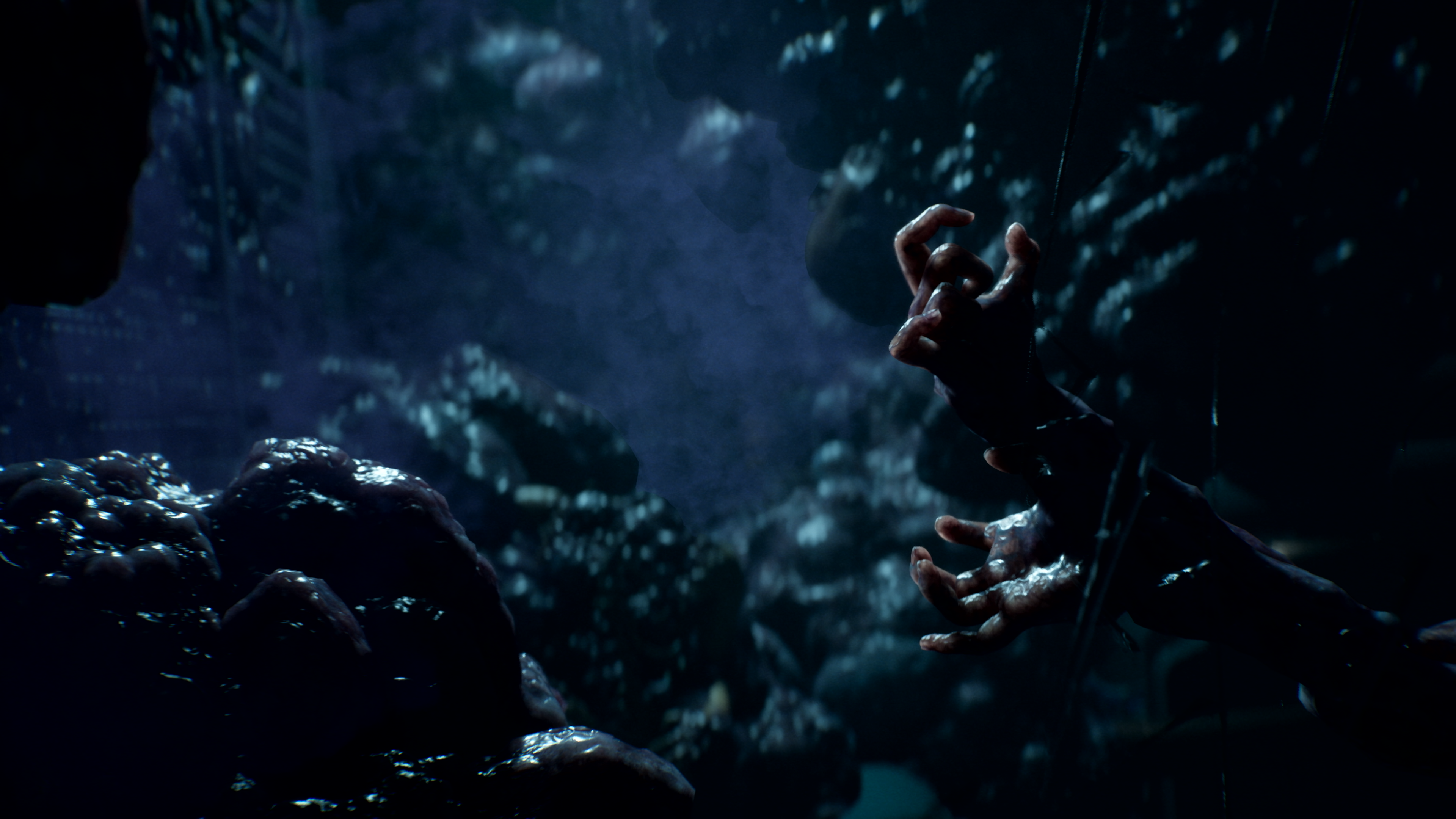
Now talking about the actual gameplay,, I was dropped roughly two hours into the main story,, where the Cassiopeia vessel had crash-landed on Tau Ceti after suffering a hull breach. The main crew was awakened from hypersleep only to discover that a strange alien growth had infested the ship. To make things worse, one sleep technician was found dead while the other started behaving suspiciously.
By sealing off sections of the ship and methodically clearing maintenance tunnels, I was trying to flush out the hiding technician. What I really like about the premise is that mysterious alien presence capable of mimicking its prey, meaning it can look and sound just like the crew. In most horror games, it’s pretty easy to understand what you’re dealing with, but here it constantly feels like anyone could be the threat hiding in plain sight. As a player, you’re always doubting who to trust, and I really like that extra layer on top of the already dark setup.
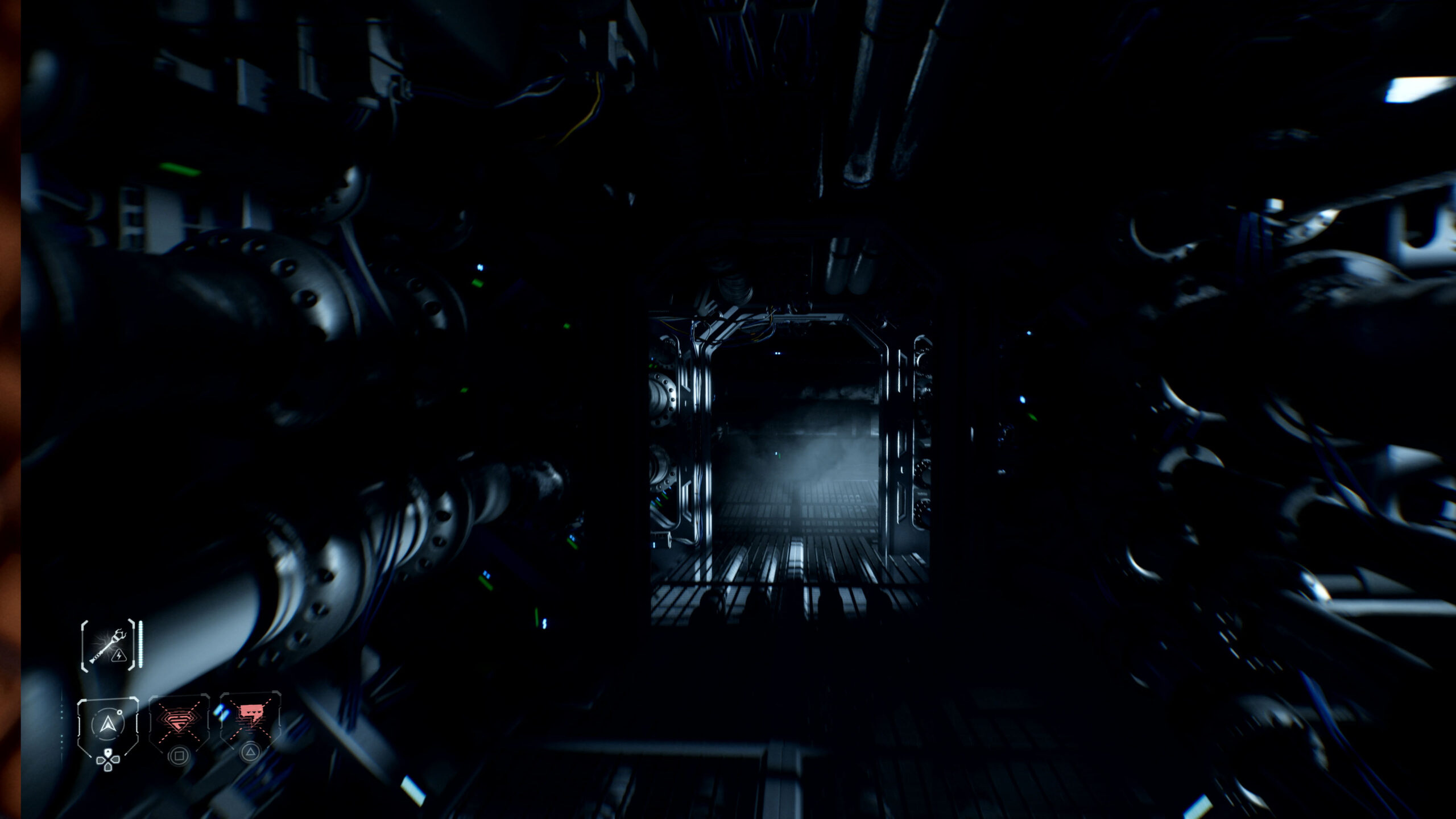
The section I played revolved around clearing those maintenance tunnels while searching for the missing technician. The first part of the demo focused heavily on sneaking through those dark corridors, where Supermassive once again showed how good they are at building tension. It felt tight, claustrophobic, and genuinely unsettling. Every corner had me expecting something to suddenly appear, and the way the tunnels were lit with only the smallest bits of light shining through the dark metal walls really sold the atmosphere.
The second half of the demo shifted more towards action. I had to solve several smaller environmental puzzles while staying out of sight of the creature hunting me through the ship. This was probably my favorite part because it showed how solid the actual gameplay is. Directive 8020 isn’t just a choice-driven narrative game, it also genuinely works as a third-person horror game. Sneaking around and hiding behind different structures reminded me a lot of how I felt while playing Alien: Isolation. It has that same type of tension where making one mistake can completely ruin your plan. The creature hunting me (or was it just a man?) wasn’t stupid either. If I made too much noise or tried to run for it, I was done. Being cautious really mattered here.
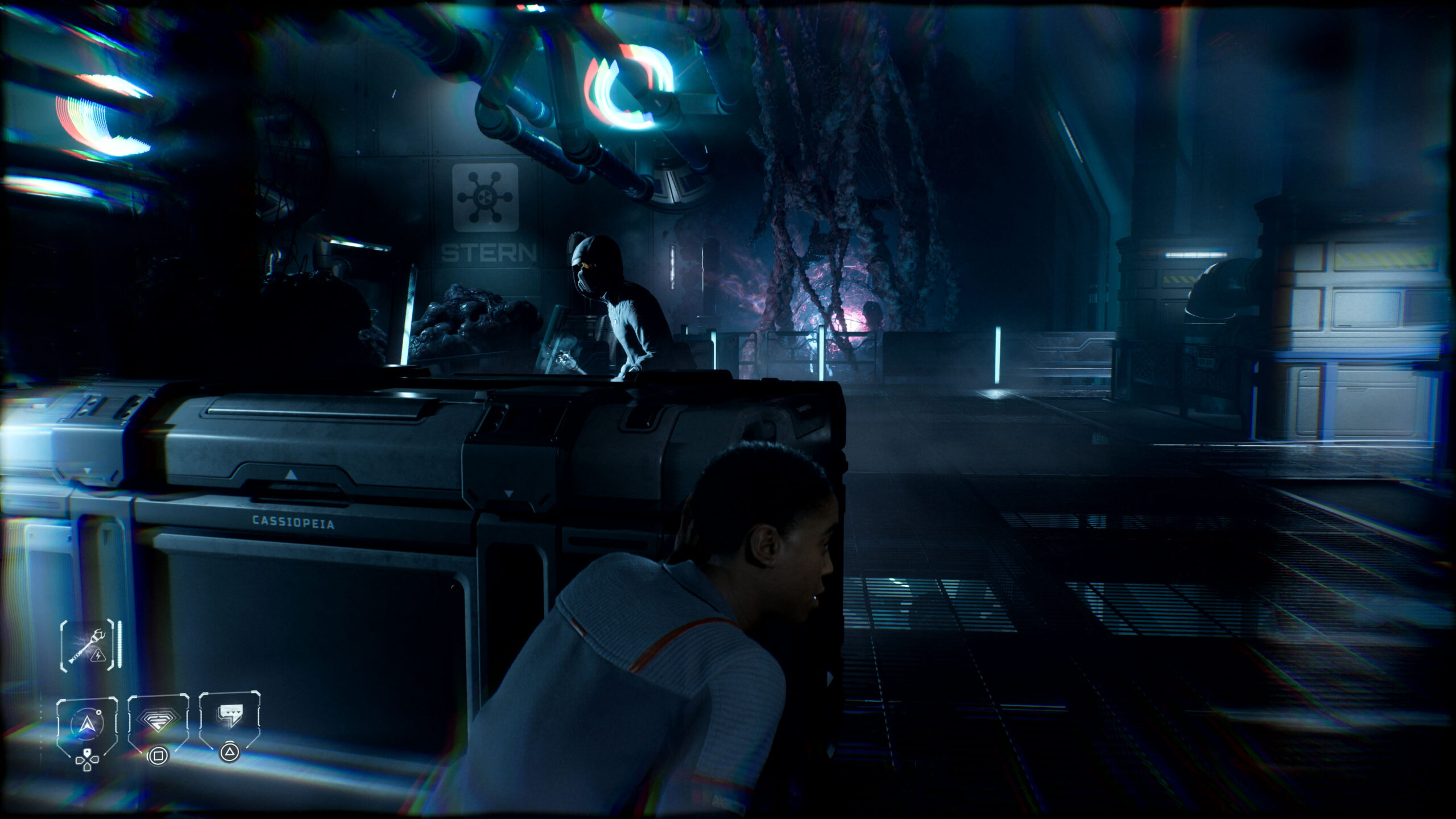
Learning movement patterns, staying out of sight, and activating terminals to create distractions quickly became the safest way to move forward. Time genuinely flew by during this section. At one point, I had to restore power to extend a bridge while simultaneously searching for a battery and avoiding the creature roaming the area. I eventually managed to get through it and saw the story move towards another cliffhanger ending. If I had access to the full game, I would have immediately kept playing, and I think that says a lot about how strong the story setup already feels in this preview build.
Early conclusion:
Directive 8020 already feels very different from the earlier Dark Pictures games. The stronger gameplay, tense stealth sections, and impressive presentation really surprised me during this hands-on session. I walked away wanting to know what happens next, and that’s probably the best sign possible for a story-driven horror game.
