
Ever since Nintendo released Splatoon on Wii U, the series has grown into something much bigger than many expected. Even on a console that never reached the audience Nintendo hoped for, Splatoon proved to be an instant hit. A chaotic but addictive multiplayer shooter was exactly the right move, and in just a couple of years, the Inklings became an important pillar for Nintendo. Fast-forward to today, and we already had three Splatoon games built around multiplayer chaos. Now Nintendo is taking the series in a different direction with Splatoon Raiders, the first single-player spin-off in the franchise. Is this new adventure worth your time, or should you just wait for Splatoon 4? Let’s jump in!
Look, it’s Deep Cut!
In Splatoon Raiders, you don’t play as an Inkling trying to become the best multiplayer player in town. This time, you play as the Mechanic, a new character who ends up working together with Deep Cut. Shiver, Frye and Big Man are no strangers to Splatoon fans, but here they finally get a lot more time in the spotlight. The trio travels to the mysterious Spirhalite Islands in search of treasure, and of course, things quickly become a lot more dangerous than a simple treasure hunt.
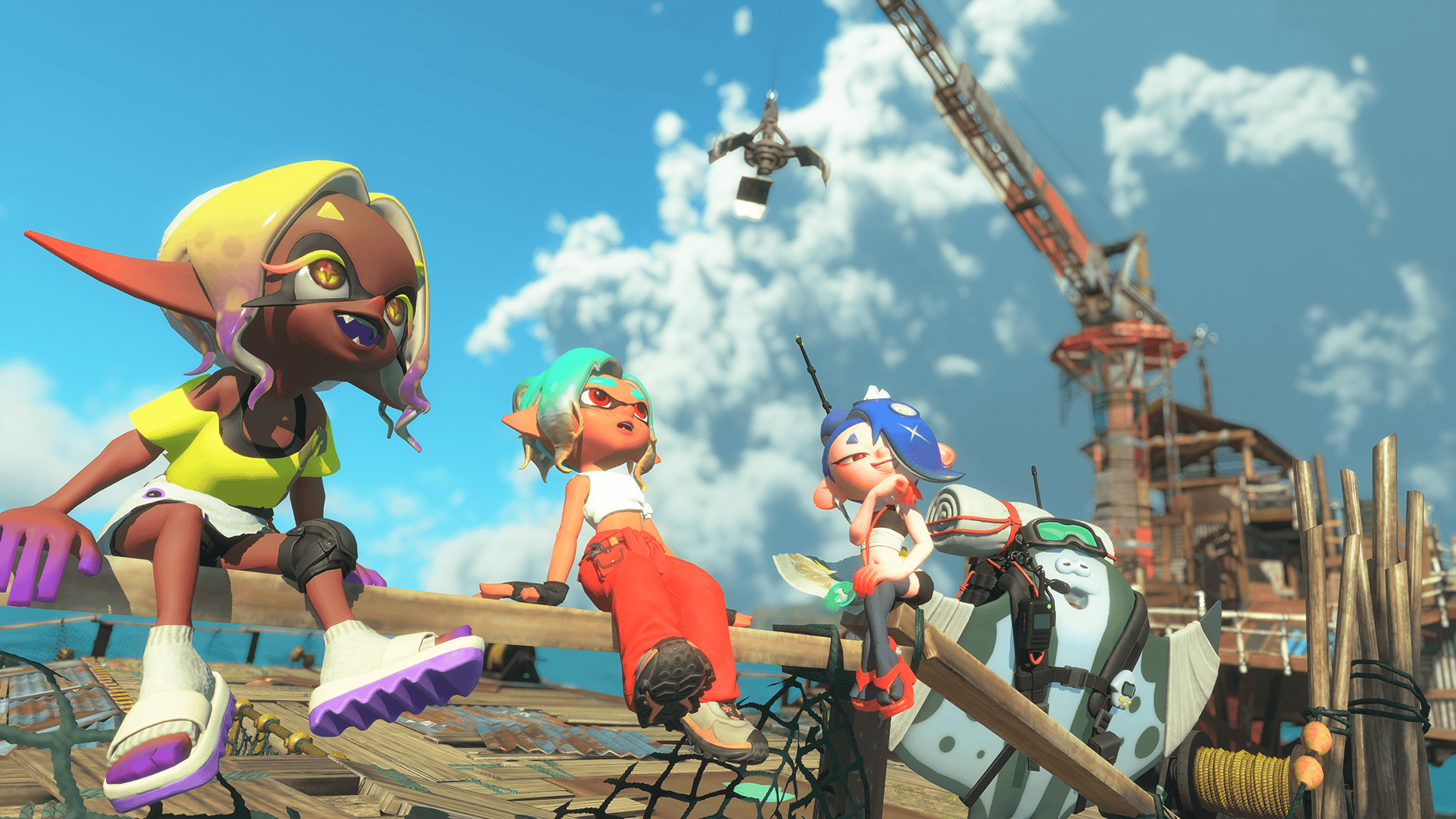
I don’t think Splatoon ever needed a super deep story to work, and Raiders doesn’t suddenly try to turn the series into a heavy narrative adventure. The setup is simple and that’s fine. You’re on a strange island, Deep Cut wants treasure, Salmonids are standing in the way and your job is to fix things, upgrade your gear and survive one raid after another. It gives the game enough context to keep moving, without slowing everything down with too much explaining. What I liked most is that Deep Cut actually gets the spotlight they deserve. In Splatoon 3, I always felt like they could have done a little more with them, so seeing them take on a bigger role in Raiders is already a fun idea. During raids, one of them joins you in the Exploration Bot, which makes the whole thing feel less lonely even though this is mostly a single-player spin-off. It still has that typical Splatoon energy, with weird characters, silly moments, and that fresh Splatoon style to make even a simple treasure hunt feel like something only this franchise could come up with. The story isn’t the main reason you’ll keep playing Splatoon Raiders, but it does what it needs to do.
It’s still Splatoon, but it’s very different
A solo Splatoon game sounds a bit strange at first, since this is a series built around chaos, other players, last-second pushes, and multiplayer matches where everything can fall apart in the final ten seconds. Taking that away could have easily made Splatoon Raiders feel empty, but that never really happened to me. If you’ve played Splatoon and especially Salmon Run before, you’ll have a better idea of what Splatoon Raiders is trying to do. The game actually started as something much closer to tower defense, where you would place traps and deal with waves of Salmonids, but Nintendo eventually moved away from that because it didn’t feel enough like Splatoon. The final result feels more like Nintendo’s answer to Borderlands. The basic feeling is still there. You still ink the ground, swim through it, aim with motion controls (you can switch those off too) and try to keep control while the screen slowly turns into a colourful mess. If you played the previous games, you’ll feel at home almost immediately.

That Borderlands comparison might sound a bit strange at first, but the further I got, the more it started to make sense. Splatoon Raiders doesn’t suddenly become a looter-shooter in the most traditional way, but the loadout and ‘class’ of your mechanic does matter a lot. You don’t just pick a weapon because it looks cool and hope for the best. Well, you can, but chances are the game will punish you for it sooner rather than later. The weapons are still the most familiar part of the whole system, with Splattershots, Rollers, Sloshers and other iconic Splatoon weapons making a return, but the way you combine them with tanks, gadgets and mods is where Raiders becomes a lot more interesting.
The tanks in particular make a bigger difference than I expected and can best be described as Splatoon’s answer to traditional classes in looter-shooters. One gives you a faster attack, another focuses more on power, while the tactical tank can fire ink at enemies for you and take some of the pressure away. At first, I didn’t think too much about it and just picked what felt right, but that quickly changed once the raids became more demanding. Some levels really forced me to think about what I was bringing with me. A weapon that worked great in one raid could suddenly feel completely wrong in the next one, and switching tanks or adding the right gadget could be the difference between barely surviving and actually feeling in control.
While you’re switching between raids, there’s never one clear combination that will give you the best advantage. It’s not about finding one overpowered combination and using it forever. Different raids ask for different solutions, and that gives the whole thing a much better gameplay loop than I expected. You try something, you fail, you change your setup, and you go back in with a better plan. That sounds simple, but it works really well because the changes are easy to feel while playing. More speed, more power, more defence or a bit of extra help from a gadget can completely change how you approach a raid. Deep Cut itself also plays into this nicely. Frye, Shiver and Big Man all have their own super attack, and those can really save you when the screen gets too crowded and everything starts going wrong. Collecting enough eggs to activate them adds another small layer during the action, because you start thinking about when to use that attack instead of just pressing it the moment it becomes available. It’s a smart way to make them feel involved during gameplay too, not just during the story.
More than just another raid
The good news is that Splatoon Raiders isn’t only about walking into an area, shooting Salmonids and collecting whatever shiny thing the game tells you to collect. That is the base of the game, of course, and a lot of the progression is built around gathering Spirhalite, unlocking stronger weapons, improving your gear, and slowly turning your setup into something that can handle the next challenge. But the game does throw enough different ideas at you to make the adventure feel bigger than just a list of raids.

Besides the regular raids, there are also special challenges and dungeon-like areas where the game plays around a lot more with movement and specific skills. Sometimes it gives you a certain ability or setup and asks you to deal with obstacles in a slightly different way, which is exactly where the Splatoon movement starts to shine again. Swimming through ink, climbing walls, jumping between platforms, and keeping an eye on enemies at the same time still feels very different from most other shooters, and Raiders uses that a lot better than I expected.
As if those levels weren’t difficult enough already, the game also throws in the occasional boss fight. I don’t want to spoil too much here, because some of the best moments are better when you don’t know what’s coming, but those bigger encounters do a lot for the pacing. They force you to use more of your setup instead of just relying on the same basic tricks, and they give the game those little spikes of energy it needs after a couple of more standard raids. The optional objectives also gave me a reason to replay missions without making it feel like pointless checklist work. Sometimes I wanted a better reward, sometimes I just wanted to prove to myself that my new setup actually worked better than the mess I brought with me the first time. It’s very easy to say “one more raid” and actually mean three more raids, because the game constantly puts something new just close enough in front of you.
A bit of repetition between the chaos
That being said, the raid structure isn’t completely safe from repetition. After a while, you do start to recognise the flow a little too clearly. You enter an area, deal with groups of Salmonids, collect what you need, finish the objective, return to base, upgrade something, and go again. That loop works, and most of the time it works really well, but there were moments where I could feel the game leaning on it a bit too much. Luckily, Raiders has enough ways to hide that repetition for a long time. New weapons make you approach enemies differently, tanks can change the way you survive a raid, gadgets give you another reason to experiment and the special challenges break things up when the normal missions start to feel too familiar. Still, I would be lying if I said every raid felt completely different from the last one. Some missions blend together a little, especially when the objective itself isn’t that exciting or when you already found a setup that works a bit too well.
For me, it never became a huge problem, mostly because the game is fun to control and because the reward loop kept doing its job. Even when a mission felt familiar, I usually had something I wanted to test, upgrade or unlock. But I do think this is where Raiders shows that it is still built around a pretty simple structure. The best moments are great, the boss fights and special challenges add a lot, but some of the regular raids could have used one extra twist to make them stand out more.
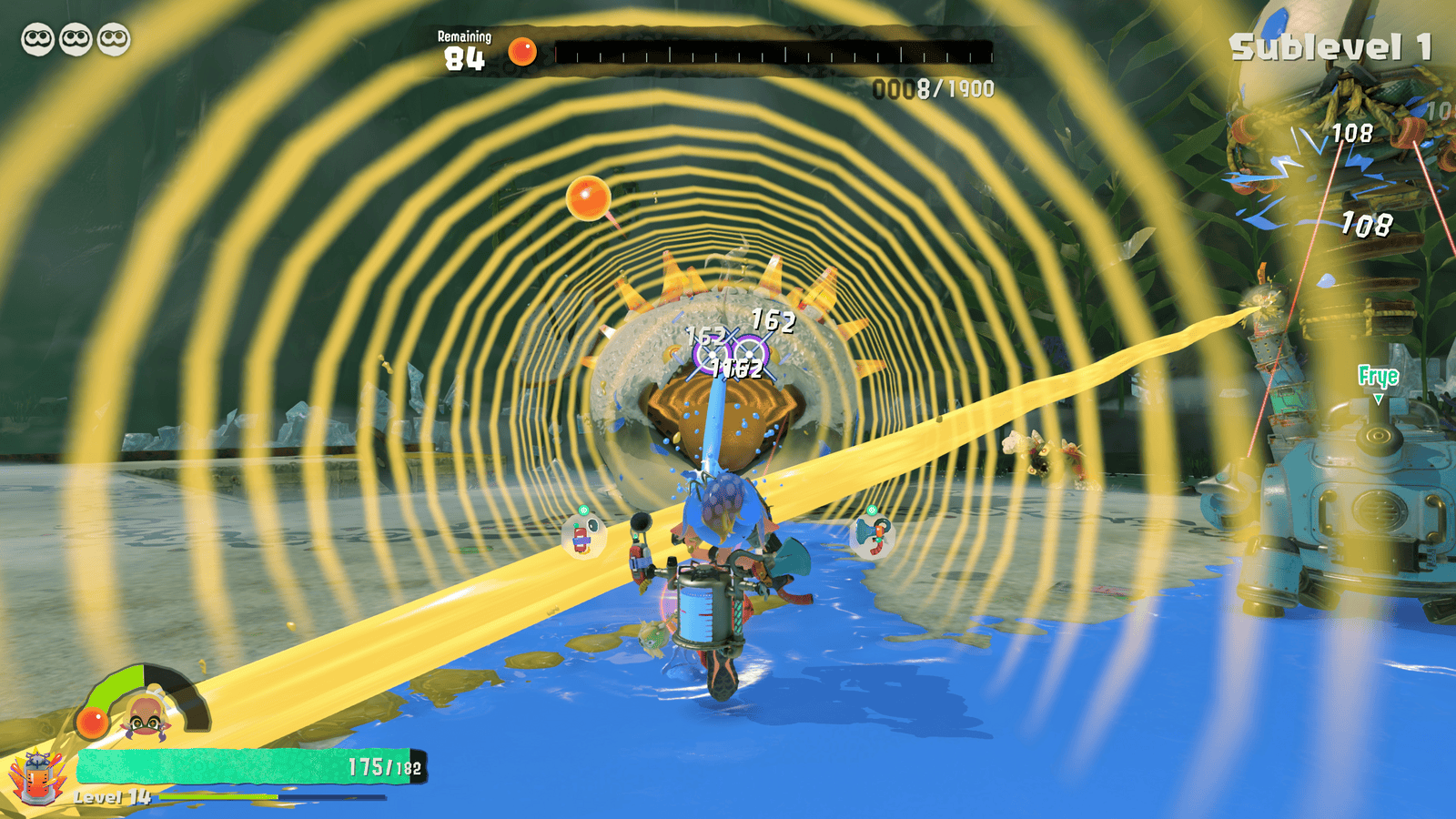
It didn’t stop me from enjoying the game, but it did make me wish Nintendo pushed some of those stranger ideas a little further. When Raiders gets weird or starts playing with its own rules, it becomes a much stronger game. When it falls back on the basic raid loop for too long, it’s still good Splatoon, just a little less exciting.
Call in some backup
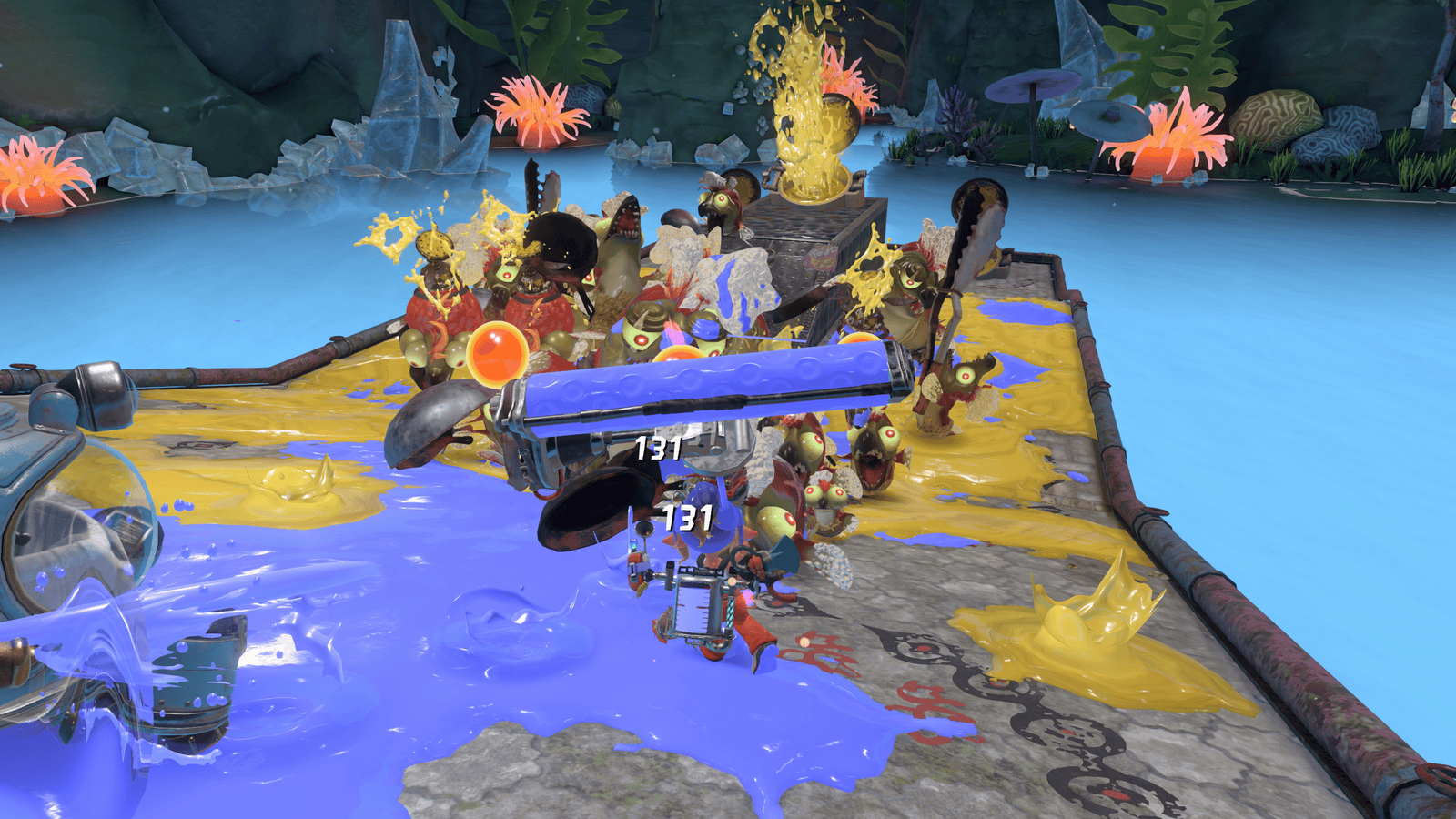
Although Splatoon Raiders is clearly built as a single-player adventure first, the co-op and online help features are a very smart addition. You can play together with up to three other players, either online or through local wireless, and that fits the whole raid structure a lot. Splatoon always had that chaotic energy where you’re trying to stay in control while everything around you turns into a mess of ink, enemies and panic, so adding other players to that formula makes a lot of sense here. It doesn’t suddenly transform Raiders into a traditional multiplayer Splatoon game, but it does make some raids feel even more alive.
What I like even more is the online help system. Before heading into a raid, you can call for help from other players, or you can jump into someone else’s game and help them out instead. If you succeed, you earn a Help Bonus in the form of weapons, gadget parts, or other materials, so there’s actually a reason to assist other players beyond just being nice. In a game built around upgrades and better setups, those extra rewards are important, so you’ll find yourself helping others a lot. It also fits the whole idea of Raiders surprisingly well. You’re not just playing random matches against strangers anymore; you’re helping someone clear a challenge and getting something useful out of it yourself.
I also appreciate that the game tries to keep things balanced when you play with others. Player power scales automatically, so bringing friends into a raid doesn’t completely break the challenge or make everything feel pointless. That was important, because a game like this could easily become too easy the moment more players enter the screen. Instead, co-op feels like a natural extra layer on top of the solo experience. You can still play the entire game on your own, but if a raid gives you trouble or if you simply want to create even more chaos, calling in backup is a very welcome option.
Conclusion:
Splatoon Raiders surprised me in the best way possible. I expected a fun solo experiment, but Nintendo turned it into a surprisingly deep spin-off with raids, smart loadout choices, great bosses and a fun co-op system. Some raids might feel repetitive after a while, but the constant stream of weapons, gadgets, mods and upgrades kept me hooked from start to finish. This isn’t just something to play while waiting for Splatoon 4, it’s proof that Splatoon can work really well outside of its usual multiplayer comfort zone.