
Cozy farming simulators have become one of gaming’s most crowded genres. Ever since Stardew Valley rekindled our collective love for tending crops, building relationships, and escaping the bustle of everyday life, developers have been eager to cultivate their own take on the formula. Some leaned into crafting, others focused on combat or exploration, while titles like Fae Farm demonstrated that simply wrapping familiar mechanics in a magical setting could make the experience feel surprisingly fresh. At first glance, Moonlight Peaks appears to follow that same path. Replace sunny meadows with moonlit forests, villagers with vampires, witches and werewolves, and ordinary vegetables with delightfully gothic crops, and you have an easy elevator pitch. It would also be doing the game a disservice, because Moonlight Peaks isn’t simply trying to be Stardew Valley after dark. It’s trying to welcome an entirely different audience onto the farm.
Wandering under the moonlight
That became increasingly clear the more evenings I spent wandering its softly illuminated world. The familiar gameplay loop is still here: you “inherit” a neglected plot of land, grow crops, care for animals, gather resources, improve your home, and gradually become part of a close-knit community. Anyone who’s spent countless hours with Stardew Valley will immediately recognize the comforting mechanics, while fans of Fae Farm will appreciate how Moonlight Peaks isn’t afraid to dress that formula in fantasy rather than realism. The difference lies in its identity. Where many farming games use fantasy as little more than window dressing, Moonlight Peaks fully embraces its supernatural setting. This is a world where moonlight is comforting rather than ominous, where vampires are neighbours instead of monsters, and where glowing plants, mystical herbs, and wonderfully strange livestock feel perfectly natural. Every crop, every animal, and every environmental detail feels chosen to reinforce the game’s gothic charm, and it’s easily one of the game’s biggest strengths.

The art direction immediately stands out because it remains wonderfully cohesive. The darker colour palette never becomes oppressive, instead creating an atmosphere that’s cozy in an entirely different way than the genre usually offers. Lanterns softly illuminate winding paths, forests glow beneath the night, and your steadily improving farm gradually transforms into a place that feels inviting instead of eerie. There’s an impressive amount of clear vision in that artistic direction.
Different settings
Instead of asking players to suspend disbelief whenever another supernatural creature appears, Moonlight Peaks establishes early on that this world simply operates by different rules. Before long, planting magical crops beside gothic architecture or raising unusual animals feels every bit as ordinary as tending chickens in Stardew Valley, and that consistency extends beyond the visuals. The writing proved to be another pleasant surprise throughout my time with the game. Farming simulators often live or die by the quality of their inhabitants. After all, no matter how satisfying harvesting crops may be, you’re ultimately spending dozens of hours building relationships with the people around you. Thankfully, Moonlight Peaks understands that memorable characters require more than quirky appearances. Dialogue feels warm, playful, and surprisingly natural. Conversations are rarely just there to hand out objectives or introduce mechanics. Instead, they establish personalities, relationships, and a community worth becoming part of. That slower approach makes even routine interactions enjoyable, encouraging you to visit neighbours because you’re genuinely interested in what they have to say rather than because a quest marker tells you to.
Perhaps what surprised me most, however, was how naturally the game’s world fits within today’s explosion of romantasy fiction. Over the past few years, bookstores have become increasingly filled with stories featuring enchanted forests, morally grey vampires, powerful witches, and magical communities that blend danger with comfort. Moonlight Peaks taps into that same atmosphere remarkably well. Rather than treating its supernatural cast as a novelty, it embraces the aesthetic wholeheartedly, creating a world that feels as though it could have stepped directly from the pages of a cozy fantasy novel. As someone who also enjoys reading romantasy, I found that surprisingly refreshing. It never feels like the game is chasing a trend or relying on familiar monsters simply because they’re popular. Instead, its supernatural setting provides a genuine identity that separates it from countless other farming simulators currently available. Even when the underlying mechanics feel comfortably familiar, the atmosphere remains distinctly its own. That familiarity is both a compliment and one of the game’s greatest challenges.

The ape in the room
Like Stardew Valley, progression revolves around carefully balancing your time between farming, exploration, crafting, and social activities. There is always another resource to collect, another tool to upgrade, or another friendship to strengthen. Fans of the genre will immediately settle into that satisfying cycle of planning each day and slowly watching their farm flourish. Unfortunately, Moonlight Peaks occasionally forgets one of the qualities that makes cozy games so relaxing in the first place, and its opening year can feel surprisingly overwhelming. New mechanics, systems, activities, and responsibilities arrive in rapid succession, often before you’ve had sufficient time to fully understand the previous ones. Those early hours sometimes create the uncomfortable feeling that you’re constantly neglecting something important. Should you spend the day expanding your farm, exploring, meeting villagers, gathering resources, or pursuing another objective entirely? The answer is often “all of the above.” Naturally, that’s impossible. The game rarely punishes you for taking things at your own pace, but it doesn’t always communicate that clearly. As a result, I regularly found myself ending each in-game day with the nagging feeling that I’d somehow fallen behind, despite there being no real deadline to meet. Ironically, Moonlight Peaks is at its least cozy during those opening seasons, but fortunately, that feeling gradually fades.
Once the various systems begin clicking into place and you stop worrying about optimising every minute of every day, the experience settles into a far more comfortable flow. That’s when the game’s strengths truly begin to shine, allowing its atmosphere, writing, and wonderfully distinctive aesthetic to take centre stage instead of competing with an ever-growing checklist of tasks. That flow is ultimately what makes Moonlight Peaks such an enjoyable experience. Once the game stops introducing new mechanics at breakneck speed, it simply lets players exist within its world. Those moments are where the game feels most its own thing but it’s also where the comparisons to Stardew Valley become most apparent.
Farming philosophy
Not because Moonlight Peaks simply copies ConcernedApe’s masterpiece, but because it shares the same philosophy. Great farming simulators aren’t built around completing tasks as efficiently as possible. They’re built around creating routines players genuinely enjoy repeating. Harvesting crops isn’t satisfying because of the money it earns. It’s satisfying because it becomes part of a comforting daily ritual. Moonlight Peaks captures that feeling remarkably well once it finds its footing. At the same time, it reminded me of Fae Farm for an entirely different reason. When I reviewed that game, what stood out wasn’t necessarily that it reinvented the farming simulator, but that it proved how much presentation can influence a familiar gameplay loop. By embracing fantasy so wholeheartedly, Fae Farm succeeded in making established mechanics feel fresh without fundamentally changing how they worked. Moonlight Peaks achieves something similar. Its supernatural identity isn’t simply a cosmetic layer placed over traditional farming mechanics. Every aspect of the presentation reinforces its central theme. Whether you’re harvesting unusual crops, caring for delightfully unconventional animals, or chatting with a cast of witches, vampires, and werewolves, everything contributes to a world that feels internally consistent. That consistency goes a long way. Instead of constantly reminding you of other games, it convinces you to accept its own rules. Before long, glowing crops and gothic architecture feel every bit as ordinary as pumpkins and wooden barns elsewhere in the genre. Of course, familiarity remains both a strength and a limitation.
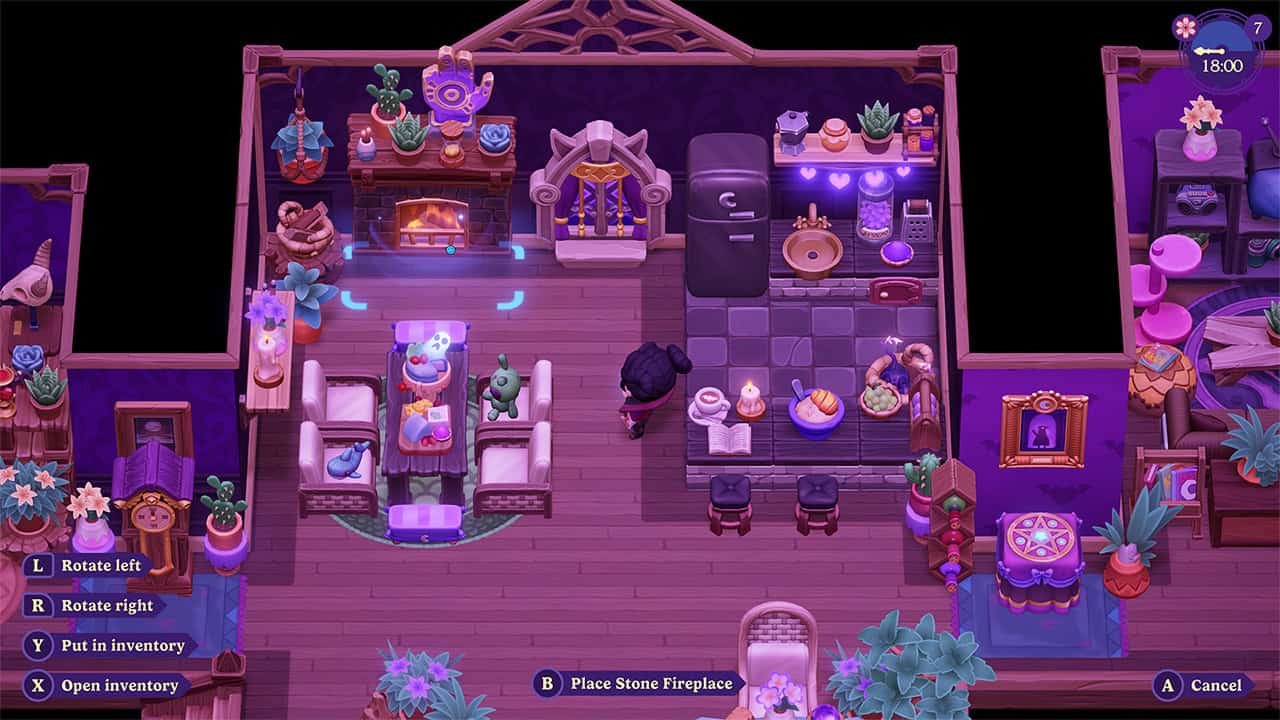
Players hoping Moonlight Peaks will dramatically evolve the farming simulator formula may find themselves wanting more. Beneath its beautiful presentation lies a gameplay structure that will feel immediately recognizable to genre veterans. The foundations are intentionally familiar, and while that’s rarely a problem, it also means there are relatively few mechanical surprises once the opening hours have passed. Whether that’s a criticism largely depends on what you’re looking for. Personally, I never expected Moonlight Peaks to replace Stardew Valley. Very few games ever will. Instead, I appreciated that it understood where it could distinguish itself. Rather than competing through sheer scale or endless mechanical complexity, it focuses on atmosphere, personality, and creating a world players simply enjoy spending time in, and that’s a perfectly valid approach. Performance also deserves praise. Playing the Nintendo Switch version on Nintendo Switch 2 proved to be a consistently smooth experience. Throughout my time with the game, I encountered no crashes, no noticeable bugs, and no technical issues significant enough to distract from the experience. Load times remained reasonable, transitions between areas felt responsive, and, perhaps most importantly for a game built around repetition, nothing interrupted that carefully cultivated sense of relaxation.
The soundtrack quietly deserves some credit as well. It complements the game’s gentle nighttime atmosphere with understated melodies that encourage players to slow down. Combined with ambient sound effects and the softly illuminated environments, it reinforces the feeling that this isn’t a world racing toward the next objective. It’s a world inviting you to stay just a little longer. Looking back, I think that’s what impressed me most, not the farming, not the crafting, and not even the supernatural setting. It was how naturally everything fit together. There are plenty of games featuring vampires, witches, or magical creatures. There are just as many farming simulators built around improving a neglected homestead. Bringing those ideas together isn’t automatically enough to create something memorable. What makes Moonlight Peaks stand out is that it commits to its identity completely. Nothing feels out of place. Every artistic decision, every crop, every creature, and every conversation supports the same cozy gothic vision; well, that’s surprisingly rare. The game’s biggest obstacle isn’t its quality; it’s competition. When your genre includes giants like Stardew Valley, comparisons become inevitable, and Moonlight Peaks doesn’t quite possess the same extraordinary depth or long-term staying power. Likewise, players looking for sweeping innovations may discover that its strongest ideas come from presentation rather than mechanics. Even so, I found myself returning each evening with genuine enthusiasm. Not because I felt obligated to optimise another in-game day or chase the next unlock, but because I simply enjoyed inhabiting its world. Once I stopped worrying about completing every available activity and accepted that not everything needed to happen immediately, the experience became considerably more relaxing. Ironically, the game became at its best when I stopped trying to play it perfectly. That, perhaps, is the lesson Moonlight Peaks teaches: slow down, ignore the checklist every once in a while, and take the long route home. Oh, and spend an evening admiring glowing fields instead of maximising profits. Because beneath its layers of supernatural charm, that’s still what cozy farming games are really about.

Conclusion:
Moonlight Peaks won’t redefine the genre in the way Stardew Valley once did, nor does it need to. Instead, it successfully carves out its own moonlit corner by combining familiar mechanics with world-building, charming writing, and an aesthetic that feels wonderfully in tune with today’s love for cozy fantasy and romantasy. Its occasionally overwhelming opening hours prevent it from reaching the very top tier of farming simulators, but once the game settles into its own, it’s remarkably easy to lose yourself in. For anyone who has ever wished their farming simulator came with glowing crops, lovable vampires, and just enough gothic charm to make every evening feel like autumn, Moonlight Peaks is well worth a visit. Just don’t be surprised if your first year feels less like a peaceful moonlit stroll and more like trying to organise a harvest festival planned by an overenthusiastic coven of witches.