
Fatal Frame isn’t loud horror that keeps throwing scares at you. It’s much quieter, and somehow that makes it even more unsettling, especially in the moments where nothing really seemed to be happening. Fatal Frame II: Crimson Butterfly Remake is exactly that kind of horror. And while modern horror games often lean on spectacle (yes, even you Resident Evil), this remake reminds us that true fear is often found in restraint… and in what you think you saw just out of frame. Shall we?
A haunting tale of loss, memory, and something far worse
At its core, the Crimson Butterfly Remake tells a deeply intimate story wrapped in supernatural dread. You follow twin sisters Mio and Mayu Amakura as their quiet visit to a nostalgic childhood location quickly spirals into something far more unsettling. Drawn into a forgotten village that seemingly exists outside of time, the two are separated, one chasing, the other being lured ever deeper into a place that should not exist. It feels like a plot from a horror manga gone wrong, and what follows is not just a rescue mission, but a slow unravelling of a tragedy that feels ancient and cyclical, soaked in cultural themes. The village itself becomes a character; oppressive, melancholic, and filled with echoes of a ritualistic past that refuses to stay buried. The narrative leans heavily on themes of guilt, dependency, and sacrifice, with the bond between the sisters serving as both an emotional anchor and a narrative driver. For seasoned horror manga readers, this will feel like coming home.
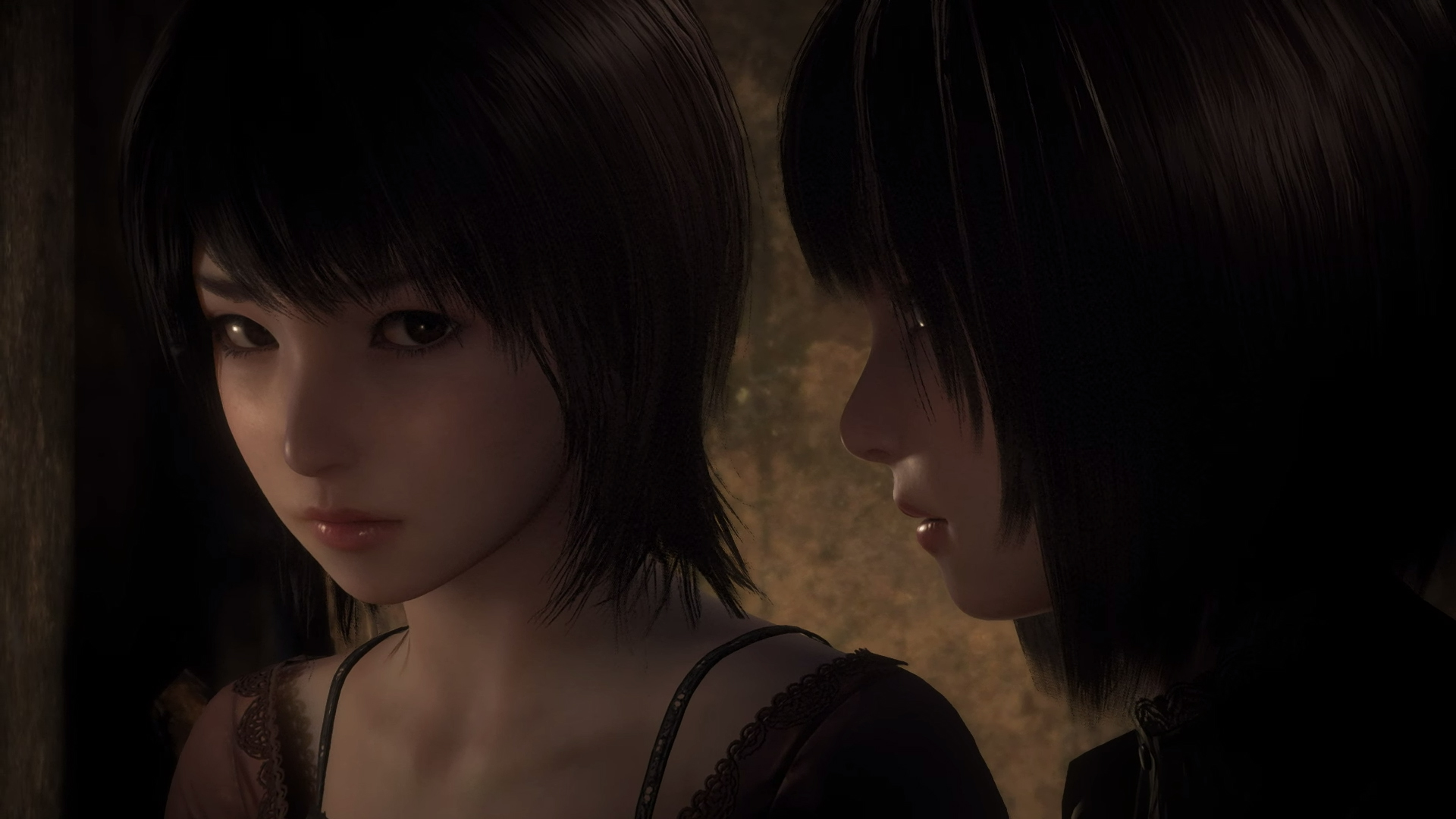
Without spoiling anything, what makes this particular story stand out is how deliberately it unfolds. There’s no rush to exposition, and instead, fragments are revealed through exploration, environmental storytelling, and encounters with restless spirits who seem caught in their own endless loops. Mio’s journey is not just about escape, but about retracing the steps of a past tragedy tied to a forbidden ritual. It’s this slow-burning storytelling that works in the game’s favor, though it may test the patience of players expecting a more direct narrative. The payoff, however, is worth it, especially for those willing to lean into the atmosphere and piece things together themselves. So yes, this means a lot of skimming through documents, piecing together clues, and battling wraiths with an ancient Camera Obscura.
Fighting ghosts with a camera never stops being brilliant
I hear you thinking, Camera Obscura? Well, if there’s one thing Fatal Frame has always done better than its peers, it’s turning vulnerability into a mechanic. That’s once again the case here, with the Camera Obscura returning as your primary (and only) means of defence. On paper, it sounds simple: you defeat ghosts by photographing them. In practice, it’s anything but, and yes, this means dying a lot. Luckily, the remake expands on this core system in meaningful ways. The Camera Obscura now features adjustable zoom and focus mechanics, allowing players to fine-tune their shots for maximum damage. A well-framed photo doesn’t just hurt enemies more; it also restores your willpower. This secondary resource adds another layer of tension to each encounter (and I have a love-hate relationship with it).

The real magic of this game series lies in timing. The iconic “Fatal Frame” mechanic returns, requiring players to wait until the last possible moment, when a spirit is about to strike, before snapping the shot. Pull it off, and you’re rewarded with massive damage and a brief stagger window. Fail, and you’ll likely pay for it, or be rewarded with a game-over screen. And it’s this risk-reward loop that gives combat its unique identity. It’s not about aggression but about composure under pressure. You’re constantly balancing fear with precision, knowing that hesitation can be just as dangerous as recklessness. And the addition of different filters (like Standard and Paraceptual) further deepens the system. Each comes with its own strengths, like prioritizing damage, where others prioritize utility, like seeing through walls or disorienting enemies. This encourages experimentation, though the upgrade system tied to these features can feel a bit grindy at times. Combine this with a tight combat loop, and you have a pretty hardcore horror game, even on the ‘lower’ difficulty settings.
When the ghosts fight back… and they really do
Encounters with wraiths are where the remake both shines and stumbles. On the positive side, the variety of enemy behaviours keeps you on edge. Some spirits charge aggressively, like the ones with sickles found in chapter 2. While others linger at a distance, forcing you to change your approach. The introduction of aggravated states, in which enemies become stronger and more erratic, adds unpredictability and, in some cases, unfairness to fights, especially during longer encounters. New mechanics like “leer attacks” and grab sequences also elevate the tension. Breaking line of sight or reacting quickly becomes crucial, reinforcing the idea that survival isn’t just about offense, but awareness. However, evade too much, and you’ll pay a different price. Ah, yes, the willpower gauge… a gauge separate from your health, adds yet another layer to manage. Let it drain too far, and even a single mistake can push you into a dangerous crisis state.
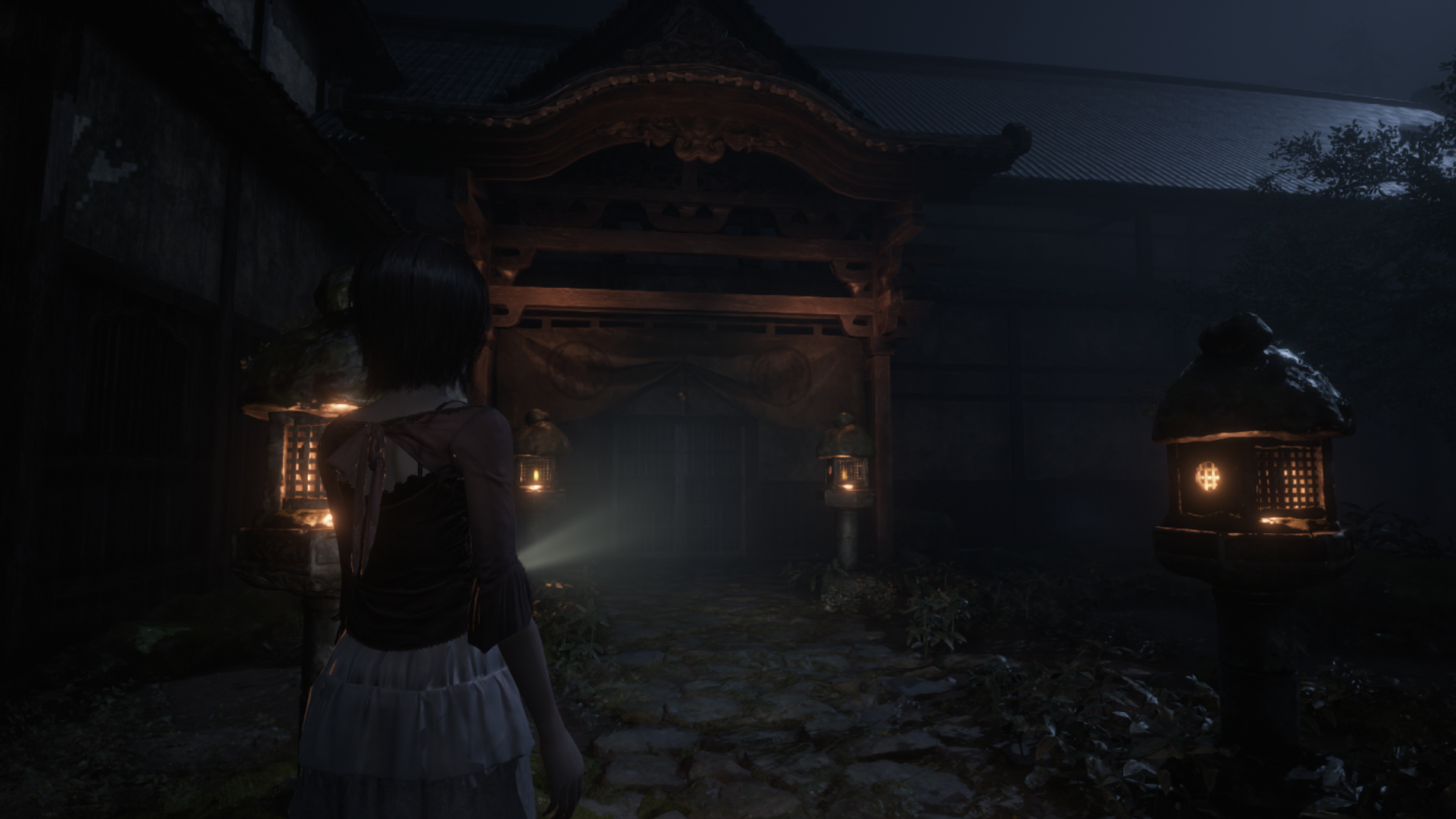
However, this is also where the game’s flaws become more apparent. Combat can feel clunky, particularly in tighter spaces where camera angles and movement don’t always cooperate. There are moments where lining up a perfect shot feels less like skill and more like wrestling with the controls. The evade mechanic, while useful, isn’t always as responsive as it needs to be, leading to frustration in encounters that demand precision. Which are quite often, since a lot of times the fight backs you into a corner of the room you are fighting in. This isn’t necessarily a dealbreaker, but it does make the game less accessible. Beginners to the genre may find themselves overwhelmed, especially during early encounters where the systems haven’t fully “clicked” yet.
Survival horror, the old-fashioned way
In an era where survival horror has largely split into action-heavy hybrids and cinematic experiences, Crimson Butterfly Remake firmly stays in the classic camp. This is a game about scarcity, vulnerability, and atmosphere first, combat second. Fans of Silent Hill will appreciate the psychological weight and oppressive environments. Like those games, horror here isn’t just about what you see, but what you feel. The village is thick with unease, and the pacing allows that tension to build naturally. From Resident Evil, it borrows a sense of methodical progression, resource management, pathfinding, and careful navigation through interconnected areas. However, don’t expect the same level of empowerment. Where Resident Evil eventually lets you feel in control, Fatal Frame rarely does.

And compared to other entries in the series, this remake feels like a careful balancing act between honoring the original and modernizing its systems. The shift to a more standard third-person perspective helps with immersion, but doesn’t eliminate the series’ signature stiffness. New additions like stealth elements, crouching, and the ability to hold Mayu’s hand bring small but meaningful changes. Protecting Mayu during certain segments adds emotional weight, though it can also lead to tense, occasionally frustrating moments when predicted behaviour doesn’t quite cooperate. Ultimately, this is a survival horror that demands patience. It doesn’t hold your hand, and it certainly doesn’t rush you along. For genre veterans, that’s part of the appeal. For newcomers, it might be a barrier.
A beautiful, eerie upgrade… with a few technical limitations
Let’s make one thing clear. Visually, Crimson Butterfly Remake is a clear step up from its original counterpart, and it looks amazing on the Nintendo Switch 2. Environments have been rebuilt with impressive attention to detail, from the decaying interiors of abandoned homes to the subtle lighting that plays across surfaces. The use of shadow and darkness is particularly effective, often obscuring just enough to let your imagination do the rest (I usually turn up the gamma a little more, so I can see just enough not to scream my household into oblivion). Character models have also seen significant improvements, especially in facial expressions. There’s a subtlety to the way emotions are conveyed that helps ground the more supernatural elements of the story. The wraiths themselves are an absolute highlight. Their unstable, almost flickering presence, adds to their unsettling nature. They don’t feel like traditional enemies; they feel wrong, in a way that’s hard to articulate fully.
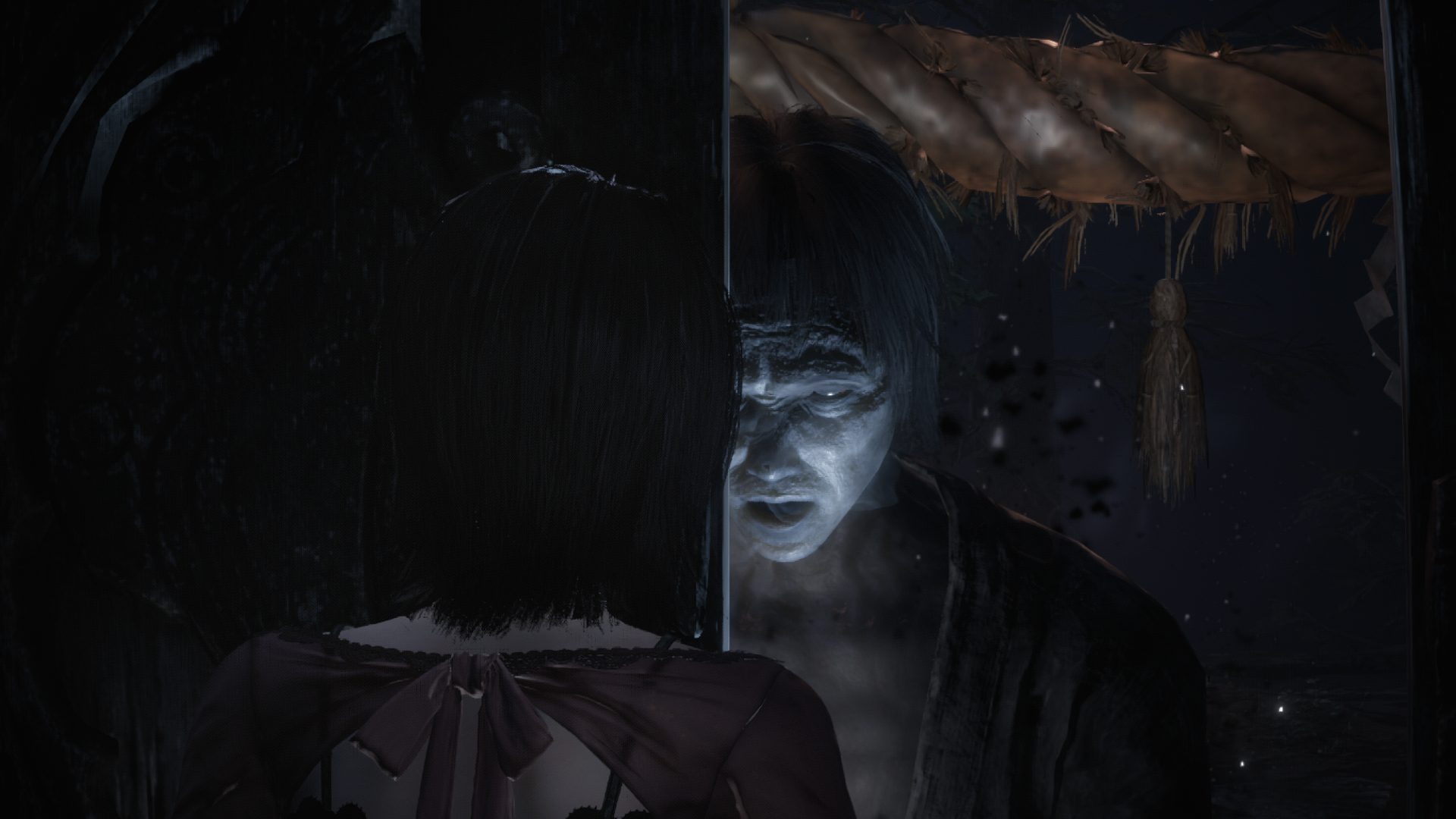
Audio design deserves equal praise. Spatial audio cues make it easier (and more terrifying) to sense where threats are coming from. Footsteps, whispers, and distant sounds all contribute to an atmosphere that rarely lets you feel safe. On Switch 2, performance is generally solid, though not flawless. The game runs smoothly for the most part, but occasional dips can occur during more intense encounters or in areas with heavy (environmental) effects. Load times are reasonable (though they can become annoying when you die a lot), and overall stability is good, though it’s not quite the technical showcase some might have hoped for. Still, the visual and audio upgrades go a long way in modernizing the experience without losing what made the original so effective (and scary)
Conclusion
So, to conclude, it’s haunting, flawed, but undeniably memorable. And that makes Fatal Frame II: Crimson Butterfly Remake not an easy game to recommend universally, but it is an easy game to respect. It captures a horror style that feels increasingly rare in the action-horror landscape: slow, careful, and deeply unsettling. Its story lingers, and its atmosphere suffocates while the core mechanic remains as unique and compelling as ever. At the same time, it doesn’t escape the limitations of its design. Combat can be awkward, difficulty spikes feel punishing, and its systems aren’t always as intuitive as they could be, especially for newcomers. But for those willing to meet it on its terms, this is a haunting experience that you’ll remember after completing it. All in all, it’s a beautifully reimagined classic that excels in atmosphere and storytelling, but struggles with clunky combat and accessibility, making it a better fit for seasoned horror fans than first-time players.
