
If you have ever played “Returnal”, the upcoming roguelike video game “Saros” will probably already be on your list. You can even say that Saros might even be the spiritual successor of Returnal… Both games are built upon the same successful formula, but they still have their own twists added to the core gameplay mechanics. However, it’s with much confidence that I can tell you that Saros goes even further and makes the genre even more exciting to play… let’s talk.

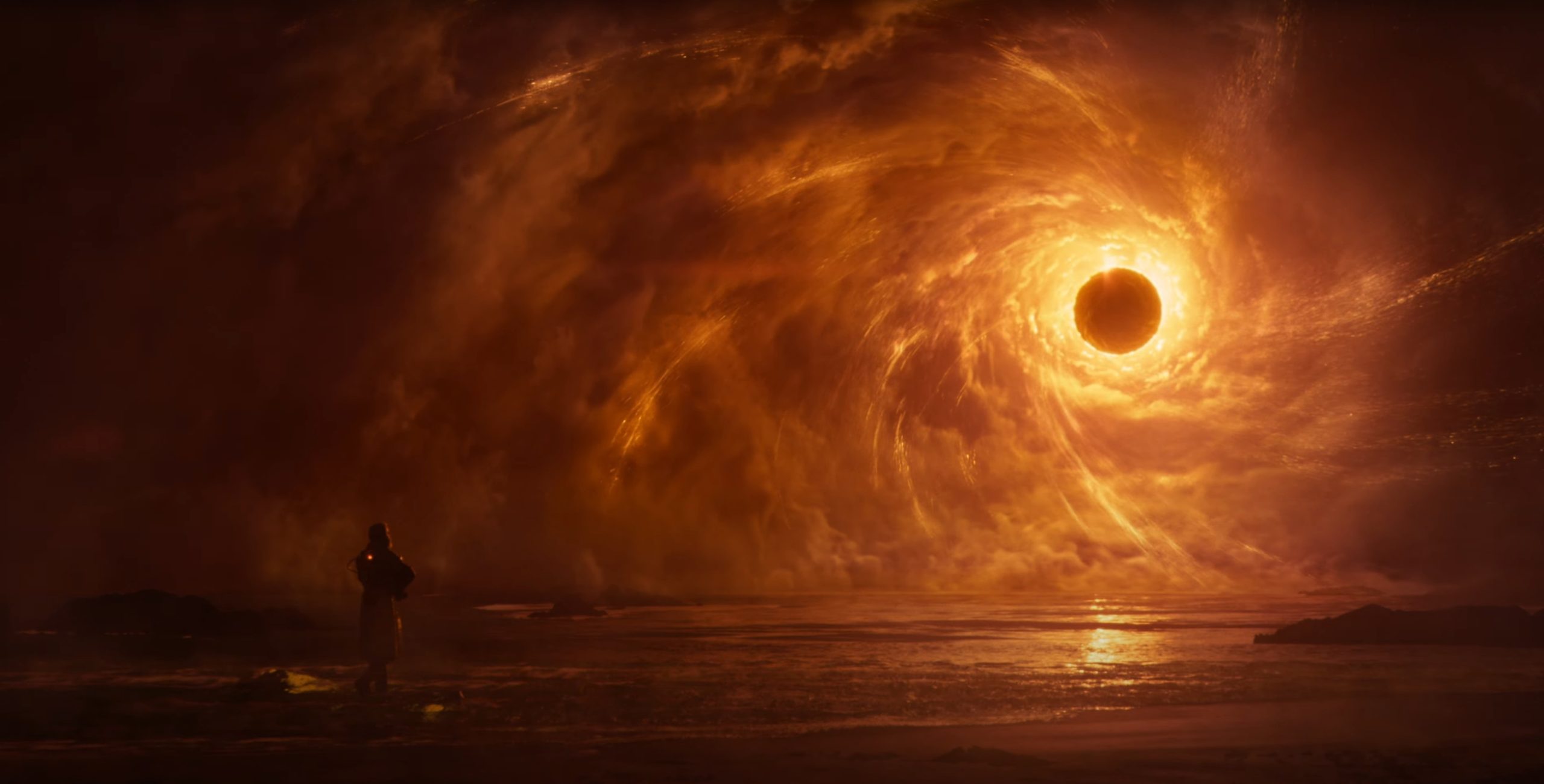
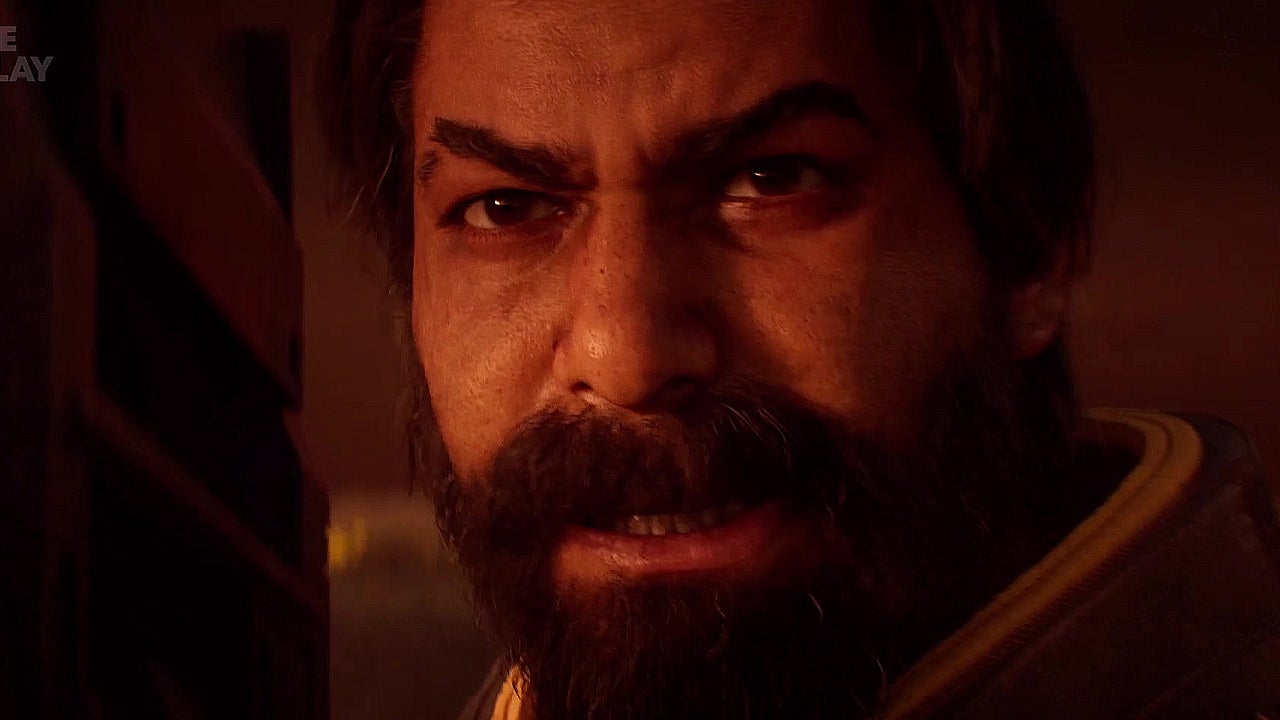
The story takes you to a planet named “Carcosa,” where you take on the role of Arjun Devraj. Carcosa is an interesting place where you can find a resource called Lucinite. Your corporation, Soltari, wants to harvest as many as they can for reasons unknown. As an Enforcer, it’s not your job to ask questions; it’s your job to do what you’re told. At first instance, your job is to make sure the mining groups are doing what is asked of them and keeping them safe. Your job description is slowly changing as you start to notice that nothing is going according to plan. It seems that something strange is happening on the surface… The planet is undergoing some changes, especially the fauna and flora of the planet… It seems that a solar eclipse is constantly happening, and this makes the fauna stronger, more aggressive… but Lucinitie is also becoming more powerful.
“A great start for this mysterious adventure you’re about to embark on.”
Another strange phenomenon is the fact that Arjun, after an unfortunate death, returns to base after being away for a while. Something not everyone is fortunate to have that second, third, 4th, … chance. The solar eclipse influences not only the world on the planet, but your team members seem to be influenced by it as well. Your co-workers are not always coming back, but when they do, they seem changed and even possessed. It’s obvious that a lot more is going on, and even you, as Arjun, can’t escape this mysterious influence… A great start for this mysterious adventure you’re about to embark on.
Saros is just like Returnal, a game where “surviving in this bullet hell” is the most important focus. Both games are known for their free-flow gameplay in order to escape the bullets that are flying towards you. It’s a third-person shooter where a set of tools can be used to help you defend against this bullet storm. As we said before, the game is roguelike, which means that the core mechanics are all about live, loot, shoot, die, and repeat. The main goal in roguelike games is getting familiar with your surroundings and pathways, learning about your opponents, getting geared up (starting from low-tier weapons to higher-tier), harvesting experience points to master your skills, then die… and respawn to repeat the process.
“This is such a cool concept that adds to the connection to the story.”
Saros does a great job in presenting the core gameplay mechanics very quickly. Without too much information, you’re being thrown into the fray, and you’re being pushed towards your first run without the system holding your hand. You will get a brief explanation about a mechanic when it presents itself… In my honest opinion, it’s the best way to get yourself introduced to the game without getting out of the action.
The game works in a way where randomisation is a big part of the game, and it also offers an environment that’s constantly unpredictable. I like the fact that developers play upon an idea and they build their mechanics around it. The planet “Carcosa” is a planet that’s constantly changing, and this is shown the moment you respawn after death. You enter the world through your base, but when you enter the environment, it will probably be totally different. This is such a cool concept that adds to the connection to the story.
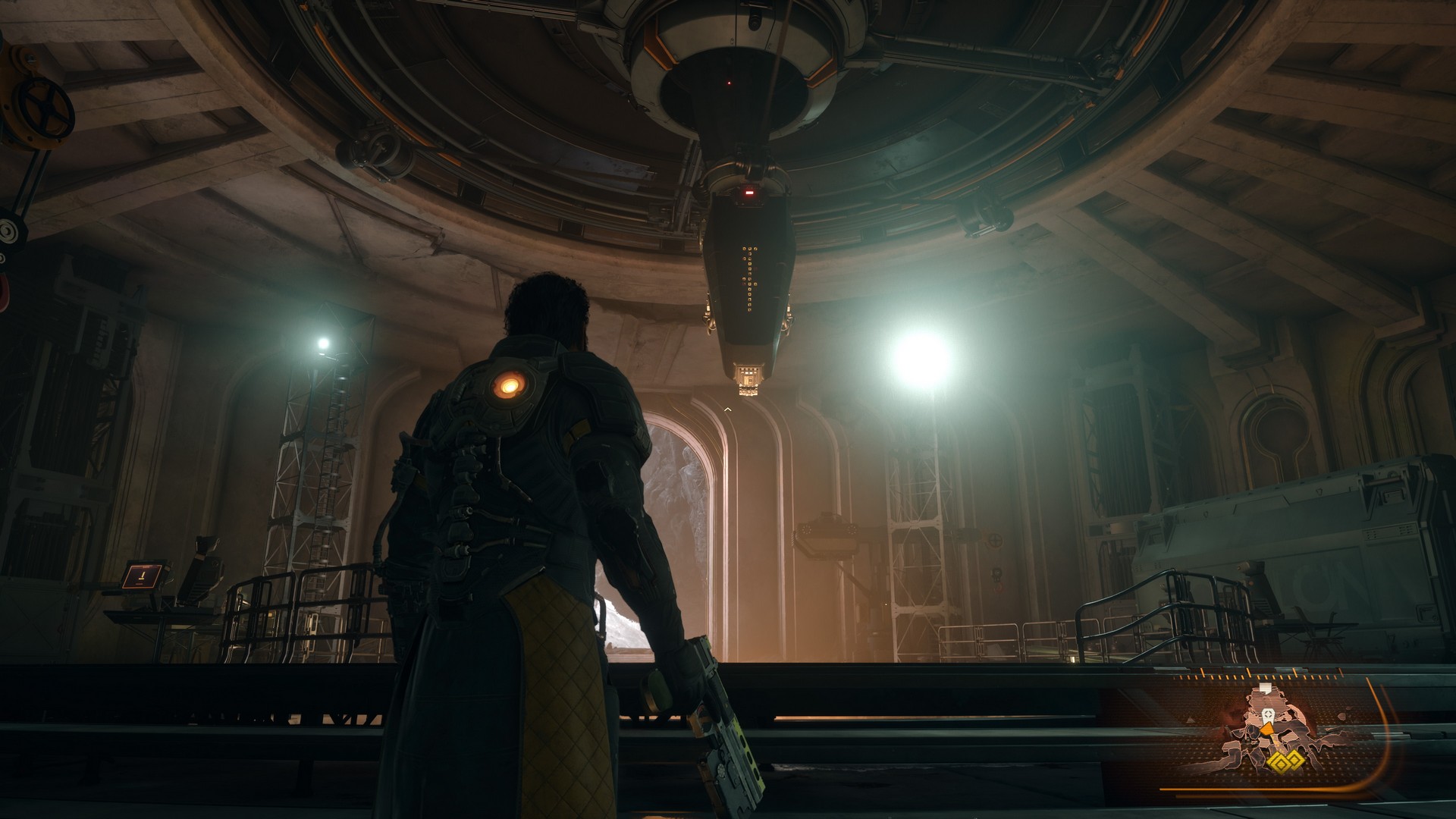
The concept is that the map alters itself, and certain places, like ruins or “combat” arenas, stay the same. In other words, there’s a certain objective you have to complete, but how you get there is totally different than your previous run. Of course, it’s clear to see that certain pathways return to the environment; you can’t expect a game to have unlimited possibilities when it comes to a “changeable environment”. However, that being said… the first few runs each time feel different and stimulate you to explore the environment to your heart’s content.
“All of these stats and weapons are randomized in buffs/debuffs and even abilities.”
Besides the changeable environments, you will find different monoliths during your playthrough that have different colors: red, blue, and yellow. These monoliths can be broken to gain stat bonuses that can boost your health (how much damage you take), your motivation (the amount and the speed you have to gather Lucenite), and your power (shield and strength of ultimate weapon). You will also have a chance of an upgraded version of your current weapon drops or a totally new weapon. Some monoliths can also drop a key that can open another monolith. This locked monolith often opens up to drop a boost to your ultimate weapon. In other words, gathering keys is also an important component to strengthen your combat abilities.
All of these stats and weapons are randomized in buffs/debuffs and even abilities. This is where the randomization plays a big part. For example, you can get the same kind of weapon that’s weaker than what you currently have, but it can have an alternate weapon mode that can help in your battle against enemies. You can also have a tremendous boost for all of your attributes, but you take a lot more damage when you’re standing still or lose half of your Lucenite when being hit. This will shape your combat playstyle constantly, and this is one of the strongest selling points of Saros. The different loot and the different pathways combined make sure that the replayability value of this game is on point. Also, keep in mind that you’re never forced to take an upgrade… Pro tip: Take the upgrade only when it enhances your combat style. Continue your search.
“The game is very unforgiving on this side of things.”
Lucenite is the resource that enemies drop when they are defeated. Lucenite is the resource that you need to buy skills in your talent tree that can give you permanent boosts to your attributes or even unlock passive abilities like being able to get up after being downed, of course, limited to one time during a run. However, Lucenite is also a kind of meter that represents your combat efficiency. You can’t use Lucenite during a run, but you use it as a kind of passive asset to keep track of. By gaining these Lucenites, your combat efficiency will level up. This level is important for how strong your items will be when they drop. The higher your level is, the higher quality drops you will get throughout your run. Just be careful not to have too many unfortunate deaths, like falling from a cliff, because this will impact the amount of Lucenite you will have when you respawn at your base. The game is very unforgiving on this side of things.

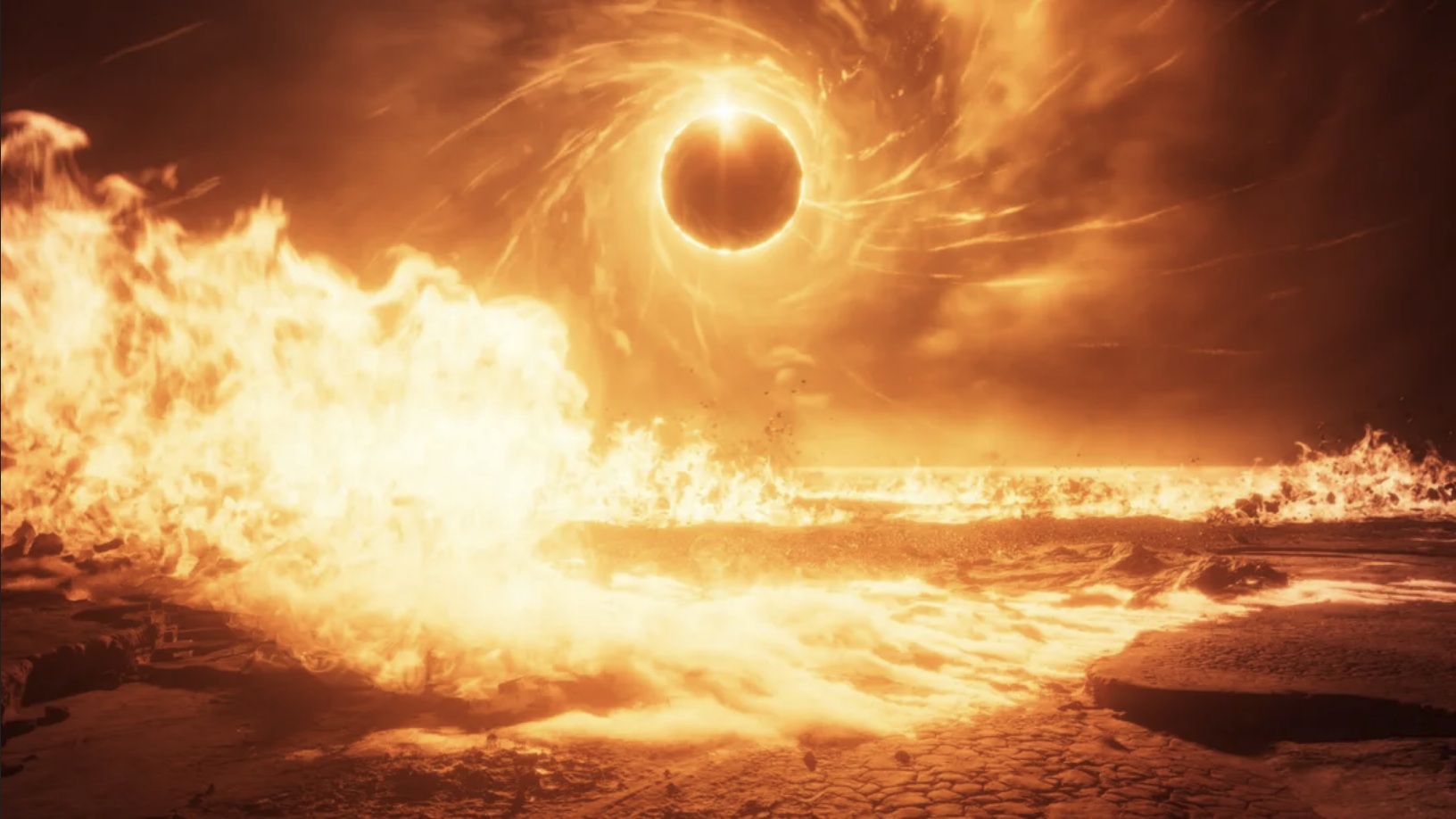
But what is the end goal, you might ask? Well, the game offers a system where missions are represented as current objectives during your run. These objectives are very story-driven, and most of the time, you’re gathering information on missing agents, but you’re also trying to find out what’s going on. The planet is very mysterious, and there’s one thing that isn’t unpredictable, and that’s the end stage of a run. At the end of the run, you will be able to trigger the solar eclipse to get further in the environment. However, this solar eclipse makes your enemies a lot stronger and more aggressive. This comes with benefits such as higher-tier enemies and a tremendous buff of Lucenite you’re getting when you defeat an enemy. The enemies not only become stronger and more aggressive, there abilities will also change because they will fire off a new type of damage dots called “Corruption”. Corruption is an on-hit effect that will definitely affect your health, but not in a deadly way.
“This makes up for an interesting mechanic when you’re roaming the environment during a solar eclipse.”
Corruption will have an effect on the total health bar. Corruption will block out your health bar, and you won’t be able to get to your full health while collecting health orbs from your enemies. Corruption itself can’t kill you, but it will block your ability to retaliate in a big way. Corruption is also something that can be stacked, so you’ll have to be aware of this status effect as well. Thank God that there’s also a way to cleanse the corruption off of you. The corruption upon your health bar can be cleansed by using the power of your ultimate ability. The moment you fire off your ultimate ability ( cannon in different shapes), you will regain a certain amount of health. Not health, but health bar. Keep that in mind. This makes up for an interesting mechanic when you’re roaming the environment during a solar eclipse.
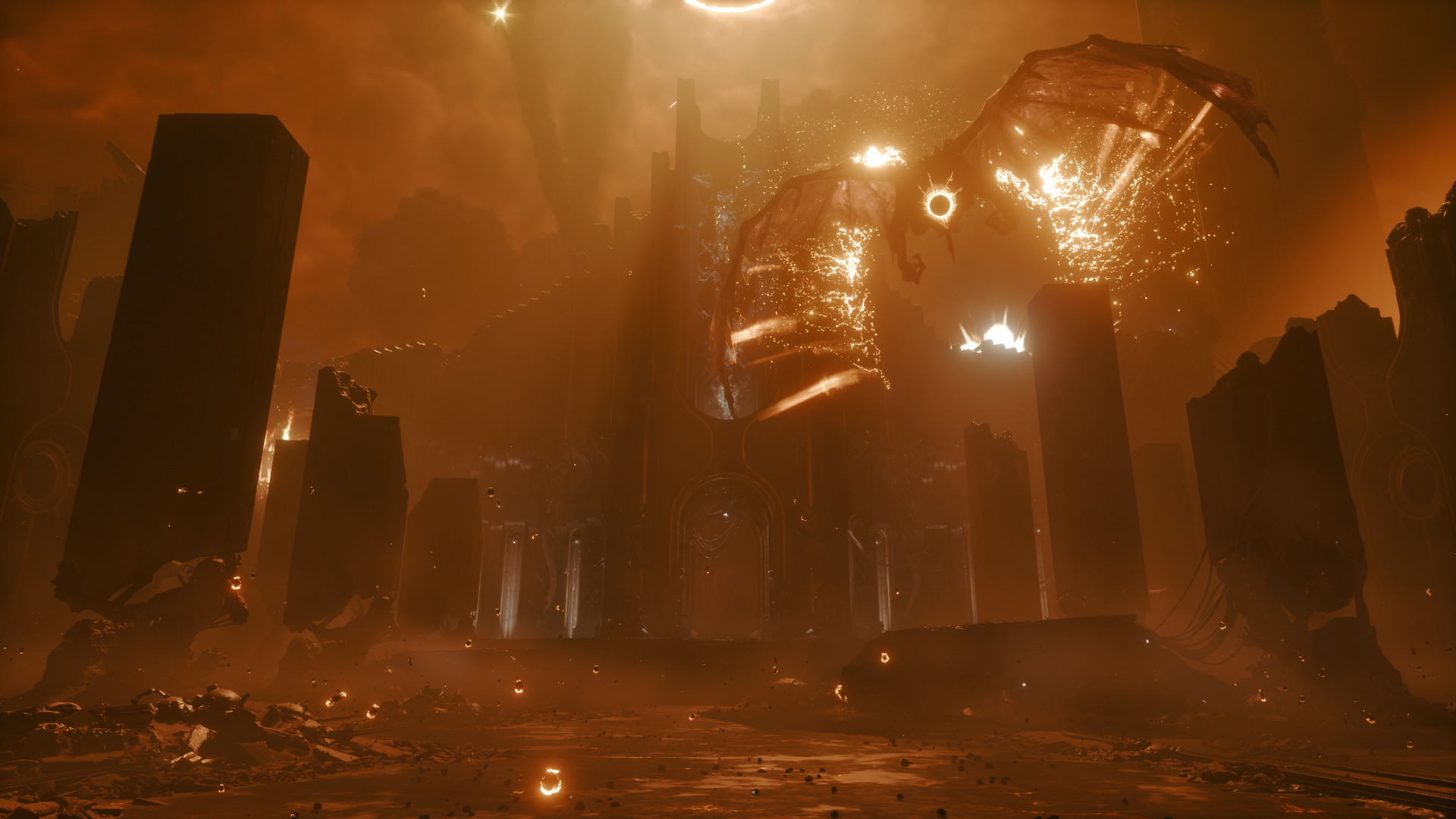
When you enter the Solar Eclipse, you will probably have some kind of Elite boss at the end. All of the bosses confront you with different tactical abilities and shooting patterns. They are also definitely challenging to overcome. A big part of your victory will depend on your combat proficiency and equipment loadout. Better weapons and stats will help you to score that victory. This kind of Elite boss also fits in perfectly within the way the game presents itself. The first few runs are all about exploring and surviving the menace. The first time you encounter the boss of this specific run, it’s almost an instant loss. The first encounter should always be with the focus of gathering information about your Elite boss and how it plays. Then you respawn after death at base, and you can keep the collected data in the back of your mind when you’re doing the next run. Search for stats and weaponry that can help you win the battle. The game gives you a sense of “practice makes perfect”. Keep repeating the process, defeat the minor enemies, build up your loadout, and try again. I love it.
“These attacks have the status effect ‘corruption,’ which is an add-on for their attacks.”
“Always be moving” is the perfect tactic when you’re playing this game. Saros is a game where you have to push out damage while surviving the onslaught of the enemies. Aside from the items and buffs, you have some tools that can help you out in battle. First of all, there’s a melee button that can help with shattering the shields of certain enemies. As long as their shield is up, you can’t do damage. You have shield and dash ability as well, but they are both situational. Not everything can be evaded with your dash or defended with your shield. Thankfully, the game will give out colorful, flashy hints to give you a heads-up on what kind of attack is coming your way. You have blue standard attacks that can be defended by shield or evaded, but you also have red attacks that can’t be evaded or even defended. During the solar eclipse, some attacks are yellow. These attacks have the status effect “corruption,” which is an add-on for their attacks. In other words, yellow attacks do damage and build up your corruption level. In the beginning, these yellow attacks are very difficult, but throughout your journey, you will find skill upgrades that can ease the process.
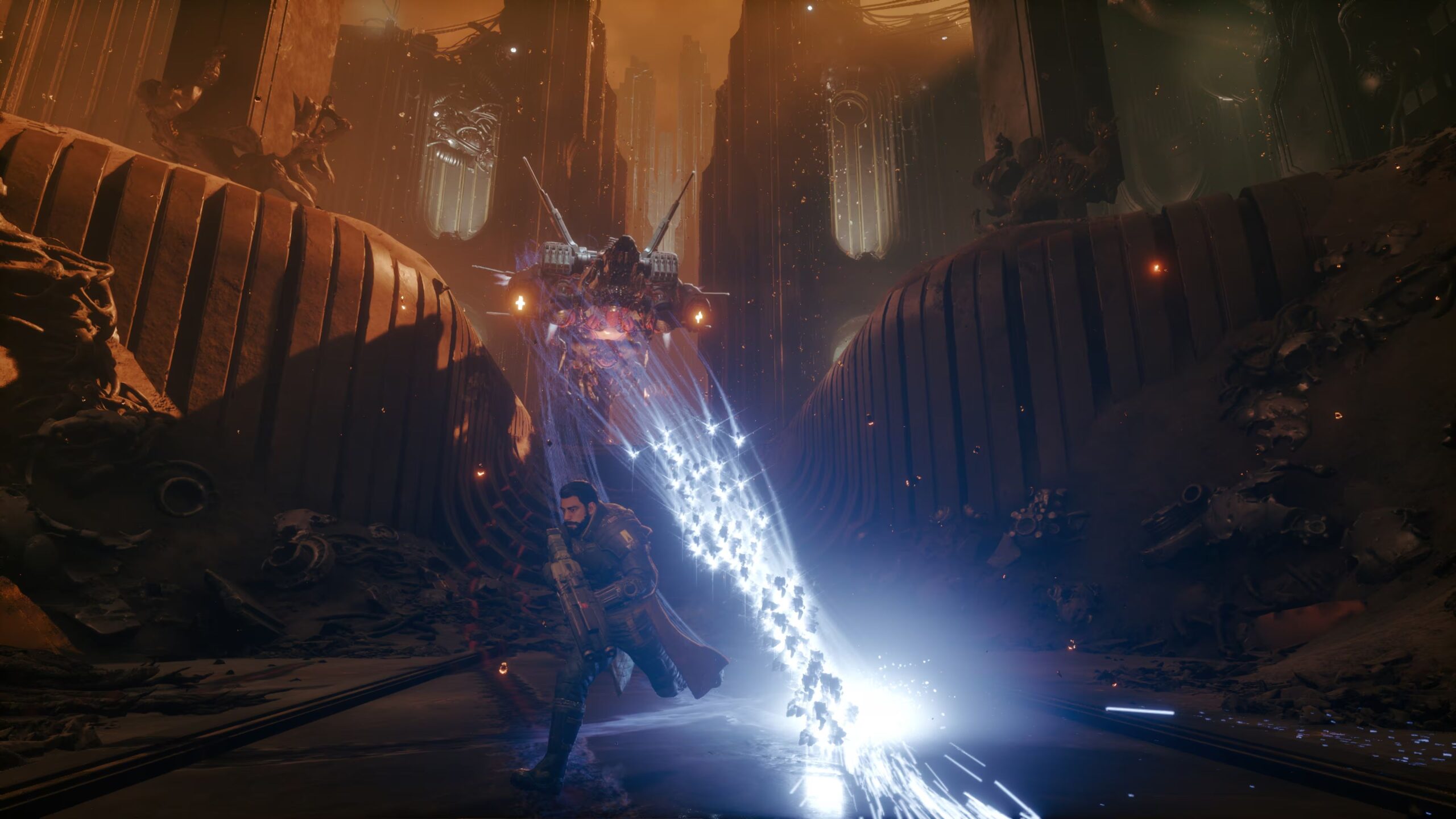
I talked about the dash and shield ability. These are interesting tools that can help you move through the different dots that are coming towards you. Dash is an ability that allows you to dash through attacks, in other words, helps you to become temporarily invulnerable to some attacks, but also helps you in traversing the environment quickly. Also, you will be able to evade big attacks. Shield helps to block out, but it also has some utility as well. The shield can convert the blue dots to energy that can be spent on recharging my shield but also charging my ultimate weapon. This stimulates you to take advantage of this synergy. It also helps to keep your combat flow on a high level.
“The game is definitely worth your time investment.”
In comparison to Returnal, there are a few changes that you will probably notice. This time around, the loot you’ve gathered after a successful run is taken back to the base. In other words, if you survive your first run after the victory of an Elite boss, weapons and stats carry over. So you can start off strong with your next run, which is a big advantage to the player. Your combat proficiency level also stays present, so there will be better loot from the beginning. This can definitely help to overpower your second Elite boss. If you die, you will lose everything you’ve gathered, and this also counts for your weapons. You start off with the same kind of gun, but you lose the enhanced version of the gun. The only thing that does carry over (after death) is the Lucenite you have gathered… then again, only a percentage of your total loot will carry over. You can see this as a kind of death penalty. You can save up Lucenites by doing different runs over the course of minutes to feed the talent tree and get new skills. Some skills can only be unlocked after you have defeated a certain boss. Even after death, you can still become a stronger version of yourself, and that’s a plus. The game is definitely worth your time investment.
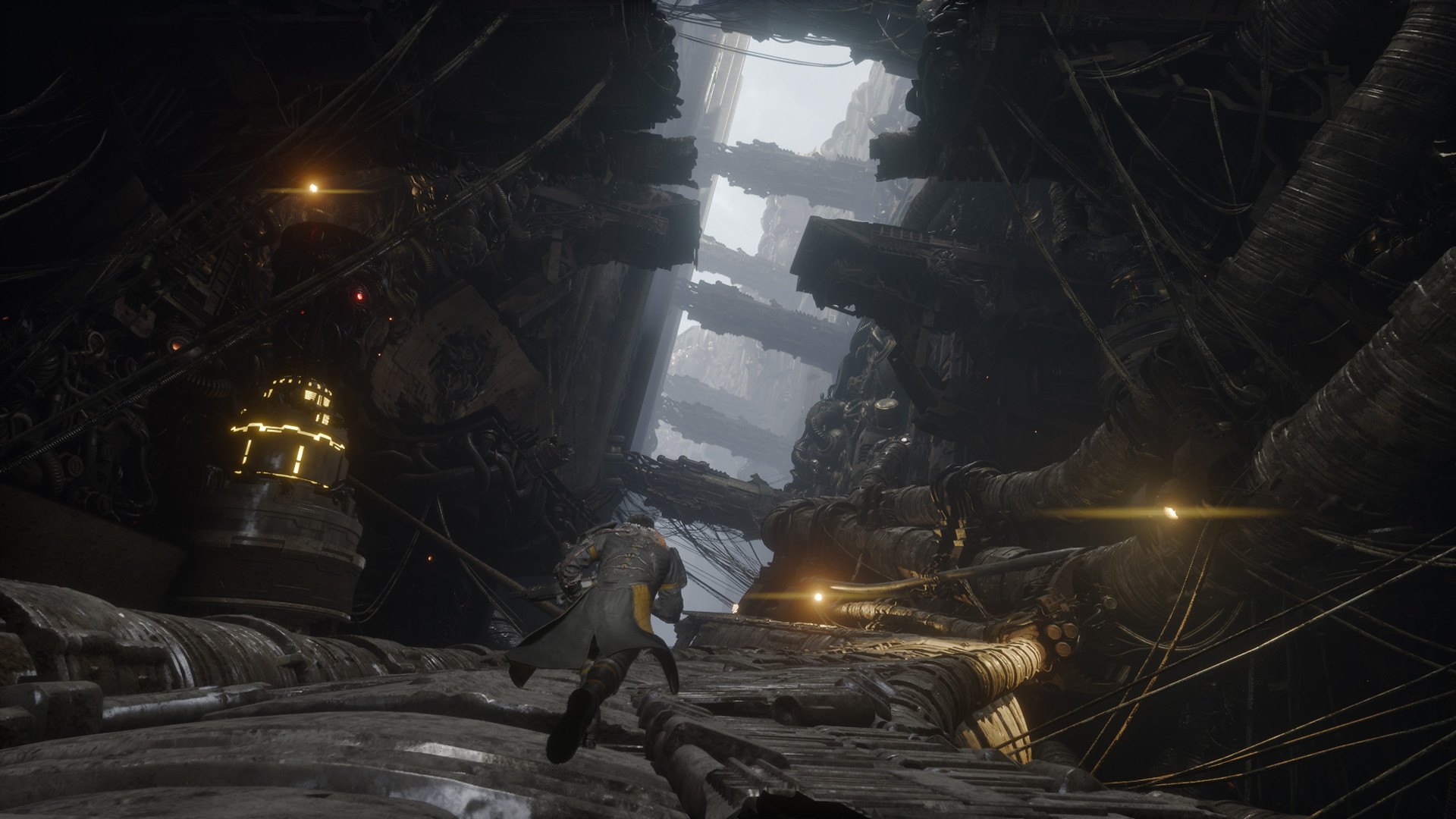
It’s also good to mention that after the defeat of a boss, you will unlock a fast travel node that can be accessed within your base. And a direct pathway from the boss’s room to the next region is also available. This also gives the player some accountability. You can either choose to do the long run and build up your character within the first region: this will mean you will be a lot stronger in the next region. Or you can go by the teleportation device and start off fresh with the second region. You will have to clear out fewer enemies, so you’ll be able to go to the Elite boss very quickly, but you will probably be weaker. It’s a nice touch that helps with the players’ choices.
“I played the game on the base PlayStation 5, and it is, without a doubt, a gorgeous game.”
There is also an option (later in the game) to apply modifiers to make some adjustments to the next environment you’ll be running. You can either make it easier or more difficult, depending on what you want to do. Eventually, the level of difficulty will have an influence on the items that are going to drop. A higher difficulty level means a lot more amazing goodies than the items from a lower difficulty level. You can change how strong enemies are, but you can also have less health or different perks that will buff you temporarily or even have a passive debuff.
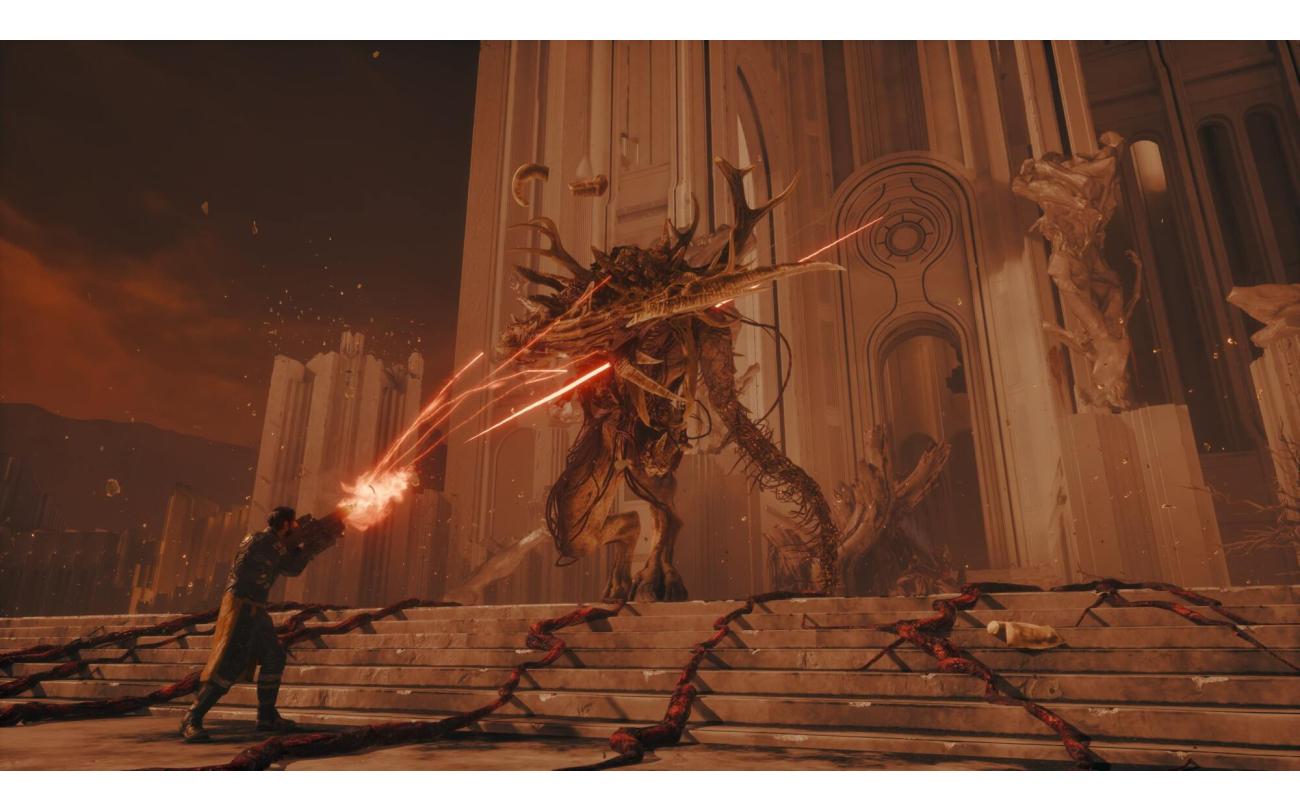
I played the game on the base PlayStation 5, and it is, without a doubt, a gorgeous game. All of my playthroughs were without technical issues, and the game ran fluently, even when all of those flashy dots are flying your way. The real-time performance has been great, and it’s a joy to experience this. Kudos to the developers because this bullet- hell game would suffer if the framerate slowed things down. Every dodge opportunity in this game is important, and it would be horrendous if the delay influenced your gameplay, especially in these fast- paced action games. The in- game scenes are fine as well, but some of them had a slower framerate at the beginning, but eventually it synced perfectly. Nothing that could take me out of the immersion. Another thing I would like to add is the fact that the developers made the right choice to let enemies announce almost all of their attacks. An enemy will almost always have a flashy hint that it’s about to release something. This gives you a heads-up, and it will allow you to create your own dodge opportunities.
“The switcheroo between these two is very well implemented.”
The environments or biodomes you’re exploring are gorgeous as well, and they play with somber colors. The transition from no solar eclipse to a solar eclipse has been well executed. The in-game scene that changes the environment is so fitting and atmospheric that you’re probably won’t even skip it, even after a couple of times. During the solar eclipse, the use of darker apocalyptic colors is also very well implemented and you truly feel the sun burning while you’re dodging the bullets during the solar eclipse.
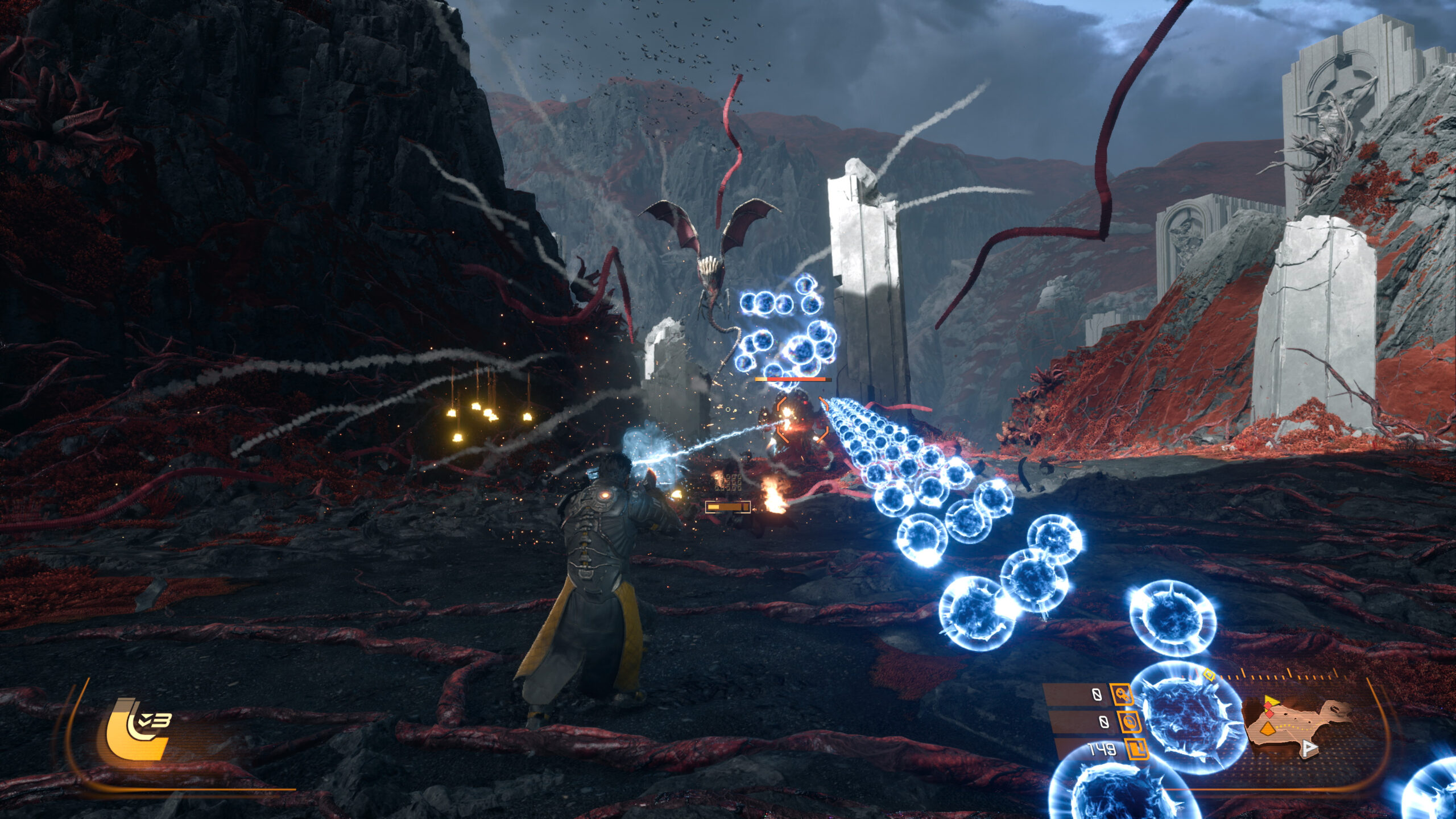
Not only do you get to experience epic open-world scenery or even an amazing skybox, but you will also be able to experience claustrophobic areas. The switcheroo between these two is very well implemented. Saros also has great voice acting and audio cues during the fight. I wouldn’t change a thing. The only thing that took me a bit out of surprise was the fact that some scenes had some off- lip synching, but it seems that the issue with the lip synching is minimal. The environmental sounds are well thought out and truly add to the immersion of the world. For example: the breathing of the planet through creeks, the distant scream, psychological tension, … everything helps to build the world.
“I wish they had done it differently…”
Something I didn’t like was the use of the haptic feature of the DualSense controller. The left trigger activates your ultimate weapon when fully pushed. If you push it in slightly, the alternate weapon mode of your gun is being activated. I wish they had done it differently because there were a lot of times I activated my ultimate weapon instead of my alternate fire mode, which cost me some recuperation of cleansing the corruption, for example, or obliterating small enemies, while this was totally unnecessary. It’s a minor thing and probably subjective. I just couldn’t cope with the “slightly” push when I’m jumping through hoops to damage and evade enemies.
Conclusion:
Saros confidently builds on the foundation laid by Returnal and evolves it into something even more refined and engaging. Its mysterious narrative, dynamic world design, and clever integration of roguelike mechanics create a gameplay loop that feels both rewarding and addictive. The constantly shifting environments, meaningful build variety, and risk-reward systems, like Lucenite management and corruption, ensure that every run feels fresh and strategic.
Combat is fast, demanding, and highly satisfying, rewarding skill and adaptability while encouraging players to learn through failure. The addition of progression systems that partially carry over between runs strikes a smart balance between challenge and accessibility. On a technical level, the game shines with smooth performance, strong art direction, and immersive audio design, reinforcing the intensity of its bullet-hell gameplay. While minor issues like occasional lip-sync inconsistencies and the somewhat awkward use of the DualSense triggers slightly detract from the experience, they don’t significantly impact the overall quality of the game.
In the end, Saros stands out as a must-play for fans of the genre and a worthy successor to Returnal, pushing roguelike shooters forward with confidence and style.
