
Pokémon Day celebrated 30 years of the franchise, and while there were many Kanto versions to go back to, we were treated to the FireRed and LeafGreen versions. How well does it hold up after 22 years?
I’ve been there since the beginning: Pokémon Blue version. I saw kids in the playground in school hiding away from teachers to link up with friends and trade their little critters with one another. Before going on holiday, I asked my mom if I could get the game and promised I would be very nice during the long car ride. Previously, I had only played Super Mario Land, Kirby, and Looney Tunes. Keep in mind that those were all games where save files were non-existent. So it’s an understatement to say that I was blown away by an actual virtual world where I could catch Pokémon, evolve them, train hard, and challenge gym leaders with my new team. I had to put my Gameboy away during lunchstops on the road, but for the first time, I knew my Pokémon were safe, thanks to the saving feature I hadn’t known before. And this was it, this was the game that taught me that gaming could be more than a 20-minute playtime to keep me busy; it was an actual world where I could go back to, and my team would be waiting for me!
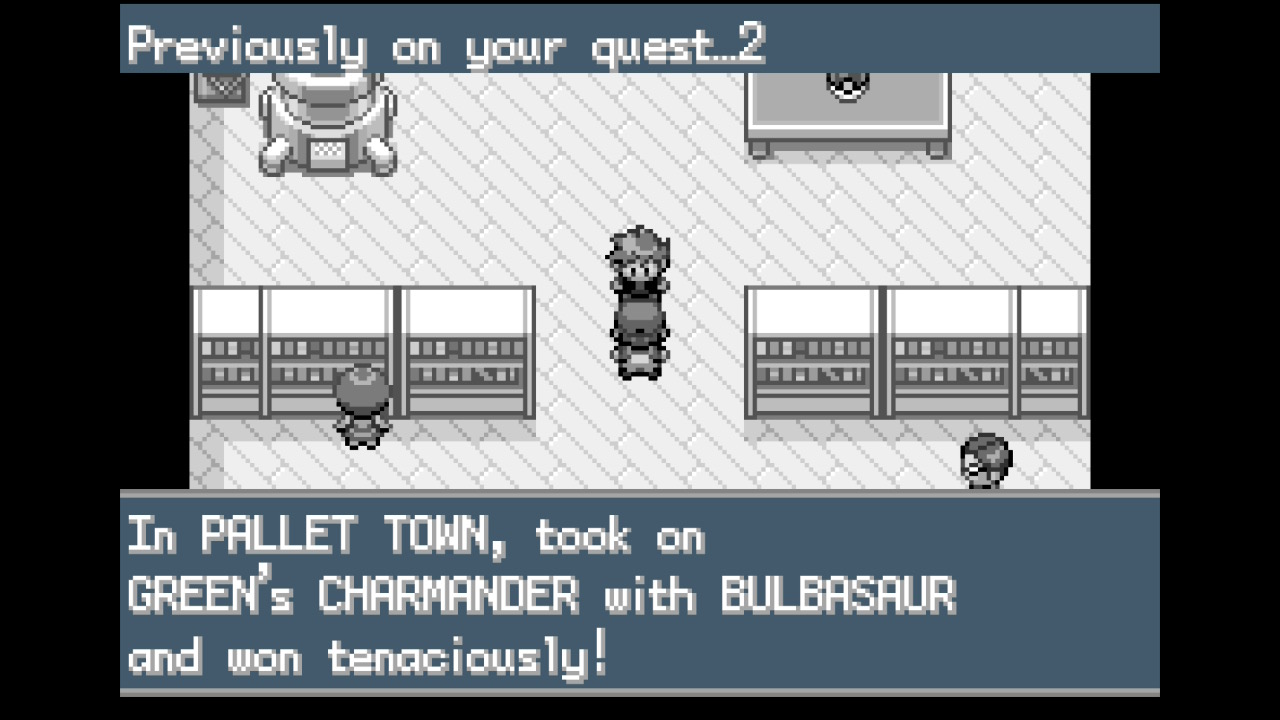
I’ve been a fan ever since and I was more than happy in 2004 to return to Kanto again on my Game Boy Advance. With the added graphical update and lots of QoL improvements, it felt like a true definitive version of the classic RBY games. Back then my copy of LeafGreen was fresh, had the engine and updated sprites that had been used in Ruby and Sapphire and back then it felt like an amazing game graphically, we weren’t comparing it to other games like Golden Sun luckily, we were just happy to return to Kanto again with modern graphics, extra content and the ability to trade to other Advance Pokémon games.
I played every iteration of Pokémon games after that and now 22 years later, I had the chance to go back to Kanto once more but on Nintendo Switch 2 in my case. I received a copy of FireRed, which is nice since I played LeafGreen back in the day. True veterans know that the only real difference is the small amount of version-exclusive Pokémon but still, I’ll be able to catch some other Pokémon than in my very first play-through 22 years ago. Since the game is a handheld port, I decided to fire it up (no pun intended) in handheld mode. Nostalgia hit me like a “dynamite punch” as I saw the intro again after all this time. In handheld mode, I think the game aged graciously and it really encapsulates the spirit of the original remakes quite well. Sitting in the garden with my headphones and Switch 2 while going through the maze in Viridian Forest was pure nostalgia. My neighbors might hate me as I shouted, “YES, A PIKACHU!” since it is so rare to come by one in that spot. As my starter, I chose Bulbasaur, which is actually a great pick, keeping in mind Brock’s first rock gym battle. But going through the first tunnel, I can say that I was so glad to have my Pikachu with an electric attack to ward off the hoards of Zubat in there! I made the mistake of teaching my Ivysaur Vine Whip, which only has 10pp and giving him only status moves for the other spots as attacks. Rookie mistake, I know. Buying the Magikarp and raising it to level 20 was a good second thought.
And it’s exactly that which makes FRLG one of the better games you can play if you want to get that classic Pokémon game feel. The pacing is so different from the newer games. In the new games, you mostly rely on your starter “berserking” its way through easy battles. Exp Share also facilitates the newer games for the worse… The old games had me go back to the Pokémon center mid-route, sometimes multiple times. I had to throw in my Pikachu and my Magikarp so they’d actually gain EXP. Sometimes they’d take some damage against a higher level, and I would fear for their lives. You actually have to use every Pokémon in your team to level them up, and it’s not a background EXP boost without ever seeing them out of their Pokéballs. I believe you bond more with your team in older games. The classic games want you to go back and catch that one typed Pokémon you need to advance. And since its level will be lower than what you’ll face, you’ll have to grind.

I truly believed that I would need a “FastForward” function or that the missing Exp Share in most of the early story would be a generational shock. But it wasn’t. I didn’t mind doing the grinding in these games. It felt like part of the concept once again. The modern games hold your hand too much, and your starter is a one-man army that’ll EXP boost your entire team without ever switching. FRLG shows that the concept can still work, if your world is built around that concept at least! I feel like an actual Pokémon Trainer, and my team earns one of the 6 spots on my belt by actually battling and surviving.
After clearing the tunnel, for most of the rest of the game, I played on my TV in docked mode. Booting up the Nidorino and Gengar intro on a decent soundbar reveals a level of bass and nostalgia I hadn’t ever heard before. Again, my neighbours might hate me for this. The music hasn’t changed, and that is for the better, as going from handheld to TV is something else sound-wise! This is where the age starts to show, though. Having a Gameboy Advance game running as a straight ROM-port on a giant screen is… well, a weird experience at first. It has no fancy scanlines or other overlays to mimic the game screen from the original hardware, and with different TV sizes in mind, it wouldn’t really work either way. You do get used to it, and now I don’t really mind it, to be honest. But be aware that it does really look like a stretched-out ROM as that is exactly what it is.

Or is it? As your first task after picking your own name, you get to name your rival. And let me tell you, we used to name “Gary” all sorts of names… The dirtiest names were the best in the playground. It’s clear that this isn’t a straight ROM-port. Nintendo thought of the profanity and installed a profanity filter for names in the games. Now, to be honest, you can still bypass that by being creative if you really want to, and haven’t aged yourself since then. Another QoL improvement that hadn’t been announced is the fact that the “event exclusive Pokémon tickets” are no longer distributed physically, but will be there in your bag as soon as you reach the post-game. And the post-game in FRLG is what makes this the definitive version! The added islands and Pokémon were great in 2004 to lengthen the already packed story of the game, and it’s still worth exploring today.
Whether you’re revisiting the 2004 classic for nostalgia or a curious new fan, this game is the pinnacle of classic Pokémon!

Conclusion:
Whether you’re revisiting the game from 2004 or you’re a young trainer who would like to know how the pinnacle of classic Pokémon plays like, FireRed or LeafGreen is the way to go. You’ll find them on the eShop for $20 each. The price is up for discussion, and I leave that up to you on some forum, but I do understand that the decision raises some eyebrows. The reason they’re not included in the NSO is probably because that system allows “rewinds and save states”. Something GameFreak isn’t keen on. And with the addition of the Pokémon Home compatibility, which will be able to receive Pokémon from these re-releases, it’s only fair. Home will probably be able to send Pokémon to the upcoming Pokémon Champions game, which will be a competitive game in the series, so I understand the fairness in teambuilding that is implied with this decision. Now we need Pokémon Emerald to complete the set of Advance games to fully explore the classic Pokémon feel!
