
Taking extra time for game development can be necessary in more than one way, such as improving gameplay and story, and fixing general bugs. But Apopia: A Sugar Coated Tale made me wonder whether streamlining the game instead of including various gameplay hooks could also elevate it from good to great. After all, less is more; especially if sugar is in the equation.
Top of the mountain
Apopia is Quillo Entertainment Limited’s debut indie title, published by Happinet. The developers spent eight years creating this indie title. The game tells the story of Mai, who becomes separated from her mother while climbing a mountain. After falling into a cave, she finds herself in the land of Yoghurt. This country is inhabited by talking bunnies who are very critical of outsiders. The main person responsible for this is Boss, the ruler who dethroned the princess and implemented a closed border policy. In short, no non-bunnies are allowed to live in Yoghurt, and its people are not permitted to leave. With the help of her friends, including a strange cat, the dethroned princess, and three children dressed as Musketeers, Mai tries to find a way to open Yoghurt’s gates and be reunited with her mother.
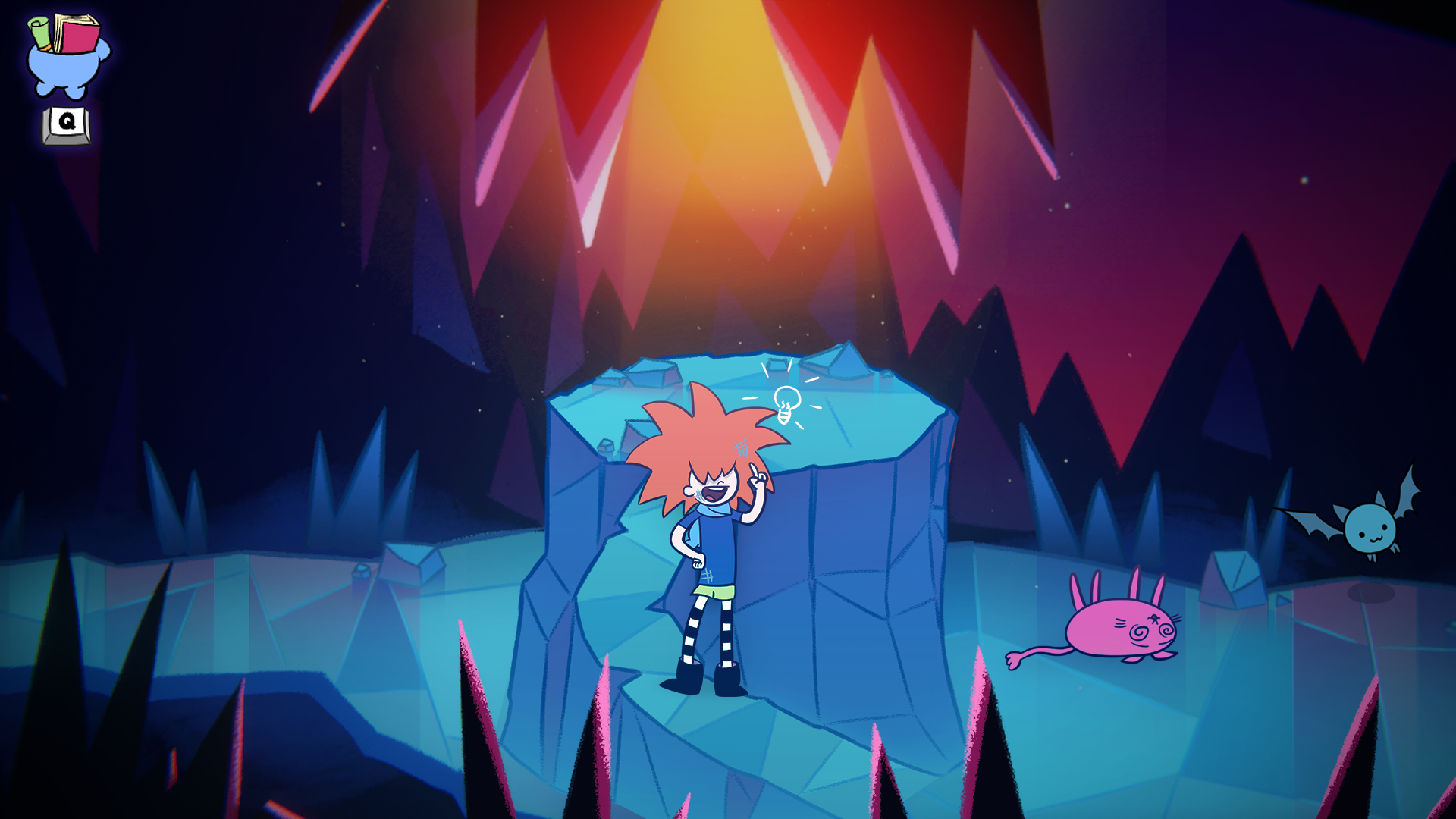
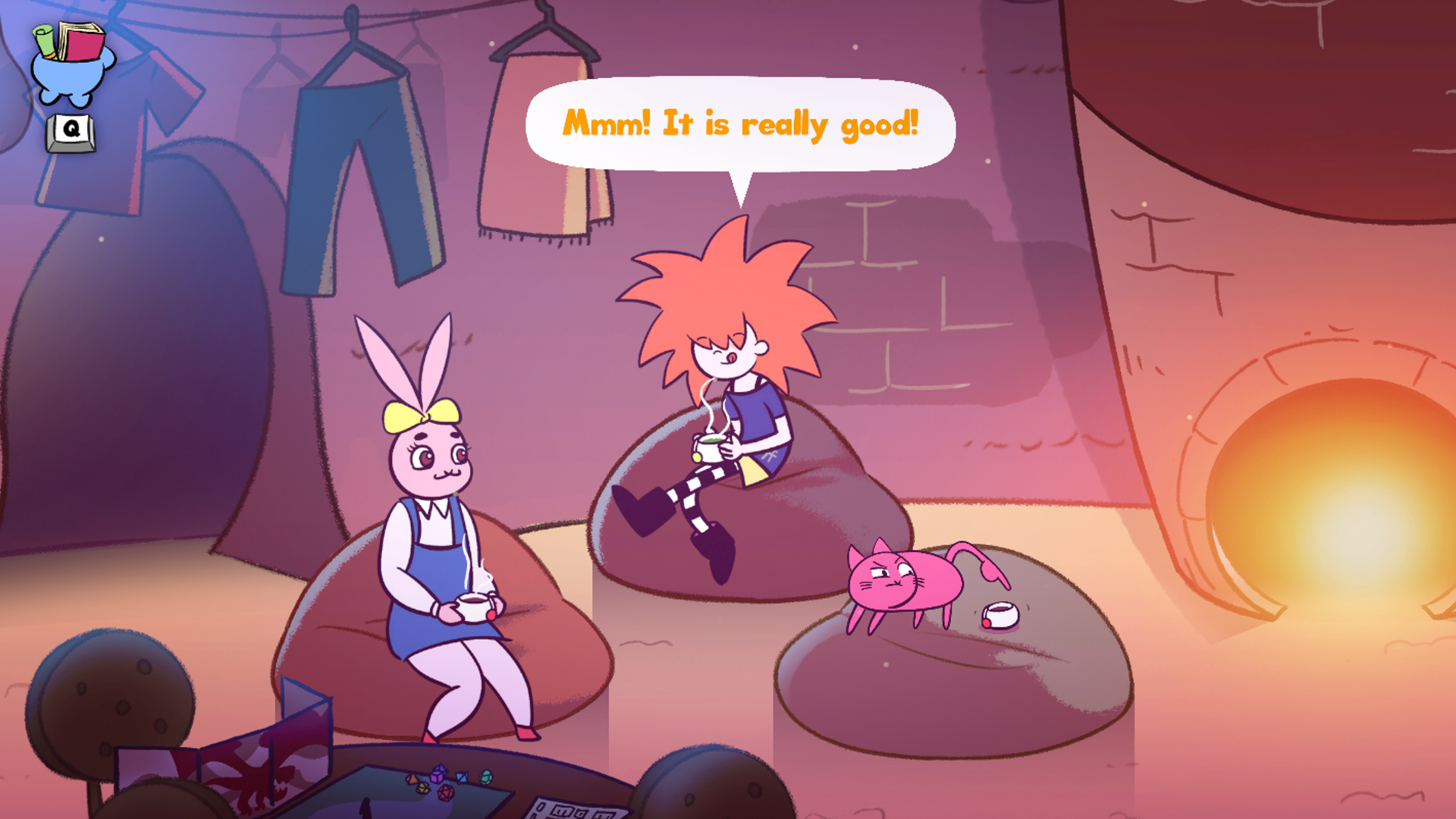
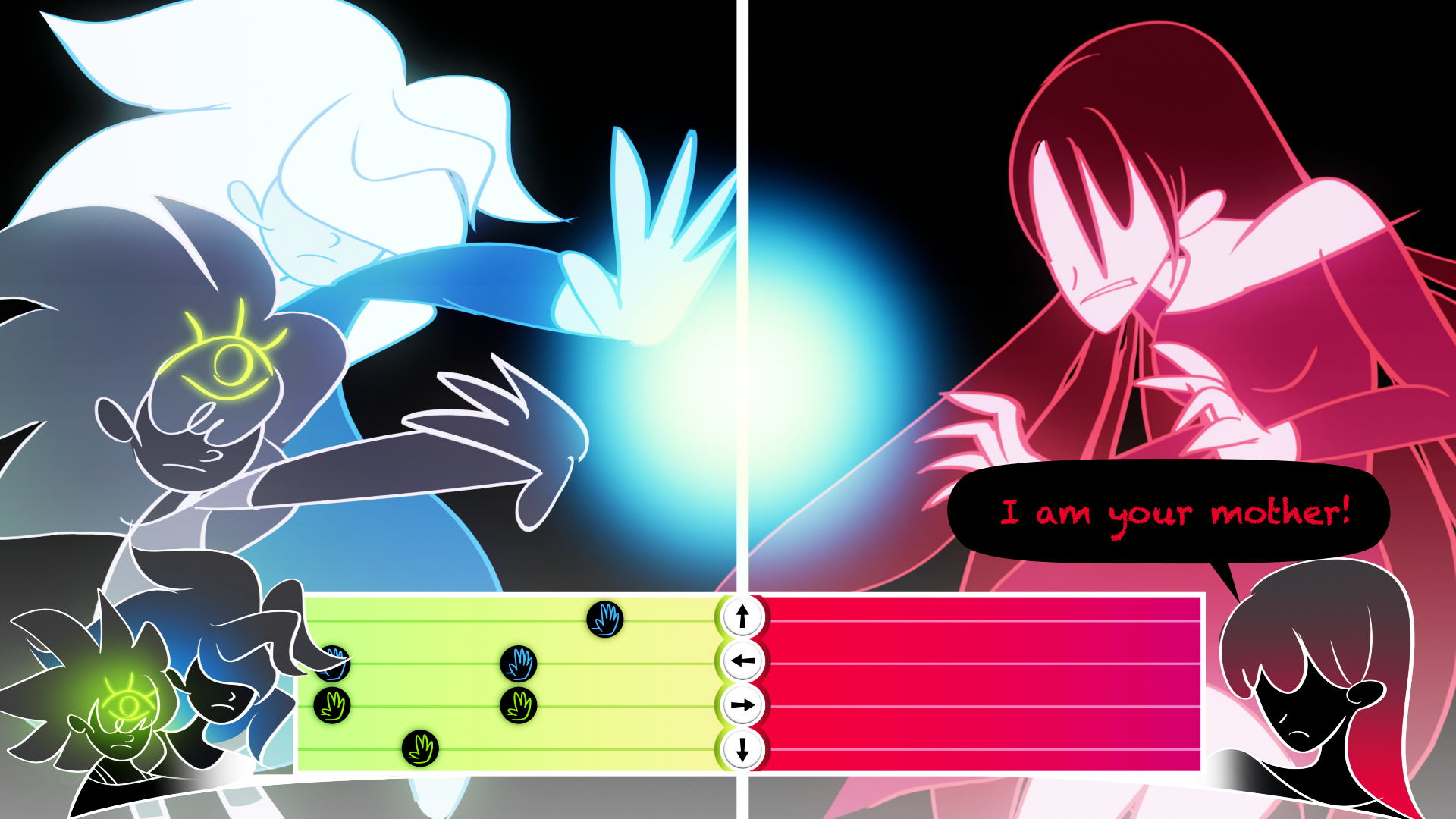
I want you to imagine the following: What if we put Undertale and Wario Ware in a blender and made a game out of the mix? The end result would probably be Apopia. It’s primarily an adventure game, with various minigames scattered throughout. In the main game, you mostly have to explore the overworld, find items, and speak to NPCs to solve puzzles and advance the story. However, this classic gameplay loop is occasionally broken by minigames, particularly during boss fights. The gameplay can then shift to whatever the boss requires: Examples include a rhythm game, a rope-swinging game and a baseball minigame. You need to be prepared to shift your focus from cosy travels to a test of skill at any time, like a kid in a sugar rush. But that only scratches the surface, because even sugar-coated sweets can have a bitter aftertaste.
Darkness
What starts as a whimsical adventure soon takes a turn when we discover that our protagonist, Mai, has the ability to read minds. While she is asleep or when she is asked, she can enter the minds of other people. You can either take a direct approach and take a quick look at what you need, or you can explore the depths of their minds further. Let me give you an example from one of the ‘dark worlds’, as they are called in the game. There is a character who asks you what he is thinking about to check that you are telling the truth about your ability. The answer to the puzzle is right there in the first room. However, I chose to go off the beaten path and explore. I discovered a deeper memory of this person that showed he was neglected as a child because of a drinking problem in his family. This is quite a shocking revelation in a game about bunnies in a whimsical land. And that is just one of the disturbing things you can discover. Mai herself also has inner demons that take the story down darker, more disturbing routes, especially in her relationship with her mother. I won’t say any more about it in case I spoil some unpleasant surprises.

Sugar rush
While playing Apopia: Sugar Coated Tale, I had mixed feelings. First, I will talk about what I liked about this game, which is mainly the presentation. I like the hand-drawn art style, especially the stark contrast between the normal overworld and the Darkworld landscapes in the minds of the NPCs. Coupled with the excellent melodies chosen for the game, you are immediately sucked into this world. However, I did have some issues with minor bugs. Some conversations wouldn’t start, and I experienced frame skips when being chased by enemies. This may be because I played this game on a Steam Deck, as it isn’t verified for the PC handheld yet.
Although the story wears its inspirations clearly on its sleeve, it is quite enjoyable. The parallels at the start of the story can’t be ignored. It’s basically the same as Undertale. A child is trapped under a mountain and must escape a hostile land, populated not by monsters, but by rabbits. Having said that, the game’s originality starts to seep through when you start the first chapter. You can even discover references to pop culture, such as Star Wars. That being said, in my view, the minigames could do with some more polish. They are fun, though. I particularly enjoyed the baseball one. But some of them need more work. For example, when I was swinging between hooks to get away from an enemy. I often fell because the line didn’t latch onto the target. In the rhythm game, there were so many prompts that I would have failed if the game wasn’t so generous with the requirements. I understand that all my critical points may be a result of the long development cycle. I understand that extra time can be helpful if you want a finished product that meets your exact specifications as a game developer. But sometimes a team needs a voice of reason to recognise the need to streamline and cut some features. That said, I enjoyed Apopia. However, the lack of focus did start to show in an otherwise polished finished product.
Conclusion
Apopia: Sugar Coated Tale is a promising debut for Quillo Entertainment. The game looks and sounds great, and its hand-drawn art style makes it stand out from other indie games. While the initial story isn’t particularly original compared to other titles in the genre, its twists and turns become more creative and entertaining the further you progress in the game. That said, the minigames could have done with a bit more work and polish. This could be due to the long development cycle. However, a bit more focus on which minigames to include and how to present them would have elevated this title from good to great for me. If you want to experience Apopia for yourself, you can buy it on Steam for Mac and PC. There is even a demo that includes the prologue, so if you’re hesitant, you can see if the game satisfies your sweet tooth before buying it.
7,5/10
Tested on Steam Deck
