
Like many other gamers, I call myself a fan of the Mass Effect series. However, when first hearing about the development of Mass Effect: Andromeda I got a little worried about the series future. Andromeda is made by Bioware Montreal, the support studio of Bioware, meaning that most of the original Mass Effect developers weren’t involved with this soft reboot. But it’s the end result that matters, so let’s take a look at Mass Effect: Andromeda.
The elephant in the room
First things first, let us talk about the terrible character animations that you’ve probably seen in countless YouTube videos by now. Simply put, they are all real and a glaring issue throughout the entire game. The weird and awkward animations make it hard to take anything seriously in dialogue or action sequences. It actually baffles me that Bioware and EA thought this was good enough to release. Sure, the most recent patch has fixed and improved some of the animations, but not all of them. If this was the only big issue in Andromeda, then it could easily be forgiven. Sadly, there are much more problems to be found in this game.

Story and side missions
Mass Effect: Andromeda tells the tale of Sara and Scott Ryder, twins that volunteered for the Andromeda program. They leave the Milky Way galaxy behind them and travel to the Andromeda galaxy, in search of habitable planets or, as the game calls them, ‘golden worlds’. Once they arrive in Andromeda, they quickly encounter the Kett and the Remnants, both alien foes that are a threat to their existence. To deal with battling these foes, finding habitable worlds and discovering useful tech, the Ryder twin you pick as your player character gets dubbed as the ‘Pathfinder’ and is given a state-of-the-art spaceship, the Tempest. What follows next is a fairly simple story about exploring new worlds and human survival.

The first couple of hours in Andromeda’s story do a good job in making you feel like an actual space explorer. The ‘golden worlds’ turn out to have terrible climate systems and strange alien constructions that can fix these climates. It’s your task to decipher the alien language and use those constructions in order to make the worlds habitable for your people. You can discover and decipher all kinds of items and tech by using your omni-tool. The more items you scan, the more you’ll understand of the unknown worlds and tech in them. What’s frustrating, however, is that the entire story plays out like this. Go to a new planet, scan some stuff, activate the climate change machine by solving a sudoku puzzle (yes, you read that right), plant some settlements and go to the next planet. Normally I wouldn’t say this, but I’m glad that the main storyline in this game isn’t that long, otherwise it would get repetitive fairly quick and drag on for much too long. It’s just disappointing to see a Mass Effect game have a weak story, certainly if you take in account that Mass Effect: Andromeda is supposed to bring back the fans that felt ripped off by Mass Effect 3’s ending. But what about the side missions?

The amount of side missions in Mass Effect: Andromeda is overwhelming. It’s certainly more than any other Mass Effect title, maybe even more than all of the other games combined. After playing a couple of them, it quickly became clear that Bioware chose quantity over quality. Most side missions are boring fetch quests that don’t offer anything interesting. Even most of the Loyalty missions, which have been a staple of the series since Mass Effect 2, are weak and not that interesting. To make things worse, they do not follow the same structure as in previous games. Normally, Loyalty missions would take you to new locations and give you background info about your squad mates. In Andromeda, however, you have to complete several side missions that are tied to your squad members. These missions are designed the same way as the regular side missions, except they offer some info about your friends. The only Loyalty missions I found even a little interesting were those of PeeBee and Drack.
Mass Effect: Andromeda also changes the dialogue system that was unique to the series. The dialogue wheel is still there, but the Paragon/Renegade system has been removed. Now, you have the option to respond in either a logical or emotional way. The writers want the player to explore the morally gray area when dealing with conflict. This new system offers a new take on problem-solving, but it also leaves little room for any real consequence in the story, since most dialogue options will have the same end results.
Character designs
Like previous Mass Effect games, you are able to design your own Ryder character or use the pre-designed options. Since Commander Shepard has been replaced with Sara and Scott Ryder, the default designs are now modeled after Jayde Rossi and Steven Brewis, who are both actors in real-life. If you choose to design your own Ryder, then you have the option to only customize the Ryder twin that you picked as your player character, or customize both twins since they both play a part in the main story. However, the character creator is so shallow and lazily designed that every character you create ends up as some sort of plastic-looking abomination, especially when you design the male Ryder twin. If you want to experience the story in Andromeda with a realistic-looking Ryder, then I suggest you pick the default model.
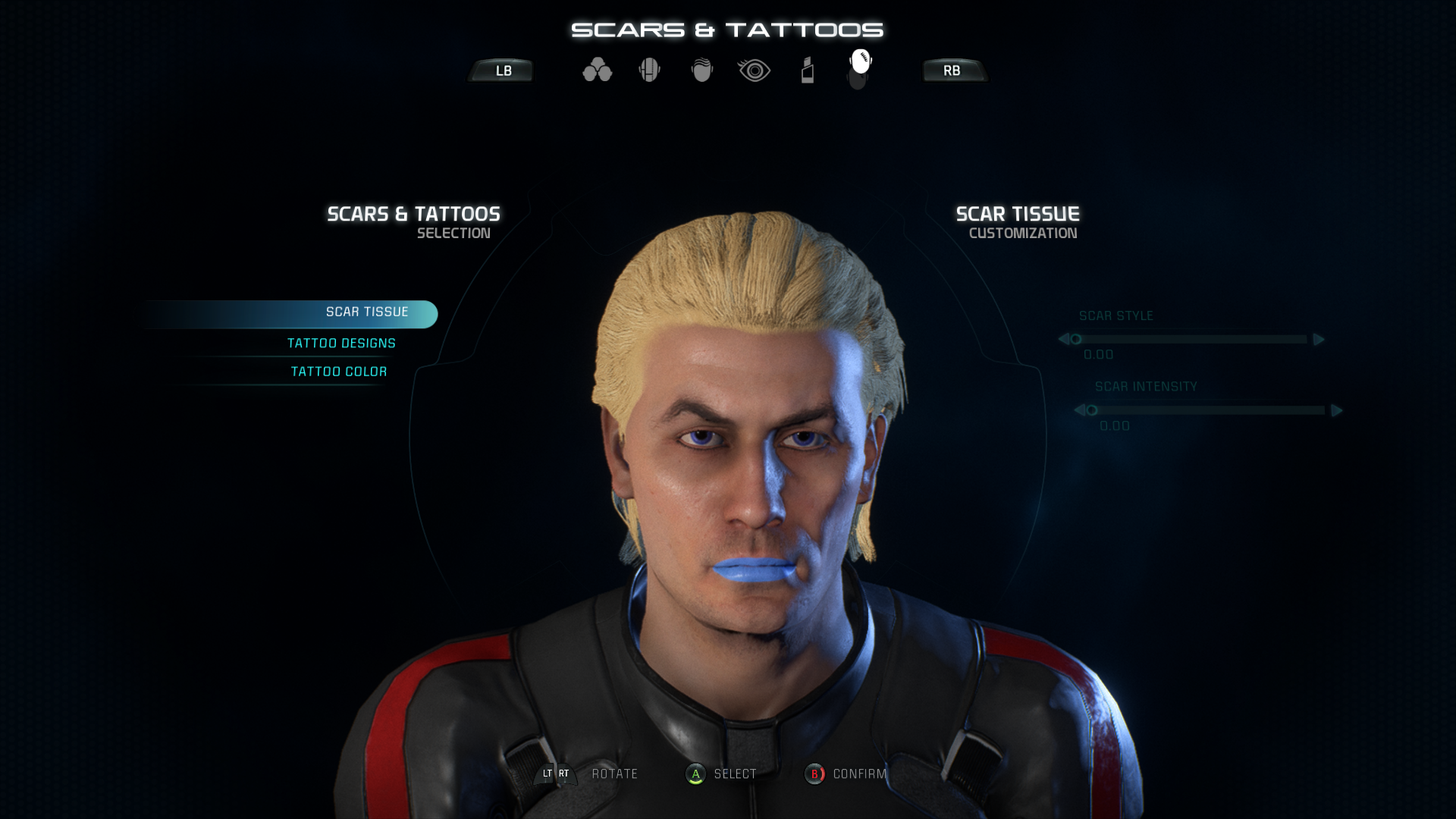
The other characters in the game are either hit or miss. The female Turian called Vetra, for example, looks great while other characters, mostly humans, look like they’re made of plastic. There’s also this weird issue with the eye movement of some characters. They’re looking at everything in their vicinity, except at the person they’re talking to. Lastly, some characters have an absurd amount of makeup smeared on their faces. It’s pretty hard to pay attention to what someone is saying when their face looks like that of a clown.
Improved gunplay
The combat in Mass Effect: Andromeda is one of the few noticeable improvements when compared to previous Mass Effect titles. The developers have now given you a jetpack, which can be used for a short burst up in the air or a quick dash in the direction you want. The amount of enemies that engage you at the same time has also been increased. These changes make the combat much more fluid and encourage you to constantly keep moving instead of staying behind cover. However, the enemy AI is not that great. Enemies often stay at the same place and rarely change their tactics. They find cover, sit behind it and fire their gun every now and then. Playing the game at the higher difficulties makes the combat more challenging, but it still has some problems with the AI.
Visuals all over the place
Mass Effect: Andromeda offers some of the best visuals I have seen in years, but also some of the worst. When you’re flying through space or exploring new worlds, the vistas you come across are truly next-gen looking. Even some of weapons, armour sets or vehicles look great. But then you watch some of the in-game cutscenes and boy, can they look hilariously bad. Especially when you’re in dark areas the game tends to mess up the lighting and make some colours way too vibrant. In the end, most of the game looked great so it’s possible some visuals were not fully finished and rushed during development.

Multiplayer
Mass Effect 3 was the first game in the series to come with a multiplayer component. By everyone’s surprise, it was actually pretty fun to play. Luckily, the same can be said for Andromeda’s multiplayer. Just as in Mass Effect 3, you and three other players form a squad and have to complete missions by fighting waves of enemies. The higher the difficulty, the more XP and credits you earn when successfully ending a mission. The earned credits can then be used to purchase guns, characters and upgrades. You can also buy these with real money, but earning the in-game credits is fairly easy so you’ll probably unlock everything without ever spending a single penny.
The multiplayer also benefits greatly from the added jetpack and dash move. Just as in singleplayer, it makes the gameplay much faster and simply more fun to play. In short, the multiplayer is sure to make you invest many hours into it.

Bugs, bugs and more bugs
I don’t know what happened over at Bioware’s Q&A department, but they did not do a good job at pointing out glitches and bugs in this game. It’s been a long time since I’ve seen that many technological problems in a video game. A few examples of all the issues I’ve experienced are: clipping, characters stuck in t-pose during dialogue, sound effects stuck on repeats, button prompts not registering, characters spawning way up in the air and so much more. I even had to restart my console three times because the game suddenly froze during loading times. Mass Effect: Andromeda is such a giant mess when it comes to bugs and glitches that it makes me question if Bioware even tested the release build at all. Luckily, the recent patch has fixed some of these problems, but there are still a lot left in the game.
Conclusion
It saddens me to say that at the current time I cannot recommend Mass Effect: Andromeda to anyone, certainly not at full price. The technical issues alone should be reason enough to avoid this title. The best part of the game is the multiplayer component, which is genuinely fun to play. Most of the singleplayer story is decent and some of the side missions offer some extra lore if you’re interested, but most of them are forgettable and repetitive. Patches can fix a lot of things in games, but it won’t make a mediocre game a great one.
