
I went into Octopath Traveler 0 with that weird mix of expectations only a prequel can create. I loved big chunks of the first two games, rolled my eyes at other bits, and bounced completely off Champions of the Continent on mobile. So a console prequel that reworks that mobile game into a full-fat JRPG sounded… risky. A few dozen hours later, I’m mostly impressed, occasionally exhausted, and weirdly attached to a little town that keeps burning down and refusing to stay dead.
A broken town at the centre of everything
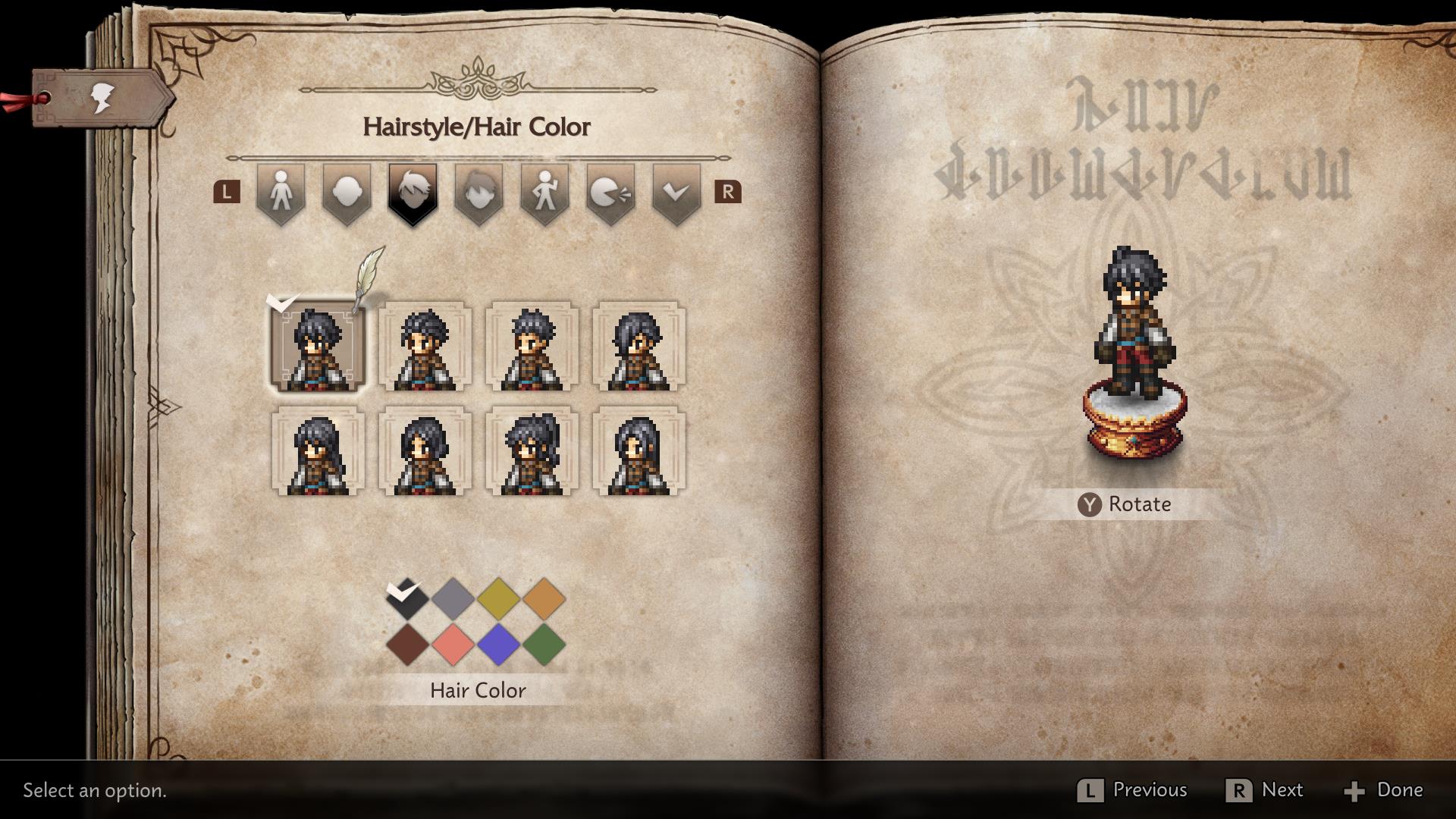
Octopath Traveler 0 shifts the series’ focus in a way that looks small on paper but completely changes how it feels to play. You still roam Orsterra in that gorgeous HD-2D style, with tiny sprites wandering through lavish dioramas, but this time there isn’t a neat row of eight protagonists waiting on the title screen. You create one main character, appearance, voice, background, and the story spins out from a single moment: Wishvale’s destruction on the Day of Reverence, when a cult-like group comes hunting for seven divine rings and casually wipes your hometown off the map.
That premise sounds very “JRPG 101” written down, but what works is how firmly everything keeps looping back to that loss. The series’ usual anthology structure, eight stories that briefly brush against each other, is gone. Instead you get one long narrative that alternates between chasing the ring bearers across Orsterra and slowly rebuilding what was stolen from you in Wishvale. The result is more coherent than either Octopath Traveler or its sequel. There’s less of that feeling that you’re playing eight parallel campaigns that happen to share a battle system, and more of a sense that everyone you meet is orbiting the same wound.
The core cast is noticeably tighter as well. The writers clearly know who the emotional anchors are: Stia, the stubborn architect who treats ruined houses like injured friends; Phenn, a hunter who reads the land better than he reads people; Laurana, a priestess who keeps trying to believe in mercy while the world actively punishes her for it. They’re not subtle characters, but their arcs land because the game gives them space. Their scenes in Wishvale arguing over how to rebuild, clashing over what “home” even means after it’s been reduced to ash – hit harder than most of the big cosmic reveals. The wider supporting cast is huge and uneven; some ring bearers are fascinating, others feel like they wandered in from sidequests that never got written. That’s the trade-off: you get this rich web of little stories, but you won’t care about everyone in it.
Tonally, Octopath 0 leans much darker than the sunny key art suggests. There’s cult violence, child sacrifice, moral rot in every polite institution all framed through that warm, painterly HD-2D filter that almost makes it cosy. The game doesn’t always know when to pull back, a few scenes feel edgy for the sake of it, but when it hits the right balance between quiet horror and human resilience, it comes close to the emotional punch of the best chapters in Octopath II.
Rings, routine, and a town that refuses to die
Structurally, the game splits itself between two loops: wandering out into Orsterra to chase rings and stories, and coming back to Wishvale to slowly rebuild your life. On paper, the town-building system is simple. You invest resources, bring new residents in, assign them jobs and watch a handful of stats creep upwards. In practice, it’s a clever emotional anchor. Every time you clear some hellish mine or cursed forest, you’re not just ticking a quest off; you’re unlocking a new shop, a new house, a new conversation in a place that used to be a smoking crater. The numbers barely matter. What sticks is seeing kids play in streets that were filled with corpses in the prologue.
It isn’t a perfect system. Some of the upgrades boil down to “now you have slightly better armour in the same menu” and a few late-game projects feel like busywork: hand over rare materials, watch a bar fill, get a cutscene that doesn’t quite justify the grind. One major criticism I share with other reviewers is that the “city-building” never becomes as mechanically interesting as the marketing suggests. It’s more emotional dressing than deep strategy. I didn’t mind that, but if you were hoping for something closer to a proper management sim bolted onto your JRPG, you’ll be disappointed.

Outside of Wishvale, Octopath 0 is still very much about wandering, talking and getting punched in the face by things way above your level. The regions you visit feel denser and more authored than in previous games. Routes fold back into each other neatly, optional dungeons are tucked behind tiny visual cues, and there’s an almost sick pleasure in stepping into a new zone, seeing the enemy level pop up, and realising you absolutely should not be here yet. The game doesn’t explain everything. It trusts you to remember locked doors for later, to follow hints hidden in incidental dialogue, to poke at the edges of the map just because you can. That’s where it feels closest to classic Square Enix design.
Path Actions return, slightly streamlined. You still charm, intimidate, bribe or invite NPCs to squeeze information or items out of them, but the UI is cleaner and the game is less fussy about failure. Blow an attempt and you’ll annoy the locals or lock yourself out briefly, but it rarely feels punishing. What’s clever is how closely this ties into Wishvale’s revival. Half your best recruits and upgrades come from people you’ve strong-armed into helping or gently convinced to move to the town. It’s a nice thematic loop: you’re stealing from the world to rebuild your own tiny corner of it.
The only real structural frustration is pacing. If you play “correctly” meaning you follow the recommended level ranges and don’t rush every new region as soon as it opens, the story has a satisfying rise and fall. But the game never stops you from over-recruiting early and spreading your experience too thin, and if you do that, the middle hours become a bit of a slog. Bosses spike hard if you’re under-levelled, and there’s a stretch where you’re shuffling party members around in menus more than you’re actually playing. It’s not game-breaking, just one of those design choices where the freedom comes with a quiet cost.
Eight blades, one brain
Combat is where Octopath Traveler 0 feels both most familiar and most experimental. The core is still that intoxicating Break and Boost loop: probe for weaknesses, shatter enemy shields, dump a ridiculous amount of stored BP into a single burst and watch health bars evaporate. It’s turn-based, fully menu-driven, but it has the pacing and satisfaction of a good action game because every turn is about betting resources on what you think will happen next. That part of the formula still rules.
The big mechanical shift is that you now field eight active party members at once, split into front and back rows, instead of four. Everyone on the front line acts and takes hits; everyone in the back row offers passive buffs and can tag in mid-fight. On a basic level, it makes you feel powerful in a very childish way. You’re rolling around with a small army. But it also adds a layer of positioning strategy the earlier games never had. You’re constantly weighing questions like: do I bench my healer to protect them from the incoming nuke and risk going a turn without top-ups, or leave them exposed and trust I can Break the boss before it casts? Do I bring a redundant element just to have a safer rotation of debuffs? When the game is at its best, every encounter is a tiny, satisfying puzzle framed by those decisions.

Jobs and skills sit on top of that in a way that’s initially overwhelming and then deeply satisfying. Each character has a base role, but the action skill system lets you cross-pollinate key abilities, creating builds that feel delightfully broken in that very JRPG way. I ended up with a support who could delete single targets with a ring-powered spell because I stacked every possible crit and damage-amp on them, and a tank who specialised in deliberately triggering certain Flaws in exchange for extra BP. The game doesn’t explain all of this cleanly, and the skill menus are a cluttered nightmare until you learn their logic, but once you’ve put the work in, combat becomes this expressive sandbox where you’re constantly tinkering with your own little machine.
Boss fights are where everything comes together. They’re long, attritional affairs with multiple phases and shield patterns that change mid-fight. Some lean too hard on gimmicks, one late boss in particular feels like it’s trolling you with status effects, but in general they hit that nice line between punishing and fair. When you wipe, you usually know exactly which greedy Boost or lazy swap doomed you. My only real gripe is that the game occasionally overdoes the trash mobs in between. Dungeon layouts are more interesting than they used to be, but a few stretches still feel like you’re being shaken for random encounters just because someone got nostalgic for the SNES days.
A long, dark road worth walking
The thing that lingers with Octopath Traveler 0 isn’t the plot twist about the rings, or the final dungeon, or even the absurd length, you’re looking at 70+ hours easily if you engage with side stories and town building. What sticks is smaller. It’s coming back to Wishvale after a brutal chapter and finding a kid you recruited earlier now running a tiny shop, proud of their three items in stock. It’s a throwaway NPC quest about grief that hits harder than the main villain’s monologue. It’s walking into a new town and immediately checking who you can drag back home, not because the game told you to, but because you want another thread tied to that rebuilding effort. That’s where the emotional design really works.

There are definite flaws. The overarching story about divine rings and cosmic balance is fine rather than memorable, and a lot of the late-game exposition feels like it’s there to justify boss arenas rather than say anything new. The cast is too large for everyone to get their due. The city-building is more mood piece than mechanical pillar. The UI is still stuck in that JRPG place where half your time is spent wrestling tiny icons in overstuffed menus.
Conclusion
But it is a genuinely strong, often beautiful JRPG that understands what worked in Octopath and what needed to change. The tighter central narrative around Wishvale gives it a beating heart. The expanded combat systems turn every encounter into a playground for people who love numbers and synergies. The tone walks a risky line between bleak and cosy and somehow gets away with it more often than not. Most importantly, it feels like a proper console RPG, not a dressed-up mobile port, even though that’s exactly what it is under the hood. For me, that lands Octopath Traveler 0 at a very solid 8.5 out of 10. It doesn’t reinvent the series, and it definitely doesn’t fix every old frustration, but it delivers a long, dark, oddly comforting journey through Orsterra that I’m glad I took; shimmering pixels, fussy menus and all.
