
Puyo Puyo Tetris 2S doesn’t pretend to be something new. It knows exactly what it is: a repackaged version of the same game with one new mode, a handful of system upgrades, and a sharper suit for the Switch 2. That might sound disappointing on paper, but once you’re back in a match, juggling combos, switching between Puyos and Tetriminos mid-thought, it reminds you why this game didn’t need much change in the first place.
It plays better here. That’s the simple truth. Input is tighter. Transitions are instant. The entire game finally keeps pace with itself, which wasn’t always the case on older hardware. Whether you’re playing docked or handheld, everything moves exactly as it should. And for a game that lives and dies by rhythm and timing, that makes a difference.
Doubles mode
The one real addition is Doubles Mode a two-player setup where you and a friend share a board, take turns, and try not to destroy each other’s plans in the process. It’s chaotic in all the expected ways, but also surprisingly enjoyable when both players are in sync. You build toward something neither of you could really pull off alone, and when it clicks, it’s great.
But the catch is this: Doubles only really works in local multiplayer. If you’re playing solo, the AI isn’t a reliable partner, it second-guesses, drops weird pieces, and completely ignores setups. And if you’re playing online? Good luck finding someone in the right mindset for proper co-op. This mode lives and dies on communication and shared flow, and without that, it collapses fast.
The same strong core underneath
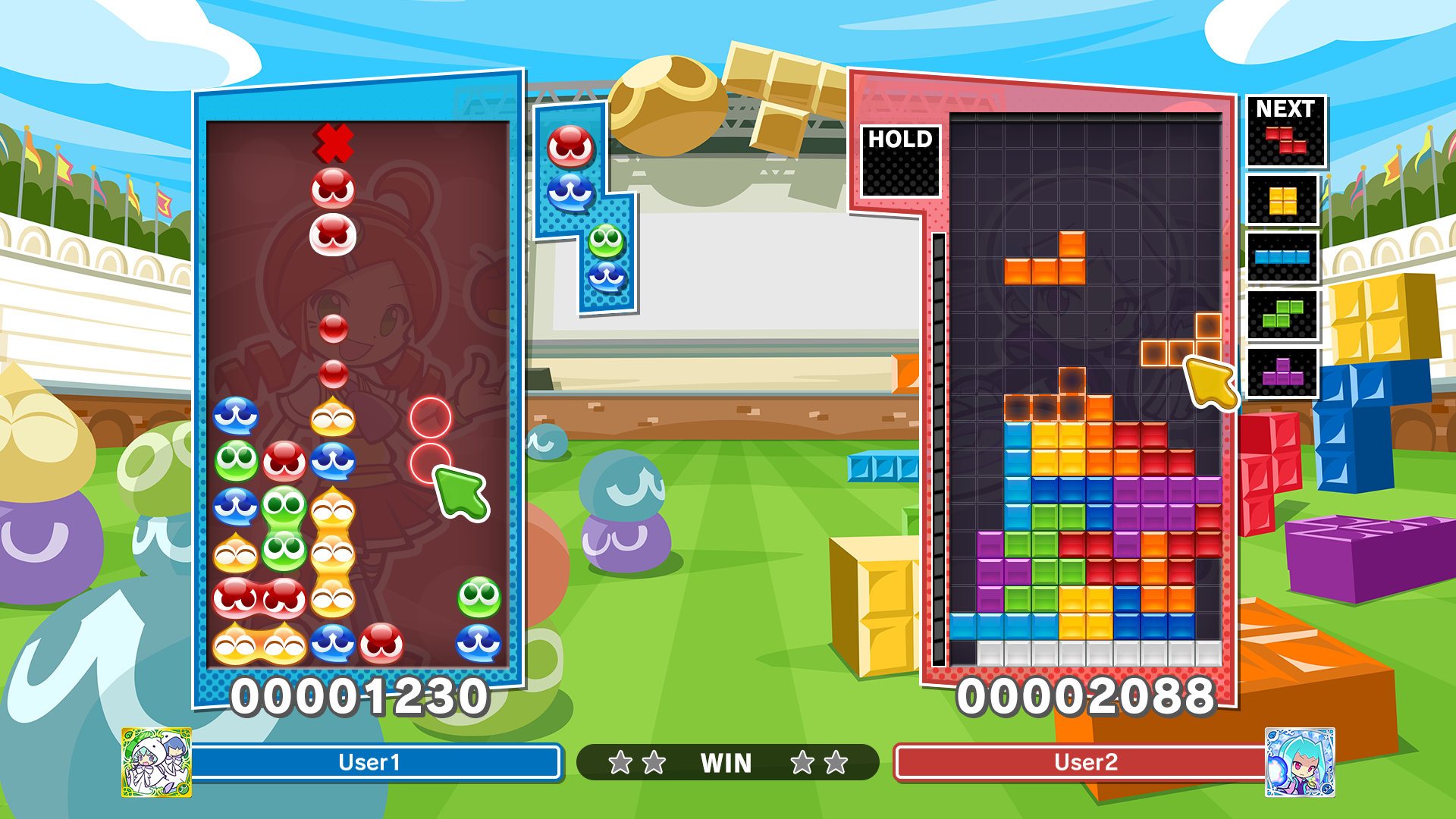
Strip away the new mode, and what’s left is still one of the most mechanically solid puzzle games of the last decade. The main campaign is intact, complete with bizarre anime storytelling and over-the-top voice work. The core versus modes: standard, Swap, Fusion, Skill Battle all return untouched. And that’s fine. They didn’t need fixing.
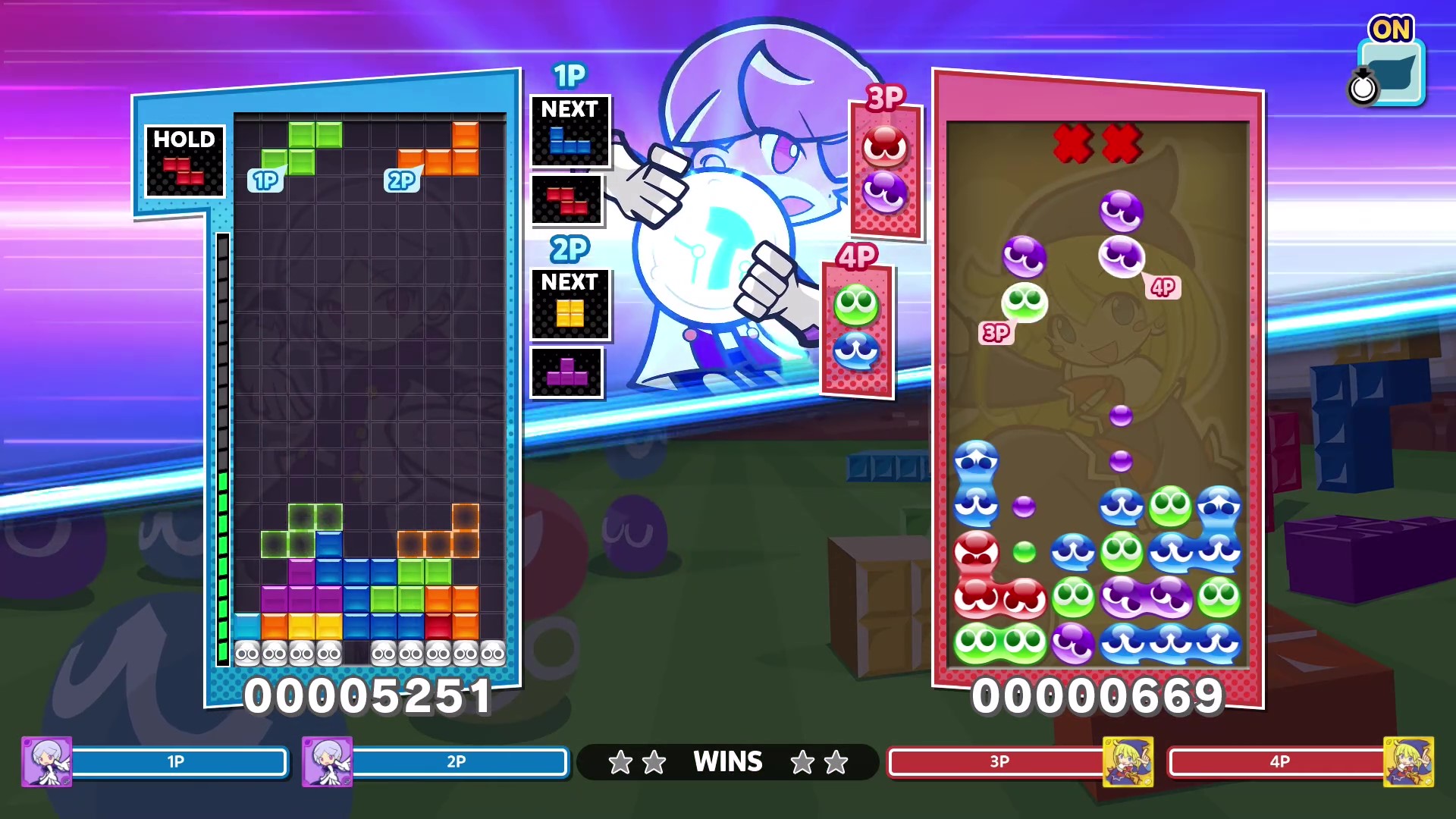
There’s still a surprising amount of depth in how the two systems (Puyo and Tetris) push against each other. And there’s still that same learning curve, the one that kicks in around hour five, when you realise you’re not just reacting anymore, you’re predicting. The game still rewards timing, muscle memory, and calculated panic. It holds up. It always did.
Switch 2 gives it space to breathe
From a performance standpoint, this is easily the best version of the game. 60 frames per second across the board, zero load anxiety, and visuals that, while not drastically upgraded, look cleaner and less compressed, especially in handheld mode.
The Switch 2 finally lets this game exist without compromise. That’s not flashy, but it matters. Everything feels snappier and more responsive, which means better precision, smoother chains, and more satisfying matches.
Is it worth buying?
That’s where things get trickier. If you already played Puyo Puyo Tetris 2, there isn’t much new here to justify a second full-price buy. There’s no upgrade path, no added story content, and the online player base is already split between versions which doesn’t help. Doubles is a fun twist, but it’s not essential. The Game Share and webcam features are fine, but they’re background noise at best. This isn’t a sequel or remake, it feels more like fresh coat.
Conclusion:
So if you’re new to the game, this is absolutely the one to get. But if you’ve been here before? It depends how much that smoother performance means to you and whether you’ve got a co-op partner who’s just as ready to throw blocks with you for hours.
