
When a franchise has been around for nearly three decades, which makes me old enough to have played them for three decades, reinvention becomes tricky. Pokémon has tried it before, with games like Pokémon Ranger, Pokémon Café, and Pokémon Quest. Sometimes these were successful, sometimes less so, but rarely has the series taken such a confident leap sideways as it does with Pokémon Pokopia. On paper, the concept reads almost like a fever dream: a cozy life simulator where you don’t catch Pokémon to battle them, but instead work alongside them to rebuild a forgotten world. And yet, after dozens of hours in Pokopia’s quietly captivating sandbox, it becomes clear that this isn’t a gimmick. Instead, it might be one of the most refreshing interpretations of the Pokémon universe we’ve seen in years. Plus, it’s a great way to introduce my kids to one of the franchises I love the most. I’m all here for it.
Where most Pokémon games focus on collecting creatures and climbing the ranks of competitive battles, Pokopia strips that formula back to its foundations and asks a simple question: what would the Pokémon world look like if the focus shifted from competition to coexistence? And yes, this has been ‘explored’ in Mystery Dungeon, but in a different… way? Stay with me here. So, what do we get with Pokémon Pokopia? A game that feels like a thoughtful blend of life-sim comfort and creative sandbox design. It borrows the laid-back pacing and social charm of Animal Crossing while embracing the block-based creativity and environmental rebuilding that made Dragon Quest Builders so compelling. The result is something that feels both familiar and completely new, like discovering a hidden region of the Pokémon world that’s always been there, and it’s very hard to stop playing once you start. And before you read any further, yes, I think it’s too easy to call this just Pokémon Minecraft or Pokémon Crossing, since it’s more, it’s deeper, and it’s complex on a scale that you won’t see when you are hopping around the first ‘area’. Let’s dive in a bit deeper.

A world waiting to be restored
Pokopia opens with a surprisingly melancholic premise. Instead of dropping you into a bustling Pokémon town, the game begins in a world that feels abandoned. You awaken as a Ditto that has taken on a human form (cosily nicknamed ‘Pudding’ by my kids), which is apparently modelled after a long-gone trainer, and you step into a landscape that has seen better days. Trees are barren, grass has withered, and what was once a thriving settlement is now little more than a memory. Almost like they wanted to see what would happen if some of the antagonists from the mainline Pokémon games had their fun in the world, it’s not long before you meet Professor Tangrowth (my new favourite Pokémon Professor), an eccentric guide who believes the land can still be saved. Together, you begin the slow process of restoring life to the region through reviving ecosystems, rebuilding structures, and creating environments where Pokémon can thrive once again. And the best part? No loans this time!
It’s a story that unfolds gradually rather than through heavy exposition, and feels like the world-building often found in digitalized tabletop RPGs or action RPGs. Pokopia isn’t a narrative-driven RPG in the traditional Pokémon sense, but there is an underlying mystery that pushes you forward at your own pace. As new areas open up and more Pokémon return to the world, hints emerge about what caused the land to fall into ruin in the first place. It’s all in the lore! As a DM from a Dungeons and Dragons game would call it. And this tone, found in the lore, strikes a delicate balance between cozy and contemplative. It’s hopeful without being naive and reflective without becoming too heavy-handed. Most importantly, it frames your actions in the game as meaningful: every tree planted and every habitat restored feels like part of a larger effort to bring the world back to life. And that sense of purpose drives the entire experience. Don’t we all want a world in which Pokémon are living their best lives?

Pokémon as tools, friends, and co-creators
As I said at the beginning, the core twist in Pokopia is deceptively simple: instead of capturing Pokémon for battle, you collaborate with them. Every Pokémon you meet brings something unique to the table. Bulbasaur can help grow vegetation, Squirtle can water crops and revive dry land, Scyther cuts through debris, and Hitmonchan teaches you to smash rocks blocking your path (and the list goes on and on). What makes Pokopia a unique game is that, rather than equipping traditional tools, such as an axe or watering can, your Ditto learns and temporarily adopts these Pokémon abilities. It’s a clever mechanic for two reasons, the first being that it ties gameplay directly into the Pokémon fantasy. Instead of feeling like a farming simulator with Pokémon decorations, the creatures themselves are integrated into every action you take. Secondly, it encourages experimentation. Solving environmental puzzles often involves creatively combining different abilities, and discovering new Pokémon means unlocking new ways to interact with the world. So don’t go dragging your Onix all over the world; every area has a solution to your problems, and it’s often way closer than you might think.
And this hybrid of actions and tool use is where Pokopia begins to resemble Dragon Quest Builders. Much like that series, the game uses a grid-based building system that allows you to construct structures block by block while gradually restoring entire regions, repopulating them with different Pokémon to eventually restore them to their former glory. It’s the act of transforming a desolate landscape into a lively habitat that’s deeply satisfying. Watching dull terrain suddenly burst into greenery after using Bulbasaur’s Leafage never really gets old, and it will blow the minds of both adults and kids alike. It’s the kind of tactile, visual feedback that games like these need to click (like LEGO).

The cozy loop: build, attract, expand
At its heart, Pokopia revolves around a gameplay loop that’s both simple and incredibly addictive. You explore the environment and gather materials to restore terrain or build new structures. These attract new Pokémon, which often unlock new abilities, which eventually help you expand into new regions. And as with most of these kinds of cozy games, each Pokémon species has specific environmental preferences. Some prefer humid areas, others want exercise equipment nearby, and a few require very particular decorations before they’ll even consider moving in, which can be quite challenging if you decide to stick to one area for too long (without unlocking certain aspects later on). This creates a surprisingly engaging management layer. Instead of simply decorating your settlement however you want, you start thinking about ecosystems and habitats. Want a Mareep to settle nearby? Maybe place a cozy knitting corner. Trying to lure Wooper? You might need to introduce water features. It’s a mechanic that feels reminiscent of Viva Piñata (yes, I’m that old), where attracting creatures depended on building the right environment. But Pokopia wraps that idea in Pokémon charm and gives it much greater scale. Before you know it, what started as a small base evolves into a thriving Pokémon community, and it’s incredibly rewarding to watch, mostly because all the Pokémon have really well-written personalities and dialogues, which makes waiting around a fun pastime in Pokopia.
The Animal Crossing comparison
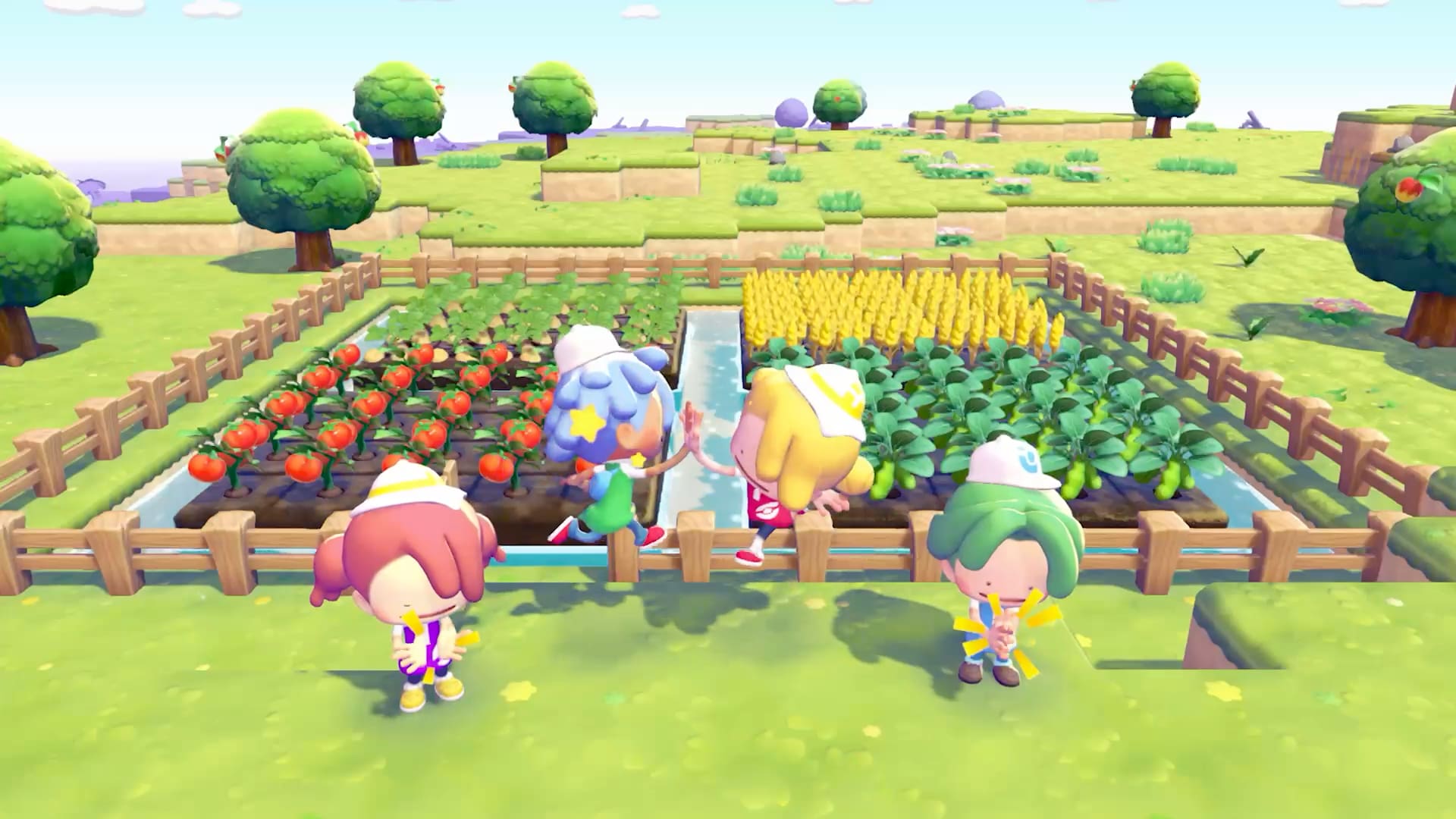
Inevitably, Pokopia draws comparisons to Animal Crossing, and for good reason. Both games emphasize relaxation over challenge. Both rely on slow progression, daily routines, and building relationships with the inhabitants of your world. Pokopia even features a real-time day-night cycle and construction tasks that take time to complete, encouraging players to pace themselves rather than rush through content (which is quite challenging if you want to write a review). But there is a huge difference between them! Where Animal Crossing focuses primarily on social interaction and personalization, Pokopia leans far more heavily into environmental transformation. To put it in a one-liner, in Animal Crossing, you decorate a world that already exists, and in Pokopia, you rebuild one from scratch. Okay, maybe a two-liner. That difference fundamentally changes the experience. Every patch of grass, every restored building, and every newly arrived Pokémon feels like a direct result of your actions. Where Animal Crossing captures the joy of living in a charming community, Pokopia captures the joy of creating one. And that’s a good thing. Okay, let’s look at that other game as well, shall we?
The Dragon Quest Builders influence
I already mentioned it, but we can’t ignore the other major inspiration. Omega Force, the studio that previously worked on Dragon Quest Builders 2, co-developed Pokopia, and their influence is visible everywhere (which is good!). The grid-based building system, the environmental restoration mechanics, and even the pacing of exploration all echo that series. But Pokopia avoids feeling like a cheap copy (which is fun, since you play as a Ditto) by layering Pokémon mechanics on top of that foundation. Instead of crafting the tools you need, you unlock abilities from Pokémon. And instead of recruiting villagers, you attract creatures through habitat design, and maybe the biggest difference is that you restore ecosystems instead of rebuilding a kingdom. And yes, it’s a subtle shift, but it makes the experience uniquely Pokémon. And it works beautifully, because why should you change a game-changer if it works?

Comfort food for Pokémon fans
Visually, Pokopia strikes a charming balance between stylized sandbox aesthetics and classic Pokémon design. The in-game models look amazing, and the Ditto transformations are amazingly detailed. Even though the environments lean slightly toward the blocky style seen in games like Minecraft or Dragon Quest Builders, the Pokémon themselves remain instantly recognizable, and this contrast works surprisingly well. The simplified terrain makes large-scale building easier (especially in mouse mode, don’t sleep on this!), while the expressive animations give Pokémon plenty of personality. Oh, and the soundtrack deserves special mention as well. It’s calm, melodic, and perfectly suited for the game’s relaxed pace. Many tracks feel like gentle reinterpretations of classic Pokémon themes, reinforcing the game’s nostalgic atmosphere. And if you want the actual renditions of the songs from the Pokémon mainline games, don’t worry, Nintendo has you covered by the enormous amount of CDs you can find in-game. All these factors combined turn Pokopia into the kind of game you play with a cup of tea nearby. It slowly became my something to unwind with rather than to conquer forcefully.

Minor rough edges
No game is perfect, and Pokopia does have a few small imperfections. Occasionally, the interface can feel slightly fiddly when placing objects or navigating crafting menus. Mouse mode solves most of my annoyances, but it’s not always an option for me to play this way. Another annoyance can be the pacing. It starts slowly, especially during the early hours before the settlement begins to expand, which makes judgment errors in the placement of trees (for example, those that take a full day to grow) nerve-wracking under a certain sense of pressure (or a sense of completion). And the last thing I want to mention is that I missed a little bit of guidance on how the ‘gates’ work and what the ‘preferred’ sequence of unlocking was. Since I did things my way, it felt a bit daunting to return to the area Pokopia expected me to go to and learn stuff I’d already figured out on my own (since I was stuck in the ‘next’ area). But these are minor issues in the grand scheme of things. If anything, the slower pace reinforces the game’s cozy identity, mostly since Pokopia isn’t trying to rush you. It’s inviting you to stay awhile (and listen). Oh, and the lack of Shinx in the latest games is weird. Where is our lynx?
Conclusion
Pokémon Pokopia feels like a bit of a radical step for the franchise. By removing battles and focusing entirely on creativity, cooperation, and environmental restoration, it reimagines what a Pokémon game can be. What did we get? A game that feels comforting yet ambitious. How? Well, it may look simple on the surface, but it is surprisingly deep once you start experimenting with its systems. Cozy gamers will find a well-filled sandbox, full of charm, while Pokémon fans will discover a world that finally lets them live alongside their favourite creatures rather than command them. And perhaps most impressively, Pokopia stands shoulder-to-shoulder with the games that inspired it. It combines both the warmth of Animal Crossing and the creativity of Dragon Quest Builders, but it ultimately becomes something entirely on its own. Pokopia is one of the most refreshing Pokémon games in years. And if you’ll excuse me, I’m off to make some more houses for my Pokémon.
