
From the moment Bravely Default soared onto the Nintendo 3DS in 2013, it carved out a special place in JRPG hearts, nostalgic, strategic, and bursting with personality. And it’s one of those games I missed out on. Once I became aware of the game, it was already priced way beyond the prices I felt comfortable spending on it, so with the announcement of it coming to the Nintendo Switch 2, I was overjoyed, I could see what this cult classic was all about, and boy, did it deliver. And for those wondering, the Nintendo Switch 2, Bravely Default: Flying Fairy HD Remaster, is not a mere port, but a confident and refined remaster, designed for a new generation of adventurers. Let’s dive in!
Bravely Default?
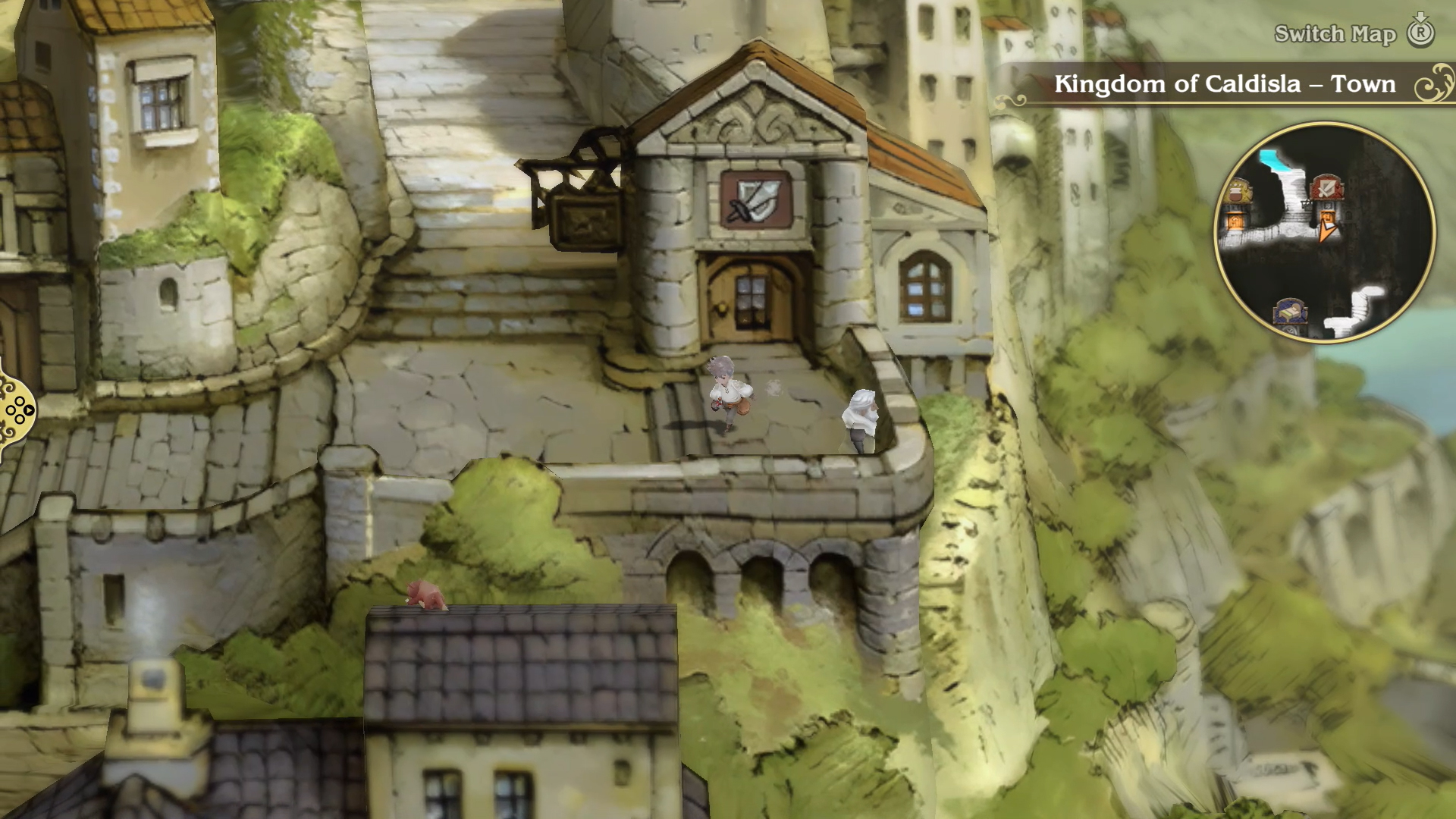
So, what’s Bravely Default all about? Well, in Bravely Default: Flying Fairy, you follow four unlikely heroes, Tiz, Agnès, Ringabel, and Edea, as they journey across the continent of Luxendarc to restore balance to a world thrown into chaos. Guided by a mysterious journal and a sacred duty to awaken elemental crystals, the group uncovers ancient secrets, clashes with powerful empires, and confronts the consequences of fate, faith, and free will. The core of the story explores the price of doing what’s “right,” the weight of destiny, and how small choices can ripple across worlds. What makes the story great is the cleverly layered and self-aware writing, which invites players to question what they know, without ever spoiling its bigger reveals until the time is right. For story and review purposes, I will spoil a little bit of what makes the layering great and what frustrated a lot of the 3DS players back in the day, so if you don’t want to know, skip ahead to the following paragraph. Spoiler: Bravely Default’s narrative loops through crystal resets and parallel realities, reinforcing its themes of sacrifice, heroism, and destiny. The HD Remaster takes care to smooth pacing with fast‑forward cutscenes and dungeon‑level recommendations, making the loops feel less like tedium and more like exploration.
Combat & the “Brave–Default” dance
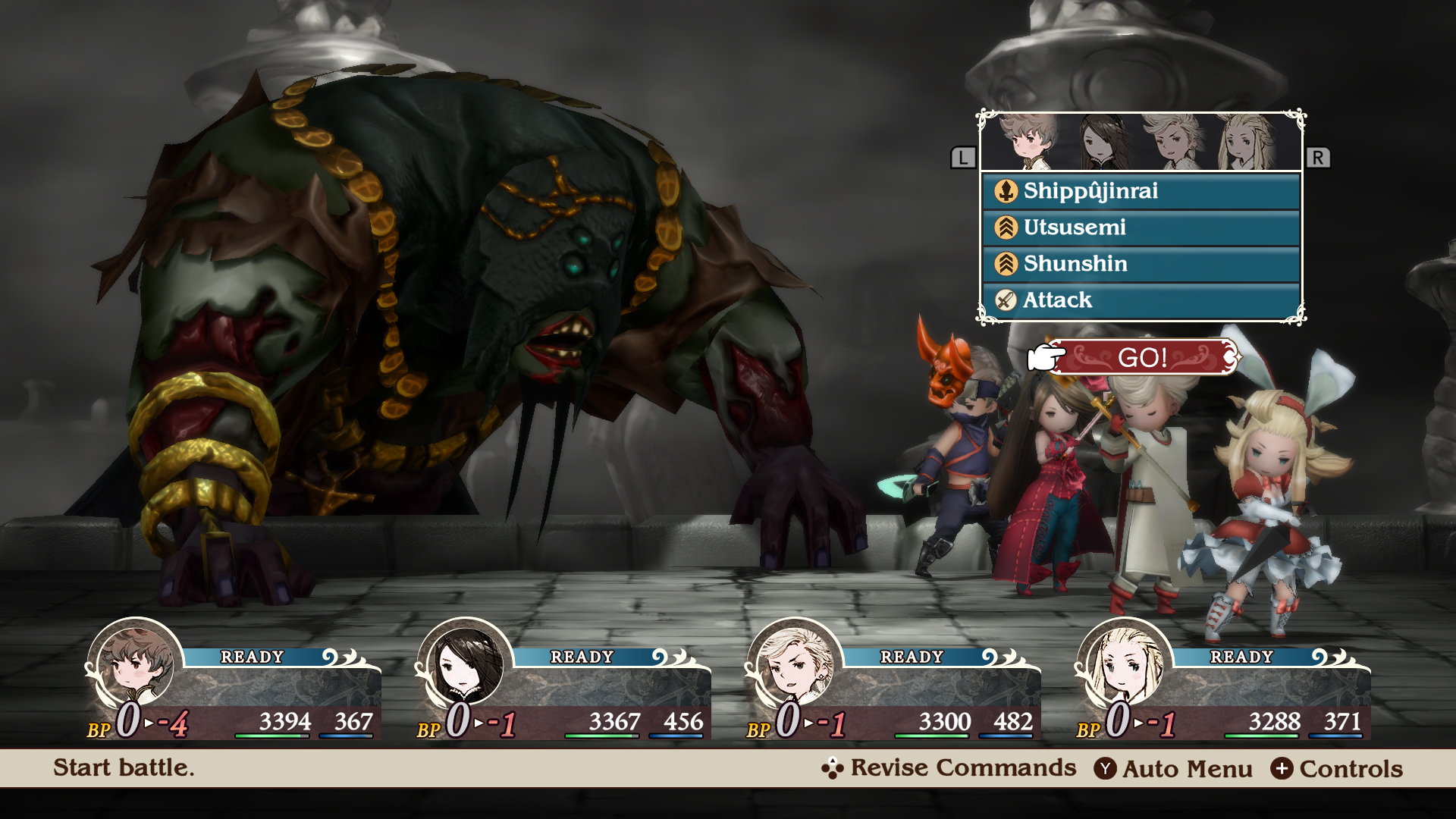
At its core, Bravely Default: Flying Fairy HD Remaster delivers classic turn‑based combat centered around the Brave–Default system:
Default: Defend and save BP for later.
Brave: Spend BP to act multiple times now, risking future turns.
This risk-reward mechanic creates a certain tension in every encounter. Boss battles often become strategic puzzles, demanding precise use of Brave/Default and effective party synergy. The Switch 2 version keeps this foundation intact and smartly builds upon it, allowing up to five custom encounter‑rate tactics for streamlined grinding. For example, using your attacker for 4x brave attacks, a mage for a well-timed group heal, and the other characters for additional backup attacks or support. You can save these tactics for further use, making grinding jobs and levels less tedious.

The job system: unlimited creativity in costume
After Final Fantasy V, job systems felt saturated in the JRPG genre, but Bravely Default breathed new life into the formula. With 24 asterisk‑unlocked jobs and the ability to cross‑equip secondary job abilities and carry passive skills, every party build can become uniquely yours. Here’s a deep dive into key jobs, their strengths, and their tradeoffs, since I went and unlocked them all (for review purposes, not for the need to complete games like these until 100% completion):
1. Freelancer
Pro: Super versatile early-game with unique utility (e.g. Dungeon Master)
Con: Weak stat growth and poor core combat performance
2. Monk
Pro: High raw damage, self-heals, and brutal counters
Con: Fragile against magic and ranged attacks
3. White Mage
Pro: Essential group healing and status removal
Con: Limited offense, MP reliant
4. Black Mage
Pro: Potent elemental nukes and group-casting capability
Con: Low survivability and MP hungry
5. Knight
Pro: High HP/defense, with protective skills like Shield Strike
Con: Very slow and vulnerable to magic
6. Thief
Pro: Fast, high accuracy, steals gear
Con: Damage falls behind in the late game
7. Merchant
Pro: Unique BP recovery and money-based attacks
Con: Requires lots of PG and setup
8. Spell Fencer
Pro: Imbues weapons with elemental damage
Con: Vulnerable while buffing
9. Time Mage
Pro: Controls turn order with Haste/Slow/Quick
Con: Low HP and high MP use
10. Ranger
Pro: Excellent against flying/nature enemies
Con: Weak vs armored foes, situational
11. Summoner
Pro: Wide-area, high-damage elemental spells
Con: Slow cast times and heavy MP demand
12. Valkyrie
Pro: Jump/dive moves for high burst + evasive maneuvers
Con: Delayed hits leave openings
13. Red Mage
Pro: Balanced black & white magic and MP conversion
Con: Mediocre in both offense and healing
14. Salve-Maker (Compounding)
Pro: Crafts powerful consumables mid-battle
Con: Complex resource management
15. Performer
Pro: Party-wide buffs + BP regen
Con: No direct damage output
16. Pirate
Pro: Strong debuffs and heavy melee hits
Con: Slow, needs first strike
17. Ninja
Pro: Dual-wield fast damage and high evasion
Con: Very low defense
18. Swordmaster
Pro: Counterattack stance punishes enemy hits
Con: Struggles against magic/AoE
19. Arcanist
Pro: Massive dark-power spells that pierce defenses
Con: Self-damaging, risky
20. Spiritmaster
Pro: Auto-revive, status removal, BP regen
Con: Support-only, fragile
21. Templar
Pro: Tanky with BP management and protective skills
Con: BP costs limit combo flexibility
22. Dark Knight
Pro: Huge damage potential via HP sacrifice
Con: Unstable, self-harming
23. Vampire
Pro: Learns enemy skills, flexible, and unique
Con: Slow, grind-heavy
24. Conjurer
Pro: Party buffs and elemental adjustments
Con: Low damage, long builds
So, some good team combinations would be:
Knight + White Mage: Traditional tank & healer, slow, but safe.
Spell Fencer + Ninja: Double attacks with elemental damage, fast and effective.
Performer + Spiritmaster: Infinite BP engine.
Time Mage + Summoner: AoE machine gun with free turns.
Valkyrie + Swordmaster: Delay, dodge, and return massive counters.
Each of these jobs is unlocked through special subscenarios, which are some of the best questlines in the game, so be sure to check them out.
More than just HD
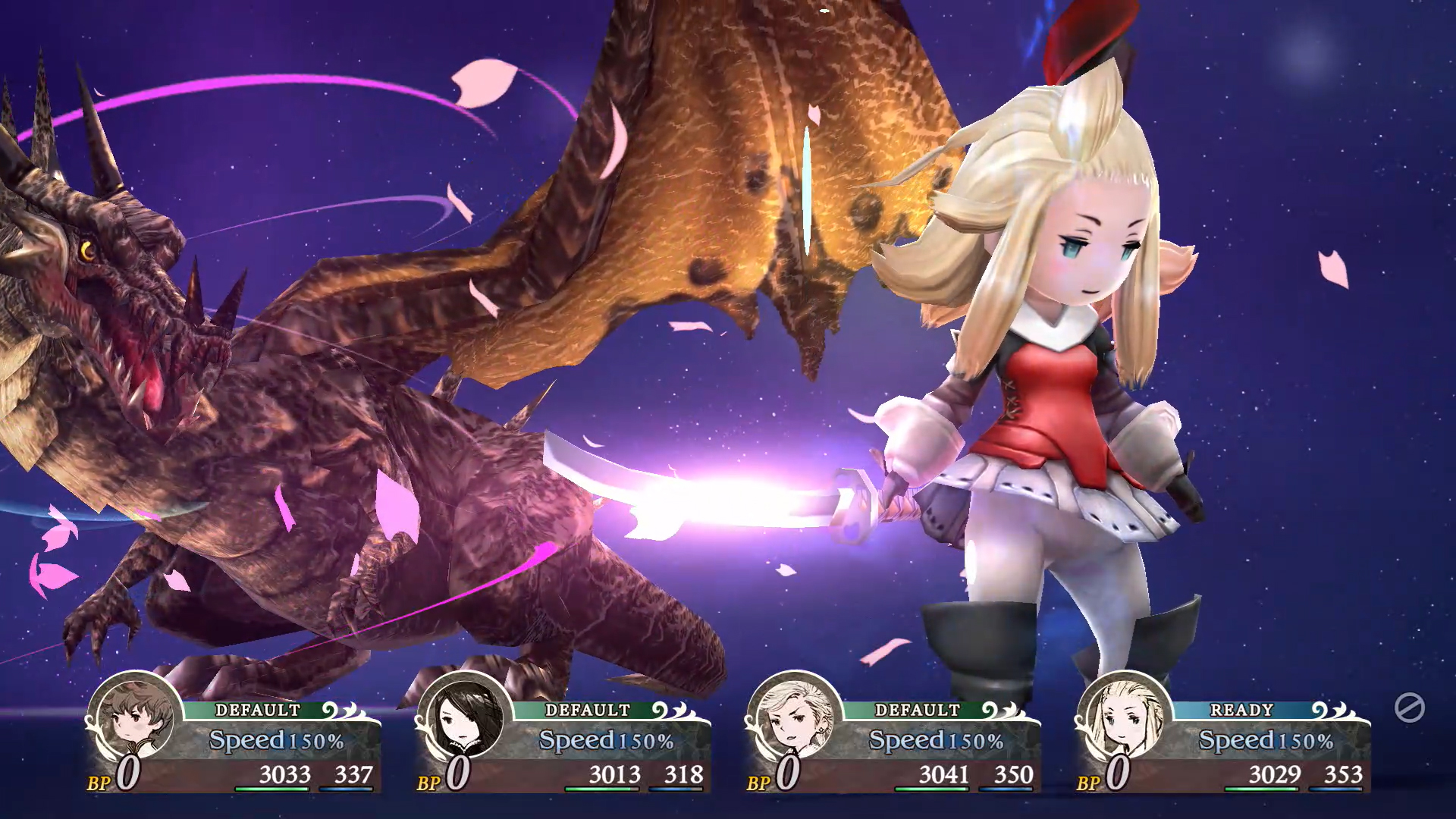
So, what do we get in this remaster? The upgrade offers full HD visuals and a locked 60 fps across both docked and handheld modes, where a redesigned single-screen UI replaces the dual-screen menus, eliminating clutter and enhancing clarity. The audio also receives a significant boost, with uncompressed dialogue injecting more emotion and presence into character moments. And don’t forget the soundtrack, which is one of the most mesmerizing things I’ve heard in years. The remaster isn’t a total overhaul, graphically speaking, character models remain the same low‑poly assets, but the cleaner textures and crisp frame rates help maintain the game’s charm, and I do love this art style.

New activities: mouse mode & norende
The remaster adds new Switch 2-exclusive mini‑games that use Joy‑Con mouse controls and shows that the mouse controls are much more than just a gimmick! It took some time getting used to it, but it became a fun part of the Remaster. There are two minigames:
Luxencheer Rhythm Catch: Tap and guide Joy‑Con cursors in rhythm mini‑games featuring Bravely’s musical themes. It felt a bit like Osu! or Elite Beat Agents, so Nintendo, if you are reading along, can we get more rhythm games on the Nintendo Switch 2? Or a Luxencheer Rhythm Catch spin-off?
Ringabel’s Panic Cruise: Pilot the party airship in real time, managing navigation, repairs, and fun environmental puzzles with a thrilling battle at the end of the road. This is one of the more hectic minigames in the Remaster, and you do need to be on your toes at all times. Rewarding, but challenging.
Rewards from these games unlock tokens used for rare accessories, encounter‑rate modifiers, and damage cap‑breaking equipment, yes, even the 9,999+ hits are back, you just need to unlock them!
The last minigame is the Norende rebuild, which was once dependent on StreetPass; it now functions via spirit villagers dropped by friends through online systems, a fluid, real‑time reconstruction of Tiz’s destroyed town. And if you don’t have ‘friends’ playing the game, there is a well-built AI function in the game that provides you with spirits and other AI Bots to help you attain specific unlocks. I will not spoil.
3DS versus Switch 2
SP Hourglass (Bravely Second) is gone—replaced by special equipment for damage‑cap breaking.
AR promos and Bravely Second post‑credits scenes have been removed.
0% encounter rate now unlocks through token rewards, not immediately.
Specific costumes and DLC are available but inaccessible unless datamined; some are unlockable through tokens.
Side‑by‑side:
| Feature | Nintendo 3DS Version | Switch 2 HD Remaster |
|---|---|---|
| Resolution & FPS | Dual‑screen, ~30 fps | Full HD, single‑screen, locked 60 fps |
| Interface/Menu Layout | Nested dual‑screen | Redesigned single‑screen UI |
| Encounter‑rate control | 0, 50–200% (varied via menu) | 0–400%, five saved tactics |
| Bravely Second/SP mechanic | SP Hourglass time‑freeze | Removed; Limit Break equipment replaces it |
| Minigames | Norende via StreetPass | Rhythm + airship games via mouse mode |
| Norende rebuild | StreetPass‑dependent | Spirit villagers, real‑time rebuild |
| Audio | Compressed voices, 3DS audio | Uncompressed dialogue |
| Cosmetics/DLC | Japan‑only DLC and AR modes | Costume data present but inaccessible |
| Bravely Second tease | AR post‑credits teaser | Removed |
Conclusion
So to conclude! Bravely Default: Flying Fairy HD Remaster proves itself as more than a nostalgic trip, it’s a modernised masterpiece. The Brave–Default combat, spiraling narrative loops, and deep job system are still the bedrock of its brilliance. Switch 2’s version polish, boosted performance, intuitive interface, richer audio, and replay incentives enhance the experience without cutting the level quality.
If you’re new to the world of Luxendarc, this is a breathtaking and time-consuming experience. Returning players get the definitive edition, trading 3DS quirks for smooth clarity and convenience. While the minigames and DLC quirks won’t matter to every player, they add valuable endgame motivation without overshadowing the core experience.
Bravely Default: Flying Fairy HD Remaster doesn’t reinvent the wheel, but it polishes it. It smooths out friction, preserves its essence, and presents the definitive version of a beloved JRPG. If classic turn‑based brilliance speaks to you, this is the version to play; brave or default.