
My daughter has a gnome-phase, so when Egglia dropped in our mailbox, she was all bout GNOMEEEES since she thought it was ‘Kabouter Plop de Videogame.’ Sadly, this was not the case since Egglia is all about folklore and centered around Redcaps (not Red Riding Hood). Unfortunately, redcaps are a not-so-family-friendly version of gnomes, so I had to play this while she was sleeping. Otherwise, I would have to explain why Kabouter Plop was murdering his forest friends…
Redcaps
Sure, I might exaggerate a bit, but redcaps aren’t family-friendly beings. The redcap (or powrie) is an evil, murderous goblin found in Border folklore. He is said to inhabit ruined castles along the Anglo-Scottish border, especially those that were the scenes of tyranny or wicked deeds, and is known for soaking his cap in the blood of his victims. He is also known as Redcomb and Bloody Cap. Luckily Egglia makes a lot of mentions about this one since our nameless protagonist is a trimmed redcap, so much more lovable.

Egglia is a new and improved Switch-specific version of EGGLIA: Legend of the Redcap, a smartphone RPG designed by Shinichi Kameoka and Koji Tsuda, the artists behind the Secret of Mana series’ gorgeous art style. The new Switch version has been “expertly optimized” for the console, throwing in updated visuals, graphics and mechanics, new content, new characters, and additional missions. And yes, they didn’t lie. Of course, you can still feel about how the game functions that it was designed for a smartphone, but it works great on the Nintendo Switch.
Egglia: Rebirth – Switch!
If you haven’t played this one before, I’m assuming, since you’re reading this review; Egglia is a turn-based RPG in which players control a redcap named Chabo, who has fallen from the sky and landed on the continent of Egglia. As Chabo, you’ll need to hunt down monsters for experience and gather resources using a turn-based dice combat system. You’ll also be tasked with growing a village and building and customizing homes for the characters you meet throughout the story.
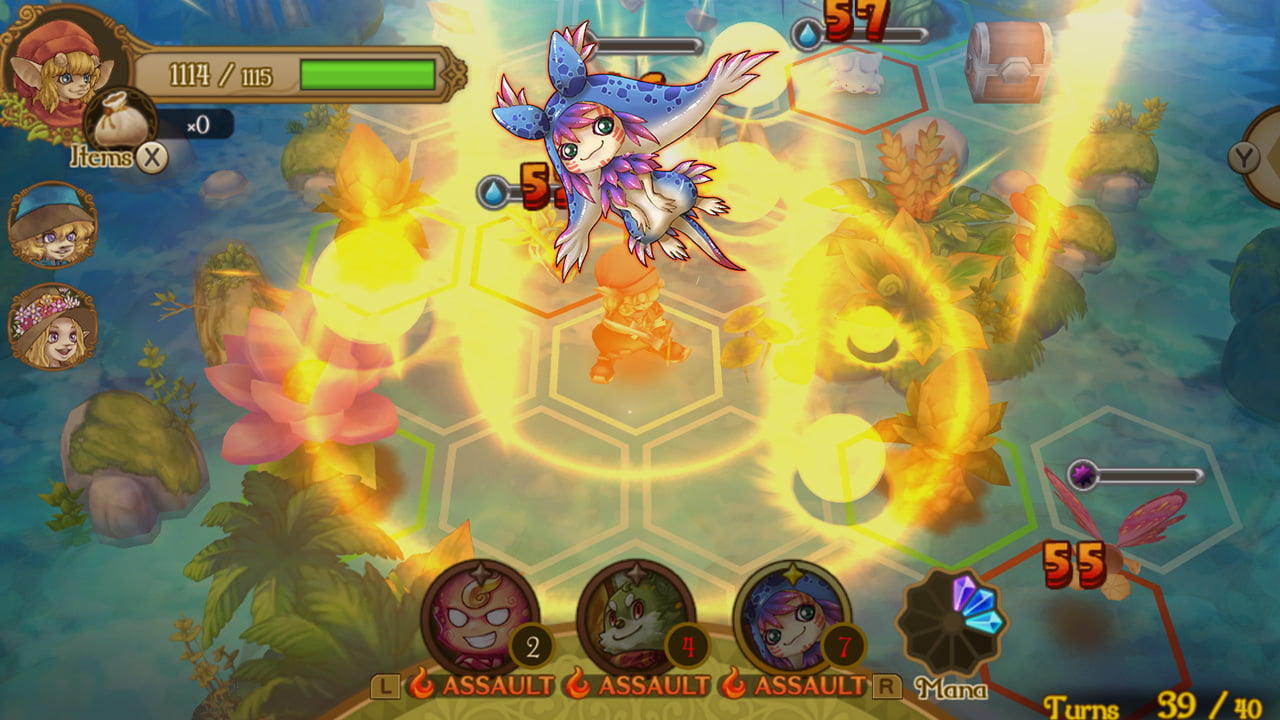
This weird mixture of genres (like an omelet, since it’s a game about eggs, get it?), results in basically an odd hybrid mixture of Animal Crossing, Harvest Moon, a touch of Legend of Mana/Secret of Mana, and a flair of Gatcha. I’m still a bit confused about what I think about this – since the game throws a lot at you as a player. It’s one big hurricane of new features, characters, and options to do so that you won’t be bored, trust me. So how does the rest of the game function? Well, let’s crack some more eggs.
Movement
While Egglia: Rebirth offers free movement in your village, like in Harvest Moon, mobility and actions are tied to dice rolls when out on missions. Each stage is divided into honeycomb-style grids, and the player rolls a die at the beginning of each turn. The outcome of this roll determines how many spaces you can move on this grid, as well as the amount of damage dealt when attacking enemies. It’s a fascinating approach to traditional turn-based combat that borrows heavily from the randomized nature of classic tabletop games. Initially, I wasn’t entirely sure I loved the system, but I quickly grew to appreciate its simplistic hook. Next to attacking enemies, you can open chests, break stuff for resources or choose to explore the map (until you run out of turns).

In between your expeditions to these egg-shaped lands, you’ll head back to your home village to manage a host of captivating farming mechanics. Players can grow crops, harvest minerals, lure new partner spirits with food, and even customize their own house as they see fit. Many of these systems are tied to timers; they encourage a fascinating blend of active and passive gameplay. As a result, you are rewarded with items and resources for essentially everything you do in Egglia: Rebirth. That consistently delivers a satisfying sense of progression, even when I could only play for 15 to 20 minutes at a time.
Art-tastic!
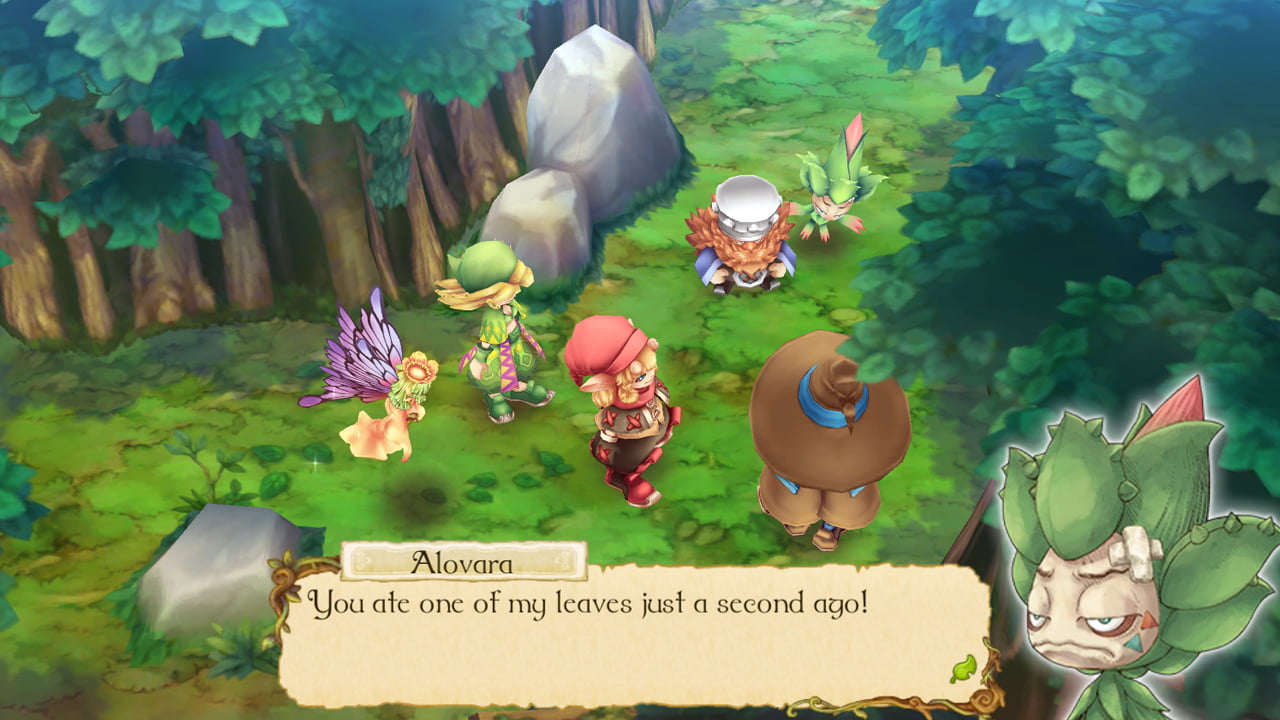
Another aspect that took me by surprise is the art style. Egglia manages to tap into the iconic art direction of Legend of Mana in powerful ways. The art style on the banner can come off as a bit depressing, but the character design is highly on point. It feels rewarding to feel connected to the quirkiness of the characters you meet. Even simple things like consumable items or seeds for farming are oozing with attention and creativity. It’s hard not to smile seeing some of the ingenious ways this team merged common foods and animals into unique produce pieces. The iconic water-color-inspired art style of titles like Legend of Mana is incorporated with modern 3D models to incredible effect.
Harvest Story Crossings
The wholesome and soothing gameplay loop will feel right at home for fans of Animal Crossing and Harvest Moon. In addition to some elements of action-oriented combat, players can view Egglia: Rebirth as a relaxed way to unwind at the end of the day. Outside of the dungeon-like stages, your home village will serve as your social hub for all the residents you’ll recruit throughout your adventures. You can spend time getting to know them, give them gifts, and even help them redecorate their houses. If you’ve played any of the Harvest Moon/Story of Seasons or Animal Crossing games, this loop will likely be very familiar and very satisfying.

The deeper I got into EGGLIA: Rebirth, the more I found the crafting mechanics. Gathering resources in an overworld stage would allow me to take those items and create new pieces of furniture for my use as well as my residents. Much like Animal Crossing, furniture doesn’t inherently affect the gameplay systems. However, it allows you to express yourself within the game. I’m not even at the end of EGGLIA: Rebirth’s campaign, and I’ve already unlocked hundreds of customization items.
Conclusion
So, to conclude, even though it may not look like it, Egglia: Rebirth is worth putting on your radar. For fans of the genre or games like Animal Crossing/Harvest Moon that are in the market for something new – the game offers something for everyone. Combine this with its loveable art style and dialogue, and you get yourself a winner. This is how your port a mobile game to consoles.
