
Never judge a book by its cover, part two! Back then, I took you on a journey with Lyrica, a rhythmical graphic novel. Today I want to take you on another journey, and yes, I still have the rhythmic feel of a block of concrete.
Lyrica (and Lyrica2) is a rhythm game of the Osu! Variety. Osu! is a game where you tap/hold/drag the icons that appear on the screen in time with the music. Lyrica does the same and does not stand out as a rhythm game, but it has other features! Where other rhythm games are a mixture of musical tracks, genres, and licenses or have a broad theme (the best Vocaloid music, etc.), Lyrica is razor-focused on one single piece, taking Chinese classical poems and turning them into lyrics for music. This time the game centers around the story of Shiue and Bai forming a band with Yang and Chun. The lives of the great Chinese poets’ Li Shangyin and Du Mu intersect with the dreams of Shiue and Bai. One night he has a vision of traveling to the ancient past in China and encounters a mysterious poet.

Chinese poems?
For those who are not familiar with the Chinese Hanzi, you can admire them since the poems are written in untranslated Chinese characters, with some beautiful, artful brushstrokes popping up onto the screen to enhance the aesthetic experience of each music track. This feature can be compared to the style of Okami, which uses a similar art style for its Kanji. Of course, this means that the words don’t make much sense to anyone who can’t understand the language. But given the analytical and interpretive skills required of poetry, having the poems translated into English would have been overwhelming to the audience trying to make sense of it all. Instead, Lyrica relies on the nature of music as a universal language. I still stand by my opinion that you can compare it to going to the opera. Most people don’t understand the words sung in an opera (me included), but they certainly get an intense sensation of what’s going on through the tone of the music.
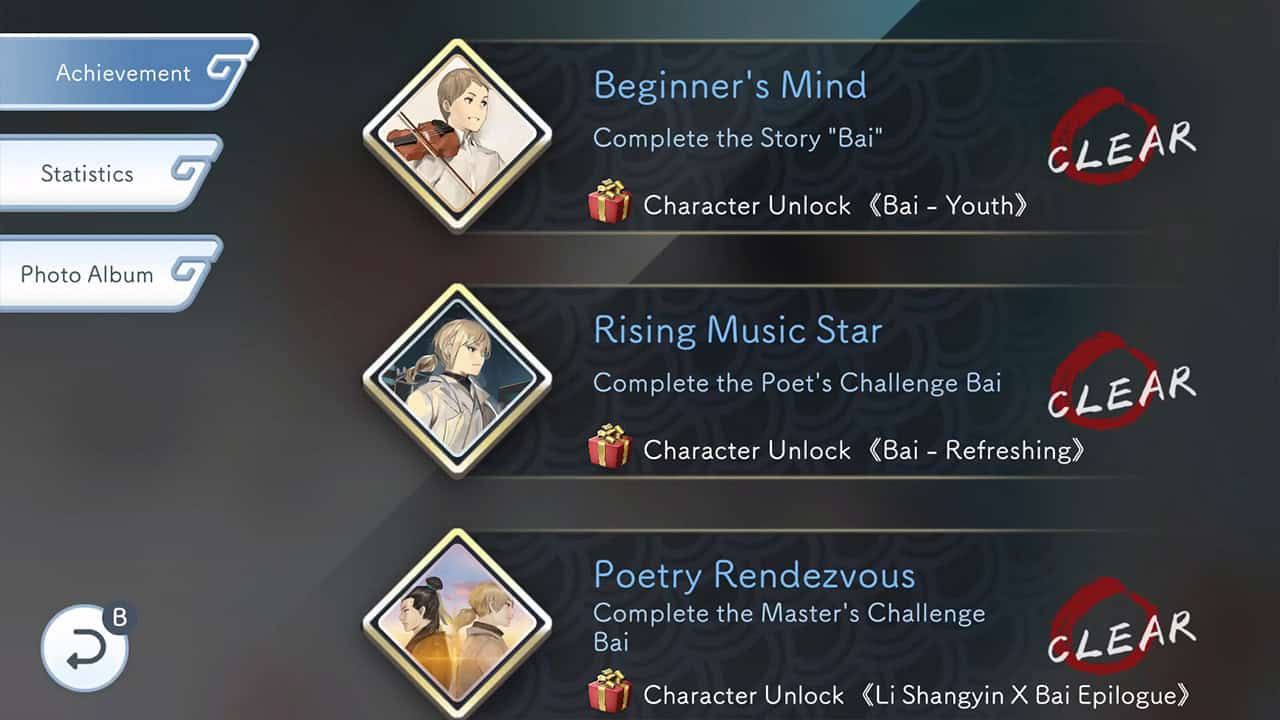
Lyrica2 Story mode
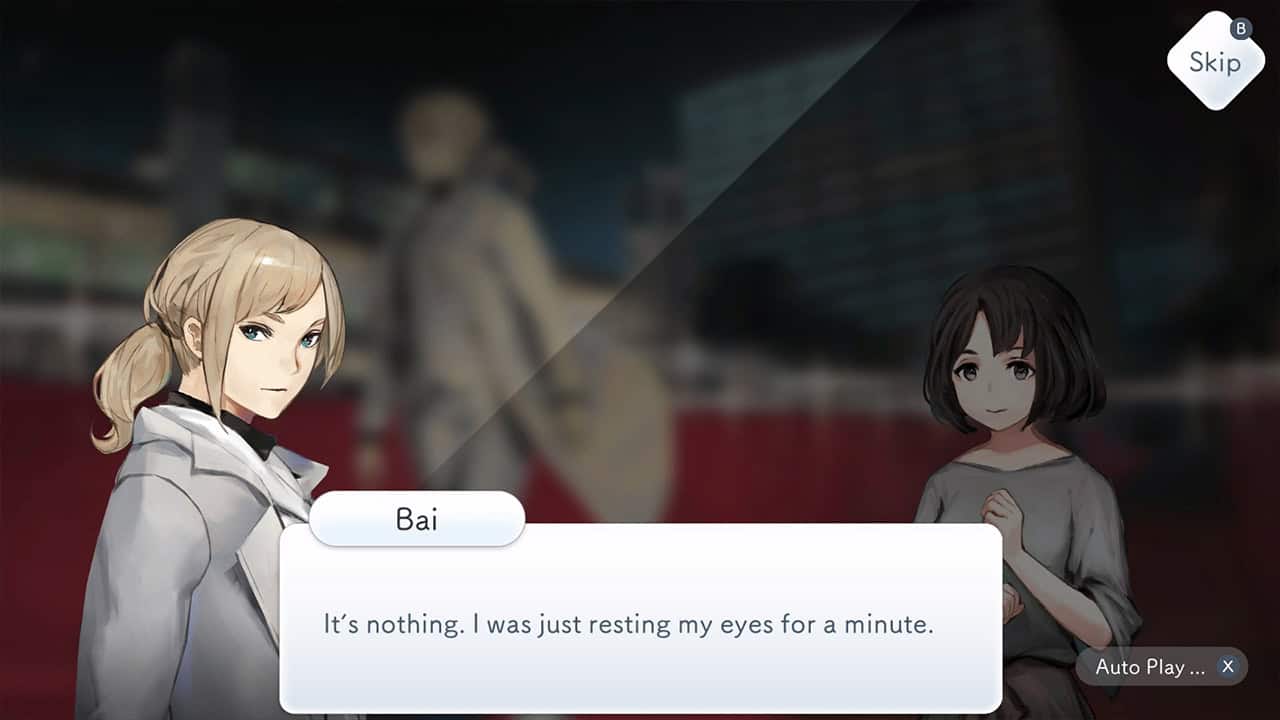
Just like in the first game, I highly recommend you play through the story mode. The story mode is structured as a series of art panels that slowly unlock as you complete objectives within the rhythm games. These objectives aren’t that hard and differ between getting a specific score or scoring a >% combo on a song. With each panel cleared away, you get a cut scene that explores a story that moves between the people of history and those in the modern day. As a historian, I applaud storytelling through games like this since European history books don’t spend much time on Chinese history (thanks to the Eurocentric view on history).
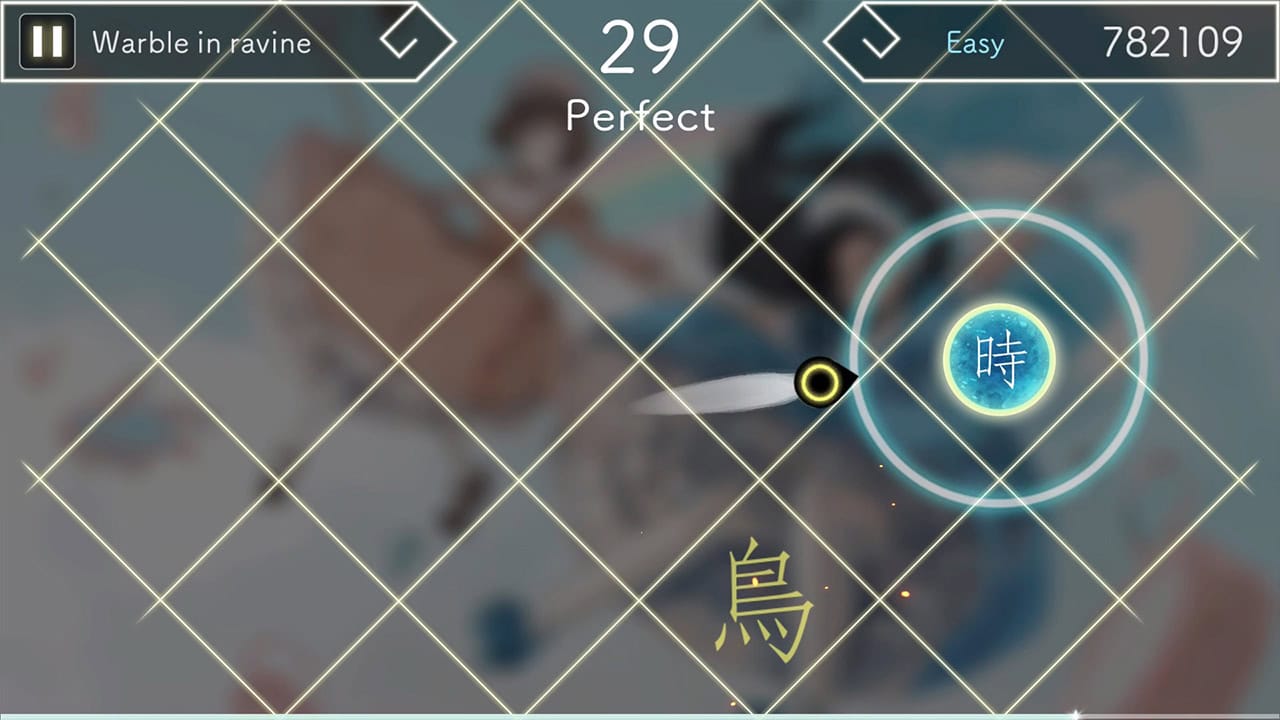
Where is the challenge?
If you want to make the game more challenging, Lyrica has just the modes for you! Try your hand at the Challenge Mode, which unlocks more characters and tracks to play, and the game’s experience system makes sure that it drip feeds you new music to play at just the correct rate to keep playing, and on, and on. There are four difficulty settings, and while rhythm game veterans will likely find the first three difficulties too easy, the highest setting should provide an interesting enough challenge, while the easiest difficulty seeing is perhaps the most accessible that I’ve seen in a genre that isn’t usually that exciting inaccessibility.
Conclusion:
To conclude: Lyrica 2 is a good rhythm game, again, which stands out through its sense of history and the addition of Chinese literature. The main problem is that it felt like Lyrica (1) since they did nothing to change or spice the game up. I know that never change a winning recipe, but I think they could have done something… else with Lyrica2? But if you like rhythm games or are interested in Chinese culture in any way, you should try Lyrica or Lyrica2. And remember, don’t judge a book by its cover.
