
Back in January, when I reviewed Final Fantasy VII Remake Intergrade for Nintendo Switch 2, I found myself in a somewhat unusual position, not because the game needed any introduction, I mean, it’s Final Fantasy VII. This is arguably one of the most recognizable names in gaming history, but because I was reviewing a version of a game that, for years, many Nintendo players simply assumed would never arrive on Nintendo hardware. And yet, there it was. A modern reimagining of one of gaming’s most beloved RPGs, running on a Nintendo system and doing so surprisingly well. More importantly, Remake Intergrade reminded me why Final Fantasy VII has remained such a cultural touchstone for nearly three decades. Beneath the nostalgia, the spectacle, and the endless discussions about what exactly Square Enix is doing with this remake trilogy, there was simply a fantastic role-playing game. One that took a portion of the original story and transformed it into a character-driven adventure that felt both familiar and refreshingly new.
At the time, I praised Intergrade not only for the quality of the remake itself, but also for its willingness to flesh out characters and events that had once occupied only a handful of scenes in the original PlayStation classic. It was a game willing to take its time, to let players get to know Avalanche, to better understand Midgar, and to explore corners of the world that previously existed only in our imagination. What I perhaps underestimated then was just how much of that experience functioned as preparation for what would come next. Because Remake offers a more focused experience, while Rebirth is way more expansive. I still hear my colleagues laughing at my way-finding skills in big open-world RPGS, so I knew I was in for a challenge.
You can read the review I’m building upon, right here:
Review: Final Fantasy VII Remake Intergrade (Nintendo Switch 2)
And they weren’t lying. Where Remake was confined to the steel corridors and towering reactors of Midgar, Rebirth opens the gates and finally allows players to step into the wider world that fans have spent decades dreaming about. And where Remake occasionally felt like an elaborate promise of things to come, Rebirth is the moment Square Enix starts cashing in on that promise, even though some fans still argue that this remake isn’t “the way Cloud’s story should have gone”. Still, whatever team you are on, the result is one of the most ambitious role-playing games of the current generation and, remarkably, one that now finds itself running on Nintendo Switch 2.
The journey truly begins
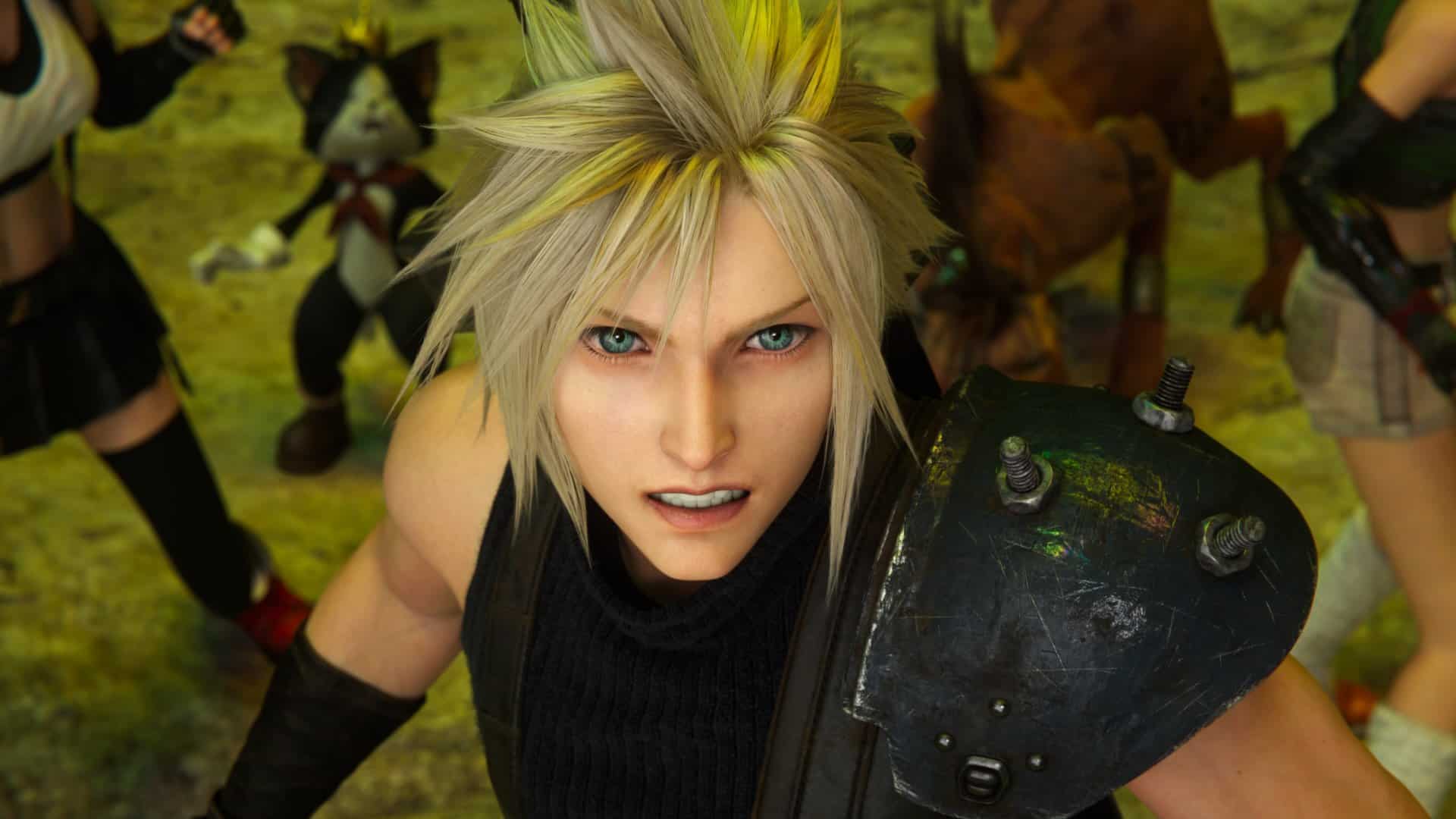
One of the most common criticisms of Final Fantasy VII Remake upon its original release was that it covered only a relatively small section of the original game’s narrative. For longtime fans, Midgar represented merely the opening act of Cloud’s journey. An important opening act, certainly, but only the beginning of something much larger, and Rebirth immediately addresses that concern. So, here we are, picking up shortly after the events of Remake, Cloud Strife, Tifa Lockhart, Barret Wallace, Aerith Gainsborough, and Red XIII leave Midgar behind and begin their pursuit of Sephiroth across the planet. The oppressive industrial skyline of Shinra’s metropolis quickly gives way to sprawling grasslands, mountain ranges, coastal regions, and towns that many players have waited decades to see realized with modern technology. Without venturing into spoiler territory, Rebirth continues exploring the mysteries surrounding Sephiroth’s plans, Cloud’s increasingly fractured sense of self, and the uncertain future awaiting the planet. Veterans of the original game will recognize many familiar locations, characters, and story moments, but Square Enix continues to walk a fascinating line between recreation and reinvention. This remains a remake trilogy willing to surprise even those who know the source material inside and out.
What impressed me most throughout the narrative is how effectively Rebirth balances its massive scope with intimate character moments. Despite featuring larger environments, more objectives, and significantly greater freedom, the game never loses sight of its cast (and yes, other Nick, I did lose my way more than once). In fact, many of the strongest moments occur during quiet conversations, optional interactions, and seemingly minor exchanges between party members. That emotional investment pays dividends because Rebirth asks players to spend considerably more time with these characters than ever before. Which brings me to another addition to the Remake version of the Nintendo Switch 2 release. What is that? Well, highlighting the importance of Intergrade’s Yuffie episode.
When Episode INTERmission was originally released, some players viewed it primarily as bonus content. An enjoyable side story, certainly, but not necessarily essential. After playing Rebirth, that perspective becomes much harder to defend. Yuffie’s additional storyline provides valuable context for both her character and several broader narrative threads that continue developing throughout this second installment. Having Intergrade readily available on Switch 2 before diving into Rebirth creates a far more cohesive experience than many players originally enjoyed when these games launched separately. Character introductions feel stronger, motivations become clearer, and certain emotional beats carry significantly more weight. In many ways, Rebirth benefits enormously from the groundwork laid by Intergrade, and that is perhaps one of the remake project’s greatest strengths: every release feels increasingly interconnected (intermission, interconnected, yes? No? Okay, moving on).
From corridors to continents
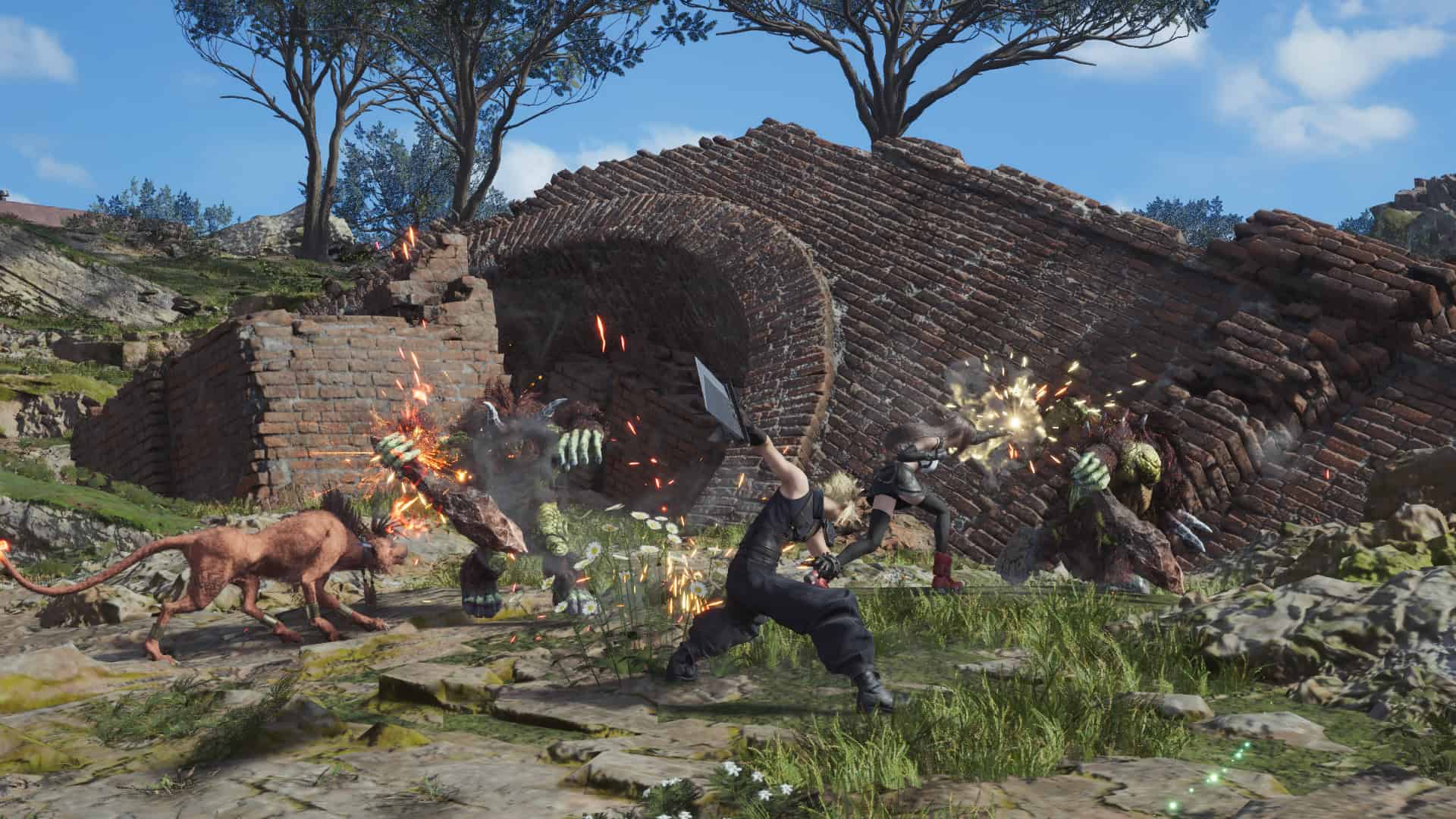
The most immediate difference between Remake and Rebirth becomes apparent within the first few hours. Space. Lots and lots of space. No, not the actual space with rockets in it, worldly space. Remake was often criticized for its linear structure, though I personally felt that approach suited the story being told. Midgar was always intended to feel oppressive. Its narrow streets, industrial infrastructure, and confined districts reinforced the atmosphere Square Enix wanted to create. Rebirth operates according to entirely different principles. Letting you deal with large regional maps allows players to explore at their own pace, uncovering secrets, completing objectives, and gradually revealing additional activities scattered throughout the world. Rather than simply moving from one story mission to the next, players are encouraged to engage with each region and uncover what it has to offer. And lucky for us, exploration rarely feels like busywork. Every region contains a mixture of combat encounters, environmental puzzles, world intel objectives, monster hunts, and optional discoveries. Completing these activities contributes to meaningful progression systems, unlocking new opportunities and rewards that make exploration feel worthwhile. But maybe most importantly, the game understands that variety is essential. One moment, you may be hunting dangerous creatures for Chadley’s research initiatives. Next, you’re searching for hidden landmarks, activating ancient structures, or investigating mysterious phenomena tied to the world’s history. Rebirth constantly rotates activities to prevent repetition, resulting in a game that consistently rewards curiosity.
The joy of getting distracted
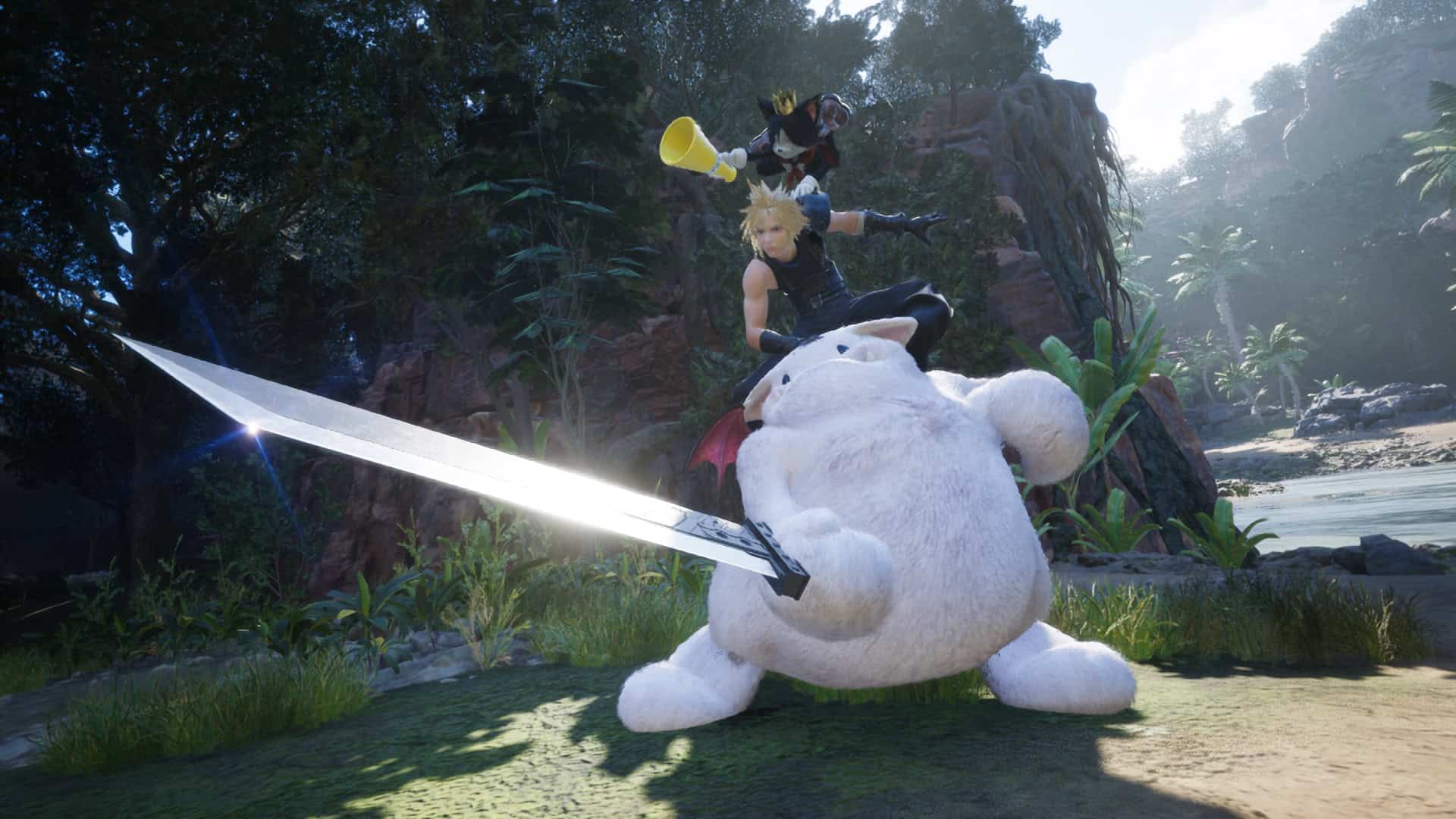
If the main storyline forms the backbone of Rebirth, then its countless side activities serve as the connective tissue that brings the world to life. Few modern RPGs embrace side content with quite the same enthusiasm, with only the Xenoblades series coming to mind. The game’s optional quests frequently go beyond simple fetch objectives, focusing on expanding relationships with party members, introducing local stories, or providing additional context for specific regions. While not every side quest is equally memorable, the overall quality remains remarkably consistent. And then there are the mini-games. A lot of mini-games, perhaps even more than any Final Fantasy title before it. Yet somehow, Rebirth manages to make this abundance feel charming rather than overwhelming. Plus, it features an amazing card game, so it was Gwent (Witcher series) all over again.
The beloved card game Queen’s Blood quickly becomes an addiction in its own right, offering enough depth to justify hours of dedicated play. Hunting down opponents, winning cards needed for your deck, and beating the championship are some of the most rewarding moments in the game. Only to be topped by Chocobo-related activities, which return in expanded form, while various rhythm games, combat challenges, races, and completely unexpected diversions appear throughout the adventure. Oh, and screw the piano minigame. There were multiple occasions where I sat down intending to progress the main story, only to realize several hours later that I had accomplished absolutely nothing beyond playing mini-games and exploring side content, which is a problem when you are on a schedule to review this game. But, strangely enough, that’s one of Rebirth’s greatest compliments. The world feels inviting enough that getting distracted becomes part of the experience rather than a deviation from it.

A cast that continues to shine
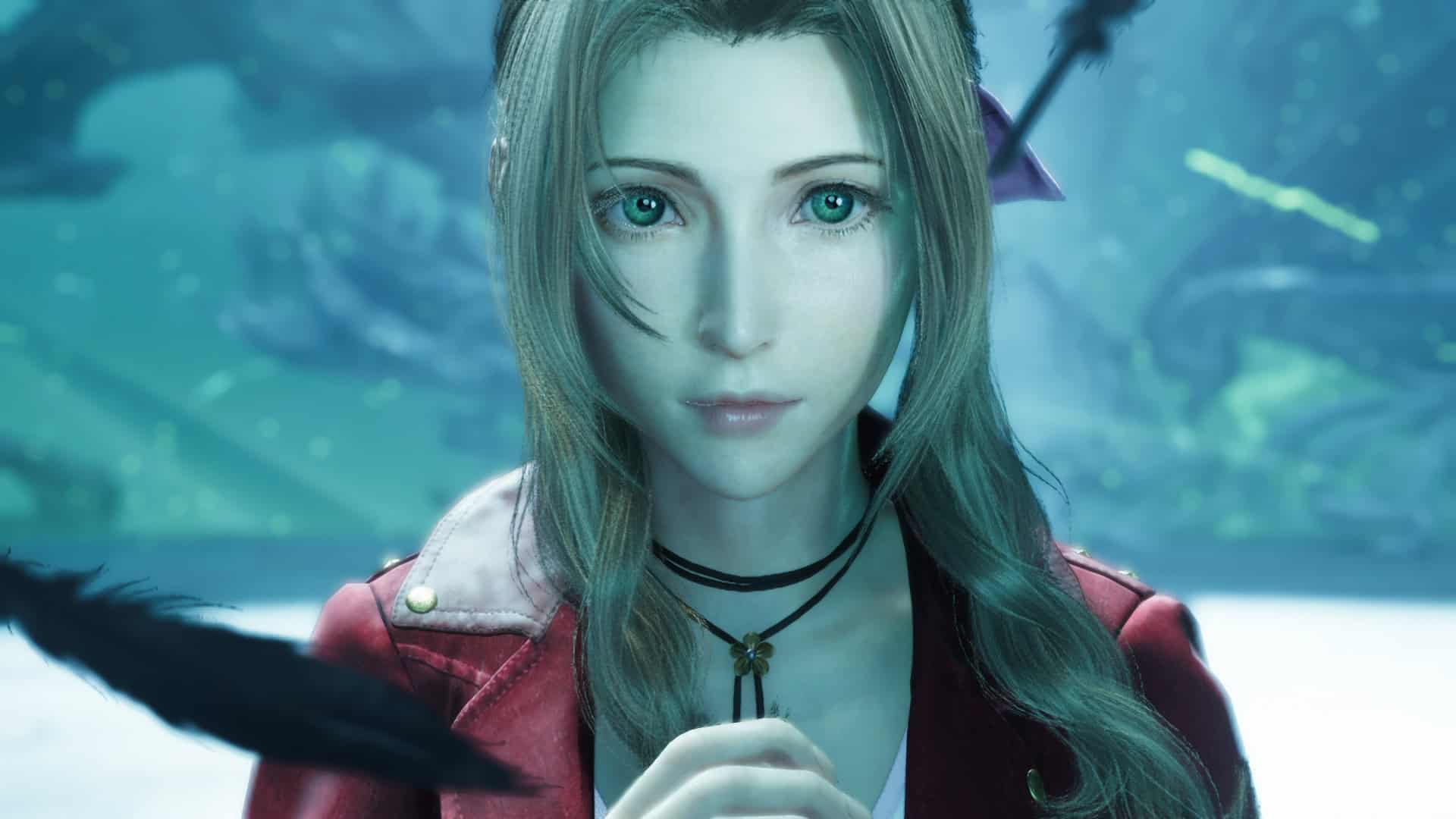
Characterization has always been one of Final Fantasy VII’s defining strengths, and Rebirth elevates nearly every member of its ensemble. So let’s do a quick rundown on the group and look at ‘how’ they changed without spoiling it. Cloud remains the central figure, though his internal struggles become increasingly prominent as the story unfolds. Tifa continues to serve as both emotional anchor and devastating close-range combatant, while Barret provides some of the game’s most heartfelt moments alongside his formidable ranged capabilities. Aerith remains endlessly charismatic, balancing optimism and vulnerability in equal measure. Red XIII finally receives the spotlight he deserves after spending much of Remake as a guest participant rather than a fully developed party member. Then there’s Yuffie. Already a fan favorite for many players (myself included), Rebirth benefits tremendously from the additional characterization established through Intergrade. Her energy, humor, and occasional recklessness make her a constant source of entertainment, while her combat mechanics rank among the most enjoyable in the entire game. I mean, grappling hooks, amazing-looking swords, and an oversized shuriken? Yes please.
Combat itself remains one of the strongest systems Square Enix has ever produced. The hybrid blend of action-oriented gameplay and strategic command selection returns largely intact, but numerous additions significantly expand player options. Synergy attacks create exciting opportunities for cooperation between party members, while individual skill trees and customization systems provide ample room for experimentation. And this makes every character feel distinct, with enough room for the party composition of your choice to be viable. Every major encounter encourages players to think creatively rather than simply relying on brute force, especially since sometimes you are ‘softlocked’ out of your team of choice.
An open world that shouldn’t exist on a handheld
So, you came here to read about this portion, didn’t you? Time to rip off the bandaid and address the elephant in the room. How does a game this large actually run on Nintendo Switch 2? The answer is surprisingly well. To fully appreciate what Square Enix has accomplished here, it’s worth remembering the difference in scope between Remake and Rebirth. While Intergrade largely operated within contained environments and carefully managed transitions, Rebirth embraces enormous open regions filled with dynamic elements, complex geometry, and an impressive amount of environmental detail. On paper, it sounds like a nightmare for portable hardware, but in practice, the Nintendo Switch 2 proves more than capable of handling the challenge.
Docked mode consistently delivers the strongest presentation, with sharp image quality and stable performance throughout much of the adventure. Visual compromises compared to premium hardware configurations certainly exist, but they rarely distract from the experience itself. Character models remain excellent, animations retain their expressiveness, and the artistic direction continues to carry much of the visual presentation. Handheld mode, however, is where Rebirth becomes genuinely impressive. There’s something inherently magical about exploring locations such as Junon, Costa del Sol, and the wider world of Gaia while sitting comfortably on a couch, in a train, or anywhere else a handheld system can travel. The occasional reduction in visual fidelity (most evident in the party members’ haircuts) becomes far easier to forgive when viewed through that lens. More importantly, the game maintains its identity, which doesn’t feel like a stripped-down version of Rebirth; it feels like Rebirth. And that’s arguably the highest compliment possible.

Final Fantasy VII has become its own universe
As I approached the end of Rebirth, I found myself reflecting on something I hadn’t fully appreciated during Remake. Final Fantasy VII is no longer simply a beloved entry within the Final Fantasy franchise, since it has effectively become a franchise within the franchise. Few games have received this level of continued expansion. Between the original release, Crisis Core, Advent Children, Dirge of Cerberus, Ever Crisis, novels, mobile projects, and now the Remake trilogy, Square Enix has spent decades building an ecosystem around a single world and cast of characters. And honestly? It’s easy to understand why. The themes remain relevant. The characters remain compelling. The setting remains iconic. Every time Square Enix revisits this universe, there appears to be another story worth telling, and at the same time, Rebirth highlights just how distinct Final Fantasy VII has become from the broader franchise. While each numbered Final Fantasy traditionally introduces new worlds, characters, and concepts, VII continues expanding outward like a universe unto itself. It’s no longer merely one chapter in Final Fantasy history, but has become one of gaming’s most significant multimedia worlds. And Rebirth serves as further proof that there is still plenty of life left within it.
Conclusion
Final Fantasy VII Rebirth accomplishes something extraordinarily difficult. It takes a beloved story that many considered impossible to improve upon and expands it in ways that feel meaningful, ambitious, and surprisingly respectful. It transforms a focused remake into a sprawling adventure, deepens an already exceptional cast, and delivers one of the most content-rich RPG experiences available today. More importantly, it validates everything Square Enix set out to achieve with this trilogy. For Nintendo Switch 2 owners, the achievement becomes even more remarkable. Rebirth isn’t merely another major third-party release arriving on Nintendo hardware. It’s proof that the platform can host modern blockbuster RPGs without sacrificing their identities. Just a few months ago, Remake Intergrade demonstrated what was possible, and now Rebirth demonstrates what is achievable. The fact that one of the most ambitious role-playing games of the decade can be played both on a television and in handheld form without losing the essence of what makes it special is nothing short of impressive. For longtime fans, this is an easy recommendation. For newcomers willing to start with Intergrade first, it represents one of the finest RPG journeys currently available. And for Nintendo Switch 2 itself? This may very well be one of its defining showcase titles (for now).