
I love Castlevania; I breathe Castlevania, and I played almost every Castlevania game out there (at least those at a Nintendo console/handheld). So I was happy that the Castlevania Collection dropped on the Nintendo Switch since it features one of my favorite games, namely Aria of Sorrow (which is, hands down, one of the best Castlevania games).
Castlevania?
For those unfamiliar with the series, Castlevania, known in Japan as Akumajō Dracula, is a gothic horror action-adventure video game series and media franchise about vampire hunters, created and developed by Konami. It has been released on various platforms, from early systems to modern consoles and handheld devices such as mobile phones. In addition, the franchise has expanded into other media, including comic books, an animated television series (Netflix), and several spin-off video games.
Castlevania is set mainly in the eponymous castle of Count Dracula, the main antagonist of the Belmont clan of vampire hunters. It debuted with 1986’s Castlevania for the Nintendo Family Computer Disk System. The first entry and most of its sequels are sidescrolling action platformers and were succeeded by the 1997 game Castlevania: Symphony of the Night. Initially released for the PlayStation, it returned to the nonlinear gameplay seen in Castlevania II: Simon’s Quest, which introduced RPG elements and exploration. Several installments later adopted Symphony of the Night’s gameplay, and along with Super Metroid, it has popularized the Metroidvania genre (hence the name).
Circle of the Moon

Since the series features four games in total, I’m going to review them all-in-one go, but with separate scores for each! So let’s begin with Castlevania: Circle of the Moon titled simply Castlevania in our region. Originally published for the Game Boy Advance as a launch title in 2001, Circle of the Moon belongs to core-series (even though it’s no longer canon), the premise of which centers on the eternal conflict between the vampire hunters of the Belmont clan and the vampire Dracula. And I’m not going to lie – don’t start with this one if you haven’t played a Castlevania game before. It’s pretty hardcore, even for me.
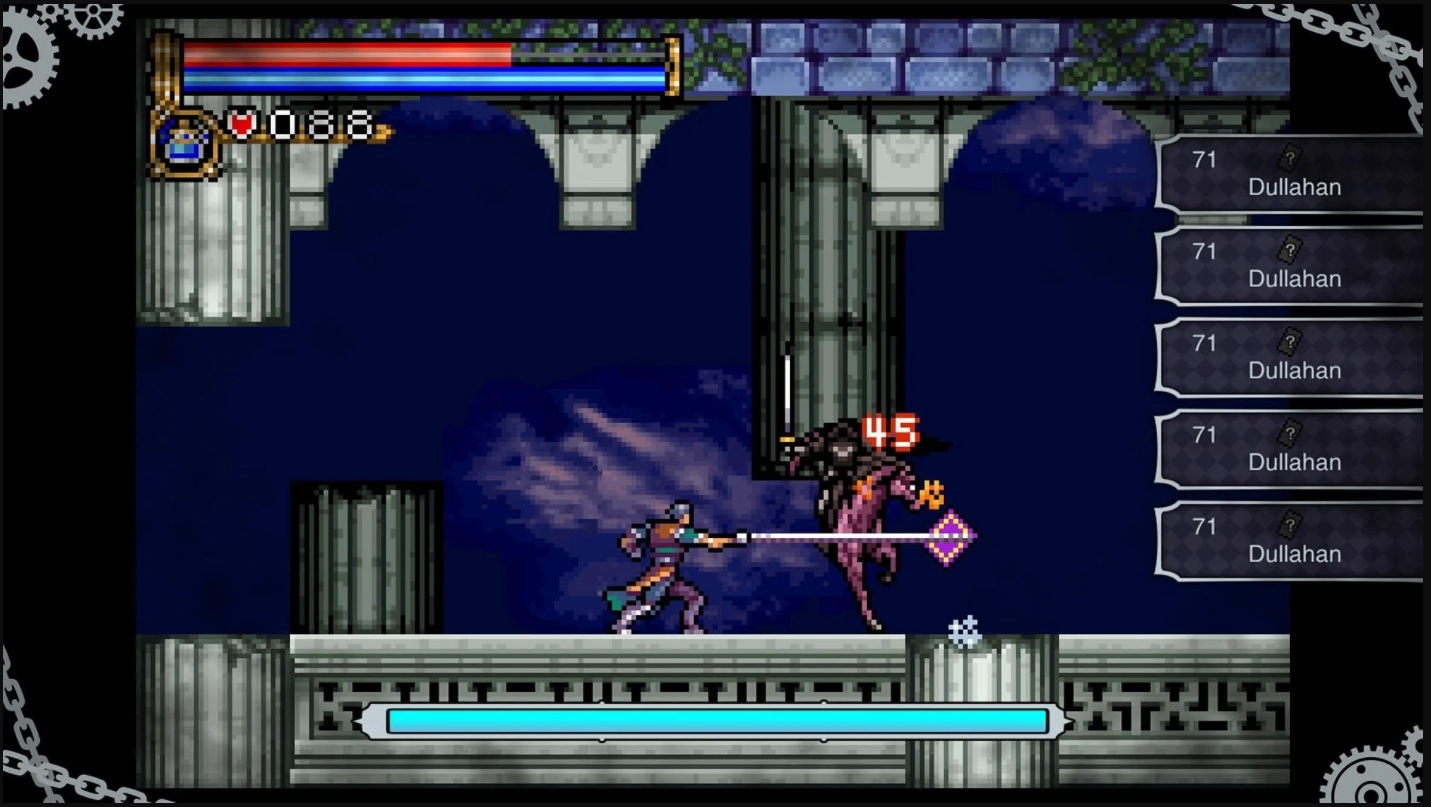
Taking place in 1830, Circle of the Moon is set in one of the fictional universes of the Castlevania series. However, the Circle of the Moon protagonist is Nathan Graves, whose parents died a decade ago to banish Dracula. Morris Baldwin, who helped in Dracula’s banishment, trained him to defeat Dracula and the monsters; Morris ultimately chose him as his successor and gave him the “Hunter Whip” to the displeasure of Hugh, Morris’ son, who trained alongside him. At an old castle, Camilla, a minion of Dracula, revives him, only to be interrupted by the arrival of Morris, Nathan, and Hugh. Before they can banish him again, Dracula destroys the floor under Nathan and Hugh, causing them to plummet down a long tunnel. Surviving the fall and wishing to find his father, Hugh leaves Nathan behind. Nathan proceeds to search the castle for his mentor. And I won’t spoil the rest, but the story is pretty linear and not full of surprises (in a good way).
Gameplay
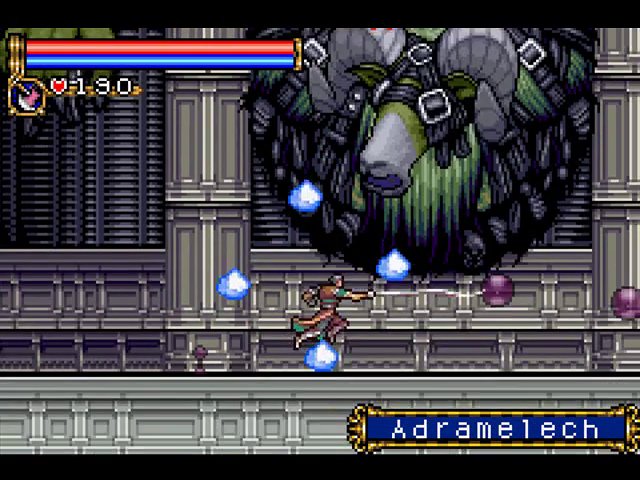
Circle of the Moon makes use of a 2D sidescrolling style of gameplay, similar to many of the previous Castlevania video games. The objective of Circle of the Moon is to lead player character Nathan Graves through a monster-filled castle as he searches for his kidnapped mentor. Like many of the previous Castlevania protagonists, Nathan uses a whip to attack and defeat enemies, alongside secondary weapons—an ax, cross, holy water, dagger, and stopwatch—only one of which may be carried by any time the player. Hearts, typically found within candles, are used as ammunition for sub-weapons, some using more than others. Circle of the Moon follows a nonlinear style of gameplay: at the beginning of the game, Nathan can only traverse certain areas of the castle; by obtaining various abilities, such as becoming able to run (which helps a lot, the beginning is so slow), double jump, and wall kick, he gradually explores the castle. He will also encounter rooms that can teleport him across portions of the castle and rooms that will restore his health and allow the player to save their progress in the game. The game automatically updates the castle map to reflect Nathan’s progress through it.
It’s time to D-D-D-DDS!
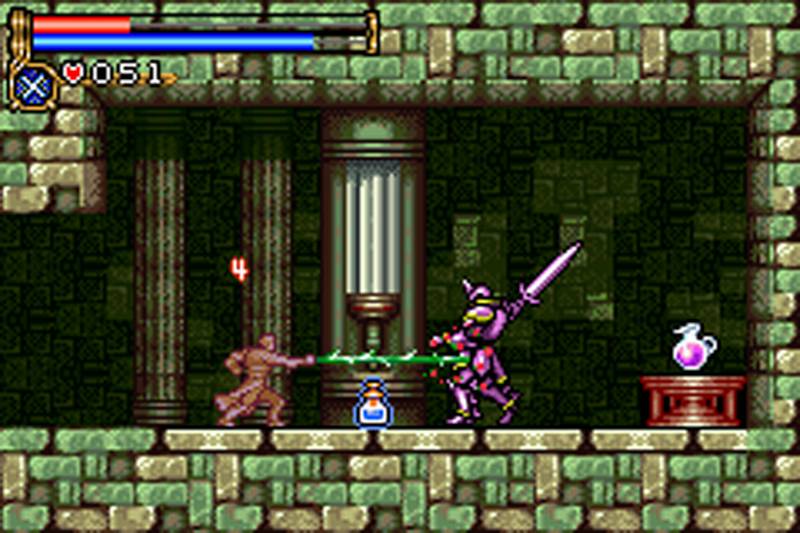
The Dual Set-up System (DSS) is unique to the Circle of the Moon; the Dual Set-up System (DSS), based on magic cards found throughout the game, belongs to two categories: Action and Attribute. Each of the ten Action cards takes its name from one of the gods and goddesses from Roman mythology and determines the type of magic performed. The ten Attribute cards take their names from Greek and Roman mythology creatures and add an effect to the magic. To produce a magical effect, the player combines one card from each of the two categories for a total of one hundred different combinations. Unfortunately, in “The Battle Arena”—an optional area of the castle consisting of seventeen rooms filled with stronger versions of monsters found elsewhere in the castle—Nathan’s supply of mind points is drained, causing the DSS cards to become temporarily unavailable unusable.
Conclusion
So to conclude this part – The Circle of the Moon is a hardcore Castlevania game, in which the collection of cards is a vital part of the gameplay. It makes the game harder and feels a little unbalanced at times. The controls are not optimized for the Switch and can make the gameplay a bit rusty. Running needs a double tap on the > or <, but it is necessary for many parts (otherwise, it’s just a walking sim). The Circle of the Moon is an excellent addition to the Castlevania library, but it’s certainly not the best addition to the collection. Score: 7/10.
Harmony of Dissonance
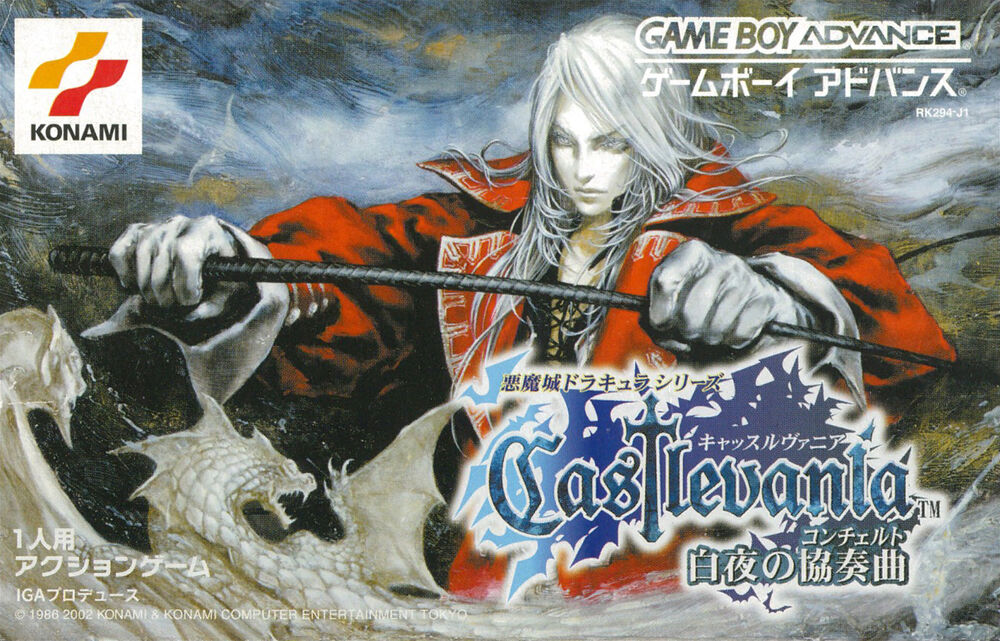
Harmony of Dissonance and Aria of Sorrow brings back some memories. I bought the double pack on the end of a family vacation and played the games non-stop on my Nintendo Gameboy Advance SP while my father drove back to the Netherlands. It took around 8 hours to get home, and my thumb felt numb, but the games were so good. So I was thrilled when I found out that the original games made a return to the Nintendo Switch, especially since I could discover the different endings this time around (I only had gotten the ‘normal’ ending back then).
Setting
Harmony of Dissonance takes place in 1748, fifty years after Simon Belmont ended Dracula’s curse. His battle against Dracula was that the villagers changed their opinion of him and the Belmont family. Producer Koji Igarashi explained: “Simon was regarded as a life-saver, and people started to look upon him as a hero; little by little, the people began to gather around them. A village, therefore, was formed around Belmonts. Juste Belmont grew up in this environment with his childhood friends Maxim Kischine and Lydie Erlanger.
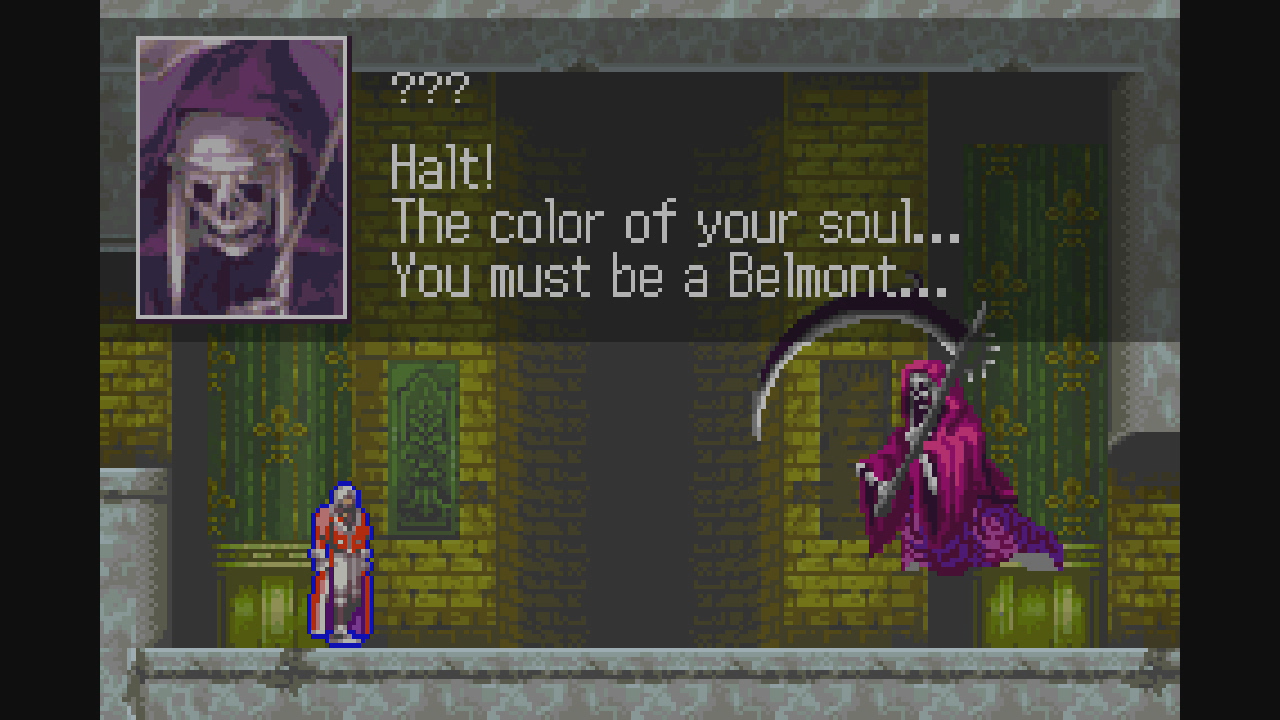
The protagonist and primary player character are Juste Belmont, the grandson of Simon Belmont and descendant of Sypha Belnades, who gained the Vampire Killer whip at the age of sixteen. With his amnesiac and injured best friend Maxim Kischine, he sets off to rescue his kidnapped childhood friend, Lydie Erlanger. While exploring the castle, he encounters a merchant who stumbled upon the castle and Death, Dracula’s servant.
Backstory
Oke, let’s do a little backstory first. When you boot up the game, Juste meets Maxim at a castle where Lydie is being held captive; after a brief talk, he leaves Maxim outside and begins to explore the castle. Within the castle, Juste encounters Death, who confirms that the castle is Dracula’s. He meets up with a dazed Maxim, whose memory is slowly returning to him, and they split up to cover more ground. While trekking through the castle, Juste notices that the castle sometimes has different atmospheres. He continues to encounter Maxim but is baffled by how his friend seems to change personalities periodically. In one of their meetings, Maxim reveals that he went on a journey to find and destroy the remains of Dracula, something Simon Belmont had previously done, but when he collected all six, his memory went blank.
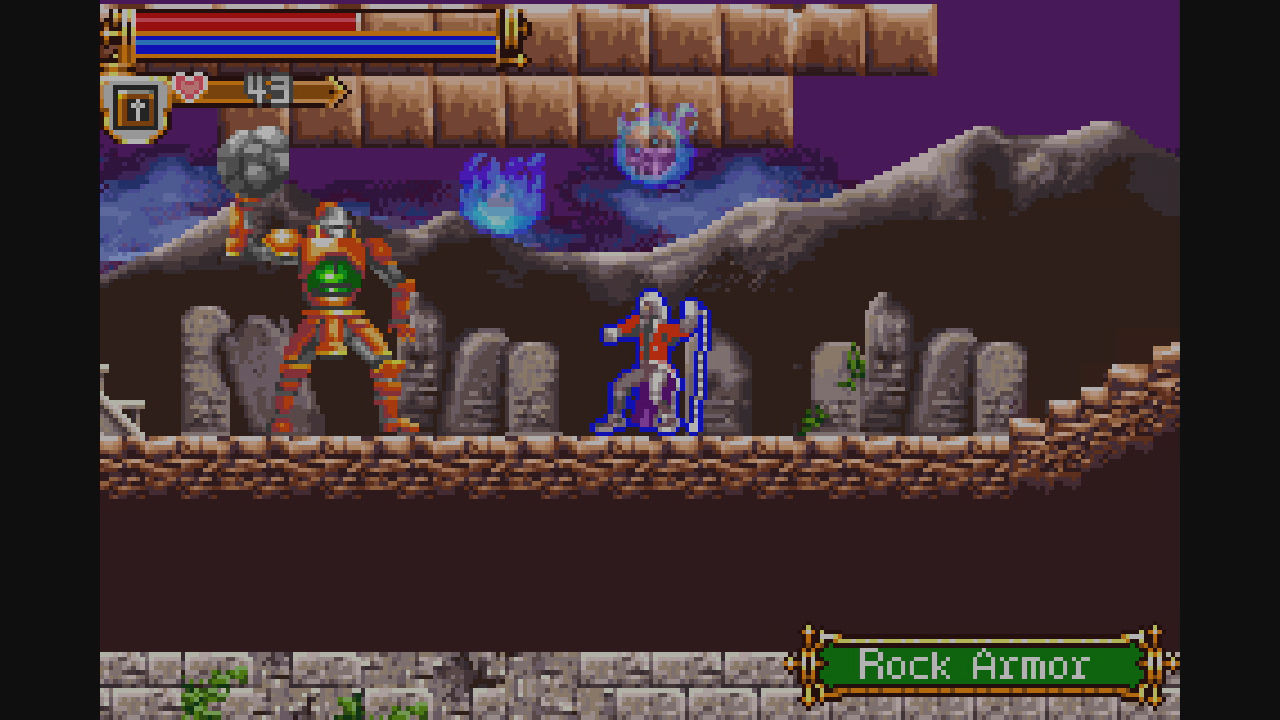
What makes the game great is a bit of a spoiler, so I’ll put up some spoiler tags for those unfamiliar with the game. Juste reencounters Death, who explains that the castle has been split into two “layers” to accommodate the two spirits living in Maxim’s body: his original spirit and an evil one created from Dracula’s remains and his suppressed jealousy of Juste. Maxim later confirms this and admits to being Lydie’s kidnapper. Juste meets his friend again in the other layer of the castle, where he reveals that he lost his memory to protect Lydie. He gives Juste his bracelet to help him locate her in the castle. However, when Juste finds her, Death kidnaps her to use her blood to unite the two castles by destroying Maxim’s spirit. The whole premise of searching through two castles, hitting switches to trigger stuff in the other castle, and vice versa is what a Metroidvania is all about.

The game offers a total of three different endings, which makes the game lengthier, based on what ending you end up with. Luckily the internet is beneficial these days (even though there are plenty of hints), so if you want to get the most out of your playthrough, aim for that 100% (or even more) before diving into the final boss fight.
Conclusion
So, to conclude, Harmony of Dissonance suffers from some aging problems but still offers a significant and lengthy Metroidvania, which covers a vast map with a lot of extra options to explore (like decorating a room, take that Animal Crossing). It also proves that Konami knows that an upgraded version of Circle of the Moon needed the option to run and dash, making the whole experience a lot more … player-friendly. Score: 8/10.
Castlevania Aria of Sorrow

This is by far my favorite Castlevania game on the GBA console (not counting its sequel on the DS, which was even better). It combines everything I love about Metroidvania with a unique collection concept to make your character better and ‘more personal.’

Aria of Sorrow takes place in the fictional universe of the Castlevania series. The series’ premise is the conflict between the vampire hunters of the Belmont clan and the immortal vampire Dracula. Thirty-six years before the start of Aria of Sorrow, Dracula was defeated once and for all by the Belmont clan, and his powers sealed into a solar eclipse. Shortly after Dracula’s Death, a prophecy was made that Dracula’s reincarnation would come to his castle in 2035 and inherit all of Dracula’s powers. This prophecy acts as the driving force behind the plot of Aria of Sorrow and is the primary motivation of the supporting characters to be present. The game takes place in Dracula’s castle, the most common setting for the series, with the castle divided into numerous areas that the player traverses throughout the game.
Gameplay
What makes the game great is the gameplay, even though you might disagree with me. Hear me out! Like the other additions to this collection, Aria of Sorrow features a 2D sidescrolling style of gameplay where the player controls the on-screen character from a third-person perspective to interact with people, objects, and enemies. Like previous games in the series and most role-playing video games, characters level up each time they earn a set number of experience points from defeating enemies; each “level” gained increases the character’s statistics, thus improving their performance in battle. Despite the game being set in 2035, the available weapons are medieval, including swords, axes, and spears, though a handgun is available. These weapons differ in their damage output, the weapon’s range, and the speed of the attack. Items and other accessories can be found by defeating enemies or purchasing items from the game’s shop.
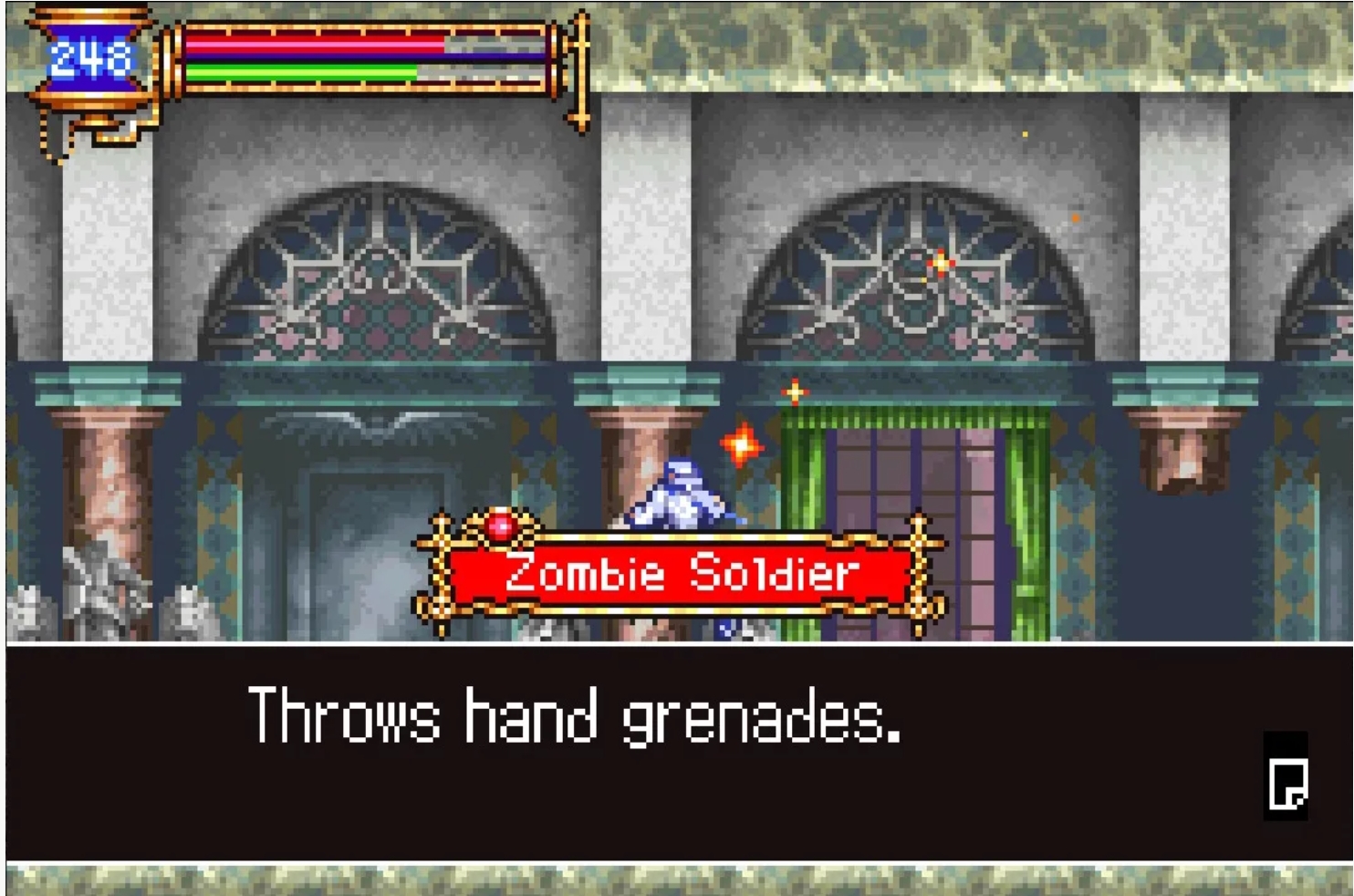
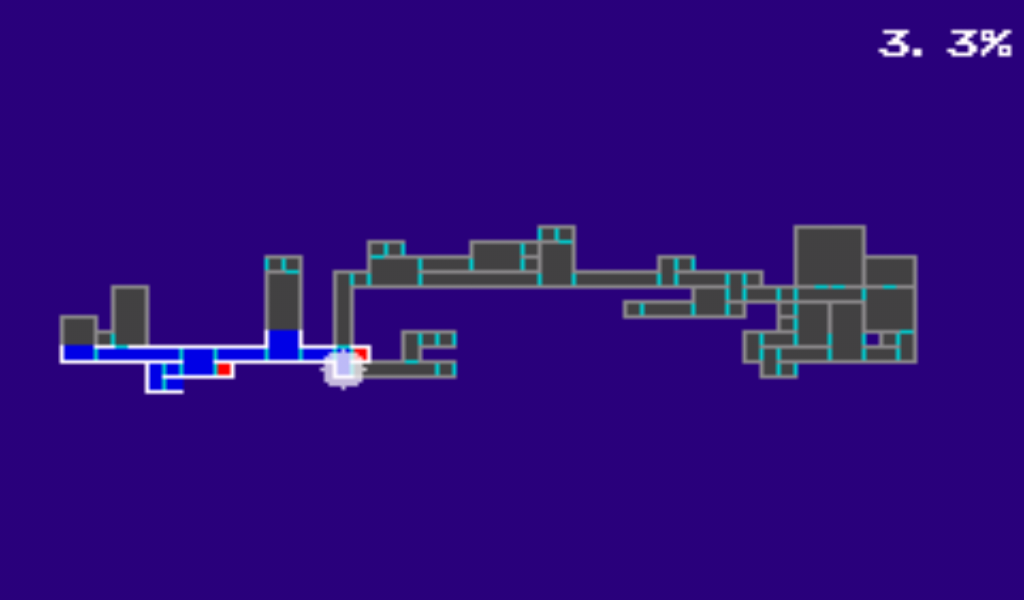
Similar to previous games in the series, Aria of Sorrow is set within Dracula’s castle, divided into several areas that the player traverses. These areas feature different components, such as other enemies, varying terrain characteristics, and a unique piece of theme music. Similar to most platform games, progression between areas is limited by the abilities the player has. While the method in which the player progresses is initially linear, the player’s options become more diverse as the number of character abilities increases.
Tactical Soul
Aria of Sorrow introduces the Tactical Soul ability system to the Castlevania series. It involves absorbing the souls of enemies to gain additional abilities. For a few exceptions, all types of enemies in the game can eventually yield a unique soul that the player can absorb. The rate at which enemies’ souls are obtained varies between enemies and is based on the players’ luck stat, so it’s well worth the while to invest in luck-enhancing items (like the very pricey ring).
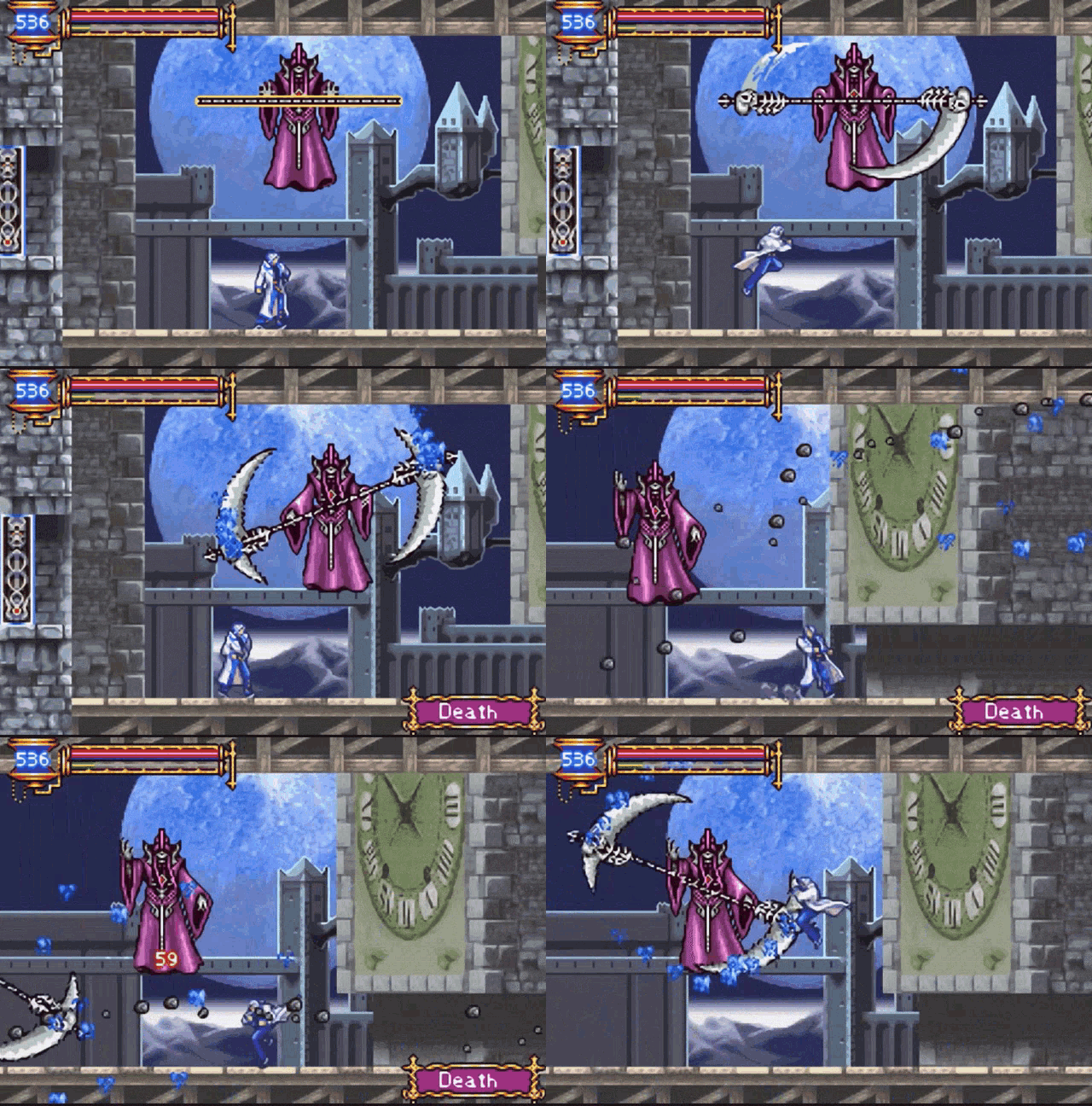
Souls provide a variety of effects and are separated into four categories: Bullet, Guardian, Enchant, and Ability souls. Bullet, Guardian, and Enchant souls are identified with the colors red, blue, and yellow, respectively, and the player can only have one of each type equipped at any time. Bullet souls are Soma Cruz’s replacement for sub-weapons in this game, and enable the player to consume a set number of magic points to use an ability, often some form of projectile. Guardian souls provide continued effects, including transforming into mythical creatures and summoning familiars. Guardian souls continually drain magic points as long as they are active. Enchant souls are continuously active as long as they are equipped and provide either an increase in statistics or abilities such as walking on water. The fourth type, Ability souls, are treated differently from the other three types. They originate from one-of-a-kind enemies in the game. Once obtained, they remain active if the player does not explicitly disable them, not consuming any magic points.
Conclusion
Collecting these souls can be a time-consuming effort, but it is worth your time. Changing up the way you use souls dramatically enhances the fun you will have with this entry. It offers a chance at getting the ‘good’ ending, which provides a different experience than the ending I got when I was a little bit younger. Another good thing about the use of souls is that it offers many quality of life upgrades from Harmony of Dissonance, making this the most new-player friendly addition to the Collection Konami shows up here. So if you are planning on rolling into the Castlevania series, maybe through the discovery of Bloodstained, start with this one! Score: 8.5/10.
Castlevania Dracula X/Vampire’s Kiss
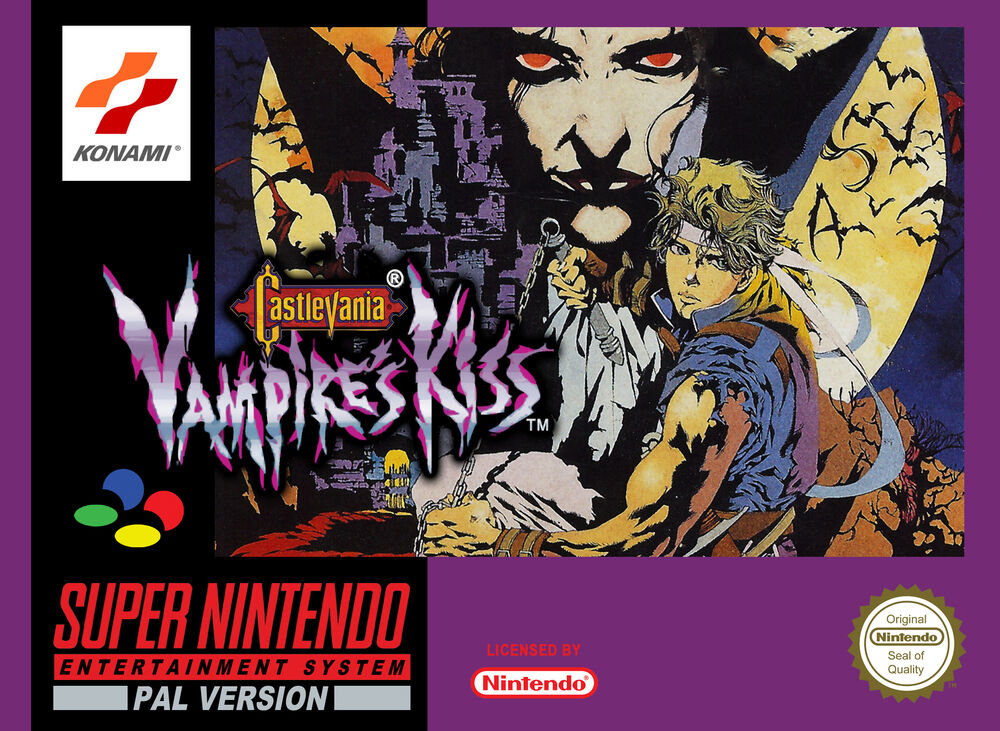
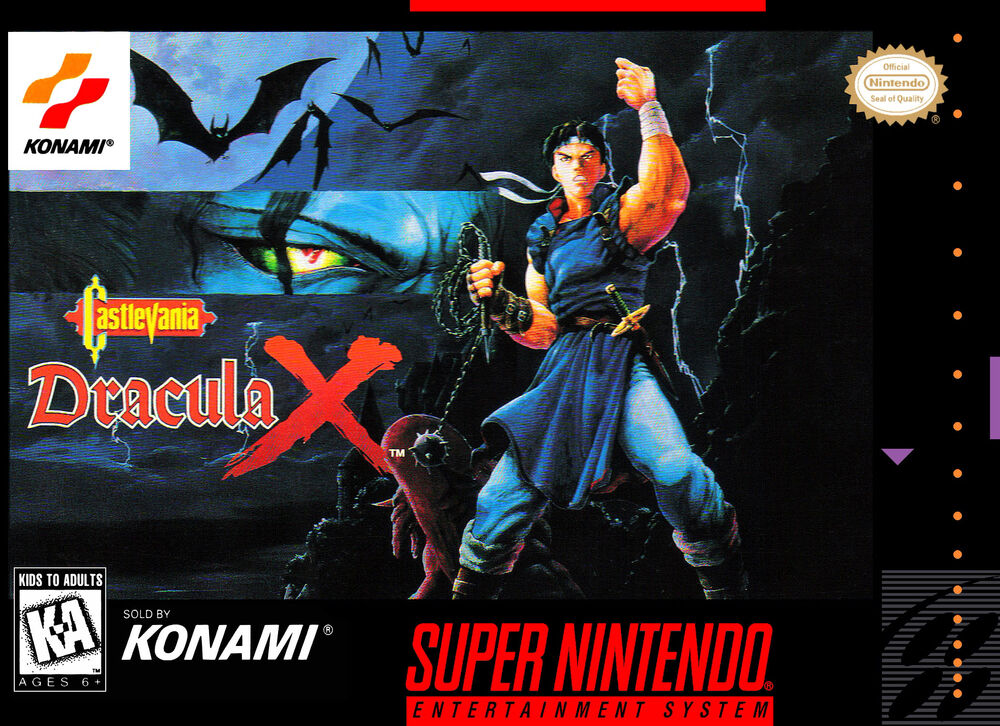
Castlevania: Dracula X is an action-adventure platform video game developed and published by Konami, originally released for the Super Nintendo Entertainment System in 1995. It is known in Japan as Akumajō Dracula XX (Double X) and in Europe under Castlevania’s Vampire’s Kiss. Since I’m from the Netherlands, I’ll be using Vampire’s Kiss instead of Dracula X.
Rondo of Kissula X?
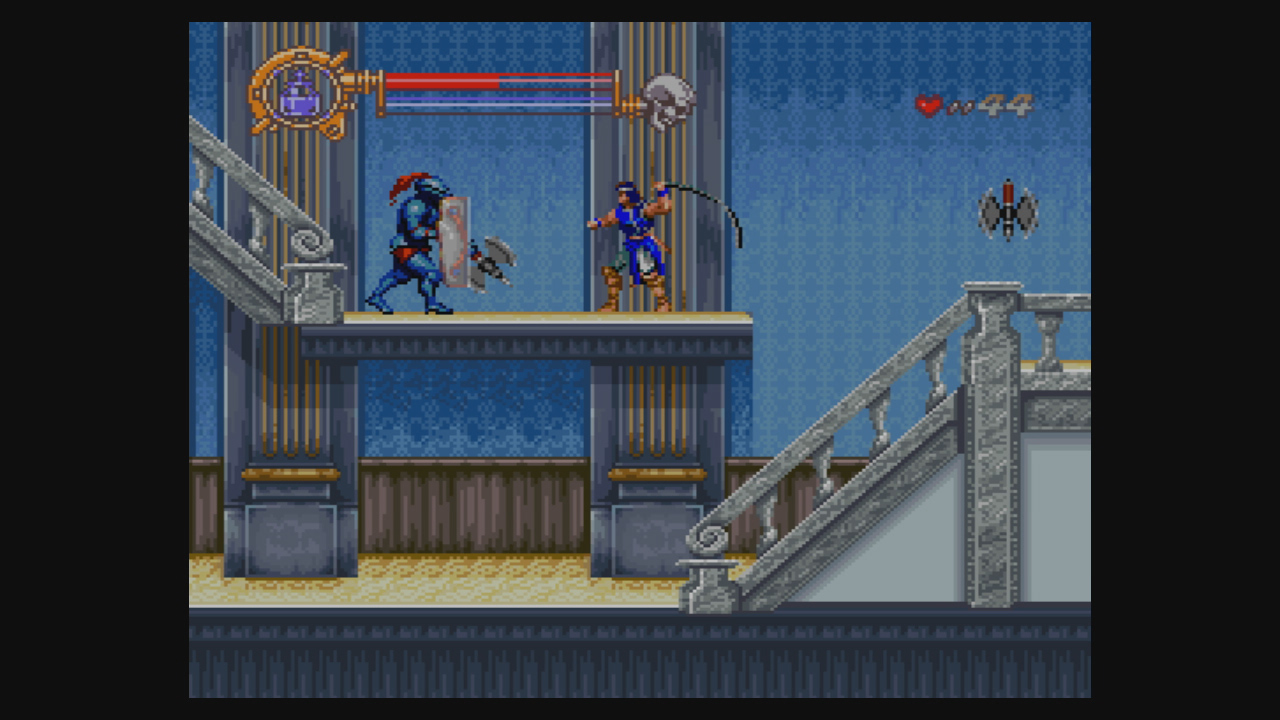
The game is a reimagining of Castlevania: Rondo of Blood, originally released exclusively in Japan for the PC Engine Super CD-ROM. Despite being commonly labeled as a port, the game’s contents are drastically altered from the original. Instead, they are considered to take place in a different continuity than the official timeline – since why should we take these things as they come. Being a reimagining of Castlevania: Rondo of Blood, gameplay in Vampire’s Kiss is almost identical to it, only featuring a few minor differences. There is only one player character to play this time around, the vampire hunter Richter Belmont, with Maria just appearing as a damsel in distress that must be found and rescued in one of the levels.
Game mechanics
Unlike its console predecessor, Super Castlevania IV (currently only on SNES, Wii/Wii U), Vampire’s Kiss attempts to return to the franchise’s primary roots by implementing gameplay mechanics that are much more akin to the classic games of the 8-bit era, while at the same time making use of the more advanced hardware’s capabilities to allow the performance of special attacks and effects. For example, whip strikes are only performed in one direction, straightforward of the player character (unlike Super Castlevania IV, where the whip could be struck in eight different directions). The ability to let the whip go limp is lost jiggle it around.
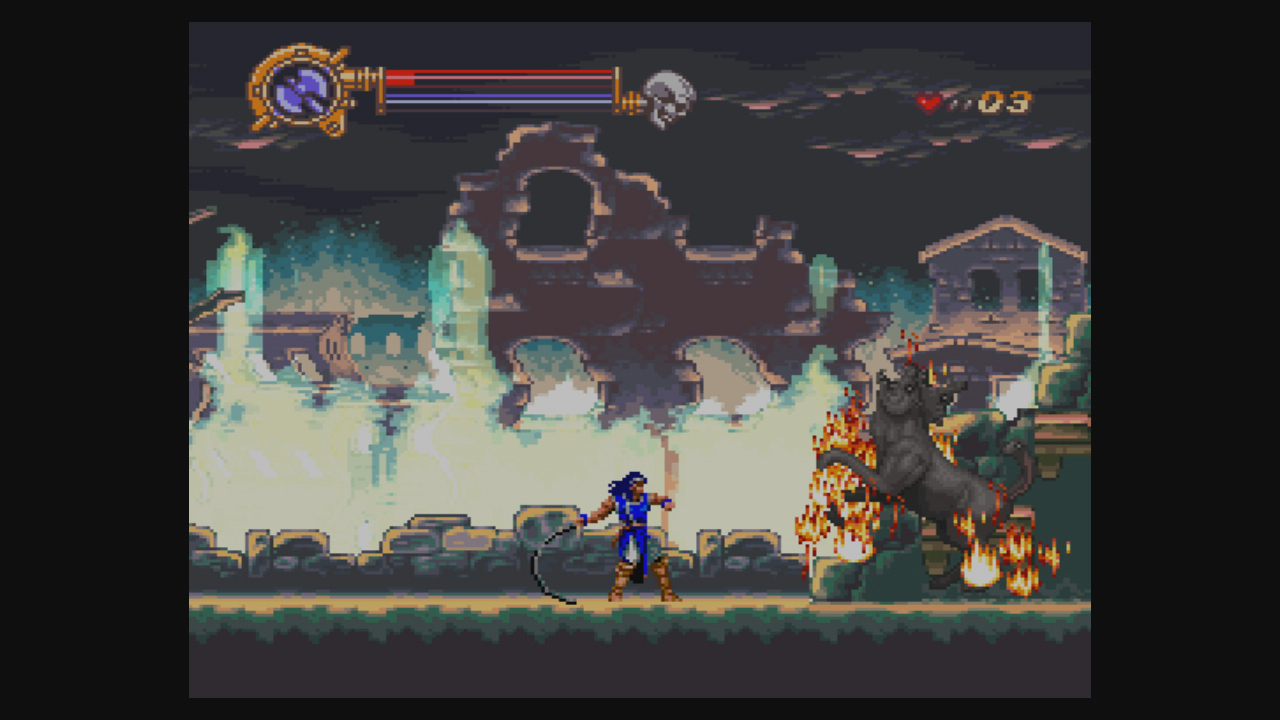
Sub-weapon throwing is performed by pressing UP on the controller pad and then pressing the attack button (default ‘Y’) and is no longer assigned to a separate button, making it more challenging to use sub-weaponry while climbing or near stairs. Mobility during jumping is also more restricted. After performing a jump, the player character is committed to it and cannot change directions while in midair. On the other hand, pressing the opposite direction on the controller while in the middle of a jump will make Richter face backward, which can be used to attack pursuing enemies. On its part, regular jumping has great height and reach, allowing Richter to reach edges and make it across pits that at first glance would appear impossible to achieve. A small forward jump can also be performed by jumping forward and immediately pressing the opposite direction on the control pad, resulting in an awkward leap with a much shorter range and arguable usefulness.
Arcade feel & Conclusion
Concerning the stages themselves, most stages count with an alternate exit; some are traps that will deviate the hero from their way and prevent them any possibility to reaching the best ending, while others can only be accessed through the use of Keys to unlock the doors guarding them. Reaching the exit to an alternate path doesn’t necessarily mean having to fight a boss at the end of the stage, although, in turn, it can lead the player to face other bosses who are not generally fought through the main path. This feels like the way old arcade games used to work, and I don’t get why people tend to lay down this much money for said Castlevania game; however, it was fantastic to play with Richter since he is also included in Smash. Due to the mobility restrictions, enemy positioning, and several other factors, Vampire’s Kiss is generally considered one of the most challenging games in the series – and yeah, I had the least fun with this one, primarily due to some limitations faced while playing this. Score: 6.5/10.
Conclusion
Still with me? Good! You made it to the end, and it was me, Dracula, all along! I wrote this review instead of Nick to convince you to play my games. Through your playing, I will be resurrected into a new 2D sidescrolling game in the likes of Metroid Dread! Muhahaha. Oke, without horsing around, the Castlevania Advance Collection is one hell of a collection. It offers great games for a great price and features a vast selection of Castlevania games, with much more experimentation than the last collection Konami dropped (sorry). It’s an excellent collection for both new fans and old, returning fans. I already gave you my thoughts on the separates game, and this will be just a logical conclusion of the rant you have been reading.
