
Most people know Suda51 as the brains behind the No More Heroes series, but he is a man of many talents. The Silver Case 2425 offers a completely different take on the crime noir genre (LA Noire is also Crime Noire) and offers a fresh perspective on adventure games in total. Let’s get case cracking!
The Silver Case 2425
To be completely transparent, the game offers two games – The Silver Case 2425 and The 25th War: The Silver Case. In The Silver Case 2425, a string of mysterious serial killings plagues the city, and the detectives of the 24 Wards Heinous Crimes Unit have their eyes on one man: Kamui Uehara. This legendary serial killer has assassinated a number of government officials 20 years prior in the now-famous “Silver Case.” However, nobody knows who—or what—Kamui really is. Has he really returned? Who is this infamous serial killer?
In the second game, titled The 25th Ward: The Silver Case, you explore the events that take place five years after the events of 1999’s “The Silver Case,” with a new 25th Ward having arisen in the bayside area of Kanto. In a room of the “Bayside Tower Land” apartment complex, a woman is found murdered under mysterious circumstances. This sets off a series of seemingly random events that crosses the paths of several individuals, including detective Morishima Tokio. With all viewpoints assembled, a truly shocking pattern emerges…

But, let’s look a little bit more into the first game, before getting ahead of ourselves. Like I stated above, The Silver Case follows the events surrounding the apparent resurrection of serial killer Kamui Uehara in a special Kanto ward known as Ward 24. Ward 24 is a densely populated municipality patrolled by the law enforcement agency, the Administrative Inspection Office. Kamui Uehara was an infamous killer from its past who was arrested in an incident known as the Silver Case, which has since become shrouded in myth. At the beginning of The Silver Case, various signs appear that Kamui will soon return, and the events of the game show how this affects the culture of the people living within the Ward.
The Silver Case Story
The A-side of the story, the Transmitter cases, revolve around the Heinous Crimes Unit, a division of the AI Office. The HC Unit specializes in taking down dangerous and sadistic criminals and operates under unorthodox methods. The protagonist of Transmitter, Akira, is a member of fellow AI Office division Republic, which is decimated in an operation to capture the newly awakened Kamui. Akira finds himself picked up and hired by the HC Unit, assisting them in various investigations, some of which have to do with Kamui, some that are mostly unrelated. Over the course of the story, the cases bring to light secrets about the members of the Unit, Kamui, and Ward 24 itself.
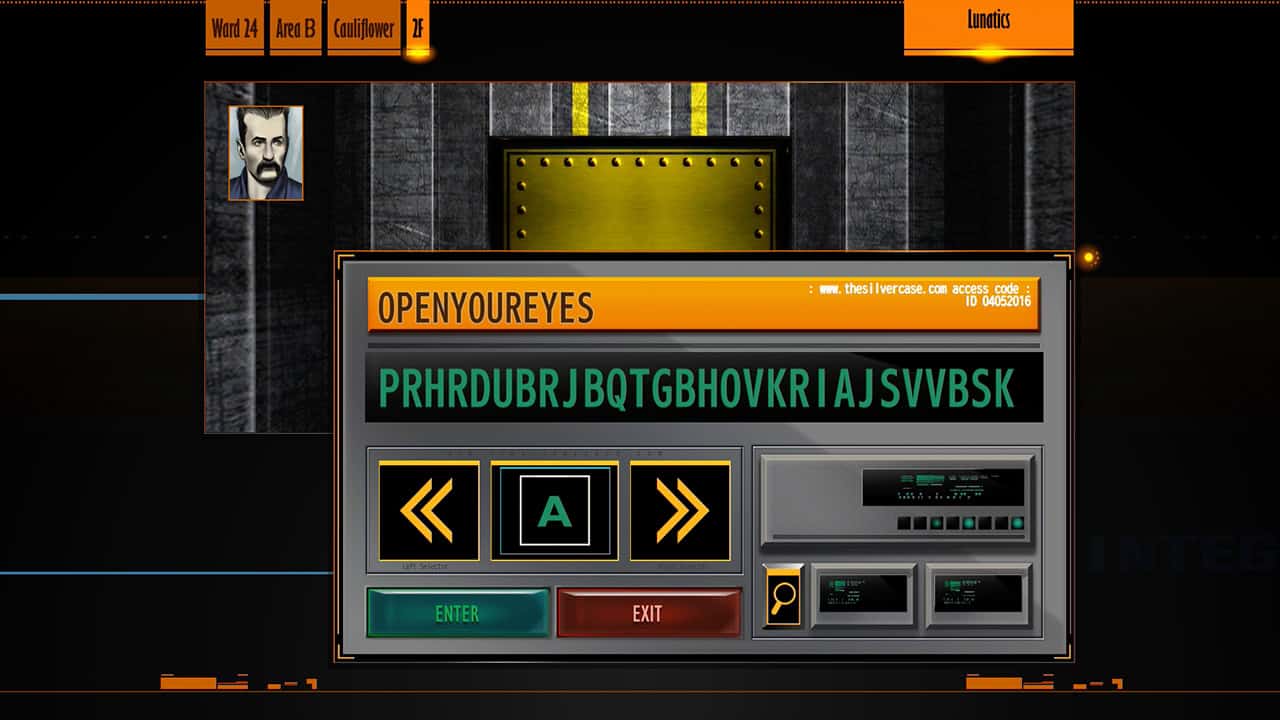
The B-side of the story, the Placebo reports, follows the daily life of freelance journalist Tokio Morishima. Tokio lives in the Typhoon apartment complex with his turtle, Red. He receives an assignment from his old boss, S. Inohana, to report on Kamui, and begins tracking the HC Unit’s investigations. In the course of doing so, he has a traumatic experience and begins to look into his own life and past as well. He also contends with a mysterious online stalker known as “The Bat”, and as the story goes on, his personal problems become more and more prominent.

The gameplay is both narrated in a way we see most in Visual Novels or Choose Your Own Adventure games, combined with the style we see mostly in D-RPGs. You control your persona with the d-pad and use the command menu to interact with your environment and persons of interest. This takes a little bit of getting used to, but once you get the hang of it, you’re sucked into the world of Suda51 pretty quickly. Those familiar with either D-RPGs or Visual Novels/Text Adventure games like Phoenix Wright will feel right at home (even though, the setting is a bit more retro).
The 25th Ward Gameplay
The 25th Ward plays fundamentally similarly to The Silver Case; it uses the Film Window system to display images, text, and other information, and it mostly consists of reading, along with occasional interactive 3D environments in which the player can move on rails in four directions. However, it features many differences that subtly affect the gameplay experience.
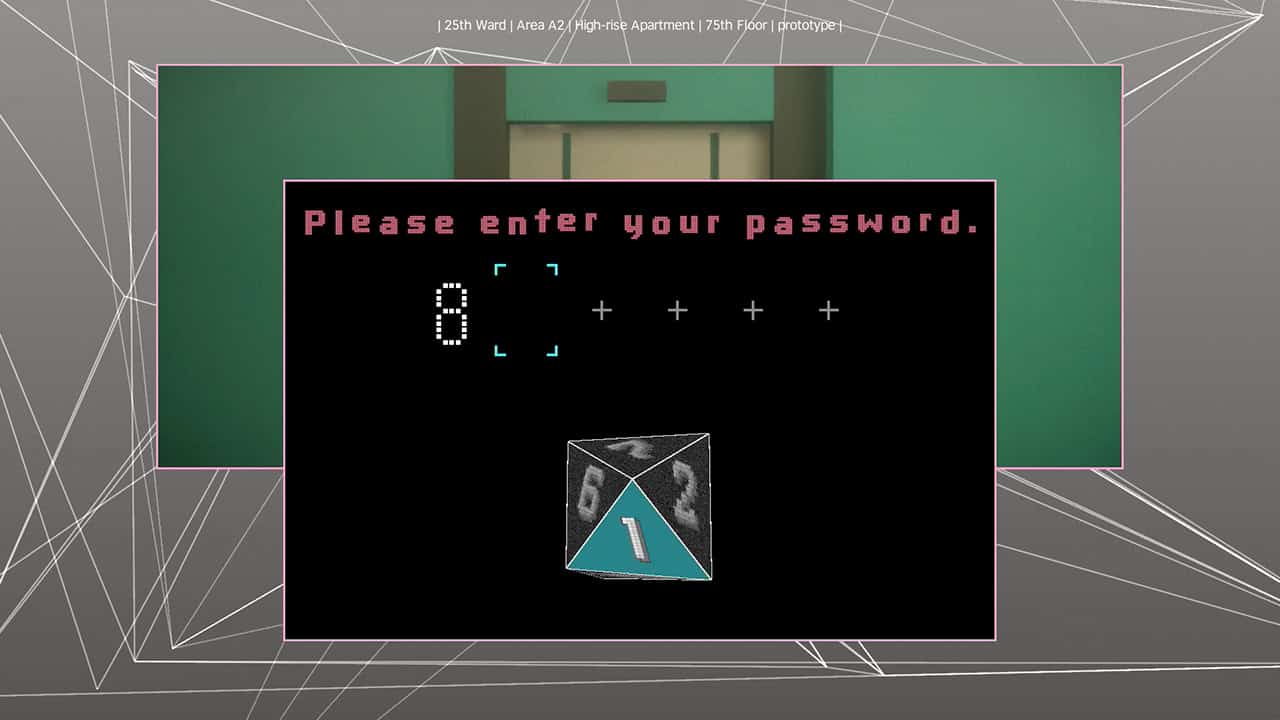
Instead of the MISC wheel, the menu is now a die that must be rotated in three-dimensional space, with each face containing an action. Although it is usually four-sided, the die increases its number of sides in situations in which more than four choices are available. Rather than a consistent set of functions like the MISC wheel, the die’s main abilities change depending on the situation. Its usual four functions are “Look”, “Talk”, “Move”, and “Item”, but other functions are available in particular scenarios, such as “PC” or “Red” when playing as Tokio. Movement is simplified compared to the first game, as there are no marks to move to, nor can the player rotate themselves or look up or down. Instead, movement is made up entirely of selecting options corresponding to cardinal directions, which will cause the player to take that path until they reach the next choice or point of interest.
The 25th Ward Story
The 25th Ward takes place five years after the events of The Silver Case. It focuses on the successor to Ward 24, the supposedly utopian metropolis of Ward 25. This new ward was constructed with the purpose of providing a perfect orderly lifestyle, but its ideal of order is threatened to be shattered by the chaos represented by the coming of Kamui Uehara. The story is divided into three different “story points”, which take place in parallel with each other.

The A-side of the story, Correctness, follows Mokutaro Shiroyabu of the 25th Ward Heinous Crimes Unit, the 25th Ward’s counterpart to the original. It begins with an investigation into the mysterious deaths occurring at a high-rise apartment complex and follows into more cases from there. Shiroyabu and his partner Shinko Kuroyanagi find themselves working with a mysterious new recruit.

The B-side of the story, Matchmaker, follows the Regional Adjustment Bureau, the shadow government agency that dedicates itself to preserving the 25th Ward’s lifestyle through carrying out deadly “adjustments” on its citizens. It focuses on two members, Shinkai Tsuki and Yotaro Osato, who attempt to complete their assignments while trying to hide their existence from the HC Unit. The C-side of the story, Placebo, is a continuation of the Placebo story from the first game. Following the events of Flower, Sun, and Rain, Tokio Morishima wakes up on a boat stationed in the 25th Ward’s harbor. Finding that he has lost most of his memories of the previous games, he attempts to regain them while periodically being roped into investigations on the internet by Slash.
Conclusion
So to conclude, if you are into text-heavy games with great plots but with some … hard to master, great to work through mechanics, The Silver Case games are right up your alley. I personally prefer games like Phoenix Wright and Famicom Detective Club in general gameplay over D-RPG type VNs, but I get why they are appealing. The story sucks you in and won’t let you go until you get to the bottom of it. That’s precisely why I added a bit more story and less gameplay in my review. You won’t be disappointed by it – just try it for yourself!
