
For private investigator Red Walker, the job seemed simple: go to Silver Pines, track down Eddie Velvet, and get compensated royally. But the case quickly turns into a living nightmare, one that makes you, the player, question whether your character is really as sane and rational as he first appeared.
The PI and the Musician
Silver Pines is the first game from Wych Elm, a five-person indie team working remotely across Sweden and Norway. It’s a horror metroidvania set in a small town of the same name. Five people may sound like a very small team, but with credits on games like Helldivers 2 and the award-winning Yoku’s Island Express, you can expect these developers to know how to make a great game. At least, that’s what their publisher Team17 must have thought, and rightfully so.
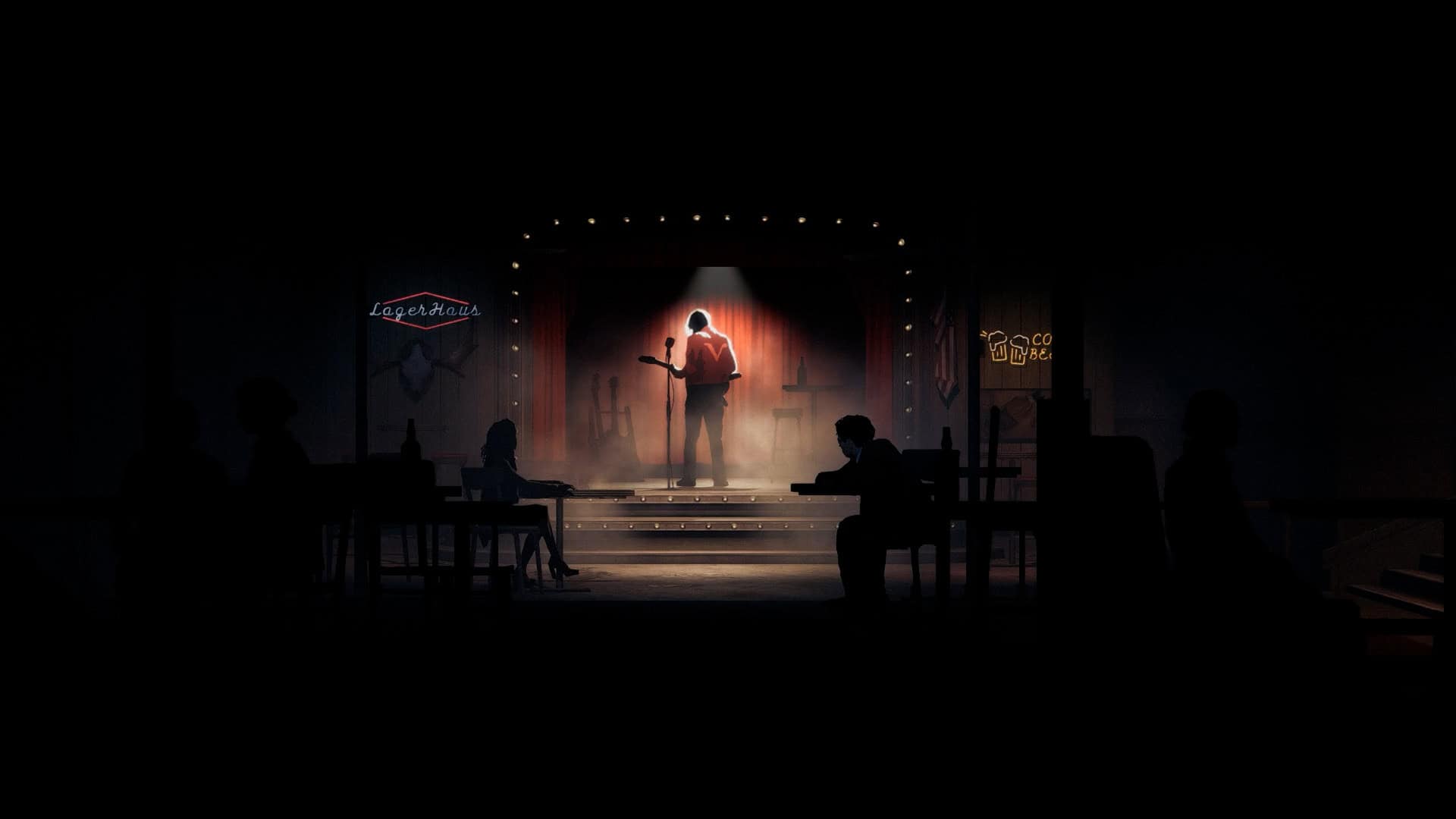
In Silver Pines we follow Red Walker as he searches for a missing person. His search takes him to the village of Silver Pines, a town left mostly deserted by an ongoing storm evacuation. His target, Eddie Velvet, was last seen in the area, so Red decides to ignore the evacuation protocol and press on. After all, he’s come this close, why give up now? But you quickly discover that the looming storm isn’t the only thing haunting Silver Pines. Some sort of madness seems to be seeping through the town as well. Villagers start acting strangely, nightmarish spectres appear, and other inexplicable phenomena make you wonder whether Red is as mentally stable as he first seemed. And there’s no way out if you keep pursuing the case, because the person at the centre of it all appears to be Eddie Velvet himself…
Herbs and spices
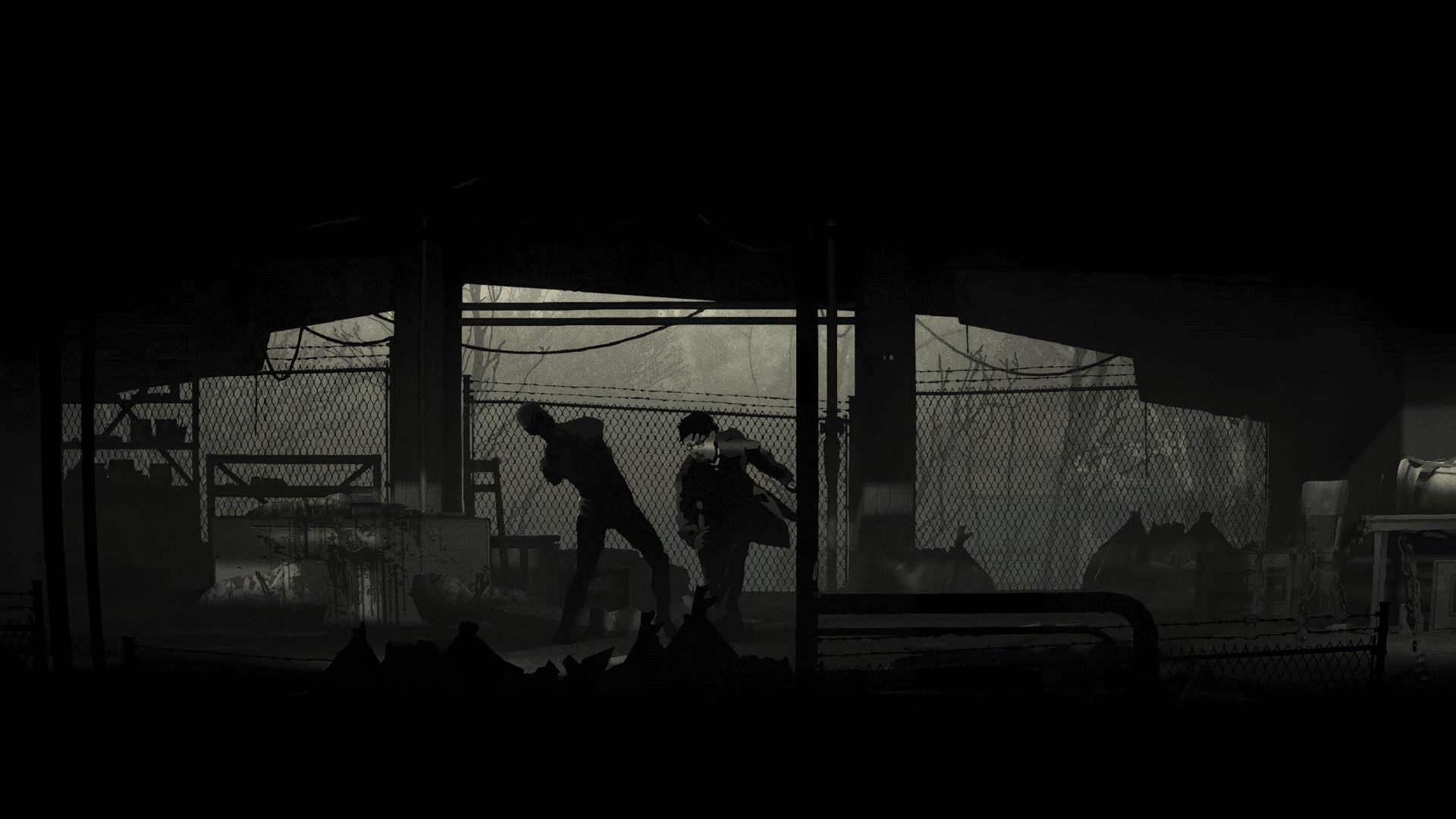
If you heard me call Silver Pines a metroidvania at the start of this article, you might already be imagining your character zipping through a deserted town, escaping hordes of enemies. But let me quickly disabuse you of that notion: platforming is not a big part of this experience. The gameplay is much more about exploration than about pulling off sick parkour moves. The only thing the game has in common with the metroidvania genre is that you need to scour the map for hidden objects, be they clues for the main quest or power-ups. In fact, the game it most reminded me of is Resident Evil. The controls made that connection most strongly. Red moves relatively slowly, and the sprint function is more of a light jog. Combat, too, is on the slower side: weapon swings cost stamina, and once you find the gun later on, attacking gets much faster — except that reloading means popping in every bullet individually. All of this makes you feel more vulnerable than the shades, who sometimes dash straight at you, and it makes combat and exploration genuinely intimidating. Even after I had built up a decent arsenal, I still felt scared going into a fight, and that kept me on my toes — going into a state of alertness at the mere moan of a shade or the scuttling of a giant bug.
The game also features a block-based inventory system, where items take up a certain amount of space. Limited inventory space meant I regularly had to make hard choices: healing a bit sooner than I wanted to, or using my duct tape before my boxcutter had even broken. It also means you can’t hoard an arsenal of weapons, because you need space free to pick up that key or that puzzle item. Do you really want a four-block baseball bat when the knife takes up half as much space and you’re already carrying three keys and the bird statue you need? These kinds of choices only amped up my personal anxiety, and I loved every moment of it.

Another bold choice is that the game uses save points instead of autosaves, with the added twist that saving costs money every time. Unlike the ink ribbon system in Resident Evil, I actually liked how Silver Pines handles it. Because saving costs in-game currency rather than a consumable item, I always had a coin left over, it only meant I couldn’t always afford the most expensive items in the vending machines. The few times my inner loot goblin got the better of me, I immediately regretted it, dying mere metres before the next save point.
Anxiety
I’ve said it before and I’ll say it again: horror games need to make you feel scared. That doesn’t mean you should be screaming at your screen the whole time, the game simply needs to make you feel something. In the case of Silver Pines, I constantly felt uneasy and anxious. Even though the game isn’t trying to kill you around every corner, it plays with your head. The loot and save management only amplifies that feeling. I was constantly scavenging, mentally debating whether to shoot an enemy or just shank it with my knife. It kept me engaged at all times. I was so locked in that at one point I got jump-scared by an NPC interaction I never expected in a town with only a handful of residents left. And it was amazing.

The anxiety I experienced throughout my time in Silver Pines also made the world feel more alive. Or should I say: abandoned… The map feels like a place that was once lived in and is only temporarily deserted, and the few people you still meet feel like the rooted-in-place locals you’d expect to find in an evacuated town. Whether it’s the sheriff or the woman who locked herself inside a building, everyone feels like they belong here, and each of them enhances the overall narrative.
Real’s not real
Despite being set back a couple of times after forgetting to save, I really enjoyed Silver Pines. The game blends existing gameplay hooks with its own engaging story wonderfully, and the latter was definitely the highlight of the experience for me. I loved exploring the town and uncovering slivers of what happened there. The living memories I experienced as Red, his interactions with other characters as he uncovered the truth, it all just clicked. The more I played, the more I wanted to find this mysterious Eddie Velvet. This downright bizarre investigation, littered with spectres and dreamlike memory sequences, even made me doubt Red’s sanity myself. It had me asking: is any of this really happening, or am I just exploring the thoughts of an overworked, possibly insane man? That lingering doubt made the conclusion of the in-game events all the more rewarding.

Conclusion
Silver Pines is a horror search-action game that borrows concepts from established games in the genre and uses them wonderfully to strengthen its own gameplay. The tanky controls and limited inventory kept me anxious as I tried to survive in this abandoned town, while the slowly unravelling story made me doubt whether Red Walker was as sane as he first seemed. The search for Eddie Velvet is a gaming experience that will haunt you like few other PI investigations can.