
It’s been a while since Batman properly entered the video game realm. And even though LEGO Batman: Legacy of the Dark Knight isn’t a new Arkham entry, it feels weirdly familiar in the best way possible. It’s as if Traveller’s Tales looked at what made the Arkham franchise so good and poured its typical LEGO magic all over it. Time to become vengeance.
Legacy of the Dark Knight
Where a lot of previous movie-inspired LEGO games tend to follow the movies quite literally, LEGO Batman: Legacy of the Dark Knight takes a different approach. Instead of simply retelling Robert Pattinson’s Batman or The Dark Knight trilogy, it offers the ultimate Batman story, blending iconic moments from decades of Batman films, TV shows, comics, games, and DC lore. It starts at the beginning, with a young Bruce Wayne training to become a member of The League of Shadows, and progresses through key events and moments until he eventually becomes the Caped Crusader. This means you’ll see and play through different eras of Batman media, but this time they’re woven into one big story. And I’m absolutely here for it. Combining modern Batman scenes with more classic moments in one story is simply amazing. I love how the developers managed to incorporate so much lore while still making it feel like LEGO.

If you’re familiar with Batman lore, you know it can get a bit dark and moody, which wouldn’t necessarily work well in a LEGO game. Don’t worry though, that typical LEGO humor is all over the place. From bats taking multiple dumps on you when you enter the Batcave to Twin guards throwing fish in your face, trying to convince you that this isn’t a secret nightclub but just a simple fish store. It’s all pretty insane and absurd, exactly what you would expect from a LEGO game. For the sake of this review, I won’t dive too deep into the actual story, since it really is a celebration of everything Batman. I’m sure die-hard fans will love all the hidden Easter eggs and callbacks to the more obscure source material too. It takes around fifteen hours to complete the story, but I never felt like it overstayed its welcome. The chapters introduce plenty of new mechanics and storyline
LEGO Arkham
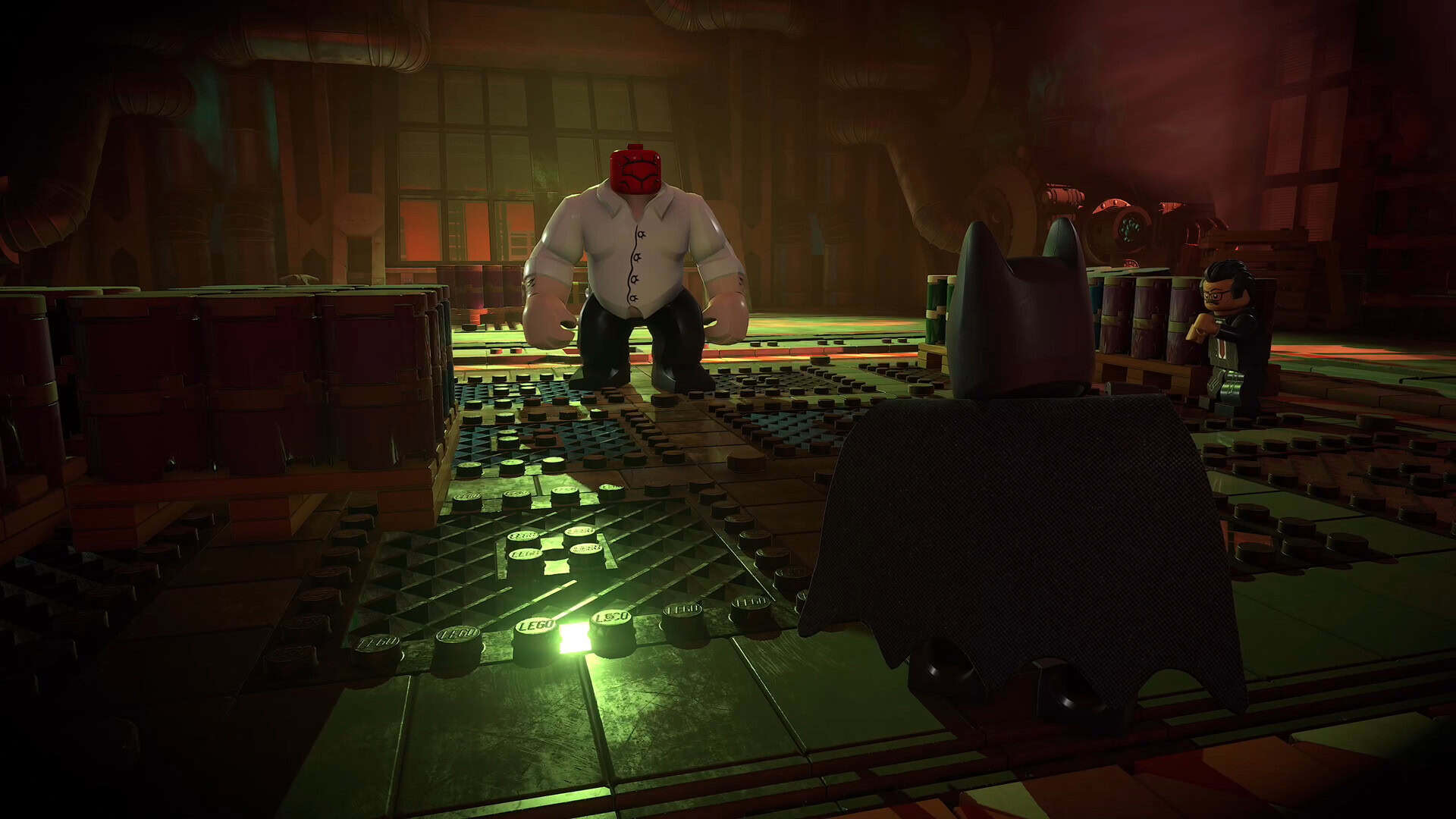
When I think of Batman games, Rocksteady’s impeccable Arkham series immediately comes to mind, and while playing this LEGO Batman, I often felt my muscle memory kicking back in, especially during combat. For a LEGO game, it runs surprisingly deep. You have your regular attacks and side weapons to deal damage, but you also have dodges and parries, which you can activate when the right button appears on screen. What follows is a very natural combat flow where I was jumping over enemies, throwing Batarangs, hitting them up close, and using my special attack once my meter was filled. This flowy way of fighting reminded me a lot of how good combat felt in the Arkham games, and I was pretty amazed to see it replicated in LEGO form. Of course, this game is still catered towards a younger audience, so don’t expect it to be very difficult, but it’s great to see that the developers clearly looked at what worked in previous Batman games before bringing it to the LEGO universe.
But it’s not only the combat, the game is a lot more than just that. When you’re not fighting, you’re solving mysteries and scanning the environment for clues. The puzzles aren’t that hard and often require you to build something in order to progress, but this more detective-focused approach in between the action fits Batman tremendously well.
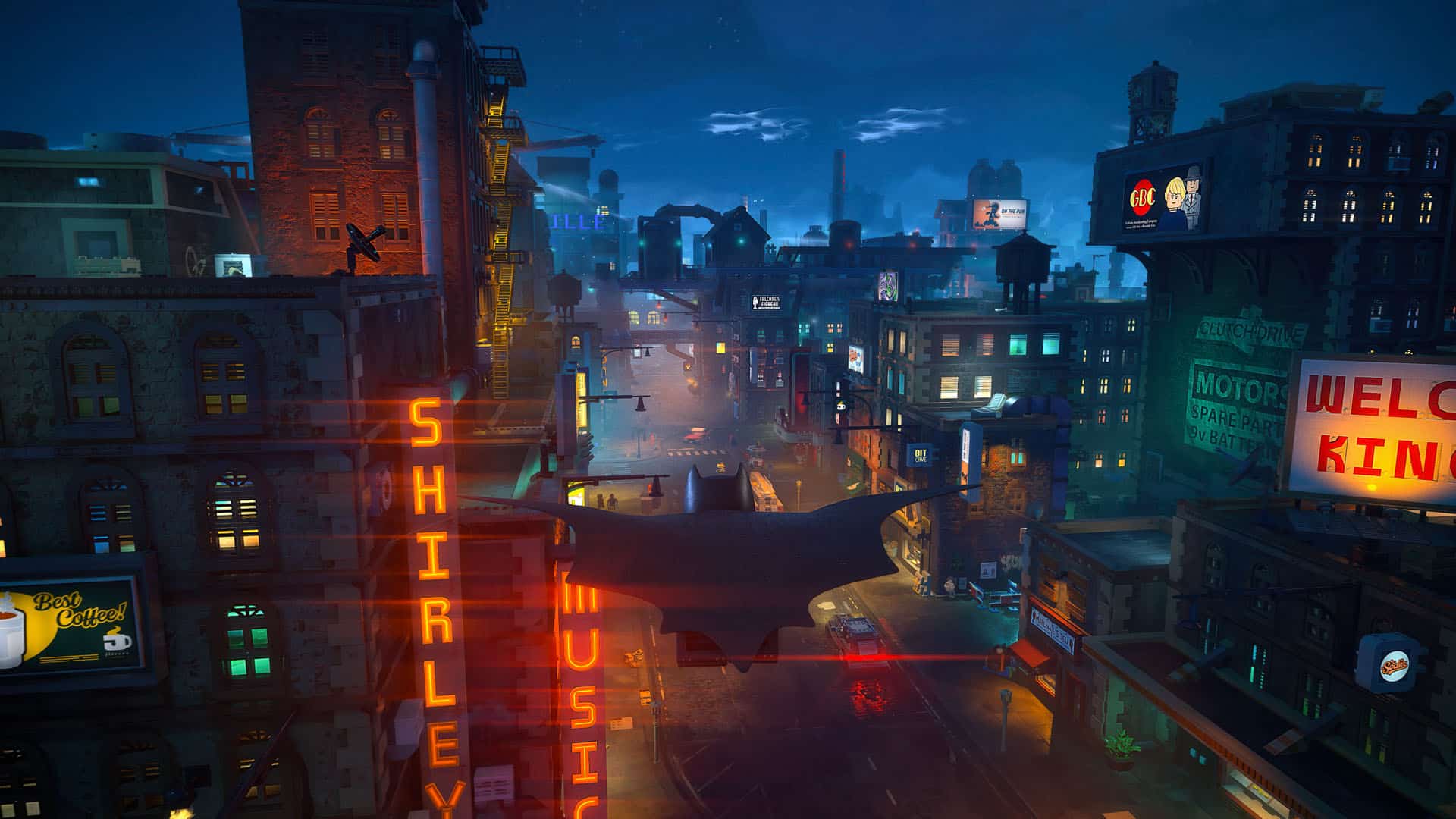
And then there’s the open world. Divided into four parts of the island, you can freely explore Gotham, where it’s constantly moody and the rain never seems to stop. It looks amazing too. By splitting up the map into four smaller open sections, the city comes to life in ways I haven’t really seen before in LEGO games. Besides the main story and its missions, there are tons of things to do in the city, and it’s buzzing with pedestrians, vehicles, crimes, collectibles and small distractions. More than once, I was gliding over the city or driving around in the Batmobile when I heard a cry for help. As a true vigilante, I stopped what I was doing and helped those in need. It’s a small thing, but it really sells the fantasy of being Batman in a LEGO world. What I like most is that Gotham doesn’t feel like a simple hub with streets around it. It feels like a place you actually want to move through. There’s something around every corner, whether it’s a hidden object, a small crime, a collectible, or just a rooftop that looks perfect to glide from. The open world might not be the biggest selling point of the game, but it’s certainly not an afterthought. Just like the combat, the traversal felt weirdly familiar. Using my cape to glide high above the city or my grappling hook to move from rooftop to rooftop felt so natural that I ended up exploring Gotham a lot more than I expected. I’ve seen open LEGO worlds before, but this one really takes it to the next level. It delivers something I didn’t expect to work as well as it does.
Smaller cast
What a lot of people have come to expect from LEGO games is a huge cast and playable roster. Legacy of the Dark Knight dials that back a little and chooses quality over quantity. At first, that sounds like a strange decision for a LEGO game, especially since part of the fun has always been unlocking the weirdest side characters and villains. But the more I played, the more I understood what Traveller’s Tales was going for here.
Instead of giving you a gigantic list of characters where most of them feel like reskins, this game focuses on a smaller team that actually feels useful. Batman is still the obvious centerpiece and comes with the gadgets you would expect. Batarangs to stun enemies, explosive gel to break through certain walls, the Batclaw to grab objects or pull enemies closer, and of course the grapple launcher and cape to move through Gotham. He feels like the complete package and works in almost every situation, which makes sense since this is still his story.

What surprised me is that the other characters don’t feel like filler either. Robin is much more acrobatic and uses his staff and cable launcher in ways that make him feel lighter and more playful. Nightwing feels like the grown-up version of that idea, with electric gadgets that can reroute power or shock enemies. Batgirl brings hacking into the mix, using her tech skills and gadgets to override systems and reach places others can’t. Jim Gordon might sound like the odd one out at first, but even he gets fun police-themed tools like bouncing projectiles and foam gadgets to stop criminals or machinery. Catwoman feels faster and more agile thanks to her whip, claws and stealth-focused movement. Talia al Ghul completes the roster with a more lethal, assassin-like edge, which makes her feel very different from the rest of the Bat-family.
That makes switching between the seven playable characters a lot more impactful than I expected. It’s not just about who looks coolest in a cutscene, it’s about what you need in that moment. Need to hack something? Bring in Batgirl. Need to move across rooftops or reach something with a cable? Robin or Nightwing might be the better choice. Need to break a wall, glide across the city or just punch your way through a room full of enemies? Batman is still there doing what Batman does best.
Of course, I can imagine some fans missing the absurd character lists from older LEGO games. That was part of the charm too. But I do think this more focused cast fits the game better. Legacy of the Dark Knight is clearly trying to be a more polished Batman adventure instead of just another huge LEGO sandbox, and the character roster reflects that. You get fewer playable heroes, but they all feel more carefully designed and all have a purpose in the story and gameplay. For this specific game, I think that trade-off works really well. And it helps that there are still hundreds of outfits to collect, including some really obscure ones.
Better in co-op?
Like many other LEGO games, this one is also designed with local co-op in mind. Thanks to an easy drop-in and drop-out mechanic, friends and family can jump into the story and fight crime by your side. I played a couple of missions in co-op with my wife, and I must say it really feels like this game was designed to be played that way. The main advantage is that you can communicate and combine the powers of the characters you’re controlling, which makes solving puzzles feel a bit more natural. With Gordon’s foam gun, a second player can, for example, block a mechanism so Batman can advance. In co-op, this flows more naturally because if you want to do the same thing in solo mode, you’ll have to switch to Gordon, block the mechanism, and then switch back to Batman. Of course, it works well in solo too, since switching between characters is fast and doesn’t come with any delay. But if you have the opportunity to play this in local co-op, I would definitely advise giving it a shot. It’s a shame the game doesn’t support online co-op, because that would have made it even better.
A new benchmark
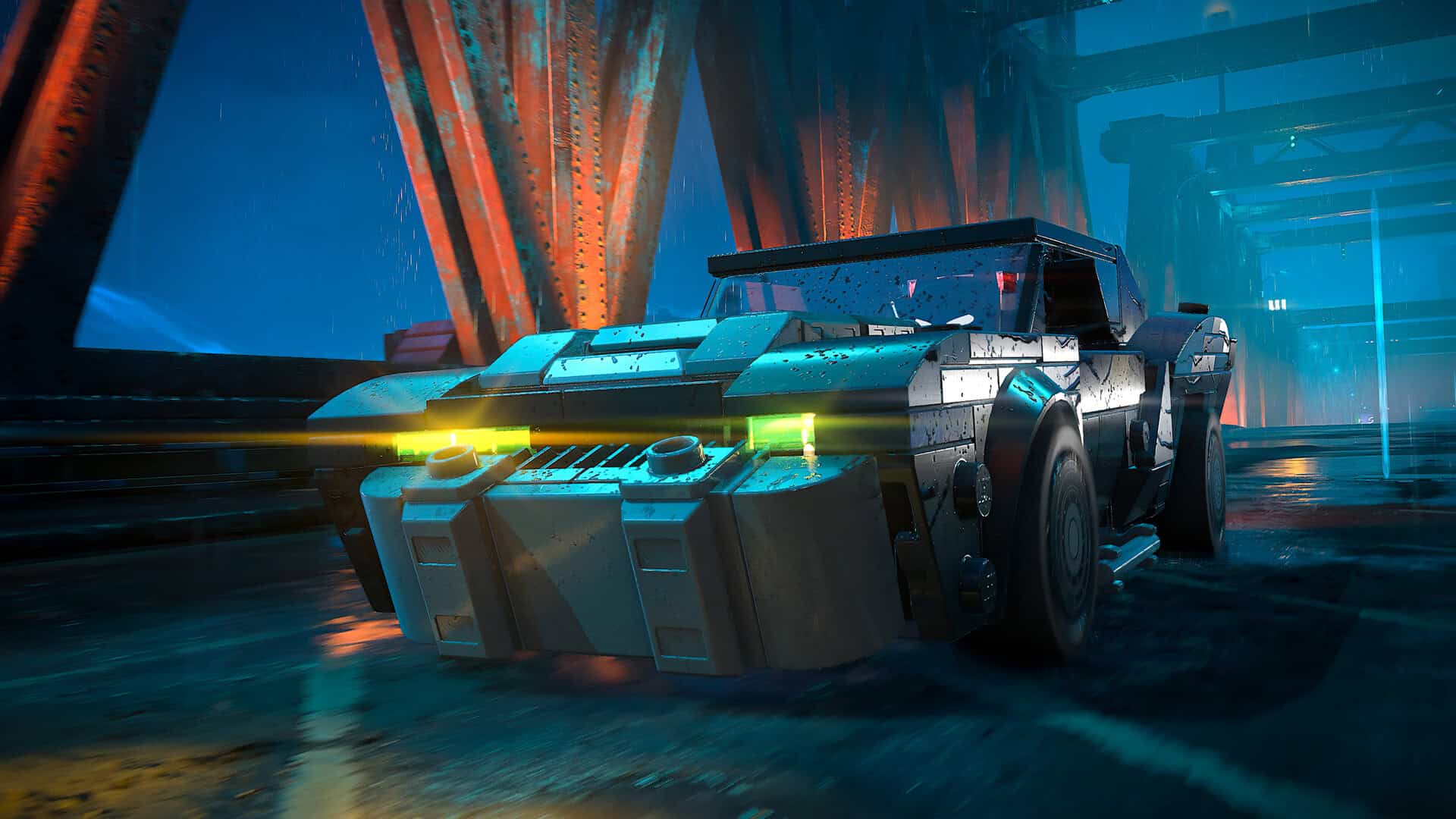
With that being said, I also want to point out how gorgeous this game actually is. I played it on Xbox Series X, and I often stopped in my tracks just to take in all those small LEGO details. It’s crazy how realistically the rain runs down the Batmobile, almost like it would on real plastic bricks. Or how Batman’s cape isn’t perfect and still has that typical LEGO sturdiness to it. Or how you can spot tiny LEGO logos on arms and even product codes when you look closely. You’ll probably notice it in the screenshots too, but the team really pushed itself here in ways that feel like a new benchmark for LEGO games. The fact that they managed to bring this level of visual detail to a vibrant open world is pretty incredible. Sure, it’s not the biggest open world out there, but the amount of detail packed into it is impressive. It’s easily one of the best-looking games I’ve played this year, and that says a lot.
Conclusion:
LEGO Batman: Legacy of the Dark Knight brings the spirit of the Arkham games into the LEGO universe in a way that clicks. Gotham is a joy to explore, the combat feels great, and the humor keeps the darker Batman lore light without losing its charm. The lack of online co-op is a shame, but this is easily one of the strongest LEGO games in years.
