
In the first couple of seconds after booting this game up, a gun is judging me, an alien is yelling, and I’m smiling again. Oh yes, we are so back!
Squanch Games doesn’t waste time setting the mood. There’s no slow onboarding, no careful recap of what you missed in the first game. You’re immediately dropped back into this loud, messy universe where every weapon has an opinion and every NPC feels the need to comment on whatever you’re doing. I liked the humor in the first game, so slipping back into this felt familiar rather than overwhelming, and within the first hour it was already clear that this sequel isn’t trying to tone anything down, but it is trying to be better at pacing itself.
The jokes are still crude. The game still leans hard into meta humor and uncomfortable moments. Your guns still talk more than they should. But there are finally small pockets of silence now, moments where you’re allowed to move through an environment or focus on combat without someone interrupting every three seconds. Those gaps matter. They give the chaos room to breathe, and they make the absurd stuff land harder instead of turning into background noise.
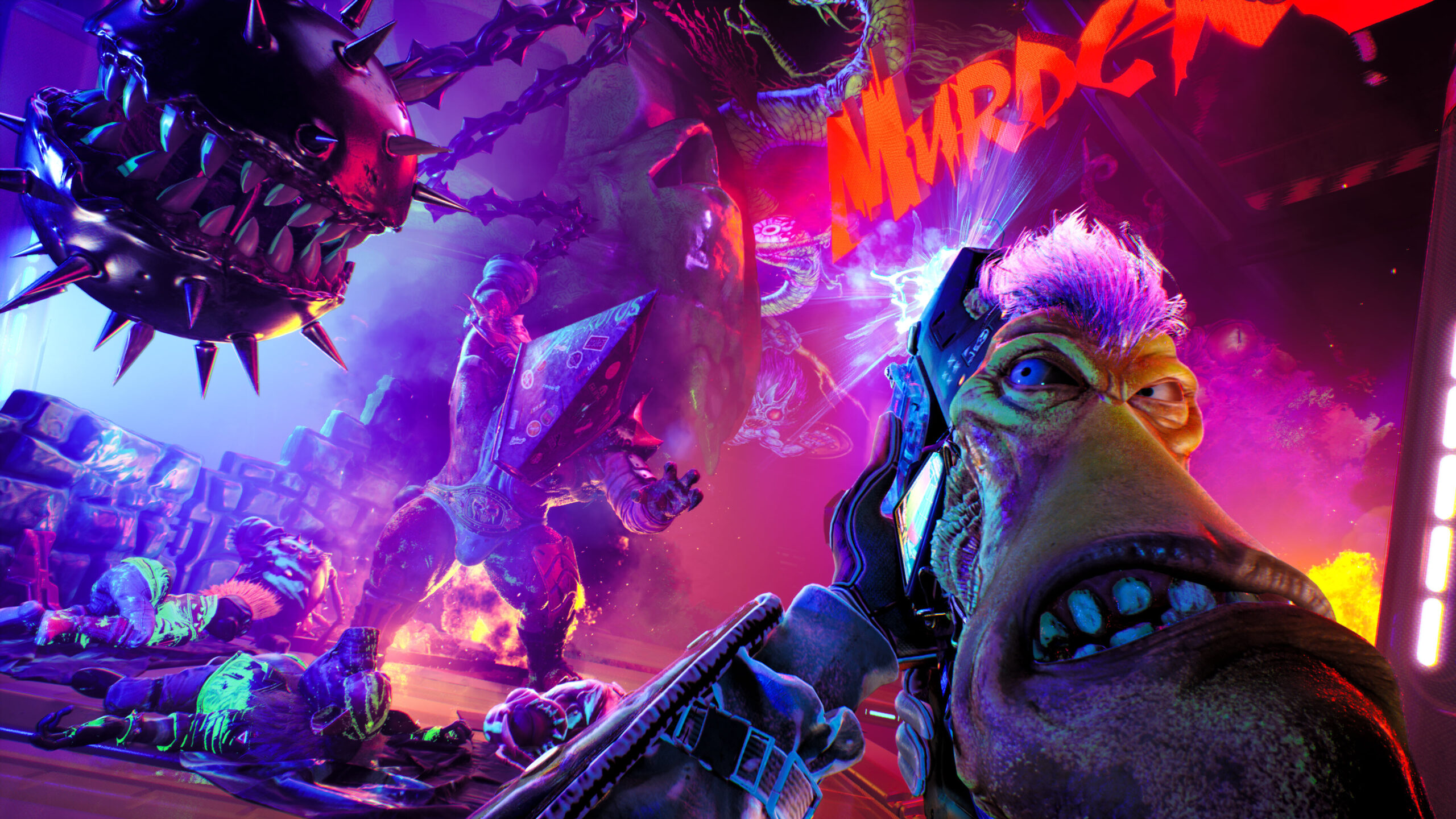
Combat is still built around shooting aliens with talking weapons, and that core hasn’t changed. What has changed is how you move. The skateboard ends up doing a lot of heavy lifting. Levels are clearly designed around momentum this time, with rails to grind, vertical routes to exploit, and arenas that reward staying mobile instead of just strafing in circles. Early on I mostly overcommitted jumps and slammed into geometry, but once I got used to how the board handles, traversal and combat started flowing together in a way the first game never really achieved. You’re constantly repositioning, launching yourself into fights, escaping danger by grinding away, then diving straight back in. It makes everything feel more physical.
Enemy encounters benefit from that shift. There’s more clarity in how fights are staged, weapons have clearer roles, and the game actively encourages you to move instead of standing your ground. It still gets visually busy with lots of particles, alien goo, and projectiles everywhere, but it feels like a deliberate choice rather than accidental clutter. Boss fights lean into this too. Several of them are built around specific weapon abilities, almost like mechanical showcases, and there’s one late-game encounter that genuinely caught me off guard, not because it was funny, but because I couldn’t believe they committed to that idea all the way through. I won’t spoil it. It’s one of those moments that works best when you don’t see it coming.
Exploration plays a bigger role this time. Side paths hide upgrades, strange NPC encounters, and optional missions that quietly feed into how the story wraps up. There’s no big prompt telling you which choices matter. You just interact with people, make decisions in the moment, and live with whatever consequences show up later. I liked that approach. It never felt like I was min-maxing dialogue trees , just responding naturally to situations.
The alien cities themselves feel more lived in too. Between firefights, I often slowed down to take in the environments, something I rarely did in the original. There are more small details here, more visual personality, more reasons to wander even when you don’t strictly need to.
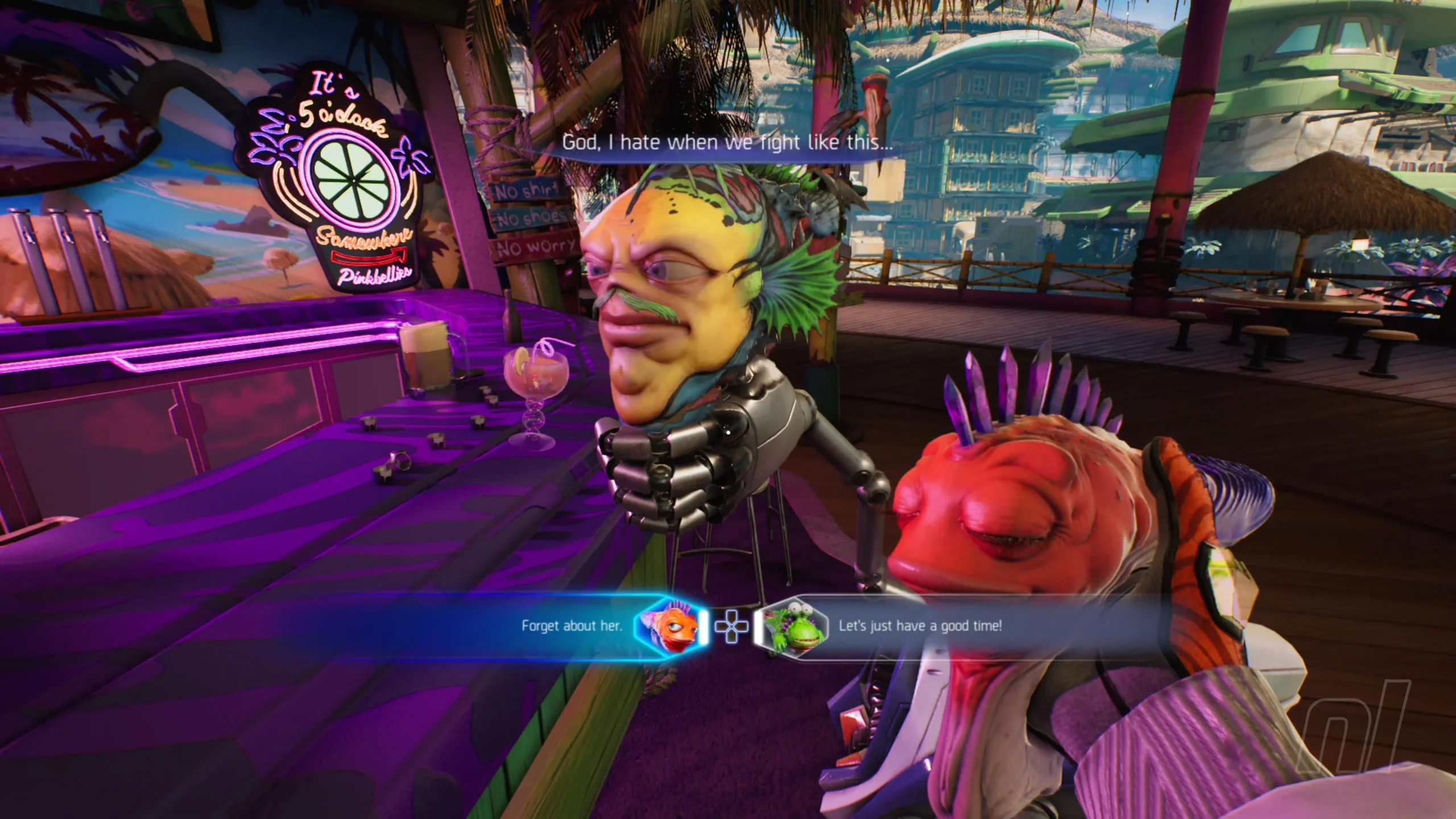
A lot of this works because the Gatlians finally feel like characters instead of joke delivery systems. Each weapon brings its own playstyle and personality, and I regularly stuck with certain guns simply because I enjoyed their presence. The voice acting carries a huge part of the experience, and for the most part it lands. There are accessibility options to reduce weapon chatter if it becomes too much, which is a smart addition, although I did have to tweak audio levels on Xbox early on to stop dialogue getting buried under sound effects.
Playing on Xbox Series X, performance was mostly stable at 60fps, but not spotless. I ran into occasional dips during heavier combat, longer-than-expected loading pauses between major areas, and a few moments where the game clearly struggled with its own scale. Nothing completely broke my playthrough, but it’s noticeable, especially when the game pushes big set pieces or dense encounters.
Story-wise, this sequel lands better than I expected. Beneath all the crude humor and absurd set pieces, there’s a clearer emotional throughline, higher stakes, and an ending that actually sticks. It’s still ridiculous and irreverent, but there’s more intent behind it this time. Some optional encounters quietly influence how things resolve, and engaging with side content made the finale feel more personal.
Conclusion
High on Life 2 is bigger and louder than the first game, but it also feels more considered. Movement finally matters and feels tight while exploration feeds back into progression in meaningful ways. The humor is still relentless, but it’s paced better, and the world gives you more space to exist between jokes. It’s not flawless. I ran into performance hiccups on Xbox, and not every gag lands. Some fights still drift into visual overload. But I never felt bored, and I never felt like the game was coasting on novelty alone. If you enjoyed the first game’s energy, this gives you more of that but with better flow and stronger structure underneath. If you already hated the talking guns, you won’t last long here.