
Double Fine has a talent for catching you off guard. They never announce what kind of story they’re about to tell; they just let it unfold, quietly, until you realise you’ve been disarmed. Keeper is one of those games. It starts small, almost fragile, but the longer you stay with it, the more it grows into something affecting.
It’s strange, tender, and unmistakably Double Fine: a mix of handmade oddity and emotional precision. What begins as a minimalist puzzle adventure slowly becomes something more human: a story about isolation, connection, and the will to keep shining when everything else has gone dark.
On paper, it’s small. A wordless story about a lighthouse in a dead world. In practice, it’s a quiet masterpiece about connection, memory, and the faint pulse of hope that refuses to die. You can’t describe it without deflating it, and you shouldn’t try. Keeper works best when you walk in blind, no trailers, no context, no expectations. What it shows, and what it hides, are equally important.

There isn’t a single spoken line, yet it tells more than most games with hours of dialogue. Through light, motion, and silence, it sketches a story about isolation and friendship, about learning to move again when the world feels empty. It’s abstract, sometimes even psychedelic, but in that abstraction, it finds clarity. Every scene feels sculpted with intention. You might not understand everything, but you feel all of it.
When the credits rolled, I just sat there for a while. Not because I needed more, but because I needed to process what I’d just seen. It’s been a long time since a game has made me feel that specific blend of sadness and warmth, the kind that lives somewhere between Journey, Gris, and Inside. Keeper belongs to that quiet lineage, short, complete experiences that say more with images than with words.
Light and motion
If the story is Keeper’s heart, its gameplay is the quiet rhythm that keeps it beating. You play as a literal lighthouse, a being of stone, metal, and light that stumbles to its feet in a world long abandoned by humanity. The early moments are almost clumsy; the way you move feels uncertain, like the world itself is testing your balance.
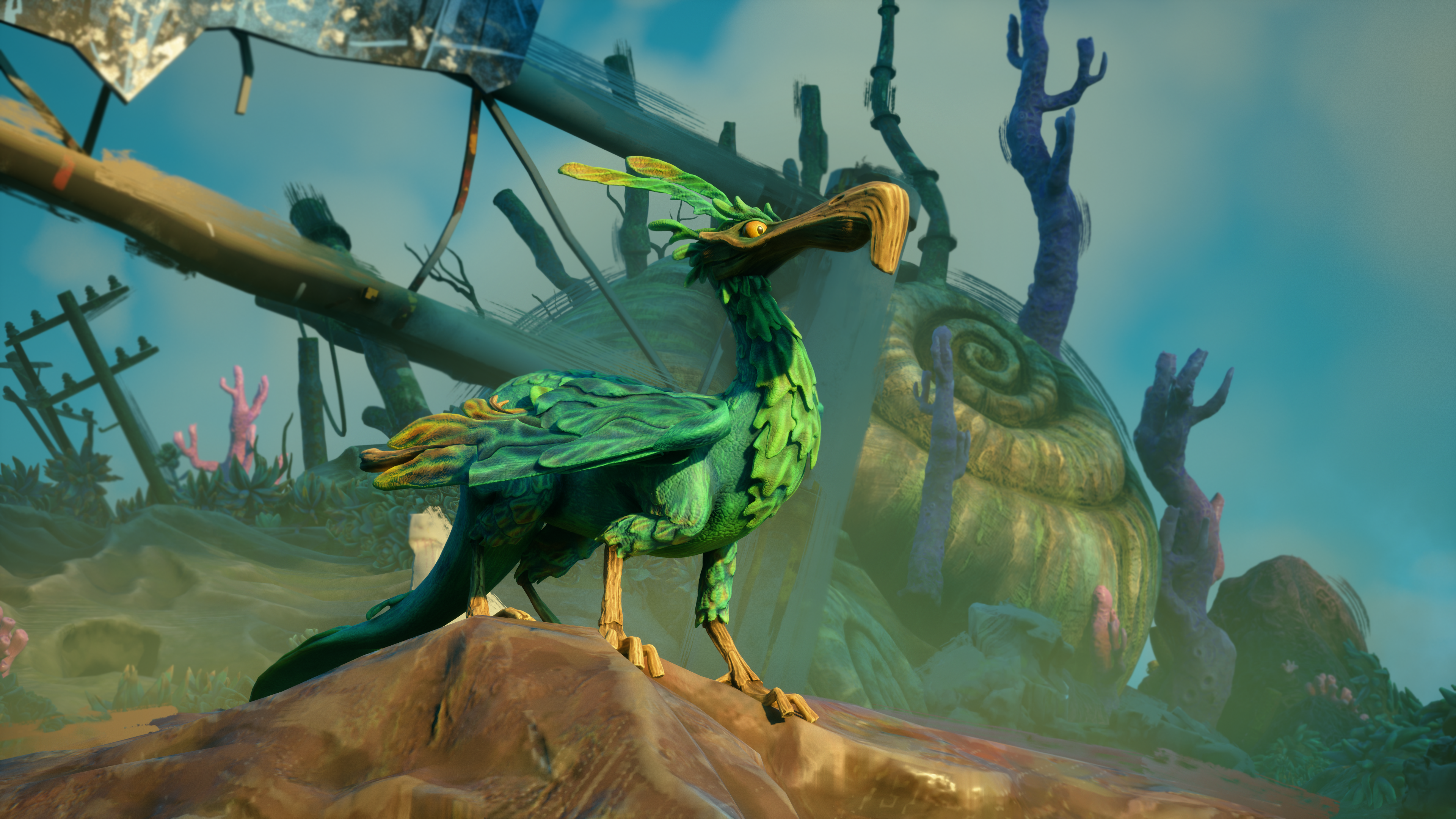
Soon you meet Twig, a bird-like companion who becomes the mirror to your light. Where you illuminate, Twig interacts. You shine beams to open paths, charge devices, or reveal mechanisms hidden in the dark. Twig can fly off to trigger switches, collect distant objects, or distract looming threats. It’s a simple system, but it breathes life into every puzzle. You’re never just solving, you’re communicating, often without knowing what you’re saying.
Double Fine’s decision to use fixed camera angles is brilliant. It’s not about limitation; it’s about control. They decide what you see, what you don’t, and when the world feels larger than you. Each frame could be a painting, every scene composed with a filmmaker’s eye. Some perspectives isolate you, others overwhelm you. The game’s emotional beats are tied to those shifts in view, it’s visual storytelling in its purest form.
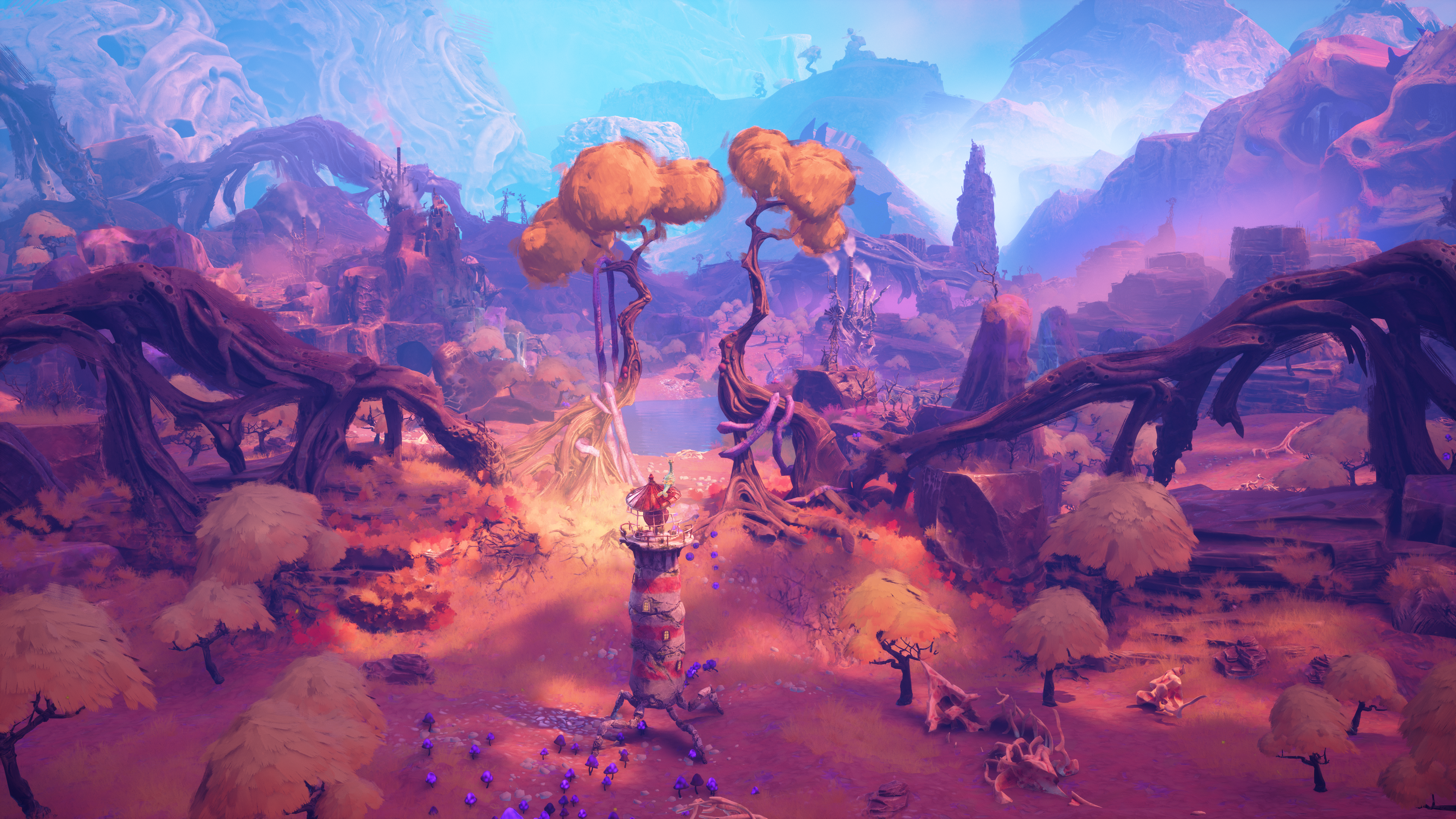
The first half is intimate: corridors, caves, tunnels. You and Twig learning each other’s rhythm. Then, mid-game, everything changes. I won’t spoil what happens, it deserves to be experienced, not explained, but Keeper reshapes itself. Movement changes. The world opens. What was once confined becomes vast. The puzzles evolve alongside your abilities, reflecting both loss and growth. It’s rare for a game to feel this transformative without shouting about it. That structural metamorphosis reminded me of Nier: Automata, not because it shares its mechanics, but because it dares to bend its own genre. It starts as a puzzle adventure, and by the end, it’s something else entirely. Every transition feels earned, every surprise meaningful.
A world that speaks in silence
What carries Keeper is atmosphere. There’s an elegance to how it balances stillness and motion. The sound design barely whispers, ambient drones, the gentle hum of machinery, distant waves. There’s a subtle emotional rhythm in how the light interacts with the environment. Dust floats through beams. Surfaces shimmer and fade. Each area feels like it’s breathing, even in ruin.
Exploration is quietly rewarding. There are secrets hidden across the island, tiny visual details, collectibles, and achievements that extend your time in its world. They’re never marked by flashing icons; they’re invitations for curiosity. Taking a detour feels less like chasing completion and more like communing with the environment. And it’s beautiful, in a way only Double Fine could manage. It’s not realism they chase, but personality. Structures twist like they’ve grown from memory rather than metal. The palette shifts with mood, cool blues for loss, deep colors for revelation. The entire game looks like a dream you almost remember.
Even when it ventures into the surreal, Keeper never loses its emotional truth. There’s loneliness here, but also peace. A sense of acceptance under the weight of decay. By the end, that feeling of smallness, of being a flicker in a vast, indifferent world, becomes strangely comforting.
A short but lasting stay
Keeper isn’t long. You can finish it in three to five hours if you move steadily, maybe a little longer if you take your time exploring. But it’s exactly the right length. It builds, it shifts, it resolves, and then it leaves. It never lingers past its welcome. In an industry obsessed with more, Keeper proves how powerful less can be. And while the story will draw most of the attention, the craftsmanship deserves equal credit. The transitions are seamless, the controls deliberate, the puzzles intuitive. Every system serves the story. Nothing feels wasted. It’s launching day one on Game Pass, but I’d easily pay for it. Not because of length or novelty, but because of impact. Few games this year have left me so quiet afterwards.
Conclusion:
Keeper is a game about finding light in ruin. About learning to move again after everything has fallen apart. It’s intimate, strange, and quietly devastating, exactly the kind of game only Double Fine could make. It’s short, yes, but meaningful from the first frame to the last. And when it’s over, it lingers. The kind of game that doesn’t just end, it stays with you.
