
GraviFire looks like it belongs back in 1999 and should be played on a Pentium III. I’m already imagining the Sound Blaster bit-crushed sounds and the GeForce DirectX 10 delivering crispy 32-bit graphics. Well, I was not far off.
No spacebar mashing in space
At first, I thought GraviFire was going to be some sort of 2D Duke Nukem/Commander Keen type title. Potata Games already delivered a platforming/adventure gem last year. To my surprise, GraviFire turns out to be a puzzle game instead of an intergalactic space adventure. I was ready for some good old spacebar mashing but had to settle for logic puzzles. And to be fair, I didn’t mind the switch because I love puzzles almost as much as I love 2D platformers in space.
No nonsense puzzler
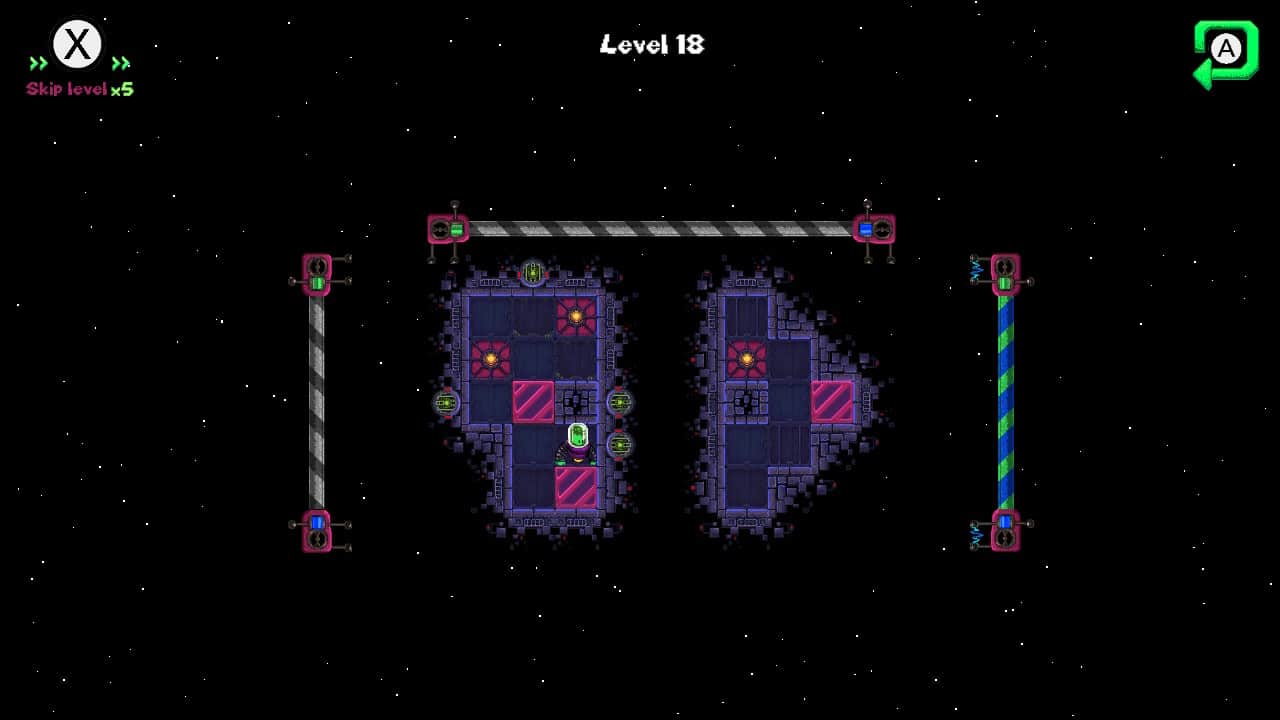
GraviFire starts out with some backstory of you being put in a spacesuit and then “stuff” happens. To be fair, I couldn’t quite make up what’s the story about but who cares about a story in a puzzler. Sudoku only needs 9 numbers and a few squares to keep people going so why should this puzzler need a backstory. As you’re thrown right into the puzzle part of the game, you find yourselves right into the first puzzle. From a top-down perspective, you see your character in a room with boxes and spaces indicating where the boxes need to go. If this description reminds you of something but you can’t quite remember the name, I got you covered. This game is Sokoban/Boxxle all over again… until you move.
Gravity hits hard
Once I tapped into my Sokoban skills I was ready to go at the first puzzle only to be put back with my two feet on the ground. This version of Sokoban alters things by adding gravity into the mix hence the space theme. Boxes fall down (or up, or right, or left) depending on the gravity which adds a nice new element into the mix. Later levels introduce changing gravity depending on the presence of a gravity bar on either side of the room. This opens up a lot of variation in puzzles.
Lasers and switches
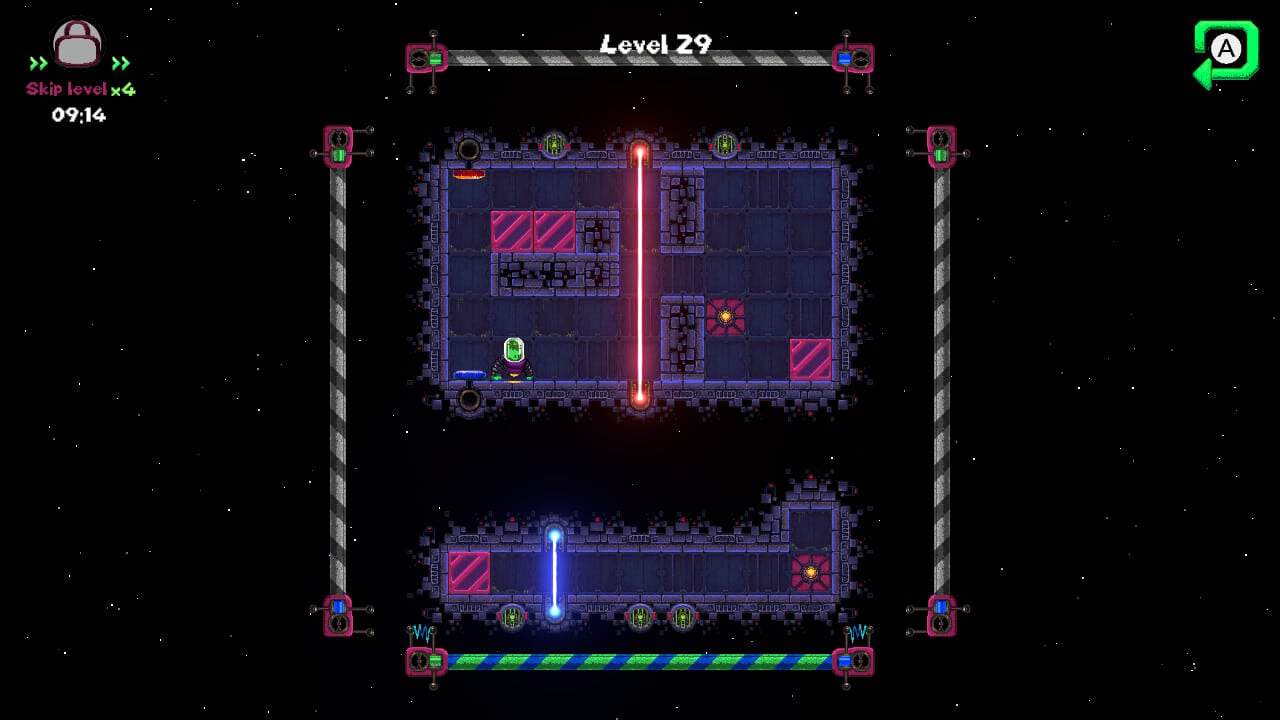
GraviFire has 50 levels in total and starts out easy, introducing you to the basic idea. The game gradually ups the difficulty by adding more elements. The gravity change keeps you sharp for the first 25 levels. As the gimmick starts to wear off a bit, new things are added to the mix. Switches to turn off lasers become another factor to calculate into your problem-solving routine. Different colored switches activate/deactivate different colored switches and can make the level quite difficult to figure out. When you’ve made a wrong move you can restart from the beginning of the level by holding the reset button. Sadly an undo button wasn’t implemented so be careful before you make a move or change gravity.
Skip a level
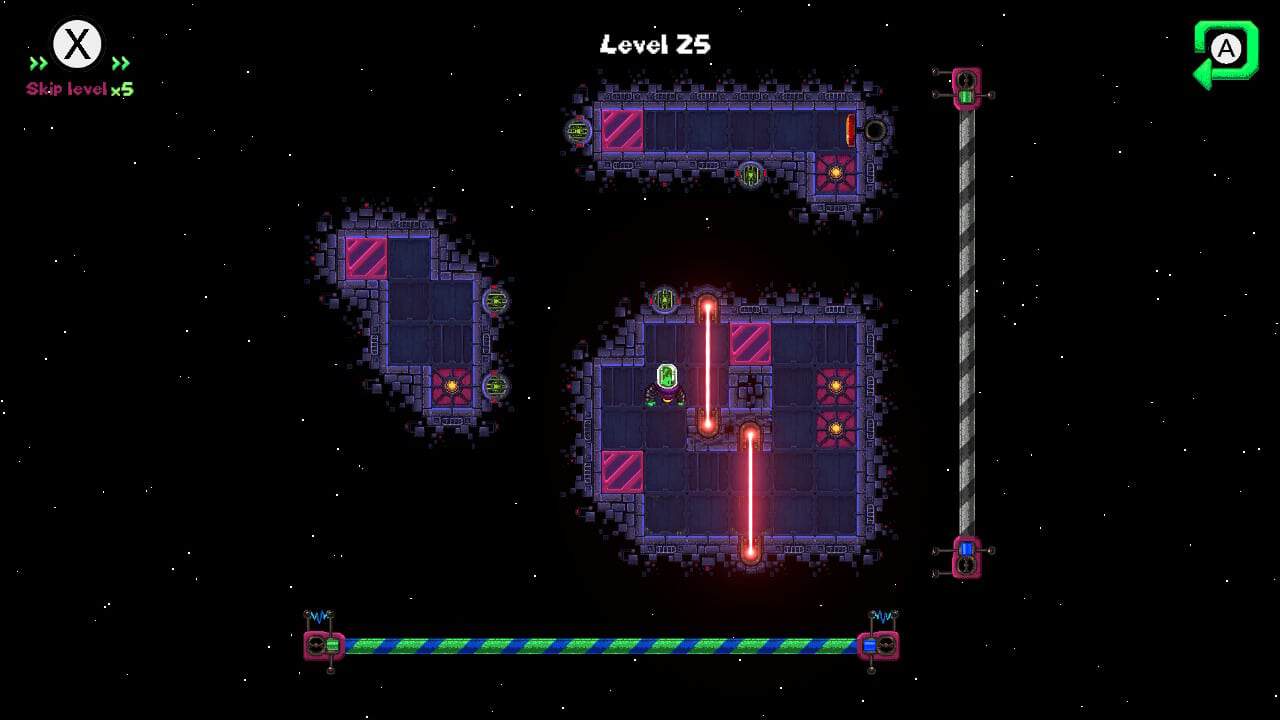
GraviFire isn’t all that hard. I got through the first half of the game with relative ease. There was one puzzle I couldn’t figure out and got a bit frustrated on. Luckily, the people from Potata games offered a “skip level” button. This button can only be used 5 times throughout the game. Besides limiting the use, they also added a 10-minute timer before the button is active again. This holds you back from just skipping 5 levels.
Conclusion
GraviFire is an ode to Sokoban/boxxle but adds new game elements to alter the experience. I had a good time completing the levels and felt the added elements along the way were well thought out. The difficulty level grew at an enjoyable pace. The only downside and the reason why this game didn’t get a higher rating, it’s so short. The 50 levels can be completed in a few hours and the game isn’t quite replayable. Beefing out a puzzler is a balancing act to not overdo it but this feels a bit underdone in my opinion. Great concept, I just wanted some more.
