
There are certain games you back because they look promising. Then there are games you back because of who is making them. Back in 2019, I reviewed Shovel Knight: King of Cards, part of the Treasure Trove collection. And I immediately fell in love with Yacht Club Games’ particular brand of retro game design. It wasn’t just nostalgia, since plenty of developers can recreate old-school visuals. Very few understand why those classics worked in the first place. Yacht Club Games managed to take the DNA of the NES era and build something that felt timeless rather than dated. Years later, after countless expansions and spin-offs, Shovel Knight remains one of my favorite indie franchises ever created.
So when Yacht Club Games unveiled Mina the Hollower and launched its Kickstarter campaign, I backed it on day one without a second thought. A gothic action-adventure inspired by Game Boy Color classics, starring a whip-wielding mouse capable of burrowing underground? Sign me up. Four years later, after delays, growing anticipation, and increasingly impressive previews, Mina the Hollower has finally arrived. The good news? It easily exceeds all expectations.
A dark tale beneath Tenebrous Isle
Without venturing into spoiler territory, Mina the Hollower follows Mina, a brilliant inventor and member of the Hollower Guild. After the mysterious failure of the Spark Generators she designed, Mina travels to Tenebrous Isle to investigate the growing darkness consuming the land. What starts as a routine mission quickly spirals into a conspiracy involving monsters, political intrigue, ancient powers, and moral ambiguity. The story isn’t necessarily groundbreaking, but its presentation is exceptional. Yacht Club Games leans heavily into gothic horror influences, creating a world that feels equal parts Castlevania, Bloodborne, and The Legend of Zelda: Oracle of Ages. The writing hits an impressive balance between charming character interactions and genuinely unsettling moments.

What stayed with me most is how little Tenebrous Isle explains. It lets you wander, read old newspapers, notice strange details in the environment, and slowly piece things together on your own. That won’t land for everyone. Some players will probably want clearer answers or a stronger push forward. But for me, that restraint made the island more interesting. I wasn’t just moving through another retro-inspired world; I was trying to understand a place that felt like it had been there long before I arrived. The Game Boy Color Zelda comparisons are obvious, but Tenebrous Isle is at its best when it leans into its own strange, quiet atmosphere. At first glance, Mina the Hollower looks like a spiritual successor to Link’s Awakening DX or the Oracle games. Yet after only a few hours, it becomes clear that Yacht Club Games is doing far more than recreating a beloved formula. This is not simply “retro Zelda with a mouse”; it’s much more ambitious, and it might not even be Zelda-like.
The joy of Hollowing
At the heart of Mina the Hollower lies its signature mechanic: Hollowing. By pressing a button, Mina burrows underground, becoming briefly invulnerable while traversing beneath the surface. What initially feels like a simple dodge mechanic gradually evolves into the foundation for nearly every aspect of the game. Exploration, puzzle-solving, combat, secret hunting, traversal challenges, everything eventually circles back to Hollowing. The brilliance lies in how naturally Yacht Club Games expands the mechanic throughout the adventure. New environments constantly ask you to rethink how Hollowing can be used. One moment, you’re avoiding enemy attacks. The next time you’re navigating environmental hazards, uncovering hidden pathways, or solving intricate dungeon puzzles.
Combat follows a similarly layered philosophy. One of Mina the Hollower’s most underrated strengths is how dramatically its weapon system changes the feel of the adventure. While many action-adventure games offer new weapons as incremental upgrades, Yacht Club Games treats each weapon as an entirely different approach to combat. In practice, switching weapons often feels less like changing equipment and more like selecting a new character class.

Most players (like me) will likely start with the Nightstar, Mina’s iconic whip, and arguably the most balanced option available. Its respectable range and ability to attack in multiple directions make it the safest and most versatile choice, evoking memories of classic Castlevania while still fitting naturally within Mina’s movement-focused combat system. It became my default recommendation for newcomers, simply because it excels in almost every situation without requiring mastery of a specific gimmick. At the opposite end of the spectrum sit Whisper & Vesper, a pair of lightning-fast daggers that transform combat into a delicate balance between risk and reward. Their limited reach demands precision, but in exchange, they allow Mina to unleash rapid combos and quickly retreat underground before enemies can respond. Players who grew up with the faster-paced Zelda entries will immediately feel at home here.
Then there’s the Blaststrike Maul, which quickly became my personal guilty pleasure. It is slow and often leaves Mina vulnerable during its lengthy wind-up animations, but every successful hit lands with the force of a freight train. The weapon even introduces a unique charging mechanic and tactical roll that fundamentally changes how encounters are approached. Boss fights become less about sustained damage and more about identifying the perfect opening to deliver a devastating blow. It’s not the easiest weapon to master, but it may very well be the most satisfying. Additional unlockable weapons (I won’t spoil them) continue this philosophy throughout the game, introducing defensive parry-focused playstyles and ranged alternatives that can completely reshape how certain encounters unfold. What impressed me most was that none of the options felt objectively superior. Instead, Yacht Club Games has created a surprisingly deep combat sandbox where experimentation is constantly rewarded. Nearly twenty hours into my playthrough, I was still discovering new weapon combinations, upgrades, and strategies that made familiar encounters feel fresh again. Mina encourages aggression but punishes recklessness. Enemy placement is tight, attack patterns demand observation, and healing requires patience. Unlike many modern action-adventure titles, button-mashing simply doesn’t work here.
That old-school philosophy extends to progression as well, where exploration is key. Hidden paths often contain powerful upgrades, useful trinkets, lore discoveries, or entirely optional encounters. I frequently found myself wandering off the main path only to emerge twenty minutes later with a newfound appreciation for the world design. And that’s where Mina the Hollower truly shines.
Design at its finest
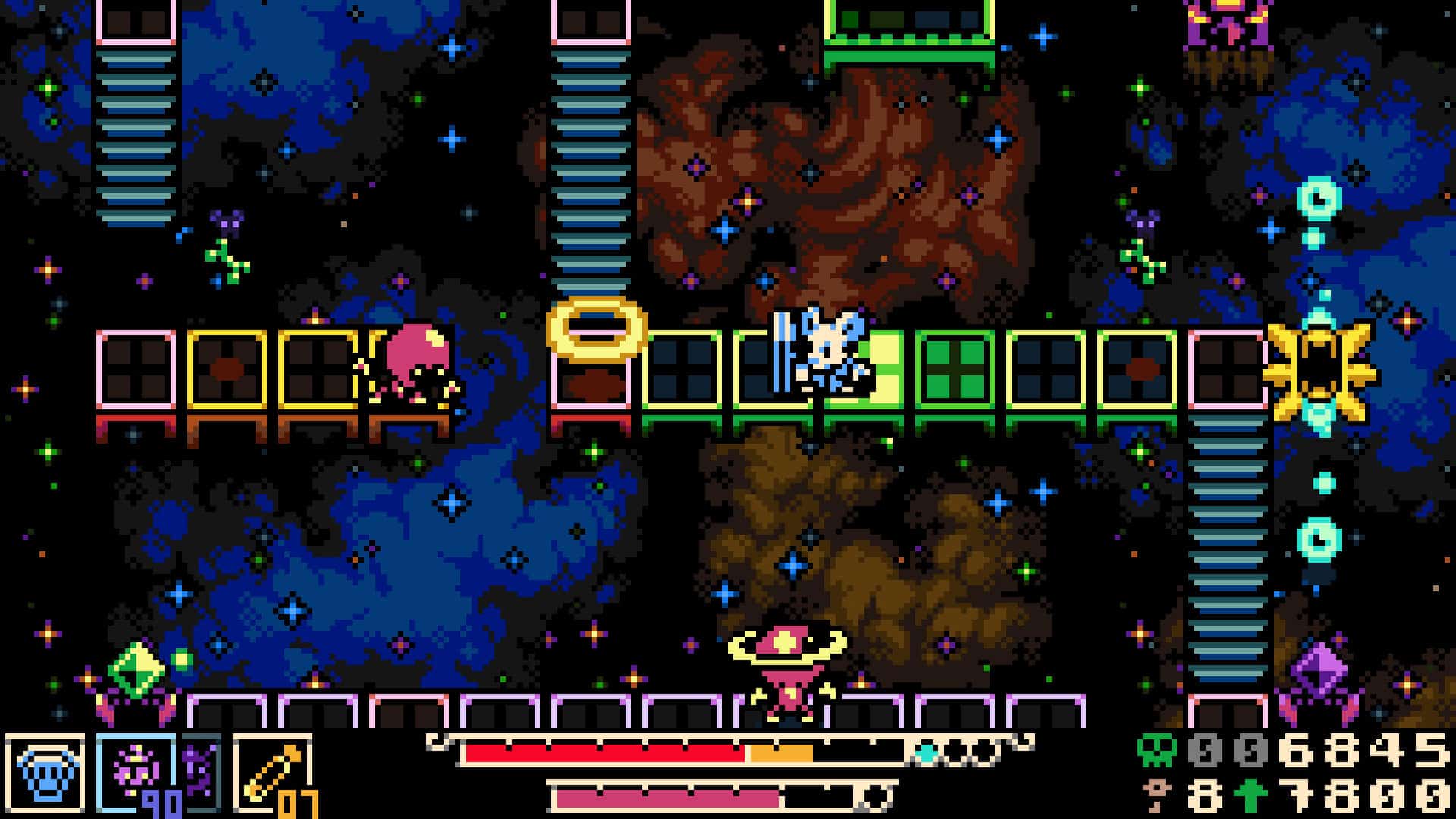
If I had to pinpoint a single reason why Mina the Hollower stands alongside the very best games Yacht Club Games has ever created, it would be the level design. Tenebrous Isle is a masterclass in interconnected exploration. Every region feels distinct while remaining part of a cohesive whole. Swamps, crypts, mountains, villages, forests, industrial complexes, and haunted ruins all possess unique identities, enemy types, visual themes, and gameplay hooks. Importantly, these areas aren’t simply larger versions of retro levels; they’re designed with modern sensibilities. Shortcuts gradually reveal themselves. Hidden routes loop back in satisfying ways, and optional encounters reward curiosity. The game constantly nudges players toward exploration without ever resorting to excessive hand-holding. There were numerous moments where I found myself thinking, “Surely there can’t be anything over there.” And yes, there usually was. Yacht Club Games has packed Tenebrous Isle with secrets to a frankly absurd degree. Think, hidden passages hiding behind suspicious walls, cryptic NPC dialogue hinting at treasures, and optional bosses lurking far from the main path. This, of course, also leads to entire questlines that can be missed if you’re not paying attention. It’s the kind of game that rewards experimentation in ways few modern releases dare attempt.
Then there are the bosses, usually the bane of our existence, but simply put, they’re phenomenal. Nearly every major encounter introduces a unique mechanic or challenge. Rather than relying on inflated health bars, bosses test your understanding of movement, positioning, pattern recognition, and mastery of Hollowing. And I must confess that several fights rank among my favorite boss battles of the year. What makes them particularly memorable is their variety. Some encounters resemble traditional Zelda-style puzzle bosses, others feel straight out of a 2D Soulslike or like an homage to Castlevania. A few transform into frantic spectacles that push every skill you’ve learned throughout the adventure, and more importantly, victories feel so rewarding. Truth to be told, I lost more than once, and in a couple of cases, far more than once. Yet frustration rarely set in because each defeat taught me something valuable. The game maintains a careful balance between challenge and fairness, ensuring success always feels achievable. That’s a difficult line to walk, and Yacht Club Games handles it remarkably well.

A love letter to the Game Boy Color
Visually, Mina the Hollower is stunning. That might sound strange given its intentionally limited aesthetic, but Yacht Club Games has achieved something remarkable here. Rather than merely imitating Game Boy Color visuals, the developers have recreated the feeling of remembering Game Boy Color games. Everything is sharper, smoother, and more detailed than actual hardware could ever achieve, yet the illusion remains convincing throughout. The limited color palettes, sprite work, animation frames, and environmental details all evoke the handheld classics of the late 1990s. On Nintendo Switch 2, the experience is particularly impressive, especially in handheld mode. Mina the Hollower feels almost destined for the hardware, whereas the crisp display makes every pixel pop, creating an experience that genuinely resembles a dream version of the Game Boy Color era. Docked mode fares equally well. The higher resolution allows environmental detail and animation work to shine without compromising the retro aesthetic, and where some pixel-art games lose their charm when blown up onto large displays, Mina the Hollower somehow becomes even more beautiful.
Performance throughout my playthrough remained rock solid. Load times were negligible, frame pacing was stable, and I encountered no meaningful technical issues. The soundtrack deserves special recognition as well. Combining haunting melodies, energetic battle themes, and atmospheric exploration tracks, it perfectly complements the game’s gothic tone. Several songs have already secured permanent residency in my gaming playlist, and they can be listened to in-game as well through an upgrade of your Underlab.

Too difficult?
One topic that will undoubtedly generate discussion is the game’s difficulty. Mina the Hollower is challenging, and not brutally punishing, but certainly demanding. Combat requires focus, bosses require patience, and exploration occasionally requires persistence. Personally, I loved this approach and felt like a fresh breeze in the genre. However, Yacht Club Games deserves credit for recognizing that not every player wants the same experience. The game includes an extensive suite of modifiers that allow players to tailor difficulty to their preferences. Options can reduce incoming damage, alter healing behavior, and provide numerous quality-of-life adjustments. Using these modifiers comes with certain trade-offs, but the accessibility they provide is admirable. For the record, I played without any modifiers enabled, and clocked in at a solid 30 hours of gameplay for a 100% playthrough. The default experience felt challenging but fair, and I would recommend new players try it as intended before making adjustments. But it wouldn’t be Yacht Games without the secret ending.
Without spoiling specifics, let’s just say Yacht Club Games has hidden one of the most absurd completionist challenges I’ve ever seen in an action-adventure game. Unlocking it essentially requires avoiding a staggering number of actions throughout the entire game, including behaviors most players would never suspect are being tracked. Even seemingly harmless interactions can disqualify a run. I didn’t pursue it myself, and I wouldn’t recommend attempting it on a first playthrough. The sheer dedication required borders on madness. And yet, the fact that it exists perfectly encapsulates the spirit of Mina the Hollower. This is a game overflowing with secrets, mysteries, and surprises, rewarding players who dig deeper than anyone reasonably should.
Conclusion
When I backed Mina the Hollower on Kickstarter all those years ago, I expected another excellent game from Yacht Club Games. What I didn’t expect was one of the finest action-adventure games of the decade.
Mina the Hollower succeeds because it understands that nostalgia is only valuable when paired with innovation. It borrows inspiration from Zelda, Castlevania, Bloodborne, and countless retro classics, but never loses its own identity in the process. The Hollowing mechanic is brilliant, the world is endlessly rewarding to explore, the bosses are unforgettable, and the presentation perfectly balances retro authenticity with modern craftsmanship. More importantly, it captures the magical feeling of discovery that defined gaming’s earlier generations while remaining unmistakably contemporary. Yacht Club Games built its reputation with Shovel Knight, and with Mina the Hollower, the studio proves that lightning can strike twice.