
Some games you finish, and others you… leave for a while? Fallout 4 has always been that second kind of game for me. Not because the story doesn’t end, because it does, but because the world Bethesda built is the kind of place you step away from and eventually wander back into again. Sometimes months later, sometimes years, and sometimes even across platforms.
When Michiel reviewed Fallout 4 for Gaming Boulevard back in 2015, one thing stood out to him: the constant distraction of the world itself. The main quest might be pointing you somewhere important, but the Commonwealth had a habit of pulling you sideways. A ruined factory here, a strange radio signal there, a group of settlers needing help just beyond the horizon. Before you know it, the evening was gone and the original objective long forgotten. And it’s that observation that has aged remarkably well. If anything, returning to Fallout 4 almost a decade later makes it even clearer that the game’s greatest strength was never its main story; it was always the wandering and its worldbuilding.
Now Bethesda’s post-apocalyptic RPG arrives once again, this time as Fallout 4: Anniversary Edition on Nintendo Switch 2. A new platform, a decade of hindsight, and a game that many players already know by heart. So the real question isn’t whether Fallout 4 is good, but whether revisiting it still feels worthwhile. And perhaps more surprisingly: whether it actually works on a portable console. Can Fallout 4 keep the track record alive for the Nintendo Switch 2, with lots of successful ports? Let’s dive in (and put on some Power Armor while we are at it).
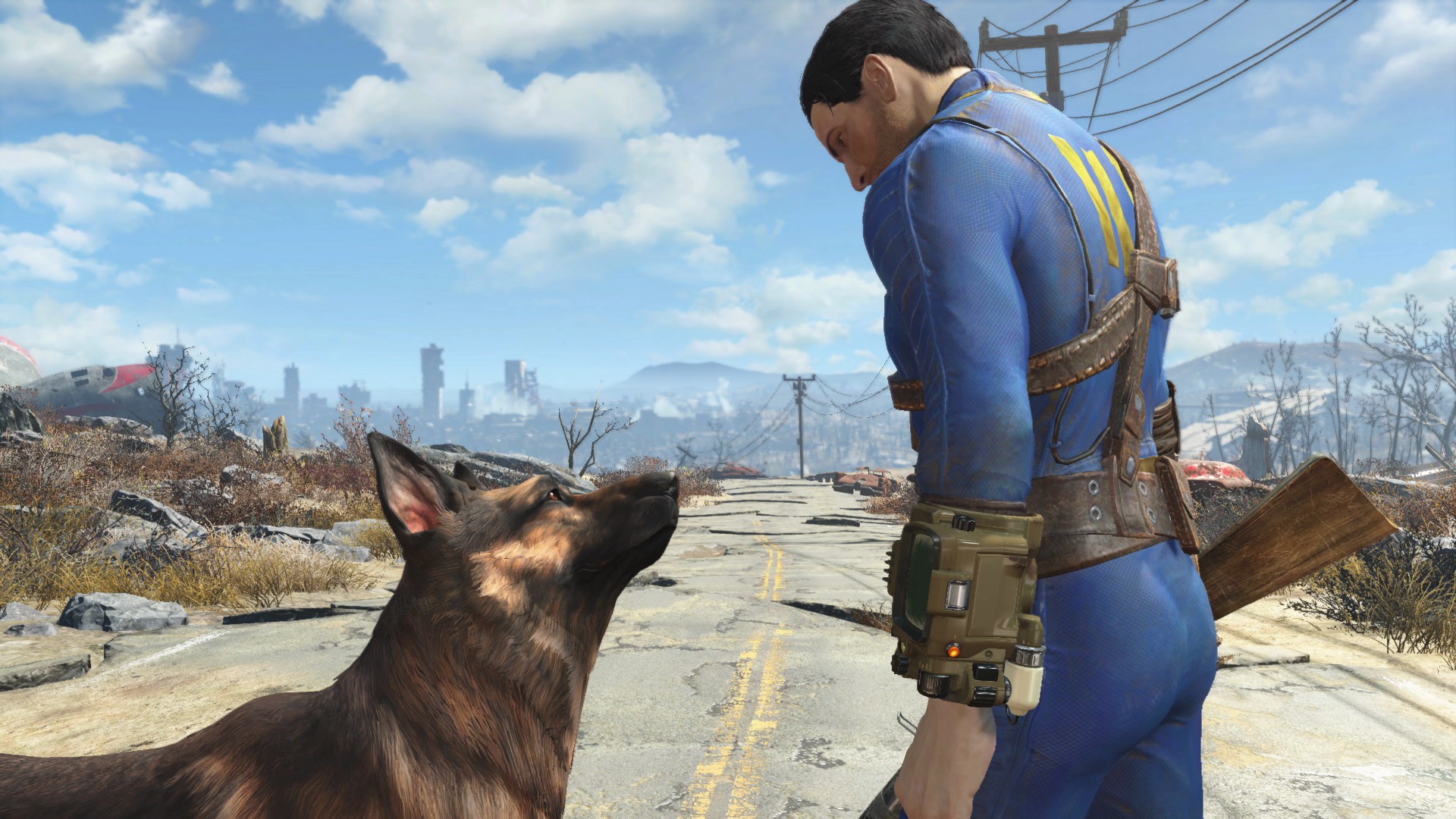
The story you remember, and the world you don’t
The central premise of Fallout 4 hasn’t changed. You start in a quiet American suburb moments before nuclear war devastates the planet. Luckily, you signed up with Vault-Tec, because within minutes of getting out of the bathroom, you’re rushing toward Vault 111 with your spouse and infant son, Shaun, as nuclear explosions light up the skyline. It’s still one of Bethesda’s most effective openings: brief, chaotic, and memorable. And like a good dystopian tale about the future starts, cryogenic stasis follows, and when the protagonist finally awakens centuries later, the world has transformed into the wasteland known as the Commonwealth, a ruined version of Boston populated by raiders, mutated wildlife, and factions with wildly different ideas about how the future should look.
The search for Shaun forms the emotional backbone of the narrative. Or at least it tries to. Because if there’s one thing Fallout 4 does exceptionally well, it’s derail your sense of urgency. Michiel touched on this in his original review as well: the Commonwealth constantly tempts you with small stories hidden away from the main questline. A random building might contain the remnants of a failed scientific experiment. A vault might reveal yet another morally questionable pre-war test. A distress signal might lead to something far more complicated than expected. You follow one thread, then another, and suddenly you’ve spent hours exploring places the main story never asked you to visit. It’s not accidental. Bethesda designs its worlds to reward curiosity, and Fallout 4 arguably leans into that philosophy more than any previous game in the series. So, what do we do with all this leftover yarn?
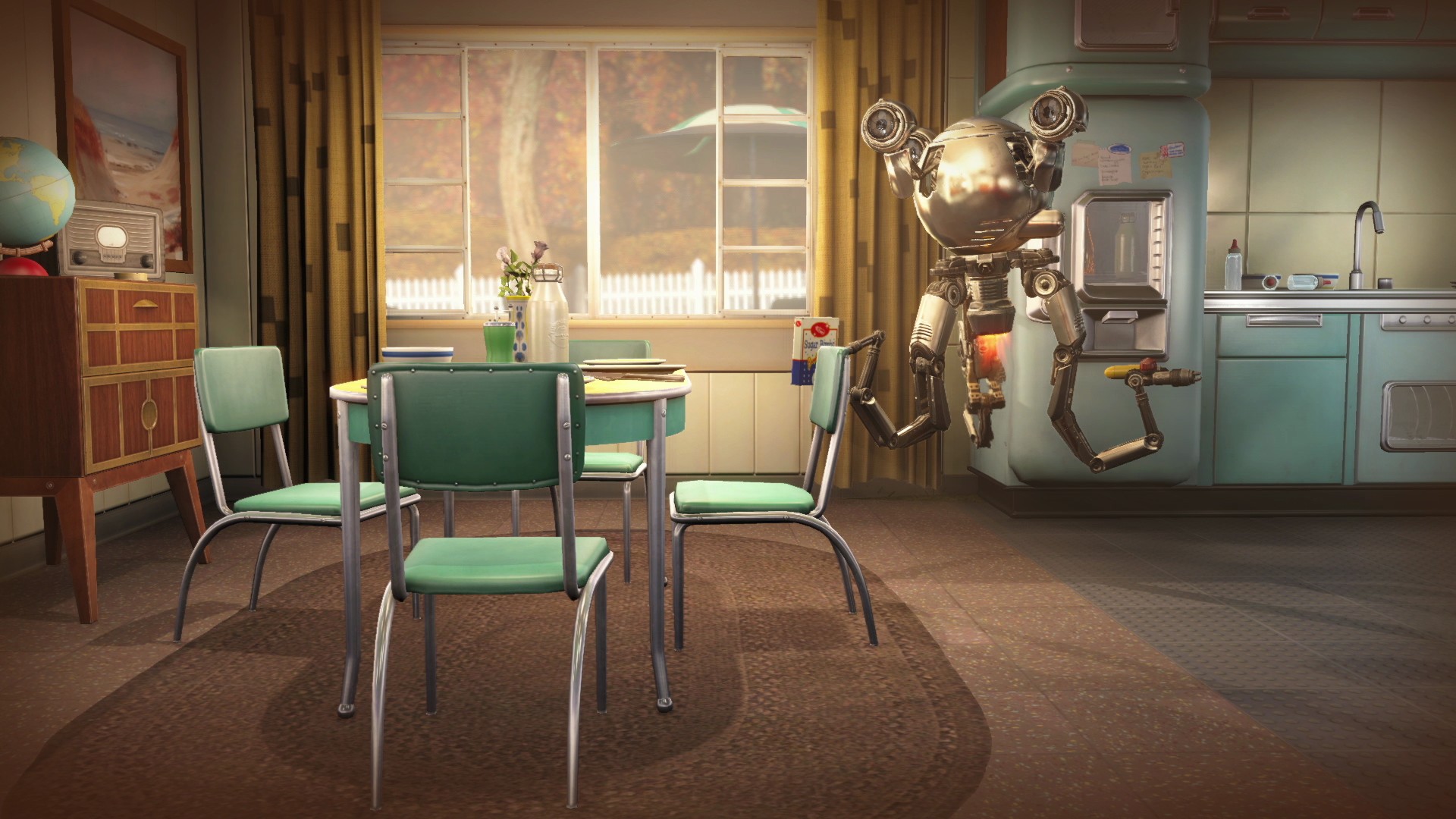
The Commonwealth as a system
What made Fallout 4 feel different in 2015, and still defines it today, is its focus on interconnected systems. If we look back at the earlier Fallout games, we see they leaned heavily on traditional RPG mechanics: dialogue trees, character builds, and branching quests. Fallout 4 shifts the emphasis slightly toward gameplay loops. In other words, the world is something you interact with physically, not just narratively.
The most obvious example is the crafting system. In earlier entries, junk items mostly existed as background clutter. Fallout 4 turns them into valuable resources. Suddenly, desk fans are worth collecting because they contain screws. Typewriters become useful for their gears. Even a simple coffee mug might provide the ceramic needed for construction. Before long, you develop the slightly absurd habit of looting absolutely everything (which is something I have been doing since Diablo I, but that’s a whole different story). And the system even expands this into weapon modification. Almost every firearm can be customized with different receivers, scopes, barrels, and magazines. Over time, a basic rifle can evolve into something highly specialized depending on your playstyle.
It’s not necessarily realistic, but it creates a satisfying sense of progression, and still feels more realistic than what Borderlands hands you. This leads to a set of weapons in the endgame that are entirely different from what you started with. Which kind of makes sense in a dystopian future? But hold up, there is more! We all love the Power Armor, and Bethesda completely reworked how it functions in Fallout 4. Instead of being just another armour set, Power Armor now behaves more like a mechanical exoskeleton powered by fusion cores. You step into it rather than equip it. The result is subtle but effective: wearing Power Armor finally feels as powerful as the lore suggests it should. And I think this is very well woven into the Amazon series, Fallout, as well.
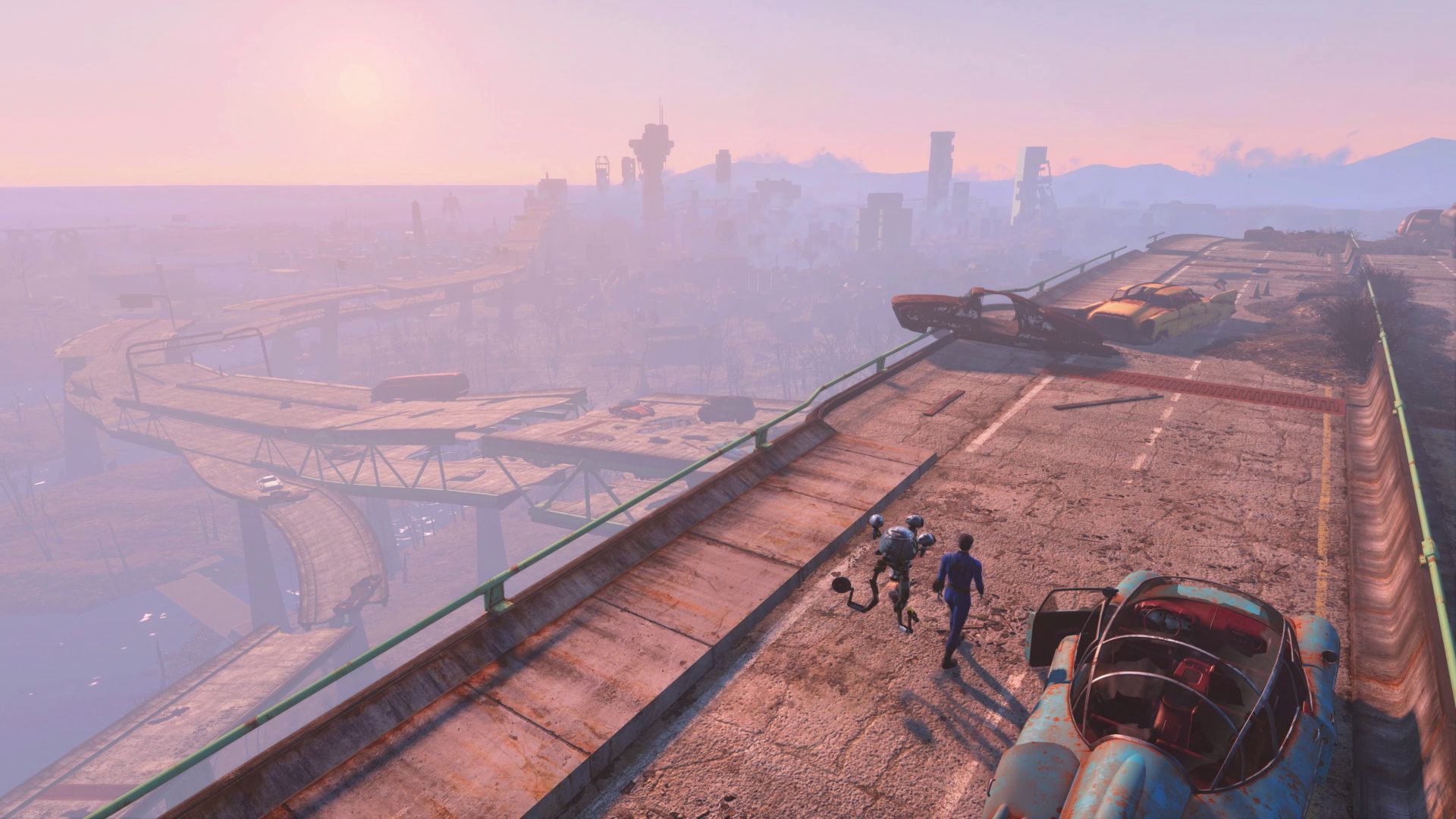
The Settlement debate (and another one needs your help)
If there’s one feature that defined Fallout 4’s identity at launch, it was the settlement system. And you either love it or you absolutely hate it. I’m in the first camp, for the record. So, how it works is that players can claim locations across the Commonwealth and gradually rebuild them as functioning communities. Crops need to be planted, water sources established, defences constructed, settlers assigned jobs, think of it as Animal Crossing with Fallout mechanics.
And on paper, it’s a fascinating idea, rebuilding civilization piece by piece in a world that has largely given up on the concept. In practice, reactions have always been mixed. Some players absolutely love the system, turning settlements into sprawling towns complete with power grids and defensive walls. Others see it as a distraction from the core RPG experience. Personally, I fall somewhere in the middle, leaning more to love than to hate. There’s something satisfying about gradually transforming an abandoned ruin into a small functioning outpost. But the building interface still requires patience, especially when objects refuse to snap into place exactly where you want them (but to be fair, that’s my main problem with almost every management sim game and aspect). The Switch 2 version doesn’t fundamentally change the system, but it runs smoothly enough that building is rarely frustrating for technical reasons. Which, frankly, already helps.
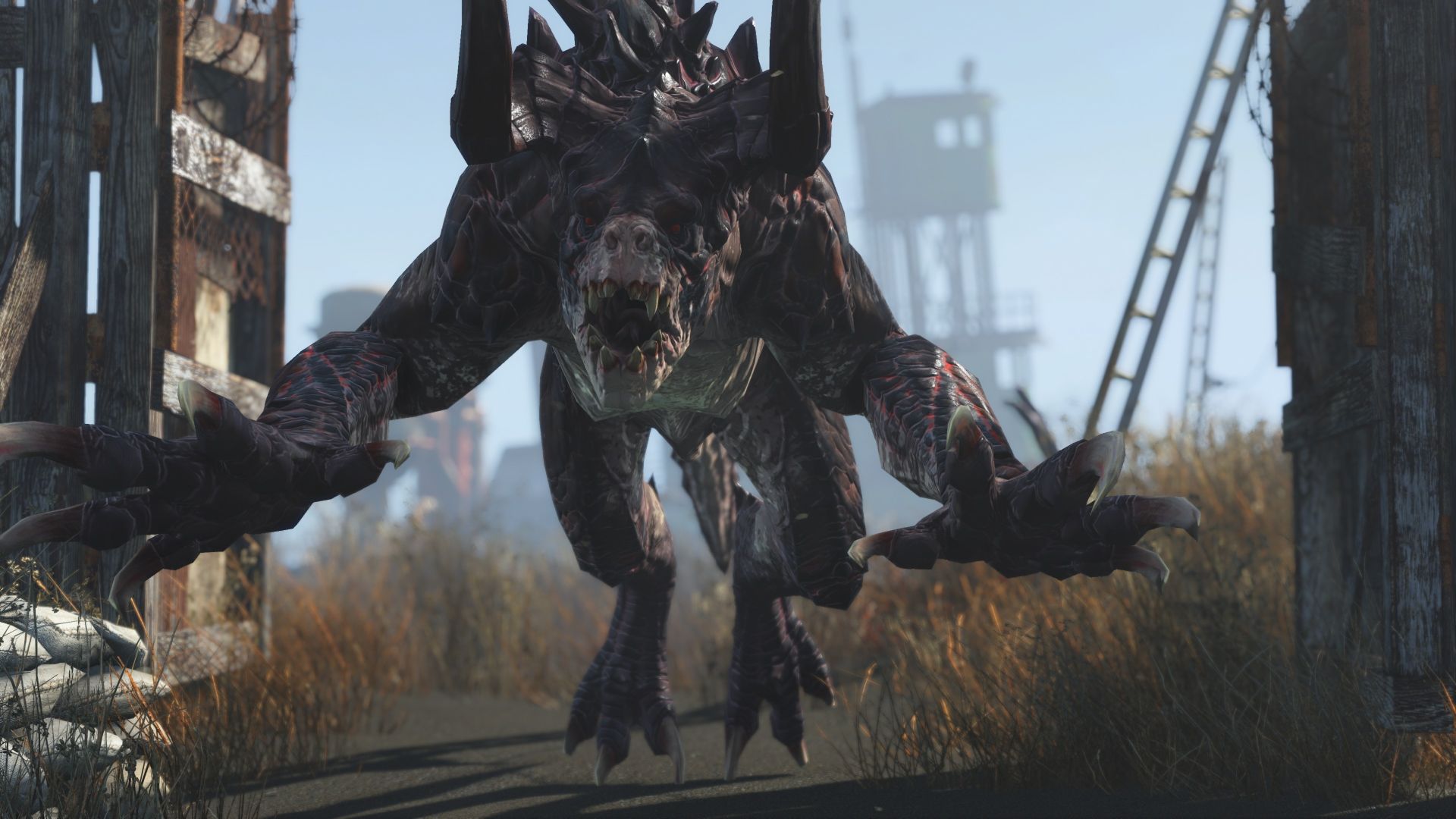
The Anniversary package
So, let’s talk about what you get in this package. Content-wise, the Anniversary Edition represents the most complete version of Fallout 4 currently available. All major expansions are included, most notably Far Harbor, Automatron, and Nuka-World. Each adds its own storyline and environment to explore. Far Harbor remains particularly impressive even years later. Its fog-covered island setting introduces a darker tone and more morally complex storytelling than much of the base game. Nuka-World, on the other hand, embraces chaos by placing players in charge of a raider faction operating inside a derelict amusement park, and who doesn’t love dystopian amusement parks? Together with the additional Creation Club content bundled into this release, the result is a massive amount of gameplay. Even returning players may find themselves stumbling into questlines they never encountered before. And that’s really the theme of Fallout 4: there’s always one more thing to discover.
Performance on Switch 2
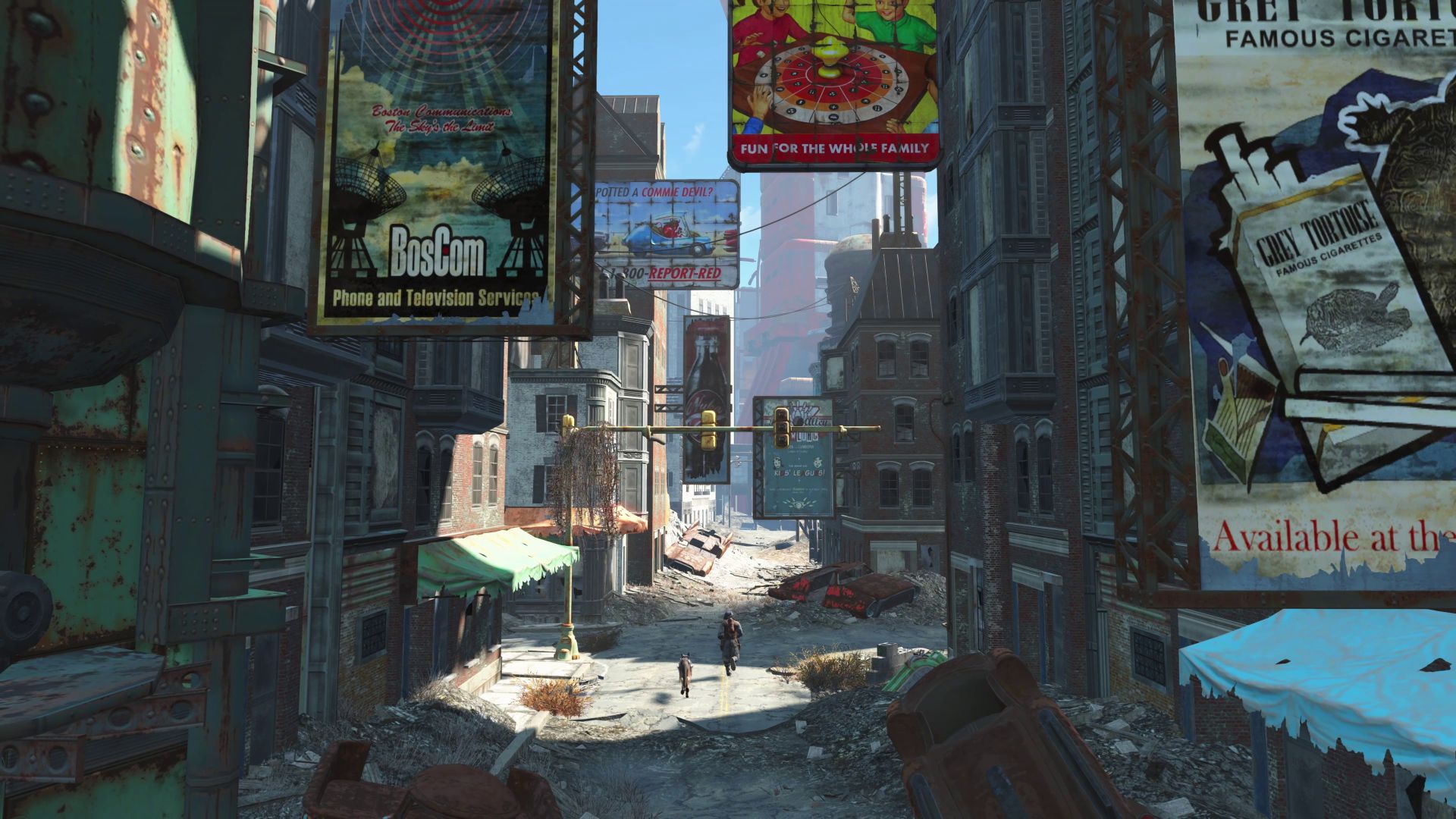
A Bethesda open-world RPG on a portable system still sounds slightly risky on paper. The studio’s games have never been particularly lightweight, and their engine has historically been… temperamental. Yet the Switch 2 version performs far better than expected, which leaves a lot of hope for the Oblivion port on the way. So, for those who like to read about numbers, you can choose among several performance modes that target roughly 30, 40, or 60 frames per second, depending on your preferences and play style. In handheld mode, the 40 FPS option feels like the best compromise between visual quality and smoothness. Visually, the game lands somewhere between the original console release and later enhanced versions. Textures remain sharp, lighting holds up well, and the Commonwealth still feels expansive. And perhaps most importantly, the experience remains stable even during larger battles or in heavily built settlements. That alone feels like a minor technical miracle (or should we call it the Nintendo Switch 2 name? That is a technical miracle on its own).
Fallout, but portable
What surprised me most while playing this version wasn’t the visuals or performance. It was how naturally Fallout 4 fits into portable play. The structure of the game, like exploring a location, collecting materials, completing a quest, and building something, works perfectly in shorter sessions. Clearing a building or finishing a side quest can take twenty minutes, making it easy to pick up and put down again. Small commute? Let’s take down a building. Longer commute? Let’s do some settlement work or clean up some raiders. The Commonwealth becomes something you gradually chip away at. It slowly became a routine of one quest before bed, one settlement improvement during a break, and one mysterious building explored before you put the console back to sleep. Before long, you’re back in the familiar loop that Michiel already described years ago: you start playing with a plan and end up following distractions for hours. Some things never change, and this time, it’s a good thing.
What time has revealed
As I mentioned at the beginning of the review, I played Fallout 4 when it released. I played it on my Steam Deck and ROG Alley, and now on my Nintendo Switch 2. So, returning to Fallout 4 today does highlight a few design decisions that remain divisive. With Fallout 4, we got a simplified dialogue system, built around a four-option wheel, which still limits conversational nuance compared to earlier Fallout titles. The voiced protagonist, while cinematic, also restricts the range of personalities players can imagine for their character. And compared to other Fallout games, the central storyline never quite reaches the complexity of some earlier entries in the series. But those criticisms were already part of the conversation in 201,5 and they’re not new revelations. If anything, time has clarified what Fallout 4 actually is: less of a traditional RPG and more of a systemic sandbox with RPG elements layered on top. And once you accept that shift in design philosophy, the game makes a lot more sense.
Conclusion
Let’s get one thing clear. Fallout 4: Anniversary Edition on Switch 2 isn’t trying to remake Bethesda’s RPG. Instead, it demonstrates how well the core design has aged. The Commonwealth remains a compelling world to explore. Its systems still encourage experimentation, and the environmental storytelling continues to reward players willing to wander off the main path. And most importantly, the Switch 2 version proves that large-scale open-world RPGs can work remarkably well in a portable format. And that is why you clicked this review. Ten years ago, Fallout 4 sparked debate about what the series should be, and a decade later, it feels easier to appreciate it for what it actually is: a messy, fascinating sandbox full of stories waiting to be discovered. And apparently, it fits perfectly in handheld mode. So, without further ado, I’m back to helping some settlements in need. Now I only need to find out how to turn my Switch 2 into a Pip-Boy.
