
Deckbuilders have been growing in popularity over the last few years – look at the impact that games like Slay the Spire and Ballatro have had on the modern gaming scene. It’s not hard to imagine that in a genre overflowing with valiant heroes and evil monsters, you need something special to make people interested. Luckily, Deck of Haunts flips the narrative. Developed by Mantis Games and published by DANGEN Entertainment, this indie gem casts you not as the hunter, but the haunted. It’s a bold, thematic deck-building roguelike that trades swords and spells for screams and shadows—and the result is something special. Let’s dive in!
Play the House, Not the Hero
I love it when developers try to do things differently, and it was the first thing that struck me about Deck of Haunts. It is an inversion of genre tropes, and I’m all here for it. Please bring in the anti-heroes of the world and let’s burn the house down (well, not literally). Rather than taking on waves of enemies, you are the threat. Set in a decadent, yet decaying 1920s art deco mansion, you get to design and haunt your labyrinth.
The goal? Dismantle the psyche of unwelcome intruders before they reach your Heart Room. It reminded me a lot of the thought behind the game Impire, in which you help construct a dungeon underworld of limitless evil and nastiness to stop all those pesky Heroes of Ardania from ruining his return to greatness! So take that plot point and add ghosts, fire, trap rooms, and much more to destroy both body and soul of the unlucky visitors to your house. It’s a setting dripping with dread and elegance—think Clue meets Crimson Peak. But it’s the mechanical integration of that horror theme into its deck-building that made me smile (and hopefully you as well).
Deck-Building Done Differently
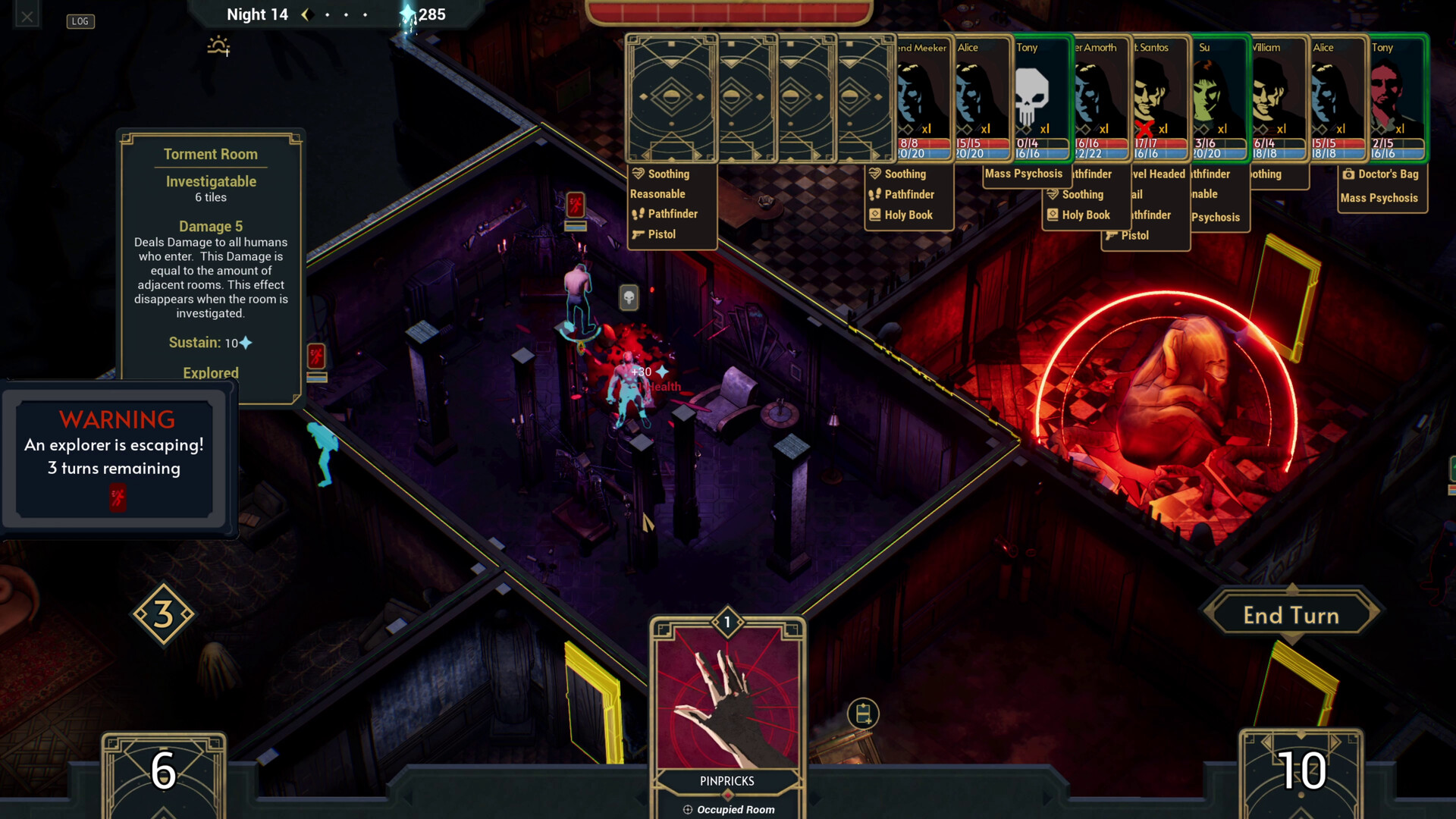
Unlike traditional deck-builders, where cards are weapons or spells, here they’re haunts—manifestations of fear, illusion, and psychological manipulation. Each card triggers scares in specific rooms, creating a dance between architecture and gameplay. Rooms like the Mirror Hall or the Weapon Room interact dynamically with certain cards. You’re not just crafting a deck, so you always need to think two steps ahead about room placement and which cards work best with your current strategy. Are you going to cause damage and kill your intruders? Or are you draining them of their sanity for even more chaos? Brilliant synergy between card effects and room placement can trigger panic spirals, misdirect intruders, or break their will entirely. Here lies what makes Deck of Haunts great: it uses deck-building not as a tool for combat, but for narrative and environmental control. It’s strategic, yes—but also a bit theatrical, with quite a high learning curve.
Day and Night Phases – Planning and Panic
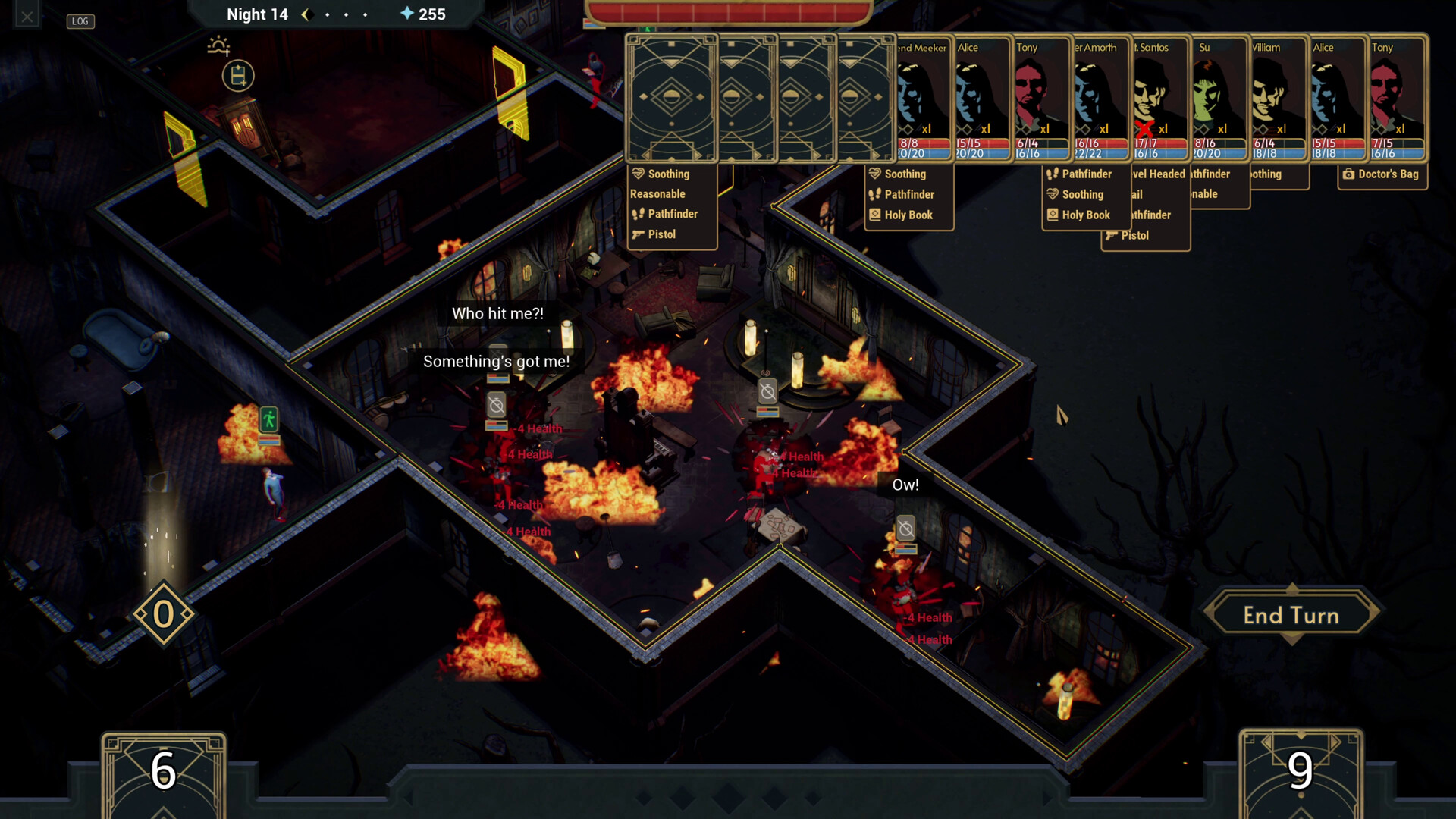
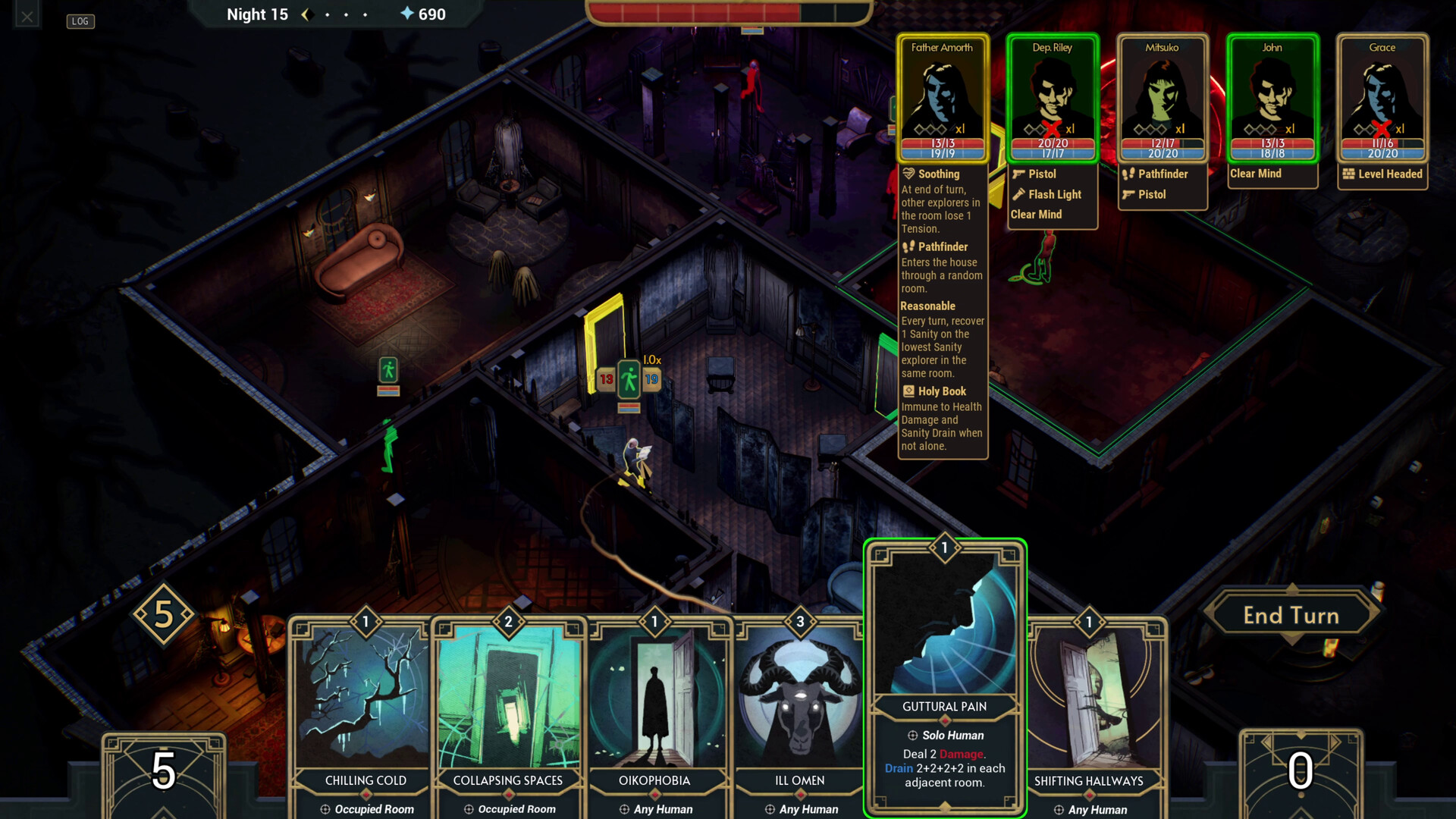
Gameplay is split between a daytime “planning” phase, where you build and customize your haunted mansion, and a nighttime “attack” phase, where you play your deck in reaction to the intruders’ movements. This structure lends a rhythm to each run that feels more like setting a trap than fighting a battle. The roguelike elements kick in through procedurally generated intruder waves, evolving decks, and branching upgrades. Each run becomes a macabre sandbox of strategy and experimentation. To keep things interesting, each intruder comes with a set of traits and personality, ranging from random trespassers, pathfinders (with extra movement), cops (with guns and flashlights), clergy (immune to certain damage types), and even stonemasons (armed with rituals to damage the heart even faster). You need to take these character types into account when building both your house and your deck, otherwise you’ll be outplayed by ‘the house’.

Genre Comparison – Where It Stands
Compared to genre favorites like Slay the Spire or Monster Train, Deck of Haunts stands apart with its indirect conflict model and environmental integration. Slay the Spire is about engine-building; Monster Train is about spatial efficiency. But Deck of Haunts is about immersion—about making fear itself your mechanic. It doesn’t seek to outdo its peers in complexity, but in personality. And it mostly succeeds, but the game does stumble in places. Ask yourself this before trying Deck of Haunts – how comfortable am I with this genre? If you’re a casual player, this game might not be the most suitable choice for you, as it has a significant learning curve. While not as mechanical as Slay the Spire, the lack of a clear tutorial or some guidance for new players may be tough for genre newcomers. That said, it’s worth the effort. Some haunt cards lack clarity in how they interact with specific rooms, which can result in a hit or miss for your run. And although Deck of Haunts features variable intruder traits, randomized mansion layouts, evolving card options, and unlockable upgrades. With each run, the pacing and difficulty shift, pushing different strategic angles, it feels a bit light, if you get what I mean, after completing a couple of dozen runs. This doesn’t mean that it has fundamental flaws, but some aspects could use a touch-up for less experienced players. And the developers seem committed to growing the experience, so I can’t wait to see how the game evolves.
Conclusion
Deck of Haunts is a genre-defying roguelike that dares to be different. It’s haunting, strategic, and endlessly atmospheric. Those who enjoy indirect strategy, horror atmospheres, and emergent gameplay will get the most out of it, especially if you’re looking for something different from combat-heavy deck-builders. So, if you are into ghosts, Crimson Peak meets Clue elements and not scared of a bit of a learning curve, well then it’s time to summon Deck of Haunts into your Steam library, if you dare.
