
Worldless is an exciting game in terms of design. Take the stick figures one would draw in middle or high school and add complexity to it you couldn’t have imagined when you were in either middle or high school. Sound cryptic? Yes, I agree, but it will make sense in a bit. Let’s dive into this aesthetically pleasing Metroidvania, shall we?
So, what do we get with Worldless? Worldless unveils its cosmic tale through a celestial clash at the game’s onset—a duel of opposing stars hurtling toward each other in an endless divine dance. From this grand introduction, we embark on the odyssey of a sentient celestial entity traversing an otherworldly landscape driven by an elusive quest for purpose. And we all know that the purpose of space and life is 42—the narrative, though abstract, prioritizes mystery over linear storytelling. Skeletal entities populate the landscapes, expressing curiosity about your existence and strange powers. Enemies, devoid of explicit evil intent, serve as an opposing force. While the narrative’s opacity is intentional, immersion in the world of Worldless may excuse its lack of clarity.
Gameplay
While not the focal point, Wordless’s central enigma adds frustration in the long run. But let’s not get ahead of ourselves since the initial moments prioritize the sensory experience. In the vast emptiness, your luminous form casts an ethereal glow, birthing ghostly flowers in your wake—a simultaneously calming and tense ambiance. The encounter with the first foe unfolds shortly after descending from the heavens. These fiery orange adversaries, contrasting your gentle blue hue, punctuate your cosmic journey regularly. Combat diverges from the typical hack-and-slash loop in similar games; it adopts a turn-based cosmic rock-paper-scissors rhythm.
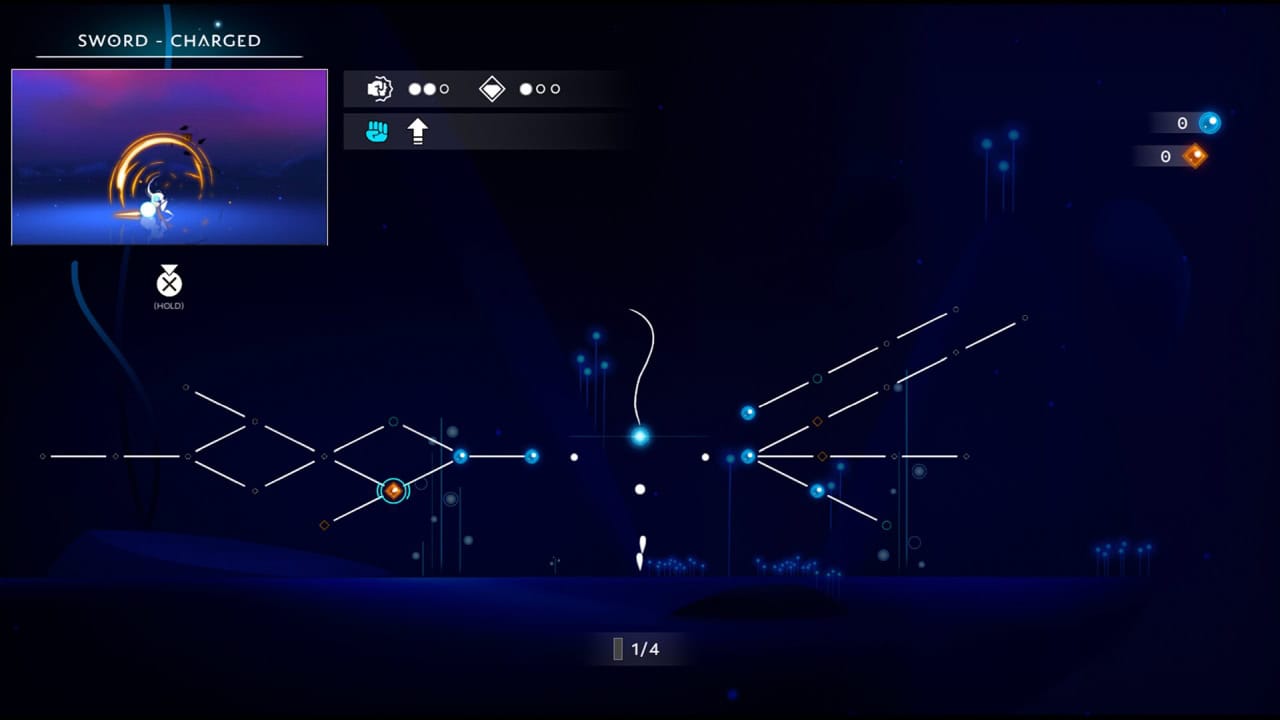
Each combatant boasts a turn timer, shield, and health bar. Initially, your objective is simple—vanquish your opponent, executing physical and magical attack combos while shielding against counterattacks. As the journey progresses, filling an absorb meter becomes crucial, allowing you to drain an enemy’s energy. This energy, in turn, fuels skill upgrades and introduces new abilities to your arsenal. Variety in attack patterns becomes essential as repetitive combos slow down absorption. Moreover, each ability carries distinct absorption levels, encouraging exploration of your moveset. Attempting early absorption triggers a quick time event, requiring you to decipher a four-digit button sequence—an option not recommended but not impossible.
Elements of frustration
While the ability tree lacks depth, it enhances damage mitigation and introduces variations to standard attacks. Soon, you’ll master airborne combos and counter even the most formidable ripostes. What counters this frustration is that the combat is strategically placed at specific points in each area, deviating from the norm of random encounters in Metroidvanias. This departure proves advantageous for exploration, alleviating concerns about potential obstacles haunting return journeys.
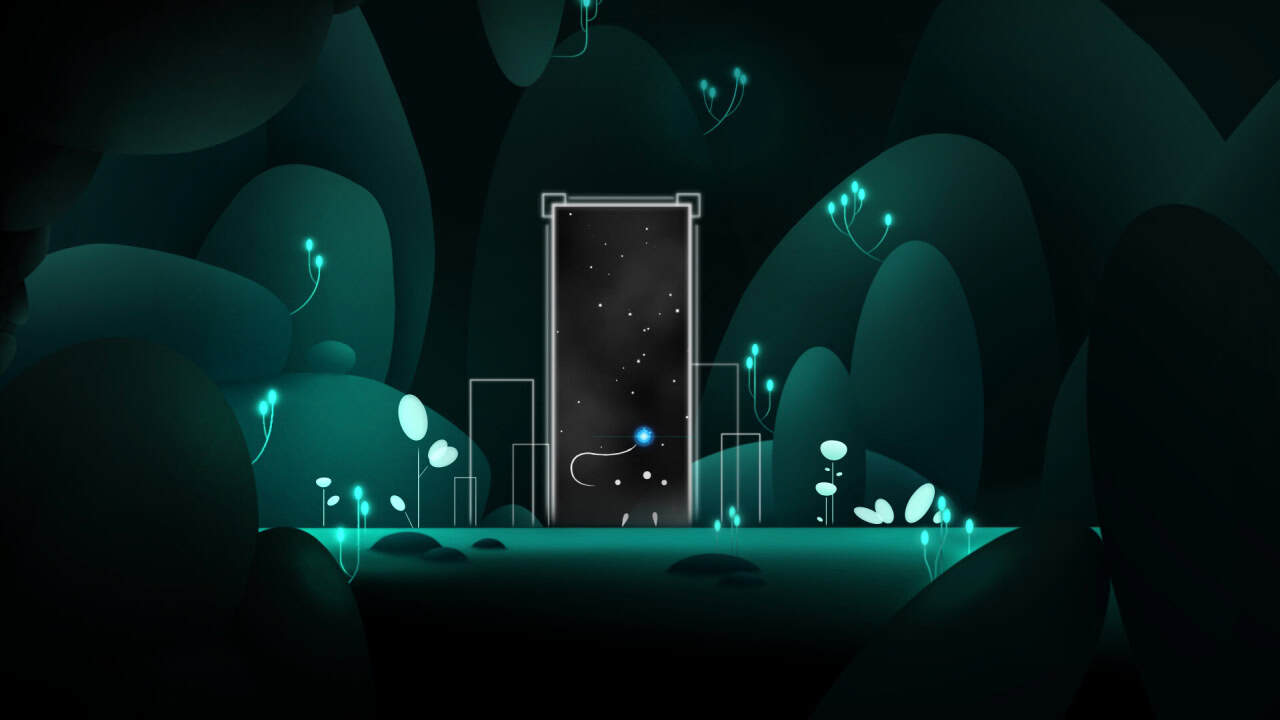
From diminutive creatures to multi-limbed behemoths, enemies vary in each area. Skill checks, presented by larger foes, demand the application of acquired knowledge to overcome. The optimal approach isn’t always evident, contributing to occasional frustrations. Overcoming these challenges, however, yields satisfaction, unveiling new areas and slivers of narrative. In a way, platforming and traversal, reminiscent of genre peers like Hollow Knight, Salt & Sanctuary, or even Metroid Dread, showcase a sense of solitude and impending danger akin to what Team Cherry did with Hollow Knight. Despite these influences, Worldless carves its identity through aesthetics and an ethereal atmosphere. The visuals perform admirably on Switch, ensuring responsive platforming and docked and undocked combat inputs.
Environments & Genre challenges
Environments feature mini-puzzles, revealed by the protagonist’s pulsating glow. Some open new paths, while others enhance health and shield capabilities. The game’s rhythm involves light exploration and sporadic small enemy encounters, punctuated by encounters with larger foes that prompt backtracking for empowerment. Puzzles across the landscape offer discovery opportunities, preventing repeated investigation from feeling tedious.
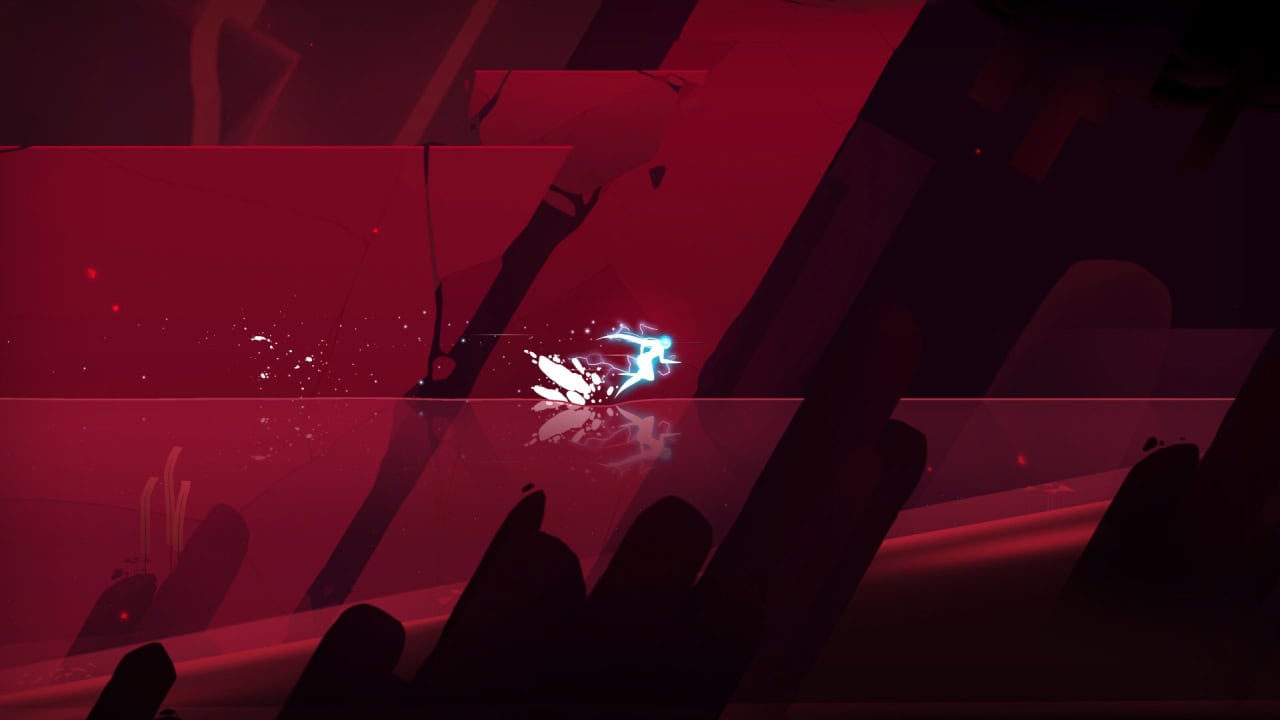
Despite occasional emergent difficulty moments blocking progression (stupid quick-time events), challenging enemy encounters coexist with the serene platforming segments also found in Ori. While the fighting and exploration occasionally clash, they don’t directly oppose. In its sometimes muddled tone, Sin Nombre Studios crafts a distinctive entry into an already formidable genre. Worldless successfully infuses satisfying turn-based combat into the Metroidvania loop, propelled by an intoxicating art style and diverse puzzle mechanics. Though difficulty spikes may disrupt the dreamlike exploration, the allure to overcome them remains compelling.

Conclusion
In conclusion, Worldless seeks to distinguish itself within a daunting genre by integrating gratifying turn-based combat into the familiar Metroidvania structure. The endeavor largely succeeds, bolstered by a captivating art style and diverse puzzle mechanics. While sporadic difficulty spikes momentarily disrupt the flow and tip the balance of dreamlike exploration, the compulsion to triumph prevails.