
As a historian, I specialized in German history; both Holocaust and Pre-war-farming topics were featured in my thesis subjects. So when I come across a game named after a very famous historical book, I’m intrigued. National socialism, communism, and other leftist views from the previous century have always been an interest of mine since they show how polarized the world can be (look at Bernie Sanders versus Donald Trump). Norman’s Great Illusion is no exception to this rule, sadly the game itself was … a big illusion.

Historical Context
Before I dive deeper into the game, I’ll give you some historical context. If you don’t want that, skip to the next headline. Trust me, though; this game will make MUCH more sense if you know some historical background, so bear with me.
In The Great Illusion, Norman Angell’s primary thesis was, in the words of historian James Joll, that “the economic cost of the war was so great that no one could possibly hope to gain by starting a war the consequences of which would be so disastrous.” For that reason, a general European war was very unlikely to start, and if it did, it would not last long. He argued that war was economically and socially irrational and that war between industrial countries was futile because conquest did not pay. J. D. B. Miller writes: “The ‘Great Illusion’ was those nations gained by armed confrontation, militarism, war, or conquest.”
According to Angell, the economic interdependence between industrial countries would be “the real guarantor of the good behavior of one state to another”, as it meant that war would be economically harmful to all the countries involved. Moreover, if a conquering power confiscated property in the territory it seized, “the incentive [of the local population] to produce would be sapped and the conquered area be rendered worthless. Thus, the conquering power had to leave the property in the hands of the local population while incurring the costs of conquest and occupation.”
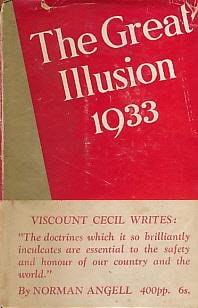
In layman’s terms, the war was too expensive, and factory workers should do the thing they do best – work hard, make very little money (but enough to stay happy), and grow a ‘self-sustaining community.’ These are the basis of Marxism, Leninism, Stalinism, etc. (Communism as group-name, but they diver very much, and my explanation is concise and could use some more arguments, but that’s not what you are here for).
Pre-Nazism
In pre-Nazi-Germany, as the same movement happened, factory workers and farmers were pushed to produce as much as possible to make Germany self-sustainable (all in preparation for the upcoming war they were planning). Roads were constructed, farming colonies established with ideas to move into Ukraine as soon as Germany declared war. Combine this with propaganda that this whole movement was ‘for the greater good’ to keep the people happy and ignorant, and countries around said the country would never suspect the intention of war – since they were all rebuilding and climbing out of an economic crisis (the book was written in 1933).

Norman’s Great Illusion
In Norman’s Great Illusion, you are such a factory worker, in which you eat breakfast with your family, drive to work, work as an accountant, drive back home, dine with your family, and sleep (repeat). This is the whole game each day, and every day it’s the same. While eating with your family, you discuss the political agenda, economic situation, or situation of a neighboring country. While driving to work, you have to work through a horrible mini-game, which results in pressing a button at the right time. While at work, it’s time to do math (for some reason), in which you can make no mistakes – otherwise you will be fined. If you do your work diligently, you’ll get a bonus. Of course, you won’t make enough to make ends meet, and soon you’ll be in crippling debt.

To drive the leftist story, each day you work, you are challenged with a social dilemma, which can range from joining a strike to helping catch a criminal or looking the other way when the Gestapo-like villains of Norman’s Great Illusion round up some of your neighbors. Sadly this part (although the most interesting) could not save the game from boringness. If you have severe dyscalculia, please stay away from this game. The math was not that hard, but it went so fast that you could not calculate the right amount most of the time. This led to not getting the bonus, falling even further in debt, and not getting the ‘good’ ending. Before I knew I was living under the Socialistic Nazi Rule. Oh, and my wife was oke with it!

Conclusion
So to conclude, although the idea of using a historical theory as the base for a game, it did not work out. I would have loved a game featured around Charlie Chaplin’s factory skit, but instead, we get a hot mess with zero historical base and cringy gameplay. Stay away from this one. Instead, I was hoping you could read the summary of my Thesis; it’s much more satisfying than playing this game.
