
There’s a very specific moment in The Prisoning: Fletcher’s Quest where it reaches inside your expectations and refuses to let them go. That moment isn’t the opening splash screen, nor is it the first jump, but when the game stops feeling like a set of mechanics and starts feeling like a psychological landscape you’re crawling through with a handgun. It’s chaotic, absurd, occasionally hilarious, and somehow just nervy enough to make every misstep feel like a personal failure. From the title of this Swedish indie project, you can tell it has personality. What you might not expect is just how deeply that personality infiltrates every corner of its design, and how unevenly, gloriously wild that infusion really is.
Elden Pixels & anxiety-filled storytelling
Developed by Elden Pixels, the studio best known for Alwa’s Legacy and A Void Hope, The Prisoning: Fletcher’s Quest represents both a thematic departure and an experimental leap. The premise is striking: a routine psychologist visit goes comically, and traumatically, awry, trapping protagonist Fletcher Howie Jr. inside his own subconscious as he teeters on the brink of emotional and creative burnout. What unfolds is a Metroidvania-lite journey through the warped projection of a game developer’s inner world, dripping with anxiety-fuelled environments, bizarre enemy types, and more self-aware humour than a therapy session gone rogue.
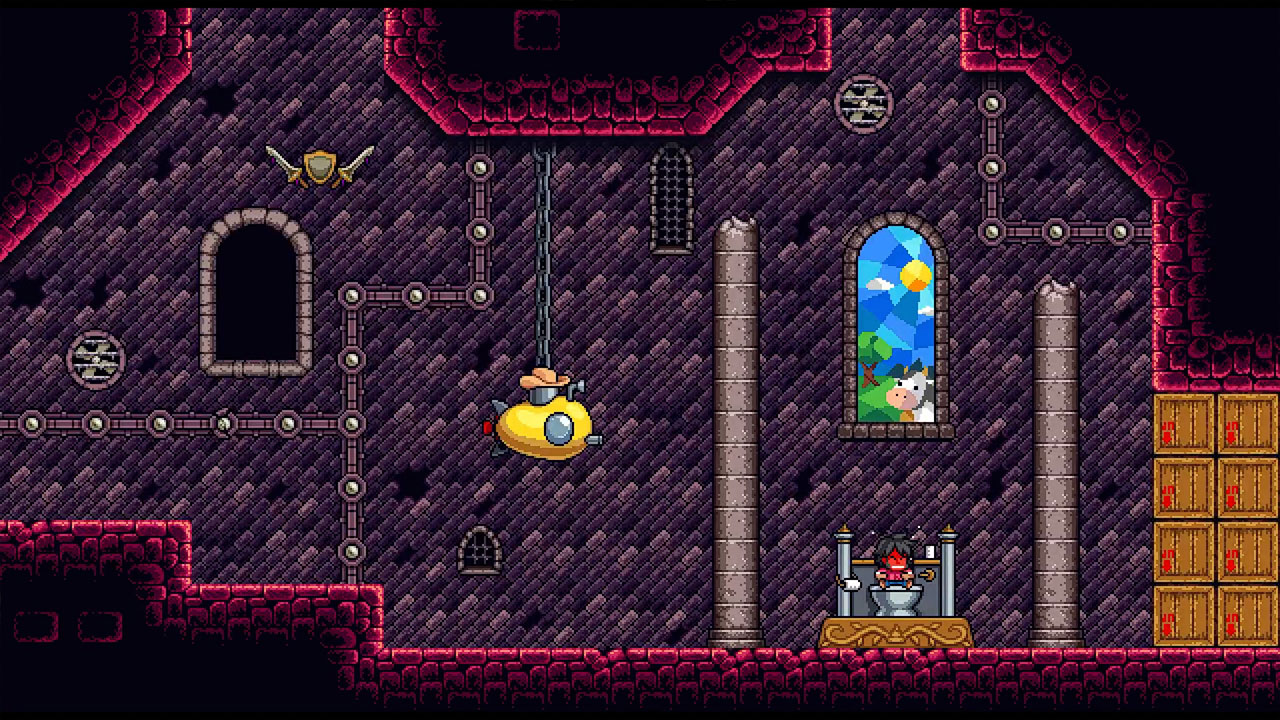
The narrative isn’t heavy-handed, nor does it pretend to be some sweeping commentary on mental health. Instead, it treats Fletcher’s inner turmoil as a playground. And it’s one filled with weird physics, symbolic areas that feel like office nightmares, and bizarre, self-referential humour that borders on parody. One moment you’re dealing with spatially twisted hallways that feel like emotional loops, and the next you’re faced with pixelated representations of insecurity that want nothing more than to knock you off a ledge. It’s playful but pointed in tone, light where it needs to be, and strangely insightful when it leans into the absurdity of its own conceit.
Metroidvania-lite
Mechanically, the game dabbles in Metroidvania staples, which means exploratory progression, acquiring a weapon, upgrades in the form of extra bullets, enemies in a new coat of fresh paint, and a procedural generation system that stitches together handcrafted rooms into unpredictable layouts, but injects them with enough oddball energy to keep you second-guessing every corridor. The procedurally assembled map means each run feels slightly different, unveiling new room combinations and enemy patterns that force adaptability (read: jump for your life). And while the term “procedural” might sound chaotic or random, here it serves to externalize the restless, unpredictable nature of Fletcher’s subconscious. Just like how my own therapy sessions felt for the first few months.
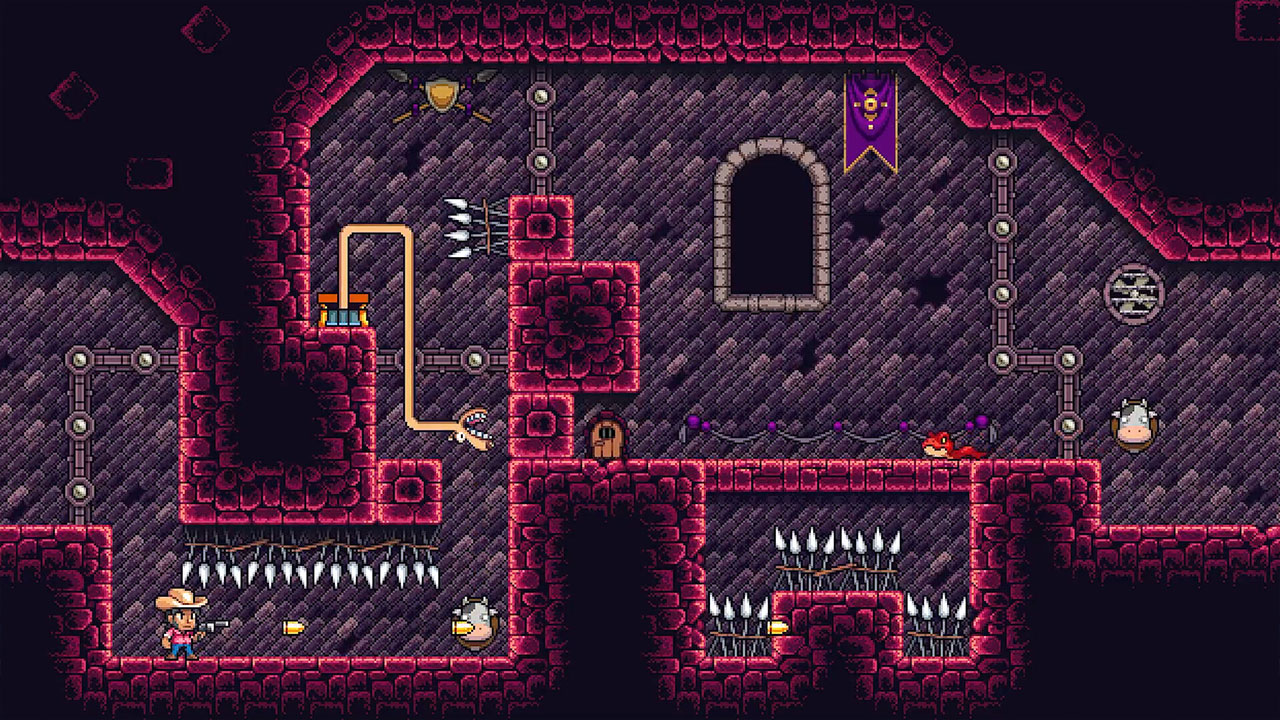
Traversal feels crisp in the moment, with extremely precise platforming and tight jump control. Combat, drawing on traditional action-platformer design, mixes ranged attacks with environmental hazards, creating a blend of Metroidvania and Super Meat Boy gameplay. Fletcher is armed and dangerous; you can “kill basically anything that moves,” according to the Steam page, but that doesn’t always feel like liberation so much as necessity. Enemies tend to spawn unpredictably, and traps often appear where you least expect them, blending exploration and combat in a way that can be both exhilarating and aggravating. I found myself more often yelling at the screen ‘why’. But it felt very rewarding when the credits rolled.
Boss battles and adaptation
Nowhere does this specific blend of exhilaration and frustration come into sharper focus than in the boss encounters, which will be, without a doubt, the talking point of this game among players. These aren’t your typical patterns-to-memorize fights. They are sprawling, chaotic juggernauts seemingly designed to make you question your life choices. One early boss took me a long time to figure out a pattern, only to discover there was none. Here, traditional cues fail you; attack tells are hidden beneath layers of flash and fury, and the margin for error is slim. Especially with only two hits on Fletcher before death comes knocking, the boss fights will be a test of will and feel like conquering Mount Olympus itself when they are beaten and kicked to the curb.
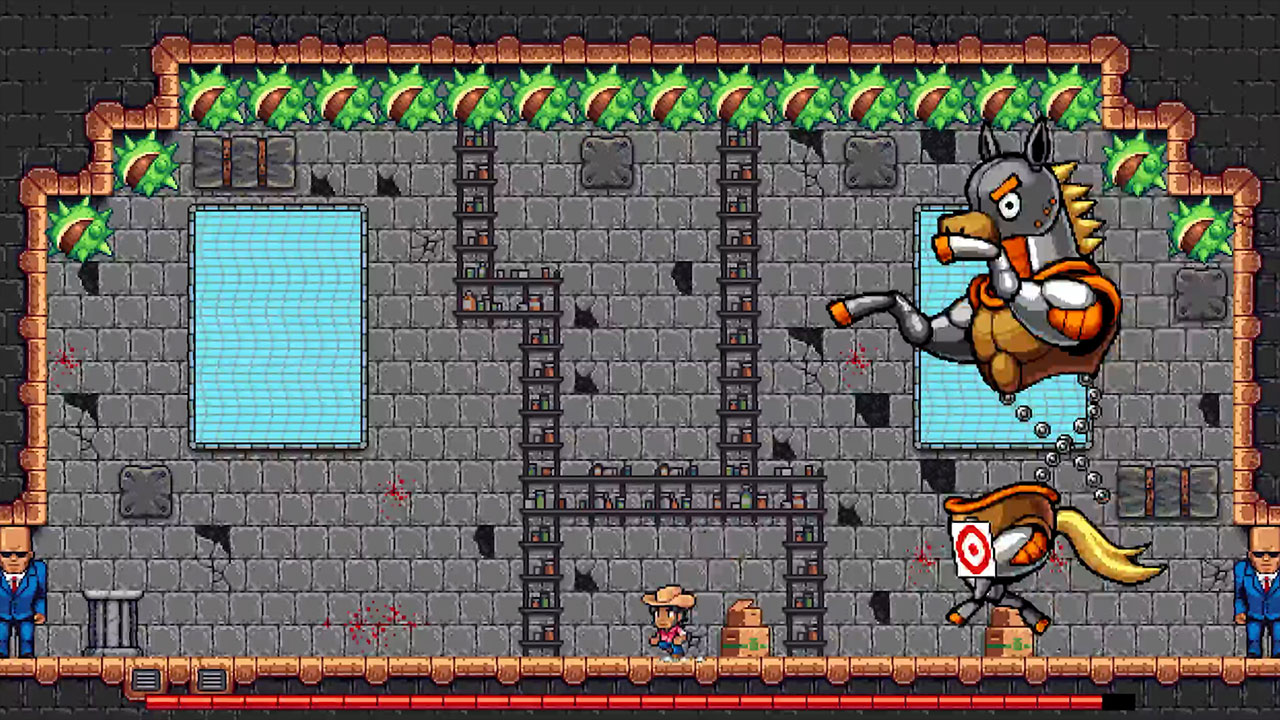
But it’s also where Fletcher’s Quest distinguishes itself, for better or worse: these boss fights force adaptation through repetition rather than simple mastery of predictable patterns. You learn to read chaos, to find rhythm in what feels like randomness, and to exploit the tiniest opening as a lifeline. It’s infuriating in the moment, frustrating on the first dozen attempts, and deeply satisfying when you finally clip that last bit of health off your adversary after what feels like 30 tries too many. There’s a bitter sweetness to conquering these foes, as though Fletcher’s personal demons are cruel teachers with dubious methods but undeniable results. Although I do wonder what kind of trauma the developer of this game suffered to dream up these kinds of therapy sessions.
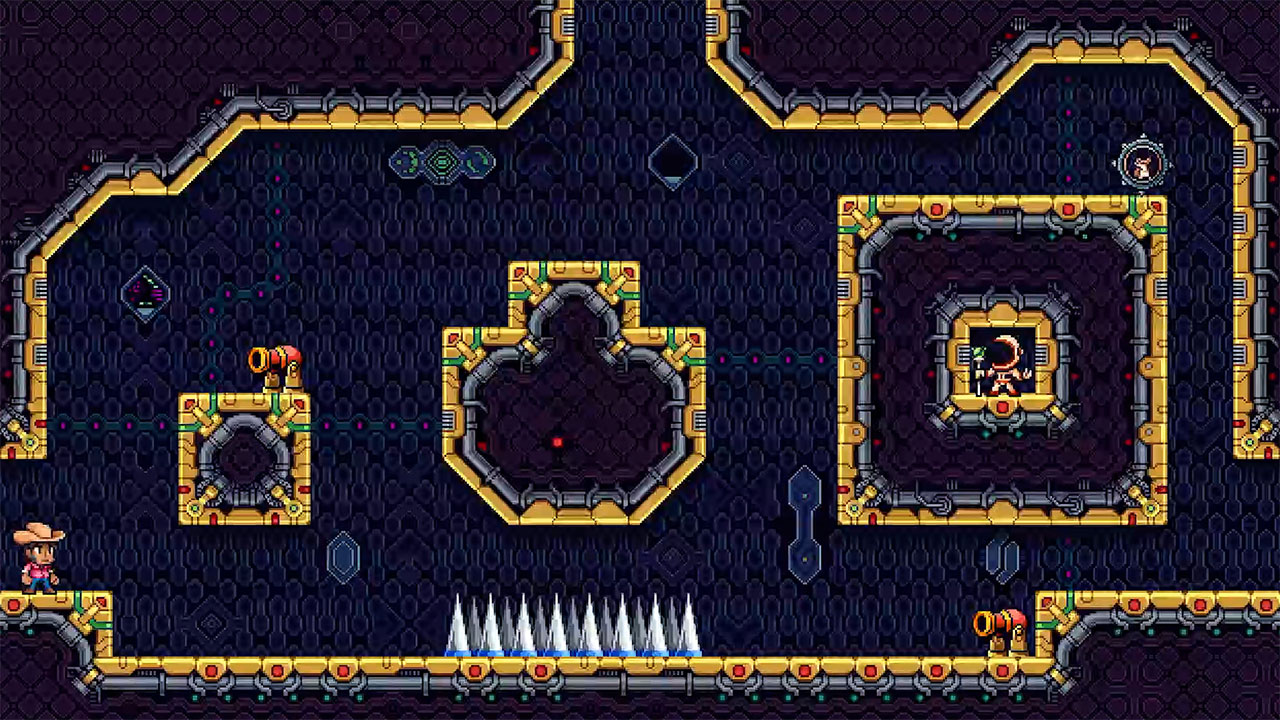
That tension between pleasure and exasperation extends to the game’s broader sense of pacing. Worst-case scenarios often feel like cruel jokes, with environmental hazards leaping out of nowhere, enemies swarming in clumps that seem impossibly stacked against you, and procedural level combinations that flip familiar routes into unfamiliar nightmares. Best-case scenarios, by contrast, feel like blissful discoveries, like a room with a change of hats (lifeforce) tucked behind a wall of enemies, an extra bullet found outside the Shag Shack, and a way of beating a certain enemy with outside-the-box thinking (like hitting its actual lifeforcebar), which makes you feel smarter for having stumbled upon them.
Pixeltherapy
Visually, The Prisoning: Fletcher’s Quest embraces a whimsical pixel art style that effectively blends the grotesque with the charming. Environments shift unpredictably to reflect changing themes of stress and self-reflection, with colour palettes that mirror emotional beats, from vibrant dreamscape excess to drab, unforgiving scientific corridors that evoke dread of burnout. Fletcher himself, complete with cowboy hat and handgun, rarely feels like a typical pixel avatar. He feels like an avatar of the developer’s psyche, fighting inner chaos with flair and stubbornness. And audio plays its part too. A driving chiptune soundtrack perfectly underlines the game’s aesthetic, blending nostalgic rhythms with occasional discordant shifts that echo the world’s surreal tone. Enemy sounds and environmental audio cues marry form and function, providing both atmosphere and useful feedback when followed closely.

Conclusion
What ultimately defines The Prisoning: Fletcher’s Quest is its willingness to lean into the messy, unpredictable chaos of its themes. This is a game that thrives on unevenness, unfair boss fights, delightful absurdity, random map generation, and moments that make you throw your controller only to pick it up again with stubborn determination. It isn’t polished to a sheen, nor does it always feel fair, but it understands its own tone and purpose, and the developer acknowledges this throughout the game. Fletcher’s Quest is a game that feels like its own critique: uncomfortably familiar to anyone who’s lived through crunch, burned out, or felt their own creativity turn into an adversary. Well, hello, therapy and burnout, good to see you again, but gamified this time.
By the time you escape Fletcher’s mental prison, you’ve not only struggled through challenges but absorbed something of the game’s unsettling humour and cathartic resilience. The Prisoning: Fletcher’s Quest isn’t just another Metroidvania clone; it’s a reflection on chaos, creativity, and the bizarre landscapes we build inside our own heads. For players who crave something genuinely different in the genre, something that bites as often as it rewards, this is an experience worth embracing, even when it feels like your personal demons are scripting the lesson plan.
