
I grew up on NES and CD-i games, so the Donkey Kong arcade game has a special place in my heart. I have fond memories of the Donkey Kong and Donkey Kong Jr. games, so I was hooked when the original Mario vs. Donkey Kong game dropped back in 2004. Fast forward to 2024, and the original remake dropped on the Nintendo Switch, making it the eighth! Entry in this spin-off series. Is it as good as the arcade original and the original on the Gameboy Advance? Let’s find out.
Okay, for those unfamiliar with the premise – I’ll do a quick rundown on the series and then focus on the actual Nintendo Switch remake. So, if you are interested in that, please scroll down now. Still with me? Good!
Game Premise
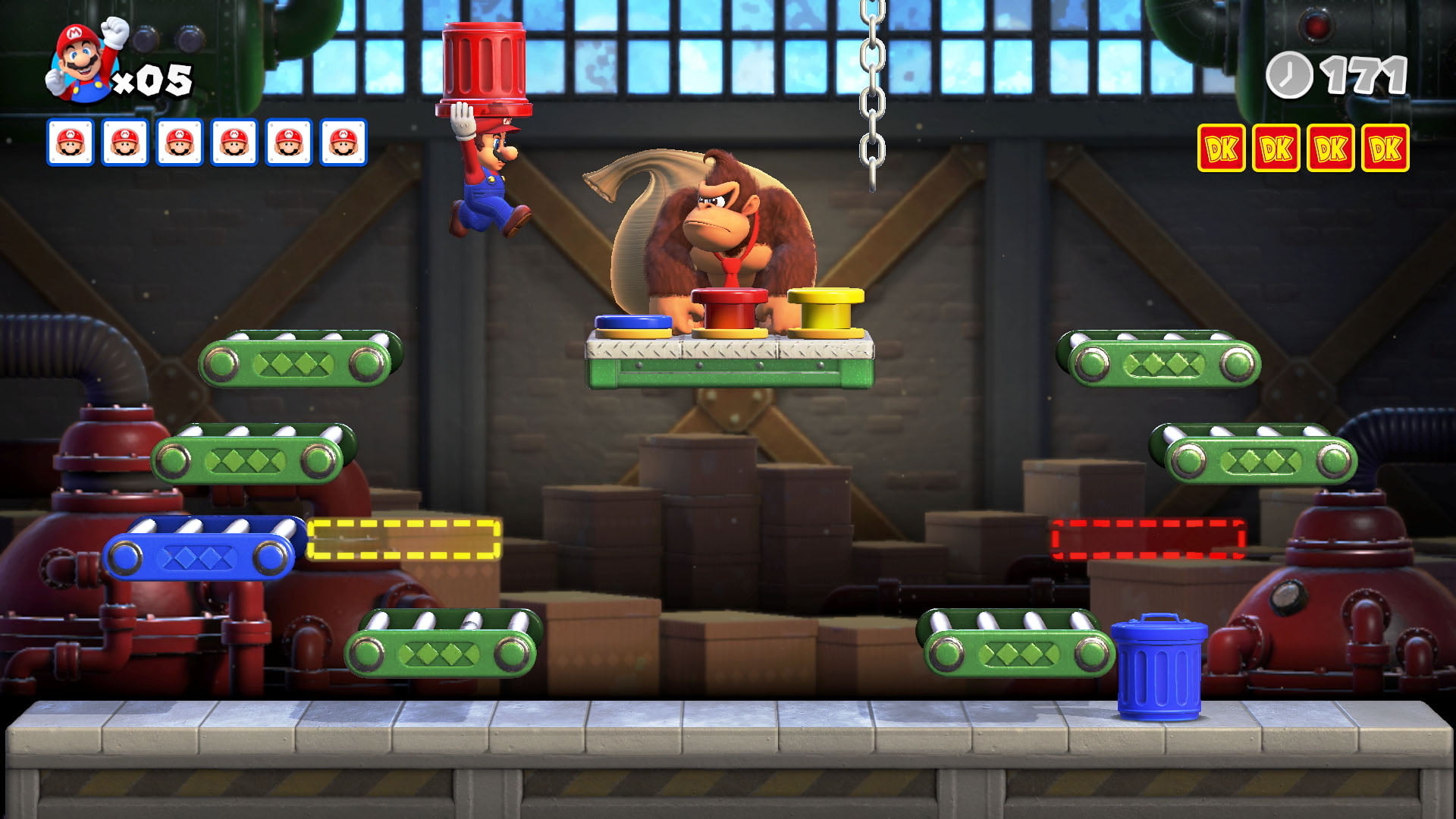
The original Mario vs. Donkey Kong is a 2004 puzzle-platform game developed by Nintendo Software Technology and released for the Game Boy Advance. The game is the spiritual successor to Donkey Kong, which was released in 1994 for the Game Boy. The game concept revolves around a combination of platform and puzzle elements, challenging Mario to find keys, reach a locked door, and rescue mini-Marios.
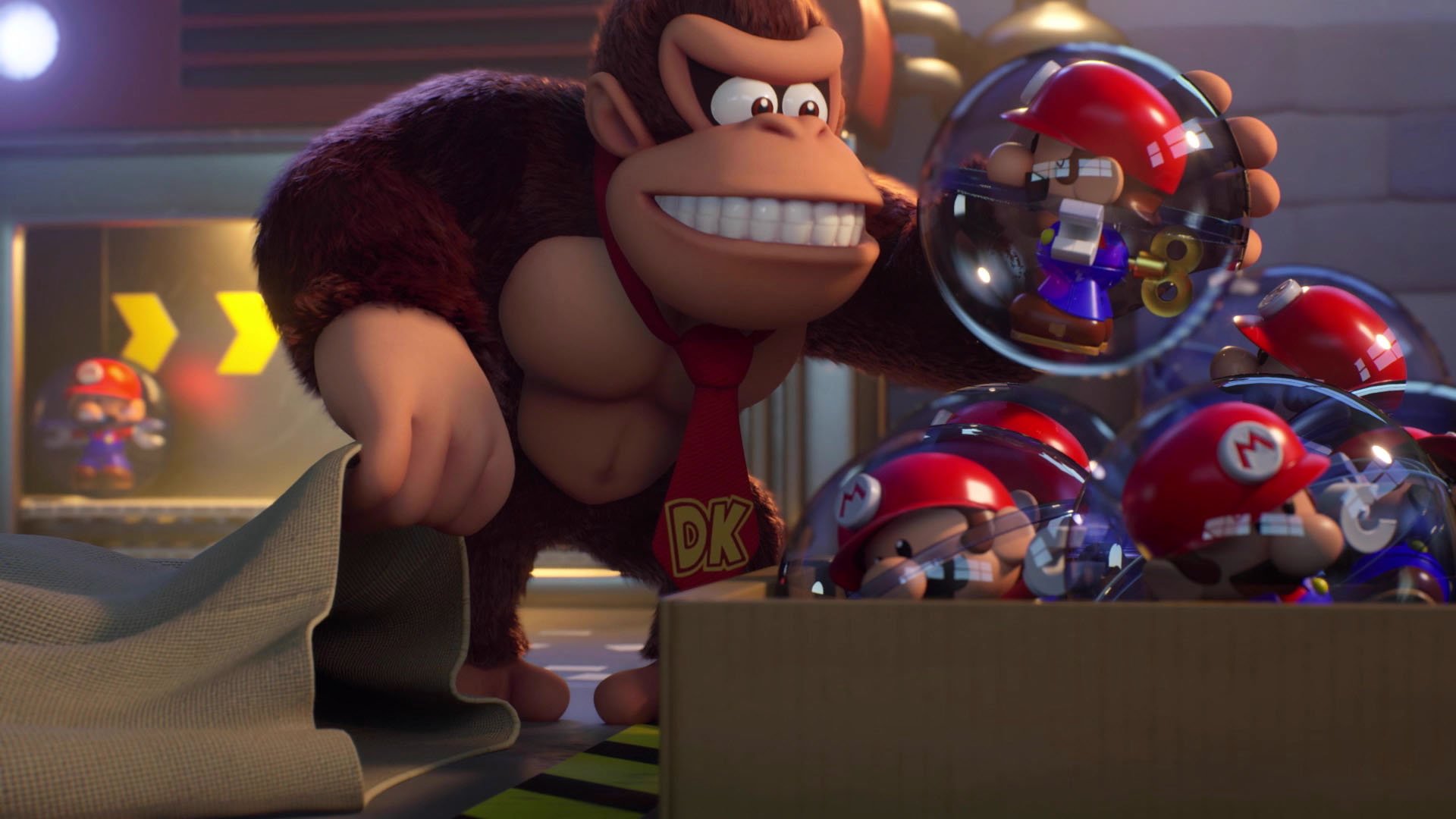
Mario vs. Donkey Kong returned to the earlier arcade-style games incorporating many elements from the Game Boy version. While its style was that of other games, the Rare design for Donkey Kong carried over. Donkey Kong, originally a villain, returns to this role in the game: wanting a Mini Mario clockwork toy, he finds they are sold out at a local toy store. Enraged, he terrifies the Toads at the factory and steals the toys. This sets up the game’s plot, where Mario chases Donkey Kong until he can take the Mini Marios back from Donkey Kong. This idea was further explored in the sequel, Mario vs. Donkey Kong 2: March of the Minis! This title was more puzzle-oriented; now, the player controls several Mini Marios with the touch screen instead of Mario himself. The game also features the return of Pauline, whose last appearance was in 1994’s Donkey Kong 94 for the Game Boy, a 100-level sequel to the original Donkey Kong.
Mario vs. Donkey Kong (Switch)
Fast forward to 2024, and we see a Mario vs. Donkey Kong remake. Plotwise, the game is still the same;
Mario owns Mario’s Toy Company, a toy enterprise in which he sells a series of small wind-up toys called “Mini-Marios.” After seeing a television advertisement for the Mini-Marios, Donkey Kong immediately falls in love with the toys and sets out to the toy store to get one, only to find that they are sold out. Furious, Donkey Kong breaks into Mario’s toy factory across the street and steals all of the Mini-Marios, prompting Mario to chase after Donkey Kong to get his toys back.
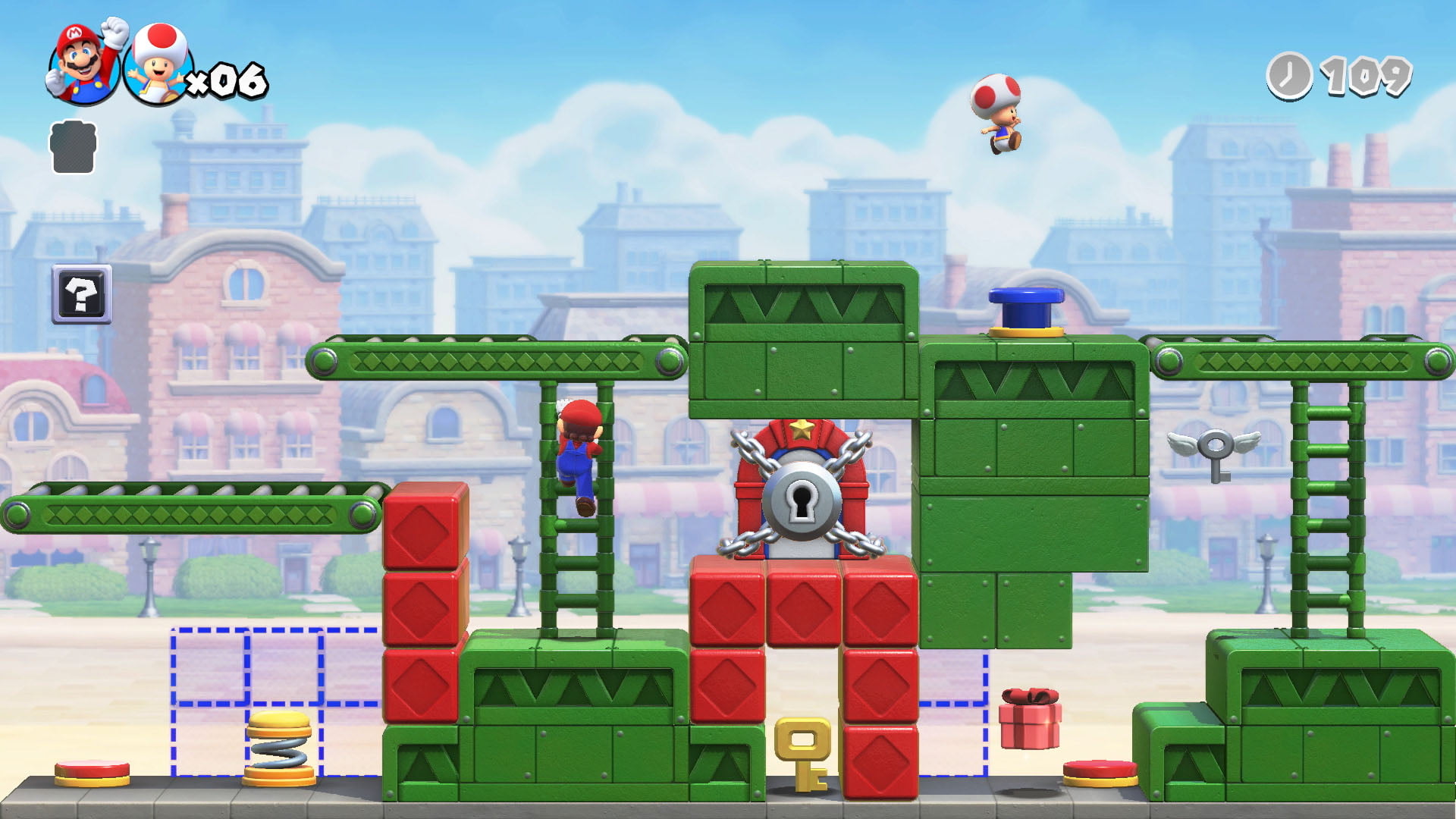
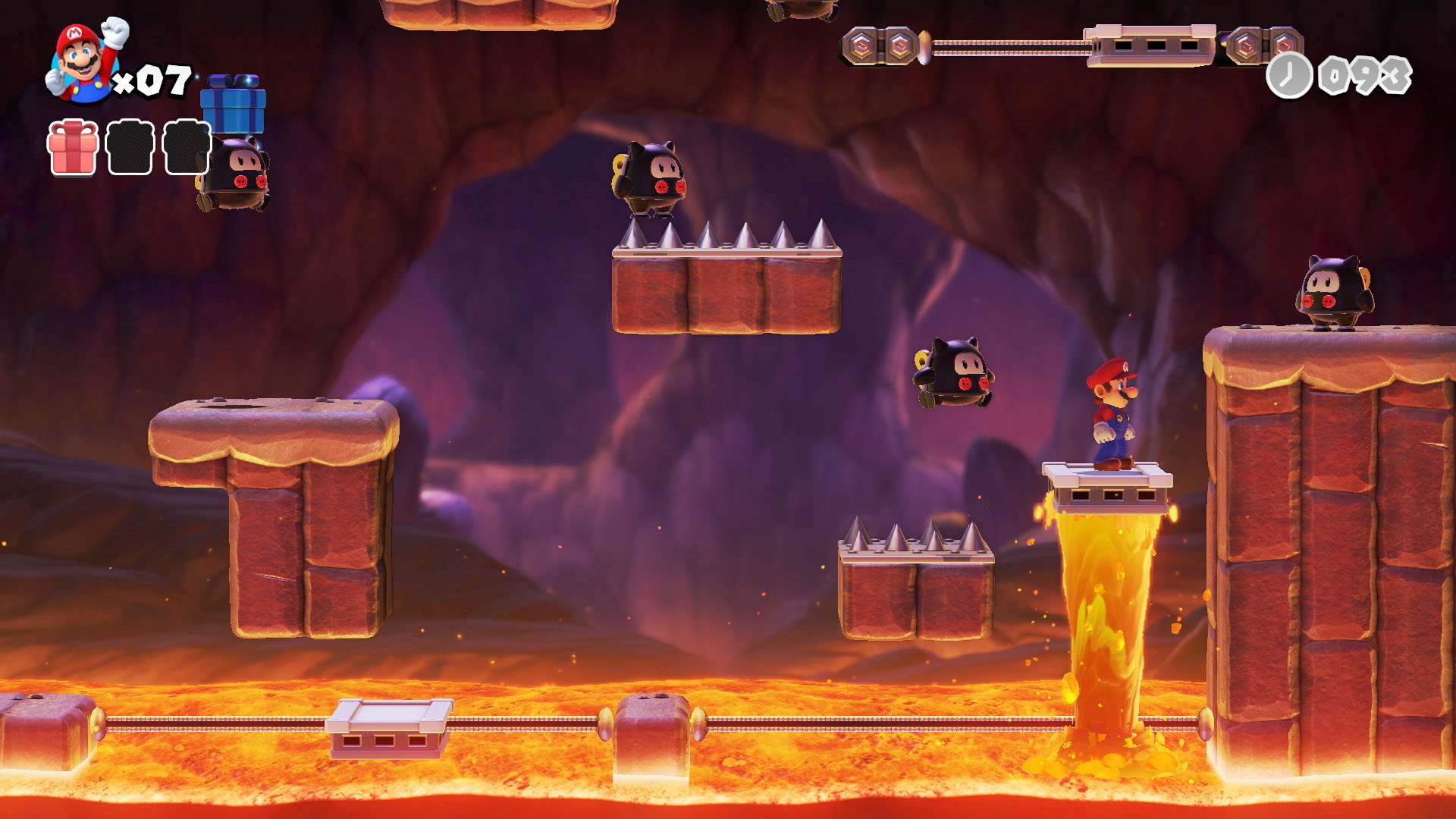
In Mario vs. Donkey Kong, the player assumes the role of Mario, pursuing Donkey Kong through several worlds to retrieve several stolen Mini-Mario toys. The game, a puzzle platform game, plays similarly to the Game Boy Donkey Kong game, giving Mario a vast set of different athletic moves, including a handstand, a sideways somersault, and a triple jump, all of which can be used to maneuver platforming stages in various ways. The game features a few different level modes; in the first and most common, Mario has to pick up a key and take it to the locked door, then find and pick up the Mini-Mario toy at the end of the level. The second type is where Mario must guide six Mini-Mario toys to the Toy Box while protecting them from dangerous environments. The third type is the boss level, where Mario must fight Donkey Kong to proceed to the next world. After completing the game, you’ll unlock additional modes, which make the game even more challenging.
Remake
It features enhanced graphics and local co-op multiplayer with Toad as the second player character. This is an excellent addition for players who like to play games with friends or partners – or, like me, with their kids. My daughters love Mario, and my eldest jumped up and down when we got to play this title. To make it even more ‘kid-friendly’ players can select between two “Play Styles,” Casual and Classic. Casual removes the time limit, adds checkpoints to levels, and lets Mario take five hits before losing a life, while Classic is akin to the original game. For the more seasoned players, I highly recommend just taking the Classic route, but if you want to wind down (get it) from a long day, Casual might be more up your alley. And don’t worry; you can switch between styles on the go.
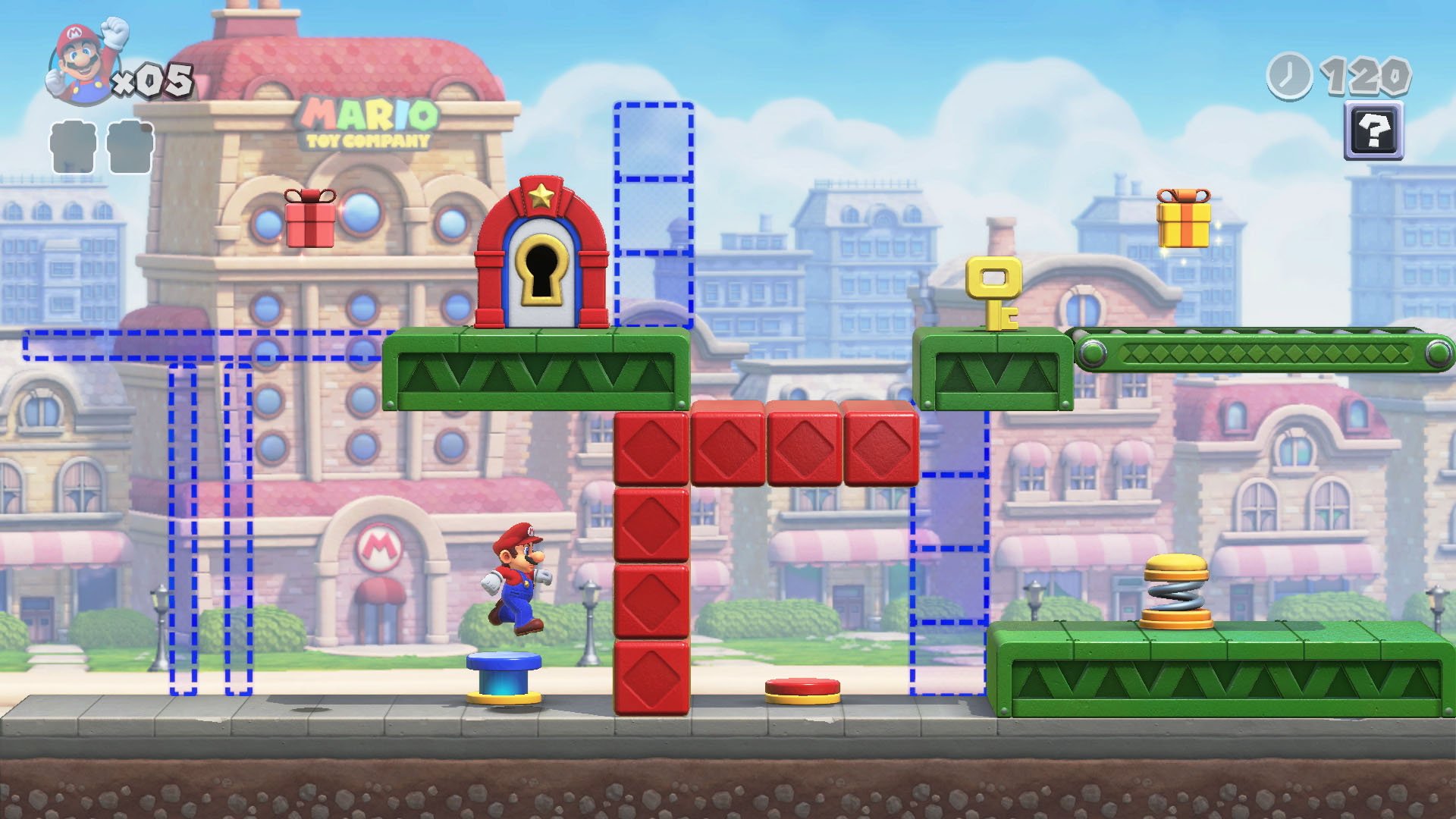
Another great addition is the two new worlds: Merry Mini-Land, in an amusement park, and Slippery Summit, an icy mountain. These worlds also receive Plus counterparts, making for 30 new levels and pushing the total beyond 130. After finishing the game, “Time Attack” becomes available, challenging players to beat each level as fast as possible. It helps that the game feels very fluid and looks very eye-pleasing to look at. It’s a blast to run through the levels, and it doesn’t feel like a chore to go through the levels ‘again’ to complete them for a second time. For those experiencing this game for the first time, it should leave them longing for more.
Conclusion
So, to conclude! The remake still packs a punch and feels like a very well-remade blast from the past. Is it new? In a way, it triggered a lot of nostalgia for me. I had fun running through familiar settings and levels again, and I also taught my kids about the games Dad used to play when he was young. Is the game too easy? Maybe – I didn’t struggle till the last levels of World 8. Did the expert mode help in this at all? A bit – since I’m pretty decent at these types of games. Most importantly, I had fun with my kids, running through the levels and beating DK for stealing the minis. And if you are on the fence about picking it up – you can always try out the demo.
