
With the HD-2D remakes of the first three Dragon Quest games released over the past few years, there has never been a better time to dive into this iconic series. However, Square Enix has decided to release yet another game, this time only three months after the last one. Are you ready to set sail and answer the call to adventure in Dragon Quest VII Reimagined?
Rediscovery
Dragon Quest VII was first released in Japan in the summer of 2000 and was translated for international audiences a year later. With a runtime of between 80 and 100 hours, it is considered one of the longest games in the series. Long-time Dragon Quest fans may already know that the game was remade in 2016 for the 3DS. This upgrade saw the game transition from a pixel-based to a 3D art style, with refined gameplay for modern audiences. However, Square Enix clearly had more plans for the game. They decided to return to the drawing board once again to streamline the story further and upgrade both the visuals and soundtrack even more while they were at it. Dragon Quest VII Reimagined was the result of this decision, ready to take the world by storm.
Kids being kids
Dragon Quest VII: Reimagined is unique in that you don’t start out as a hero who must set out to slay an evil mastermind. You are simply the son of a fisherman from the island of Estard. This is the only island in the world. For generations, people have been content with that. They live their best lives in tranquillity, only setting out on the ocean to fish. However, you and your best friend Kiefer, the prince of this land, have been wondering what lies beyond. You discover pieces of an ancient tablet that, when assembled in a local shrine, allow you to travel to the past. You travel to other islands that are in trouble or threatened by events that could end their existence. Your task is to drive off the evil so that the island can continue to exist, allowing the present-day world to flourish. This is what makes the story so appealing. The protagonist and their friends are just kids, deciding that their quiet life is boring and that they want more adventure. The dynamic between their desire to change the world and the panic of the adults when the new continents suddenly appear is still relevant, even 26 years after the original release. Perhaps it is its relevance to current events, governments around the world trying to cling to the old and prevent change, that makes this Dragon Quest game hit home for me.
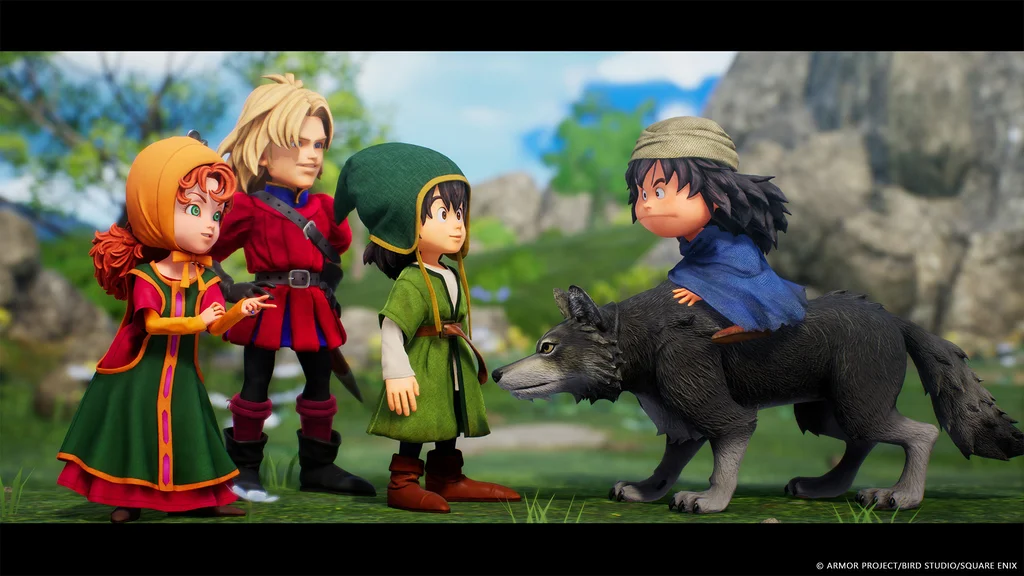
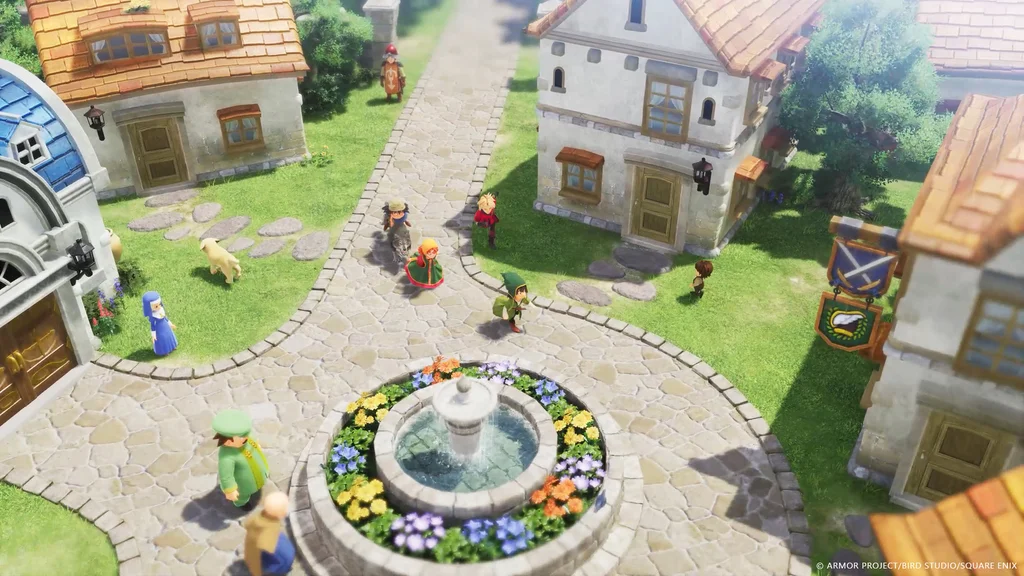
However, some changes have been made to the structure of the story. Mostly to speed things up a bit. The introduction is streamlined to get you into the action more quickly. You fight your first slime within the first hour instead of after three or four. The individual stories in the past received the same treatment. The unnecessary details have been removed, but the encounters are still there. So, if you want more backstory on a region, you can get it. You can walk around the villages and talk to NPCs at your own pace. However, islands can be completed quite quickly if you only have key interactions. Most of them take between an hour and three hours to complete, which makes this title better suited to playing in short bursts. This makes it ideal for a busy day-to-day life. But, if I had to add one small criticism, it would be that marathon sessions can sometimes feel repetitive because of this structure. Dragon Quest retains the useful refresh function, which retells important story beats when you reload your save file. This ensures you’re always up to speed on recent events, even if real-life commitments reduce your gaming time.
Hand crafted
Another significant aspect of this reimagining is the presentation. This applies to both the sound and the visuals. The team at Square Enix could easily have used the 3DS remake of the game and scaled it up for modern systems, but that wouldn’t have met their high standards. Just like with the remakes of Dragon Quest I, II and III, there is now a high-definition orchestral soundtrack. Gorgeous melodies accompany you on your travels through time. There is a wide range of new takes on classic melodies. I just couldn’t play this game with the sound off, even when I wanted to complete another dungeon or island before going to sleep. Much to the annoyance of my wife.
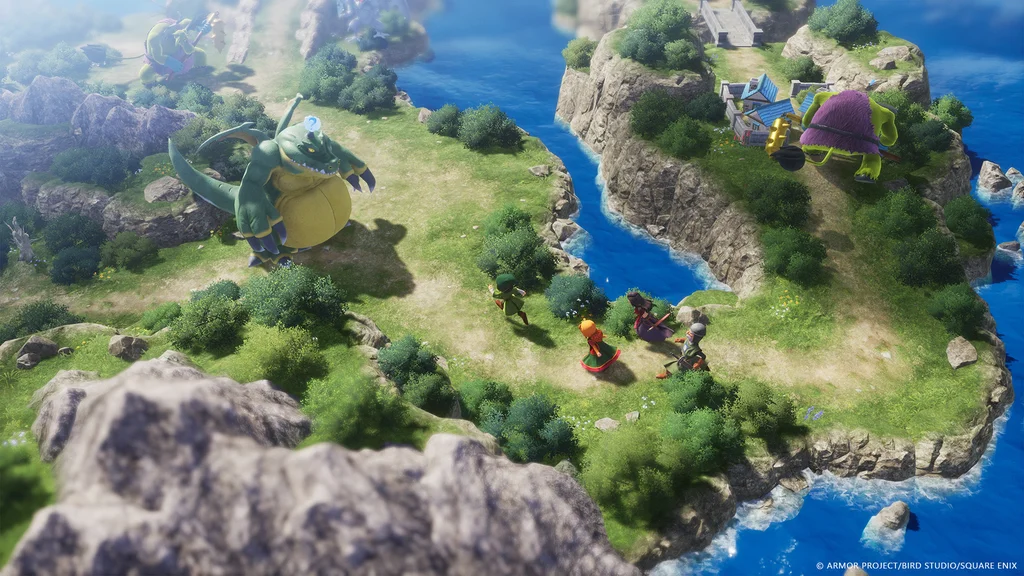
The visuals are the true star of the show. I literally cursed out loud in amazement when I took my first steps in this world. It’s not just the cutscenes that stand out. The overall visual presentation is truly amazing. The character designs are still credited to the late Akira Toryama, of course, but every model has been redone in a new art style that is labelled as ‘hand crafted’ by the developers. The overworld looks like a diorama on display, but you can explore these lifelike places with your character. It’s a real sight to behold. I was amazed to see the sun shining in the top corner of my screen. And if you move your camera around… The sun and shadows move with it. I haven’t even mentioned the voice acting, battle animations or the art in the menu yet! The attention to detail is incredible.
Personal playstyle
But the innovations don’t stop there. Square Enix has also taken the gameplay into account. You can customise your Dragon Quest VII Reimagined experience to suit your preferences.
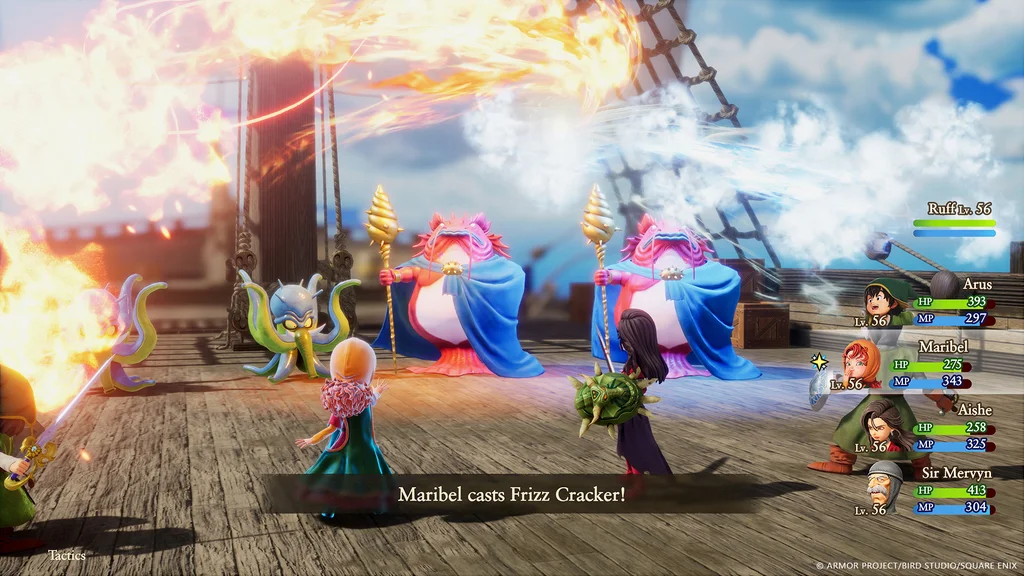
When you boot up the game for the first time, you can select a difficulty level, as you can in many other games. Dragon Quest VII Reimagined goes a step further. It allows you to adjust every aspect of the battle system. You can adjust the basics, such as damage dealt and monster strength; nothing new there. But you can also change gold earned, proficiency earned (used in the returning but also reworked vocation system) and experience earned. Getting tired of combat? No need to worry! You can set the monsters to not attack when you pass by them in the overworld, and you can choose to restore your health completely after every battle. Customise your experience to make your 100-hour journey enjoyable until the end.
One final thing I want to mention is the dungeon design. Some of them have been overhauled to make them more enjoyable and engaging to explore. One example is a mine that you explore on the first island. In the original version and the first remake, you just had to make your way down to retrieve a gem at the end. Now, there are puzzles along the way, where you have to guide gems down slopes and make them collide with gems of the same colour to clear a path forward. This made the dungeon feel less like a chain of endless combat. It was a refreshing change of pace. This remake will no doubt go down in history as one of the greatest RPG reworks of all time.
Conclusion
In Dragon Quest VII Reimagined, Square Enix once again proves its ability to do a remake justice. The new orchestral soundtrack and handcrafted visual style not only elevate the immersion, but also make the game more enjoyable. The changes that streamline both story and gameplay also make the transition to newer hardware much more enjoyable. Combined with the deep accessibility options that let you adjust the difficulty and the episodic structure of the separate islands, this makes for a long RPG that even the busiest players will be able to enjoy at their own pace. If the quality of recent Dragon Quest games sets a new standard, I can’t wait to see what the teams at Square Enix will show us next.
