
There are certain games that instantly transport you back to a very specific moment in gaming history. The kind of titles that smell faintly of CRT televisions, chunky controllers, and the optimism of an industry that was still figuring out what 3D actually meant (spoilers, it meant polygons). Fighting Force Collection on Nintendo Switch (2) is exactly that kind of time capsule. And yes, before we dive any deeper, this is a remaster of the original Fighting Force games, lovingly (and sometimes awkwardly) pulled out of the late ’90s and given a fresh coat of badass for modern hardware. Welcome back to Fighting Force. Or maybe more accurately: welcome back to Fighting Force… and that other one.
For those unfamiliar, the Fighting Force Collection bundles together Fighting Force (1997) and Fighting Force 2 (1999). Two games that share a name, a legacy, and very little else. What you get here is the complete package: both titles, preserved and updated to run smoothly on modern systems, with visual enhancements, stability improvements, and the convenience of having them playable anywhere thanks to the Switch format. No emulation issues, no compatibility issues, just two very different relics of their time, side by side. And that contrast? That’s where this collection gets interesting. Let’s dive in!
Fighting Force (1997): a proper Beat ’m Up, warts and all
Let’s start with the original Fighting Force, because this is the game most people remember, and for good reason. Released during a period when developers were desperately trying to translate 2D arcade beat ’em ups into 3D spaces, Fighting Force was Core Design’s answer to the question: “What if Streets of Rage, but… polygonal?” The story is gloriously simple and unapologetically late ’90s. A mad scientist named Dr. Zeng is attempting world domination (of course), and it’s up to a group of four fighters to punch, kick, and throw literally everything not nailed down in order to stop him. Plot takes a backseat to momentum, and that’s exactly how a beat ’m up should be. You’re not here for emotional depth, you’re here to clear streets, warehouses, and labs by force. Fighting force.
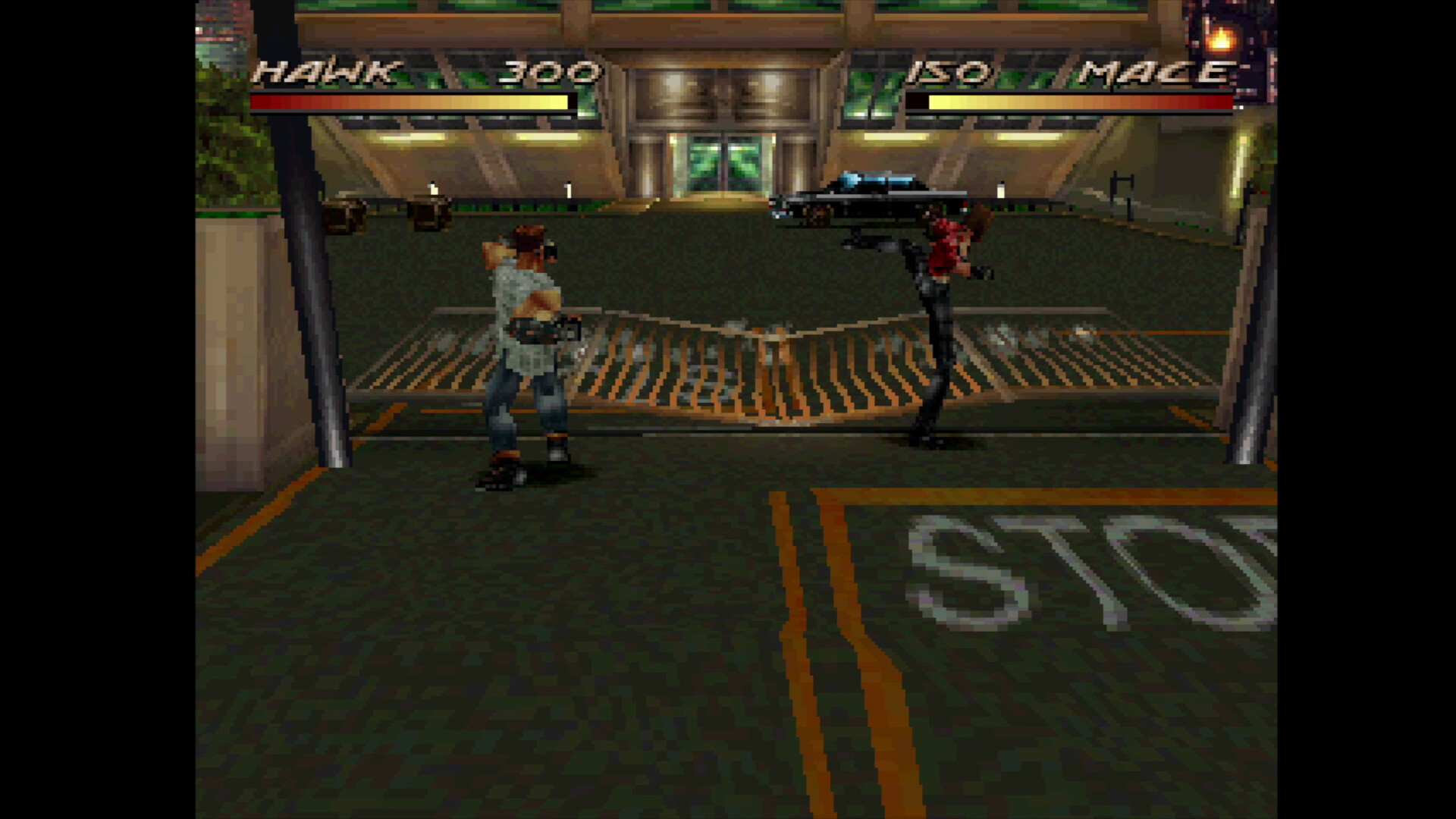
Gameplay-wise, Fighting Force is a clear product of its era, but it still holds up surprisingly well within that context. You move through semi-open 3D environments, beating up waves of enemies using punches, kicks, grabs, throws, and most importantly, environmental weapons. Pipes, knives, crates, chairs, and even enemies themselves can be picked up and used as tools of destruction. It’s chaotic, messy, and incredibly satisfying. What really elevates the experience, even today, is the multiplayer. Local co-op allows two players to team up, and this is where Fighting Force truly shines. Running through levels together, accidentally hitting each other mid-combo, and coordinating crowd control feels timeless. It’s a reminder that couch co-op beat ’m ups were once a cornerstone of gaming, not a niche feature.
The remaster does a solid job here. The game runs smoothly, controls feel responsive, and the visuals, while unmistakably old, are cleaner and more stable than ever. Character models are sharper, environments are more readable, and the frame rate no longer fights against you like an extra enemy. It still looks like a late ’90s 3D game, but it’s a well-preserved one. Is it perfect? Absolutely not. Camera angles can still be awkward, enemy AI remains simplistic (especially on lower difficulty), and combat can feel floaty compared to modern standards. But none of that detracts from what Fighting Force fundamentally is: a fun, dumb, enjoyable beat ’m up that knows exactly what it wants to be. 3D-ish arcade fun, brought to your home.

Fighting Force 2 (1999): Same name, completely different game
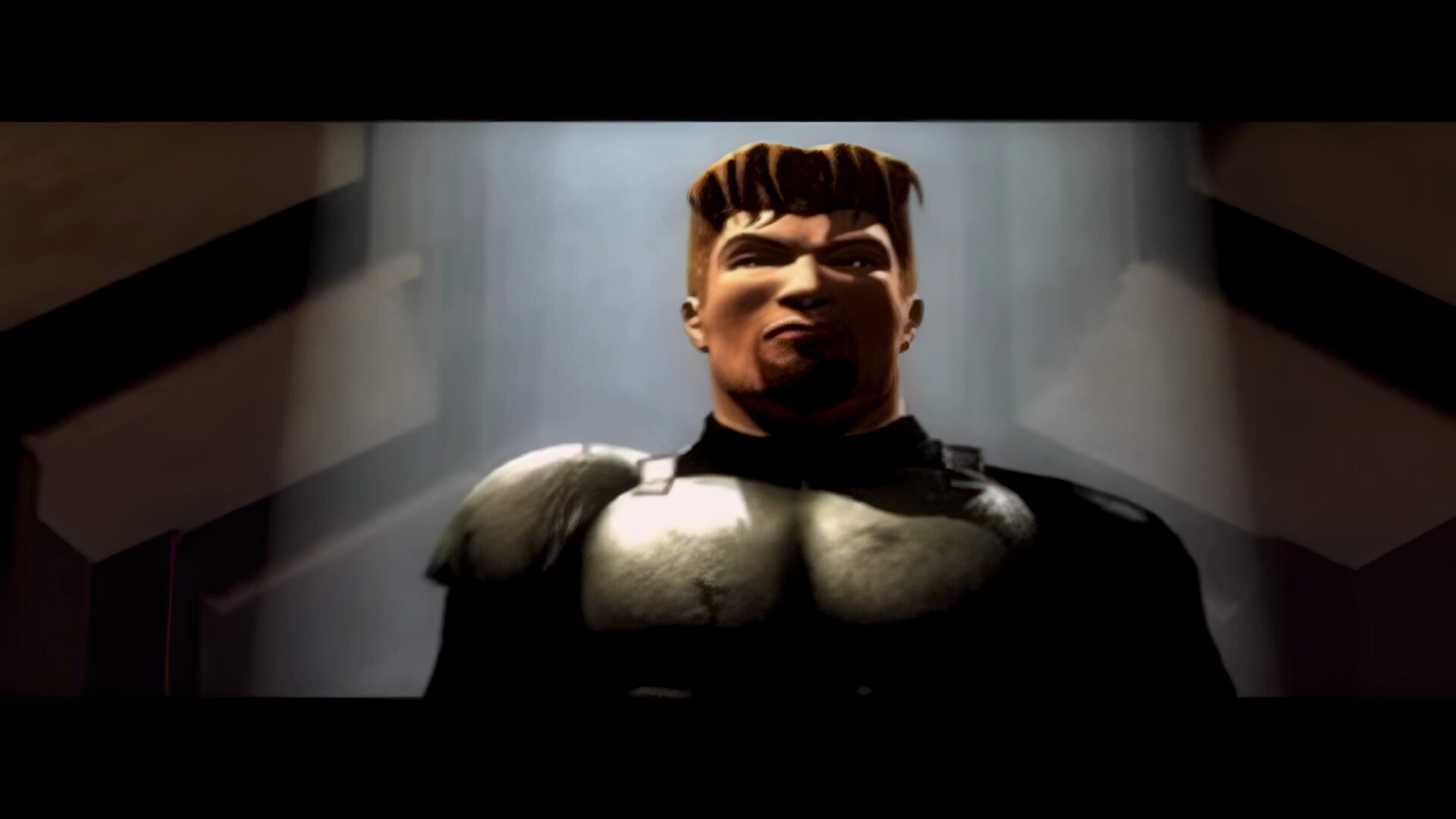
And then there’s Fighting Force 2. This is where things get… complicated. If you boot this up expecting more of the same, more streets, more co-op chaos, more environmental destruction, well.. you’re in for a surprise. Fighting Force 2 feels less like a sequel and more like a completely different project that happened to reuse a recognisable name and a handful of assets. The story immediately sets a different tone. Instead of urban chaos and arcade-style progression, Fighting Force 2 leans heavily into a spy thriller aesthetic. You play as Hawk Manson, a government agent tasked with infiltrating enemy bases, uncovering conspiracies, and stopping global threats through stealth and precision rather than brute force. It’s darker, more grounded, and far more serious in its presentation. On paper, that might sound interesting. In practice? It’s a mixed bag at best.
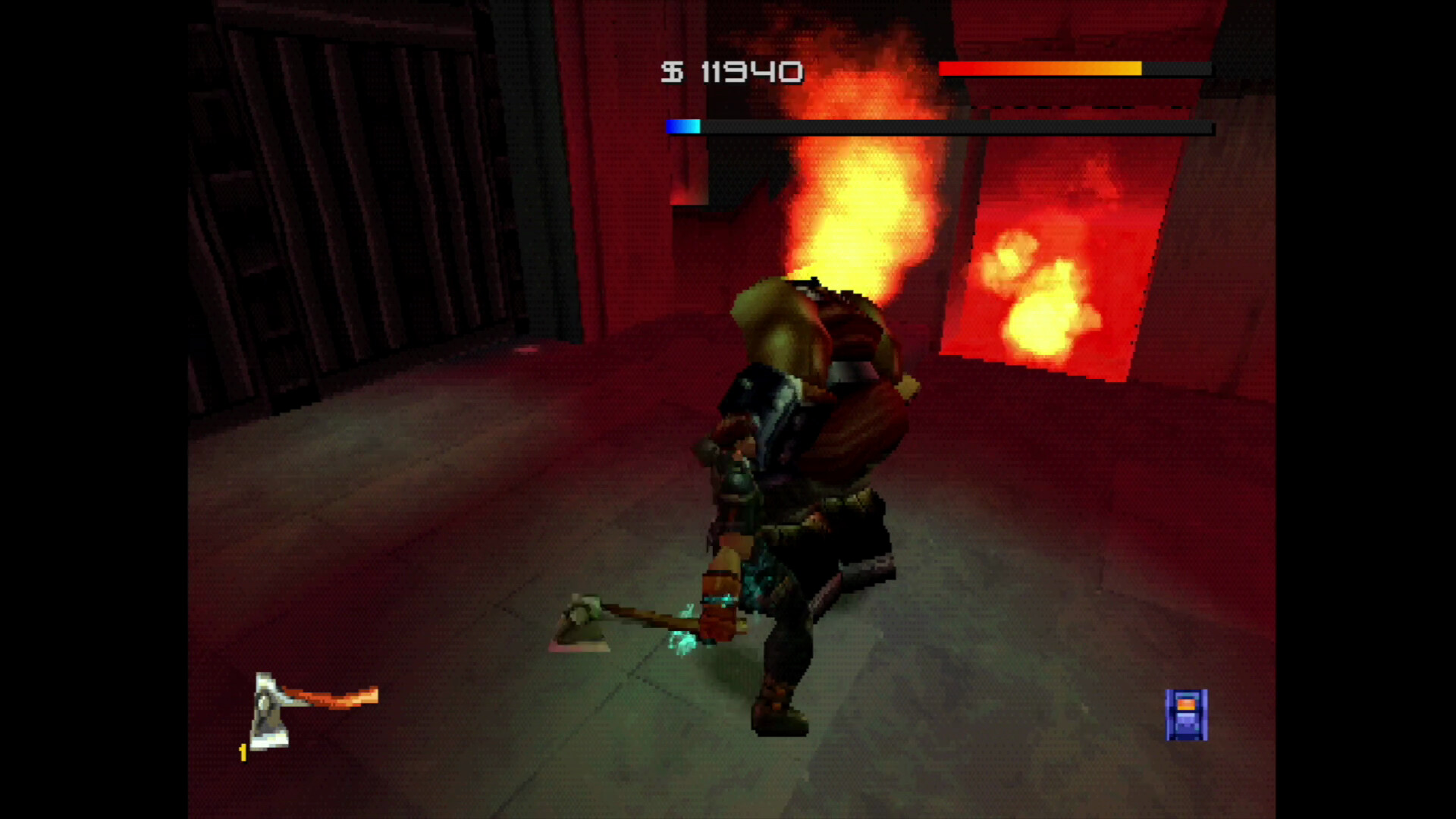
Gameplay shifts dramatically toward a slower, more methodical pace. Levels are more enclosed, enemies are deadlier, and combat emphasises firearms over melee brawling. Ammunition management becomes a thing, stealth is encouraged (sometimes required), and the game often feels closer to an early third-person shooter than a beat ’m up. And this is where the cracks really show, especially in a modern context. Controls feel stiff, aiming is clunky, and enemy encounters can be frustrating rather than fun. The satisfying crowd control of the first game is replaced by cautious corner-peeking and awkward shootouts. Gone is the joyful chaos; in its place is a game that seems unsure of its own identity.
Even worse, the multiplayer is gone. Fighting Force 2 is a strictly single-player experience, and that decision alone strips away a huge part of what made the original so enjoyable. Without co-op, the game feels lonelier, slower, and far more dated. To the remaster’s credit, this version of Fighting Force 2 runs as well as it possibly can. Performance is stable, visuals are cleaned up, and load times are minimal. But no amount of polish can fully mask the fact that this game’s core design simply hasn’t aged well. It’s not unplayable, but it is a reminder that not every sequel benefits from reinvention. So, if this is your first time playing through it, give it a whirl.
Two Games, one collection, very different legacies
What makes the Fighting Force Collection fascinating is how clearly it highlights two different design philosophies colliding with time. Fighting Force embraces its arcade roots and survives largely intact because of it. Its simple mechanics, cooperative focus, and moment-to-moment fun still work, even decades later. Fighting Force 2, on the other hand, feels trapped by its ambition. It wanted to be more cinematic, more serious, more modern and in doing so, it lost the soul that made the original memorable. Playing it today feels less like rediscovering a classic and more like studying an experiment that didn’t quite pan out. That doesn’t mean it has no value. As a historical artifact, Fighting Force 2 is interesting. It shows where developers were trying to go at the turn of the millennium, how genres were blurring, and how risky transitions could be. But as a game to actively enjoy in 2026? That’s a harder sell.
Conclusion:
As a remaster, Fighting Force Collection does exactly what it needs to do. Both games run well, look as good as possible, and are presented in a way that respects their original form. There are no game-breaking issues, no lazy emulation shortcuts, and no technical excuses. This is a competent, respectful revival. Where the first Fighting Force remains the clear highlight: still fun, still chaotic, and still best enjoyed with a second player on the couch. It’s proof that good core design can outlast technical limitations. The second game? It’s… fine. Functional. Interesting in a historical sense. But also a strong example of why some games are better remembered than replayed. And that’s okay. Not every classic needs to be reinvented, and not every sequel deserves the same reverence as its predecessor. The Fighting Force Collection succeeds because it lets you experience both and decide for yourself. So, what you get is a solid, enjoyable remaster anchored by a genuinely fun original game, slightly dragged down by a sequel that time hasn’t been kind to. Yes, it’s worth playing, worth remembering, just maybe not worth revisiting everything.
