
There are games you revisit because you miss them, and games you revisit because you want to know if they still hold up when you’ve changed. Layers of Fear sits firmly in that second category for me. I’ve played it before, on more powerful hardware, in darker rooms, at different moments in my life. Playing it again on Nintendo Switch 2 felt like re-entering a familiar headspace, one that still knows exactly where to press.
This Final Masterpiece Edition reframes the entire experience as a single, cohesive descent through obsession, guilt, grief, and self-destruction. The painter. The actress. The fragments in between. What stood out this time wasn’t the scares, but how confidently the game trusts its pacing. It never rushes you. It lets rooms linger. It lets silence do work. And on Switch 2, that restraint actually becomes one of its strengths.
Playing Layers of Fear on Switch 2
The biggest surprise is how well the game fits the Switch 2 form factor. This is not a version that constantly reminds you it’s running on different hardware. Visually, it doesn’t try to compete with high-end PC lighting setups, but it doesn’t need to. The environments remain expressive, textured, and intentionally imperfect. Walls still shift when you’re not looking. Paintings still seem to watch you longer than they should. The atmosphere holds, and that’s also because of the magic Bloober team managed to pull off here. The game runs on the Unreal Engine 5, and thanks to the lighting effects, this Switch 2 version feels on par with the other consoles. I’m talking Xbox Series S to PlayStation 5 here. Visually, the Switch 2 version is by far one of the most impressive games I’ve played to date and I can only applaud Bloober for this.
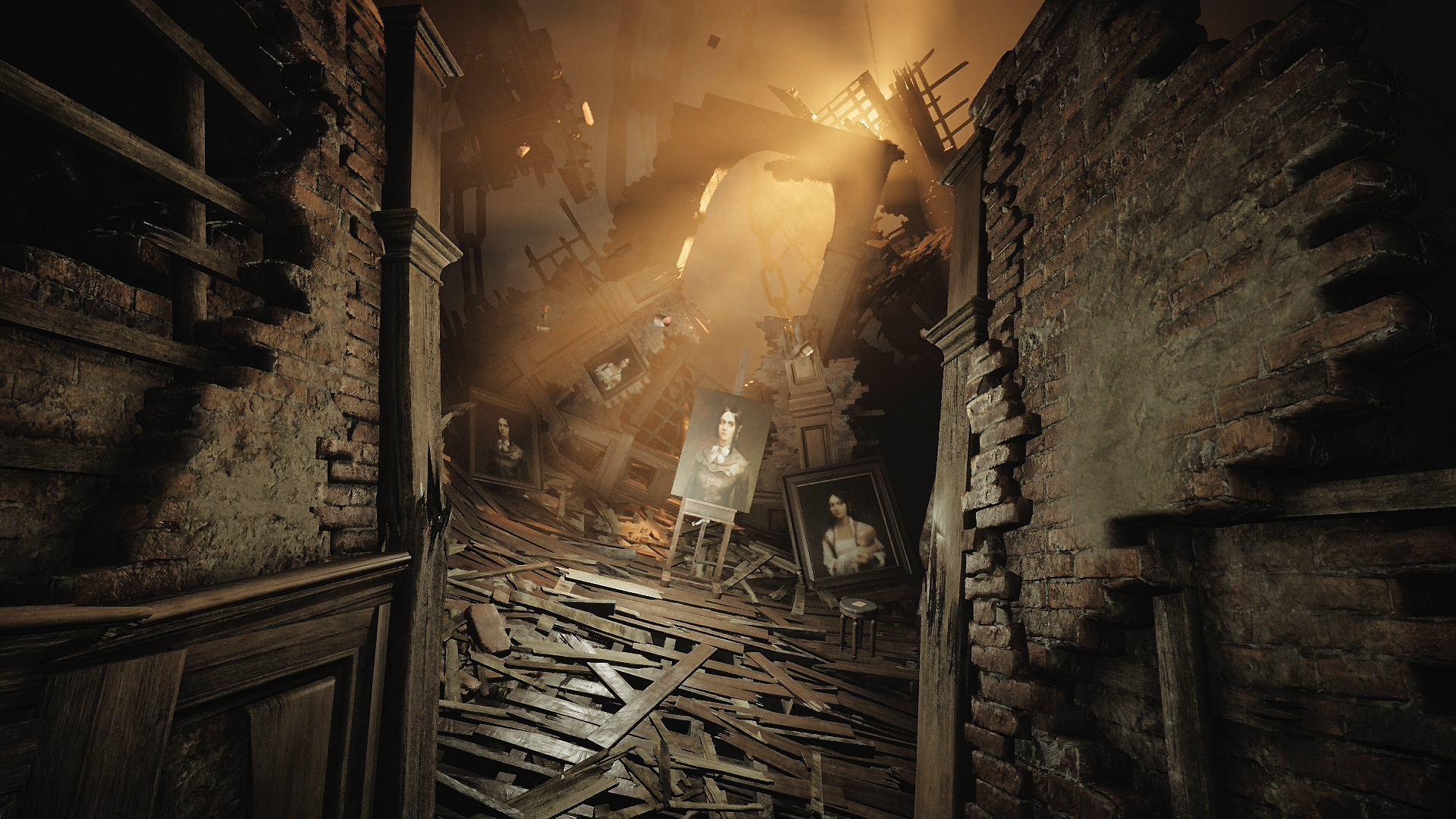
In handheld mode especially, the game feels more intimate than I expected. Being physically closer to the screen changes how you process its spaces. Corridors feel tighter. Rooms feel more oppressive. I found myself playing slower, scanning environments more carefully, because the gameplay loop encouraged that kind of attention. The horror works best when you’re not rushing, and Switch 2 quietly supports that mindset.
Performance is stable throughout. There are moments where complexity pushes the engine a little, but nothing that breaks immersion. No crashes, no major technical distractions. Audio remains one of the game’s strongest elements. Subtle environmental sounds, distant creaks, and sudden shifts in tone all translate well, especially with headphones. The game relies heavily on sound design, and this version respects that.
The mechanics we all know
Mechanically, Layers of Fear has never been about challenge. That hasn’t changed, and it shouldn’t. Movement is deliberate. Interaction is simple. Puzzles are rarely about logic and more about observation and interpretation. Some players will always bounce off that, but for me, that restraint is the point. The mechanics never try to outshine the narrative. They exist to support it.
That said, the unified structure of this edition does reveal some uneven pacing. Certain sections feel more impactful than others, and not every chapter lands with the same emotional weight. When the game is at its best, it’s unsettling without being loud, disturbing without being explicit. When it’s weaker, it can feel like it’s circling familiar ideas without pushing them further. That contrast becomes more noticeable when everything is experienced back-to-back.

Still, the strength of the writing and environmental storytelling carries it through. There are moments that stayed with me long after I put the console down, although it must be said this slower pacing is something newer Bloober fans will have to get used to. It’s not as flashy or action-packed as Cronos for example.
Conclusion:
Layers of Fear: The Final Masterpiece Edition on Switch 2 doesn’t reinvent the game, and it doesn’t try to modernise it unnecessarily. What it does is preserve its identity in a form that feels natural, focused, and respectful of what made it resonate in the first place. It’s still a slow burn. It still asks you to meet it halfway. And it still won’t be for everyone. But if you’re willing to sit with it, to let its spaces breathe and its themes unfold without rushing to the next moment, it remains a deeply affecting experience.
