
I’ll admit it right away: before Persona 3 Reload, I had never played a Persona game. As a lifelong JRPG enthusiast, that confession feels almost shameful. I’ve battled through Final Fantasies, traversed the worlds of Xenoblade and Dragon Quest, and I’ve always admired how Japanese RPGs can blend heartfelt stories with imaginative combat systems. And yet, somehow, Persona always remained on my periphery, a series I knew was revered, but which I never quite got around to. Maybe it was the intimidating legacy, maybe the “high-school life simulator meets shadow-slaying dungeon crawler” pitch sounded too eccentric? When Persona 3 Reload arrived, freshly remade for modern consoles (and running wonderfully on the Switch 2), I decided it was finally time. If I were to dive in, why not start at the source —the game that established the Persona formula we know today? What followed was a journey that surprised, moved, and left me absolutely captivated.
The Persona Series and where Persona 3 fits
The Persona series has long been a sub-brand of Shin Megami Tensei, but it has since evolved into its own distinct entity. My Persona/SMT enthusiastic friend described it as less apocalyptic and more introspective. Where SMT games often lean into demons, dystopias, and moral extremities, Persona focuses on the psyche: identity, friendship, trauma, and the masks we wear. Each numbered entry features a new cast and story, making them self-contained and independent. Yes, Persona 3 Reload is perfectly accessible to first-time players.
Chronologically, Persona 3 was a watershed moment. Released in 2006 on the PlayStation 2, it redefined the series by introducing the now-iconic mix of school-life simulation and turn-based dungeon exploration. Players would spend their days attending classes, hanging out with friends, and building “Social Links,” while at night they’d face supernatural horrors in a mysterious tower known as Tartarus. That loop, balancing the ordinary and the extraordinary, became the foundation for Persona 4 and Persona 5. In that sense, Persona 3 Reload is both a love letter and a rebirth: it preserves the soul of the original but presents it in a way that feels completely modern.
Story
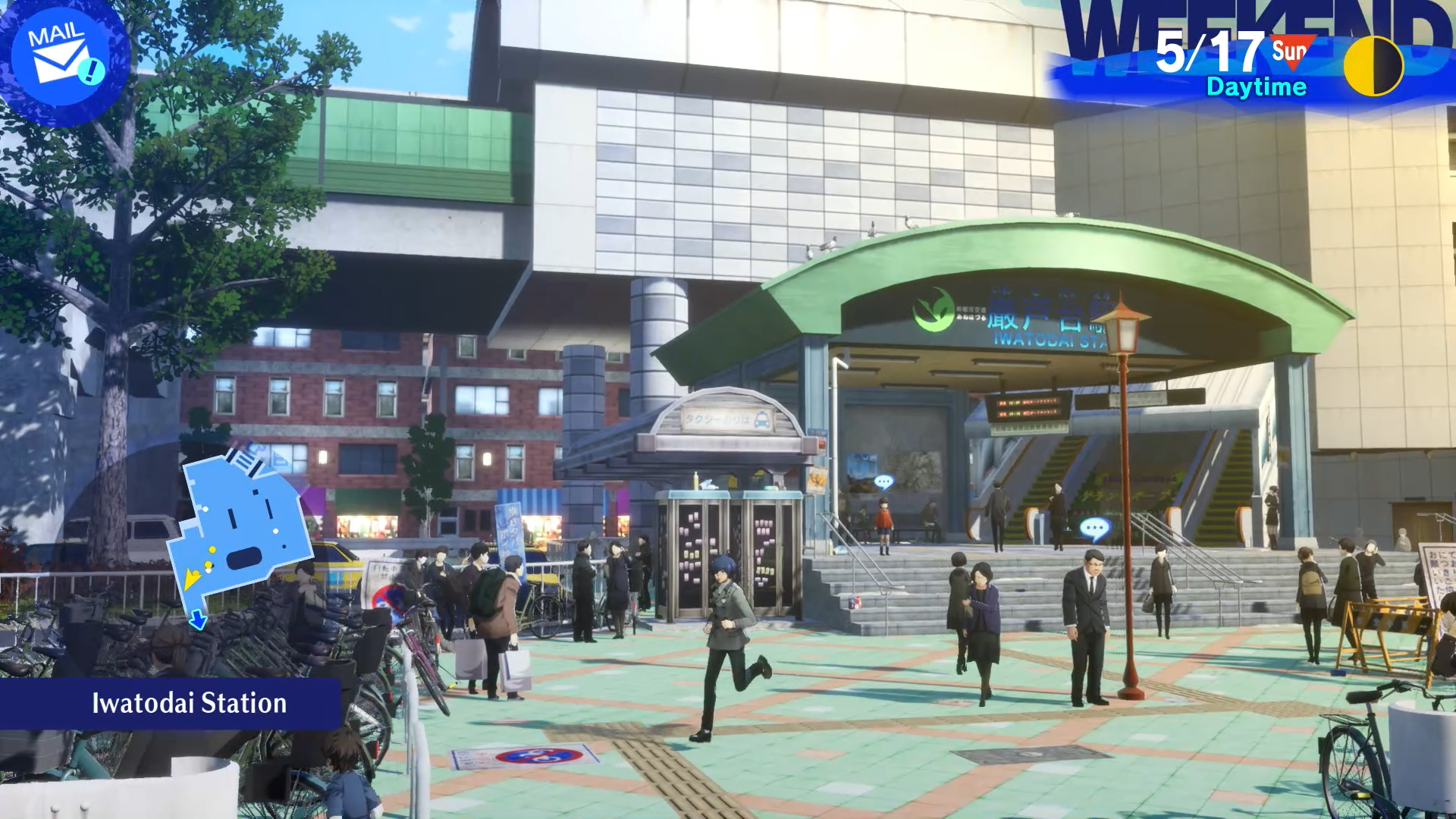
In Persona 3, you play as a quiet transfer student arriving at Gekkōkan High, a sleek seaside school perched in the fictional Tatsumi Port Island. Your arrival coincides with strange and disturbing events: every midnight, an extra “hidden” hour manifests as the Dark Hour. During this time, ordinary people are trapped inside eerie green coffins with a reddish glow, while terrifying creatures known as Shadows roam freely. You soon discover you possess the power to summon a Persona, a supernatural reflection of your inner self. With that ability, you’re invited to join S.E.E.S.: the Specialized Extracurricular Execution Squad, a group of fellow students who investigate and combat the mysteries of the Dark Hour. Together, you climb the enigmatic tower Tartarus, battling Shadows and unravelling the truth behind the time anomaly.
During the day, you live a seemingly everyday life: attending school, studying for exams, hanging out with friends, working part-time jobs, and building relationships that deepen your Personas’ power. It’s a delicate balance of choices, since each day has limited time, and every decision matters. The joy of Persona 3 Reload lies in that rhythm: studying and socialising by day, fighting for your life by night. And don’t worry, this summary (and review as a whole) is spoiler-free. Just know that beneath its cool blue aesthetic, Persona 3 Reload hides one of the most heartfelt and haunting narratives you’ll find in any JRPG.

What’s changed between the Original and Reload?
Before diving deeper, it’s worth pointing out how Persona 3 Reload differs from the original 2006 release (and its later FES and Portable editions). The core story and characters remain the same, out of respect for the original’s tone and writing, but almost everything else has been rebuilt from the ground up. Visually, it’s a stunner: the remake uses the same engine as Persona 5, delivering vivid lighting, expressive models, and cinematic camera work. The UI has been completely overhauled into a slick, kinetic interface that makes every menu feel alive. The entire game is now fully voice-acted, including smaller side moments that were previously text-only, and the music has been re-recorded and rearranged, blending nostalgia with fresh energy.
“Persona 3 Reload is a testament to how to remake a classic: respect the past, refine the present, and reintroduce it for a new generation.”
Gameplay-wise, you now control all party members directly, rather than relying on AI. A new Shift mechanic (similar to Persona 5’s Baton Pass) allows smooth tactical chaining, while Theurgy attacks offer flashy, powerful finishers that build up under certain conditions. Tartarus has undergone a structural revamp, featuring more visual variety, improved pacing, faster traversal, and new checkpoints. On top of that, there’s a mountain of quality-of-life upgrades, like auto-saves, fast travel, streamlined fusion menus, and improved quest tracking. Notably, Reload focuses strictly on the original’s story and does not include FES’s epilogue “The Answer” or Portable’s female protagonist route (at least not yet). It’s a faithful retelling, not an “ultimate edition.” Still, what’s here feels like the definitive way to experience this classic.
Persona 3 Reload vs. Original: What’s New, what’s changed
| Aspect | Original Persona 3 (2006 / FES / Portable) | Persona 3 Reload (2024, 2025 Switch 2) |
| Visuals | PS2-era 3D models, simple lighting. | Full Unreal Engine rebuild, featuring modern lighting and expressive animation. |
| UI | Functional but dated blue menus. | Sleek, dynamic UI inspired by Persona 5. |
| Voice Acting | Partial voices. | Fully voiced across all storylines. |
| Combat | AI-controlled allies. | Complete manual control + “Shift” mechanic. |
| New Systems | Standard turn-based play. | Adds Theurgy attacks and weakness chaining. |
| Social Links | Basic conversations. | Expanded dialogue, more life-sim activities. |
| Exploration | Static backgrounds. | Free camera, explorable dorm/school/town. |
| Tartarus | Random floors, repetitive visuals. | More visual variety, improved pacing. |
| Soundtrack | Classic Shoji Meguro tracks. | Remixed and re-recorded with new vocals. |
| QOL | Limited options. | Auto-save, fast travel, quest logs, skip options. |
| Extra Content | FES and Portable added side stories. | Base Reload sticks to the main campaign. |
With that said, Reload is a faithful remake, respectful yet revitalised. It keeps the heart of Persona 3 while reimagining it with modern standards. The result feels both nostalgic and new, a bridge between eras. But we have more to discuss, so let’s climb Tartarus a bit more!
Gameplay & mechanics
What impressed me most as a newcomer was how cohesive the entire design feels. Persona 3 Reload juggles an array of systems, but each complements the others, creating a loop that’s as addictive as it is thoughtful. During the day, you live a student’s life: attending lectures, joining clubs, hanging out, studying, working, and nurturing “Social Links.” These relationships are the emotional and mechanical backbone of the game. Strengthening them unlocks stronger Persona fusions later, but more importantly, they ground the narrative. You want to succeed in battle because you care about the people you fight alongside.
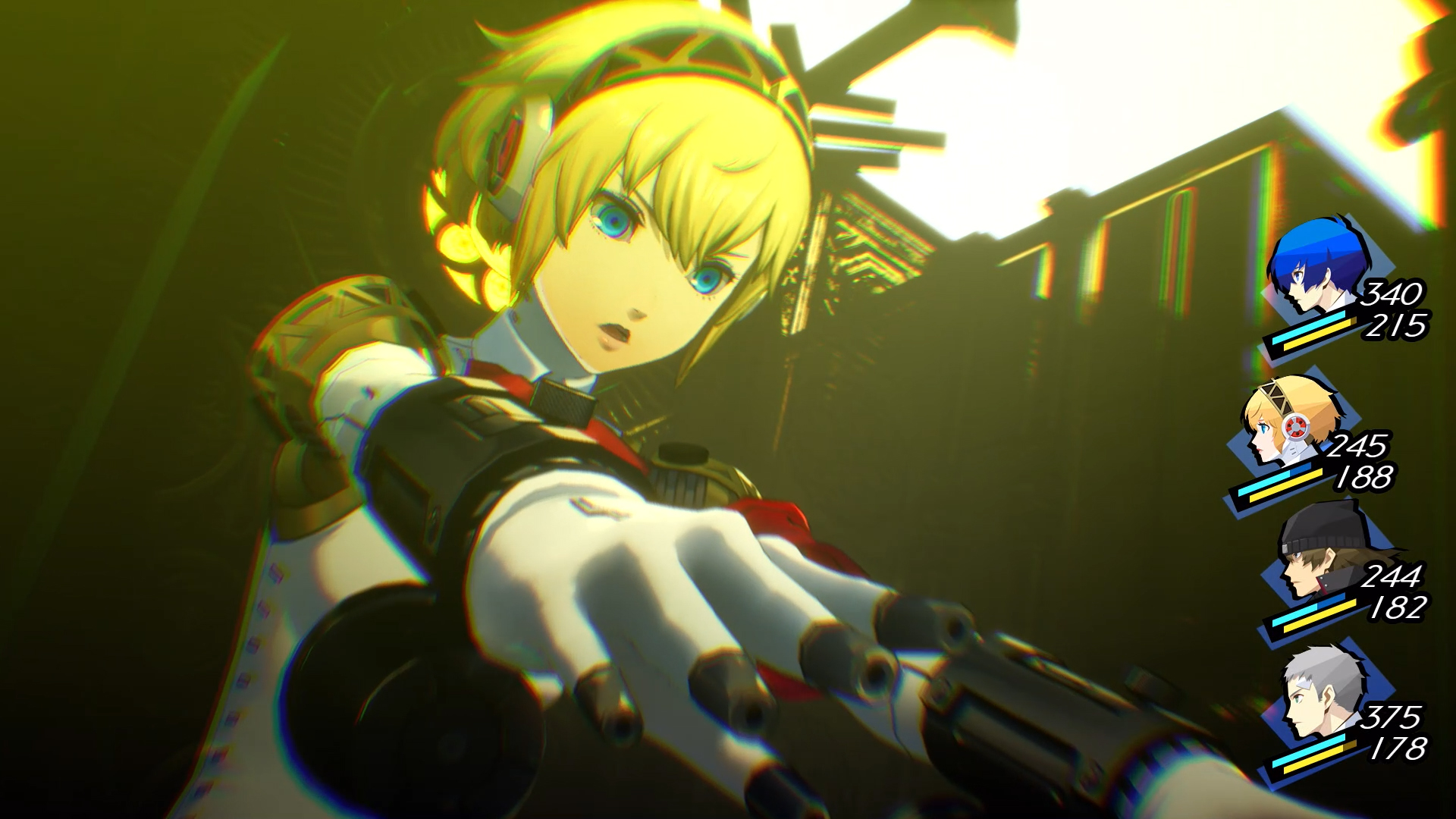
Then, at night, comes Tartarus (one of my favorite aspects of the game), a towering labyrinth of procedurally generated floors teeming with Shadows. It’s here where Persona’s classic turn-based combat shines. Every encounter revolves around discovering and exploiting enemy weaknesses. Hit the right one, and you gain a chance to “Shift” to another ally, chaining attacks until you’ve set up a devastating “All-Out Attack.” Beyond the raw combat, Reload layers in new tactical wrinkles. Theurgy skills offer cinematic special moves, each tied to unique character conditions. For example, Mitsuru might charge hers by freezing foes, while Junpei’s builds from aggressive strikes. It’s small touches like this that make every party member feel distinct, both in combat style and personality.
Outside of fighting, there’s the ever-present calendar system, ticking day by day. It’s both your greatest ally and your worst enemy, since time never stops, and every decision has trade-offs. Do you spend your free time studying to raise your academics or bonding with Yukari to deepen your relationship? This rhythm, half routine and half risk, is what makes Persona’s design so compelling. It’s not just about grinding stats, it’s about building a life, and I’m a sucker for it.
Art Style, anime flair, and soundtrack
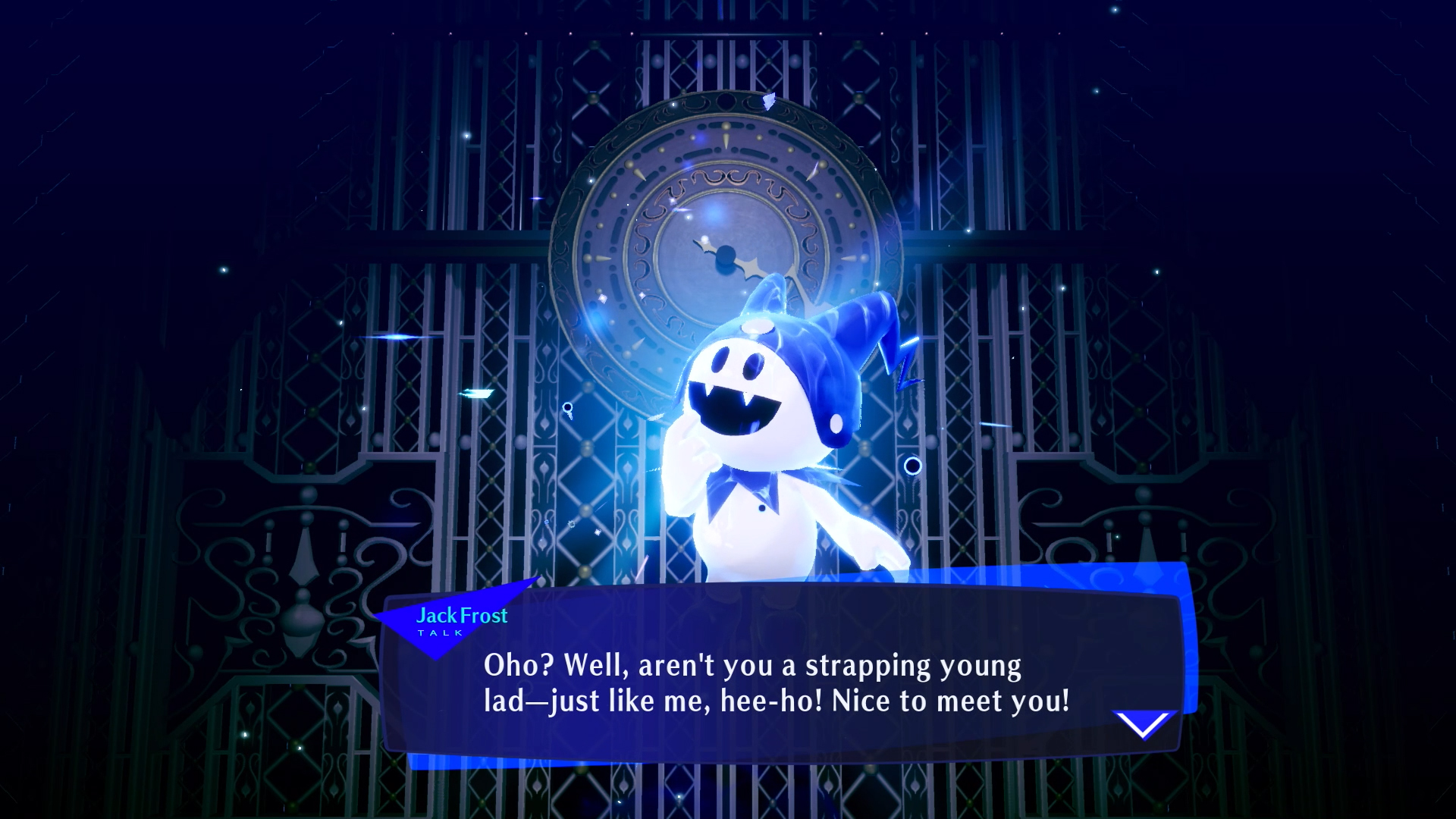
Stylistically, Persona 3 Reload is gorgeous. The clean blue aesthetic (contrasting with Persona 5’s rebellious red) gives it a calm melancholy. Atlus has always excelled at presentation, but Reload feels elevated, with every menu transition, every motion, every line of UI that drips with personality. The anime-style cutscenes are beautifully redrawn and directed with modern cinematography, seamlessly blending with in-engine moments. The visual language, with its long shadows, moonlight hues, and surreal green glow of the Dark Hour, perfectly conveys the game’s somber tone.
And the music? Still untouchable. Shoji Meguro’s compositions, reimagined by Atsushi Kitajoh, sound as stylish as ever. The fusion of pop, jazz, and electronic beats makes even ordinary days memorable. Battle themes like “Mass Destruction” hit harder than ever, while new songs such as “It’s Going Down Now” add fresh energy. The soundtrack alone could carry this game. What struck me most, though, is how cohesive it all feels. The art, the sound, the pacing. Together they create an atmosphere that’s melancholic yet empowering, stylish yet deeply human.
Conclusion
After dozens of hours working my way through the world of Persona 3 Reload, I realised it had done something few games manage: it made me nostalgic for a story I’d never experienced before. There’s a timeless quality to its blend of daily life and existential drama, a rhythm that prompts reflection on one’s own choices and relationships. For a newcomer like me, it was the perfect entry point: challenging but accessible, rich in systems yet emotionally grounded. The Switch 2 version runs beautifully, letting me play long sessions docked or quick bursts on the go, and the performance never faltered. Yes, there are small nitpicks: Tartarus can still feel a bit repetitive after long stretches, and I occasionally wished the story’s pacing between major events was a bit tighter. But these are minor blemishes on an otherwise masterful experience. It’s not just one of the best JRPGs I’ve played; it’s one of the best games I’ve played. Persona 3 Reload is a testament to how to remake a classic: respect the past, refine the present, and reintroduce it for a new generation. Now that I’ve finally taken the plunge, I can’t wait to see where Persona 4 and 5 will take me next. If they’re anything like this, I might have just found my new favourite series.
