
I spent an hour with Styx: Blades of Greed at Gamescom and it reminded me why this goblin still has a place in today’s gaming landscape. For those unfamiliar, Styx is not your typical fantasy hero. He is a small, cynical goblin assassin who relies on wit, shadows, and a sharp blade rather than brute strength. His return after two cult classics feels both nostalgic and fresh.
The demo began with a tutorial that introduced the basics of sneaking. It quickly became clear that this is not a game where you can charge headlong into battle. The developers mentioned that about three quarters of the design leans toward stealth and the rest toward action, though the action is never meant to be your main approach. Guards are far too strong to take down in open combat, so success comes from patience and clever use of the environment.
One of the key mechanics is light. Torches and lanterns litter the world, and extinguishing them is often the first step to survival. Shadows make Styx nearly invisible, while bright areas put him at risk. Surfaces matter just as much. Landing on carpet is quiet, dropping onto stone is noisy, and those little details make each move feel deliberate. I appreciated how much freedom I had in deciding my route. In one section I could crawl under tables, slip through trapdoors, or climb unseen paths to get around patrols. In another I used chandeliers to create accidental accidents for unsuspecting guards. It never felt like the game forced a single solution.
The second part of the demo opened things up with larger, vertical spaces. Here Styx gained access to more tools, including a grappling hook and a glider. The extra mobility made exploration far more dynamic, especially when combining wall climbing with sudden aerial drops. Abilities also became more inventive. Creating a clone to draw attention away from myself felt both useful and mischievous. Setting traps that eliminated enemies and disposed of their bodies in one motion made me feel like a master of preparation. Every power pushed me to experiment rather than repeat the same routine.
There were rough edges in this build. Animations sometimes lacked polish and certain transitions between areas felt unfinished. Still, the core of the experience already works. Stealth thrives when it offers choice, tension, and the thrill of outsmarting opponents. This demo managed all three, and it did so with a personality that only Styx brings.
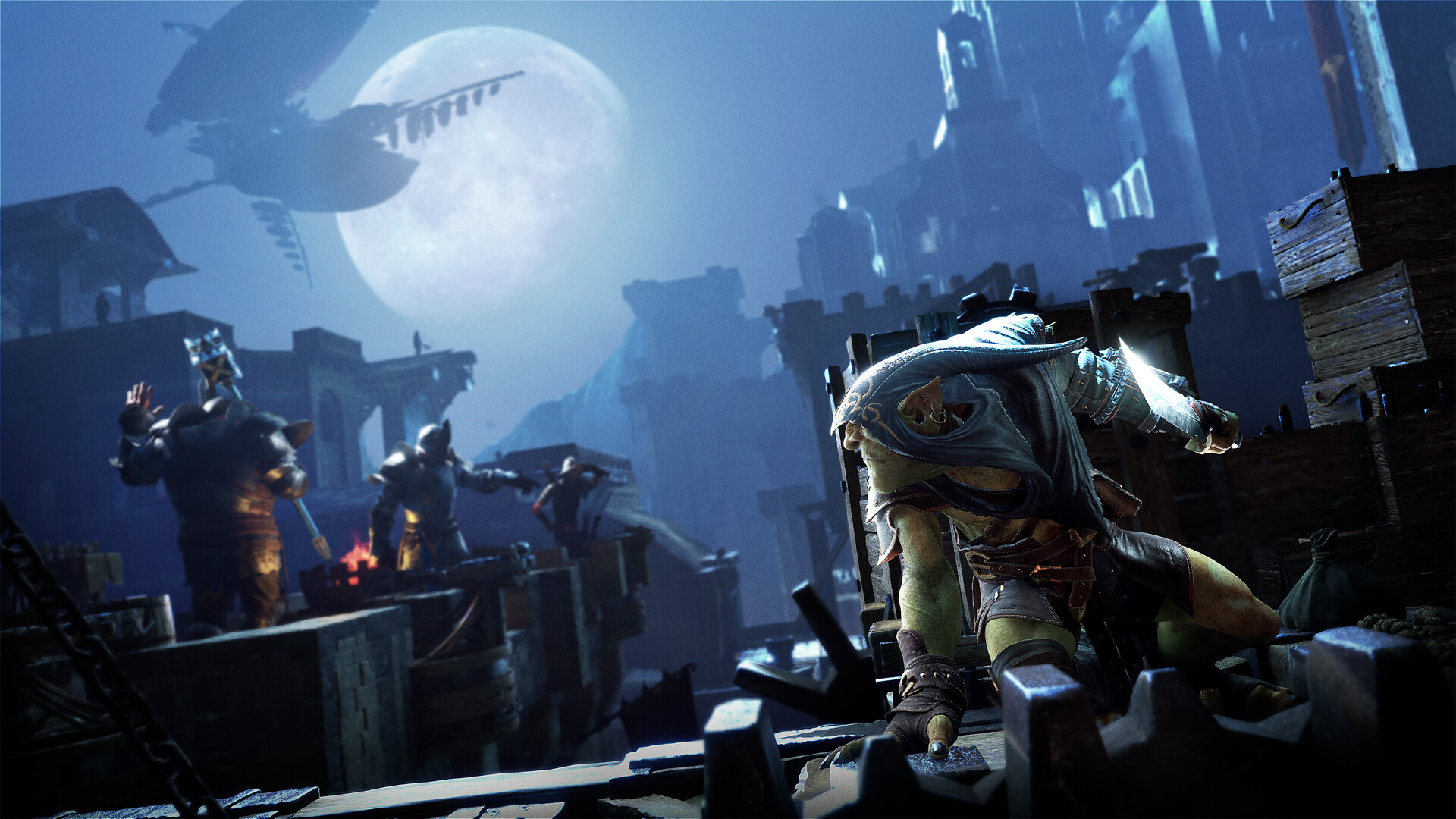
My time with Blades of Greed flew by faster than expected. Modern gaming often chases spectacle or relentless action, so revisiting a pure stealth game with this much care felt refreshing. Styx may not be the hero anyone looks up to, but guiding him through shadows remains as entertaining as ever.
