
From the moment you emerge onto cracked pavement with a battered shelter behind you, Death Stranding 2 announces its intentions quietly. It won’t shout, it won’t show off. Instead, it reaches out and lingers in your palms, an invitation to rediscover what it means to walk, to carry, to connect. This isn’t just a sequel. It’s a reckoning, a second act that takes the fragile beauty of the first game and carves it deeper.
Traversal redefined
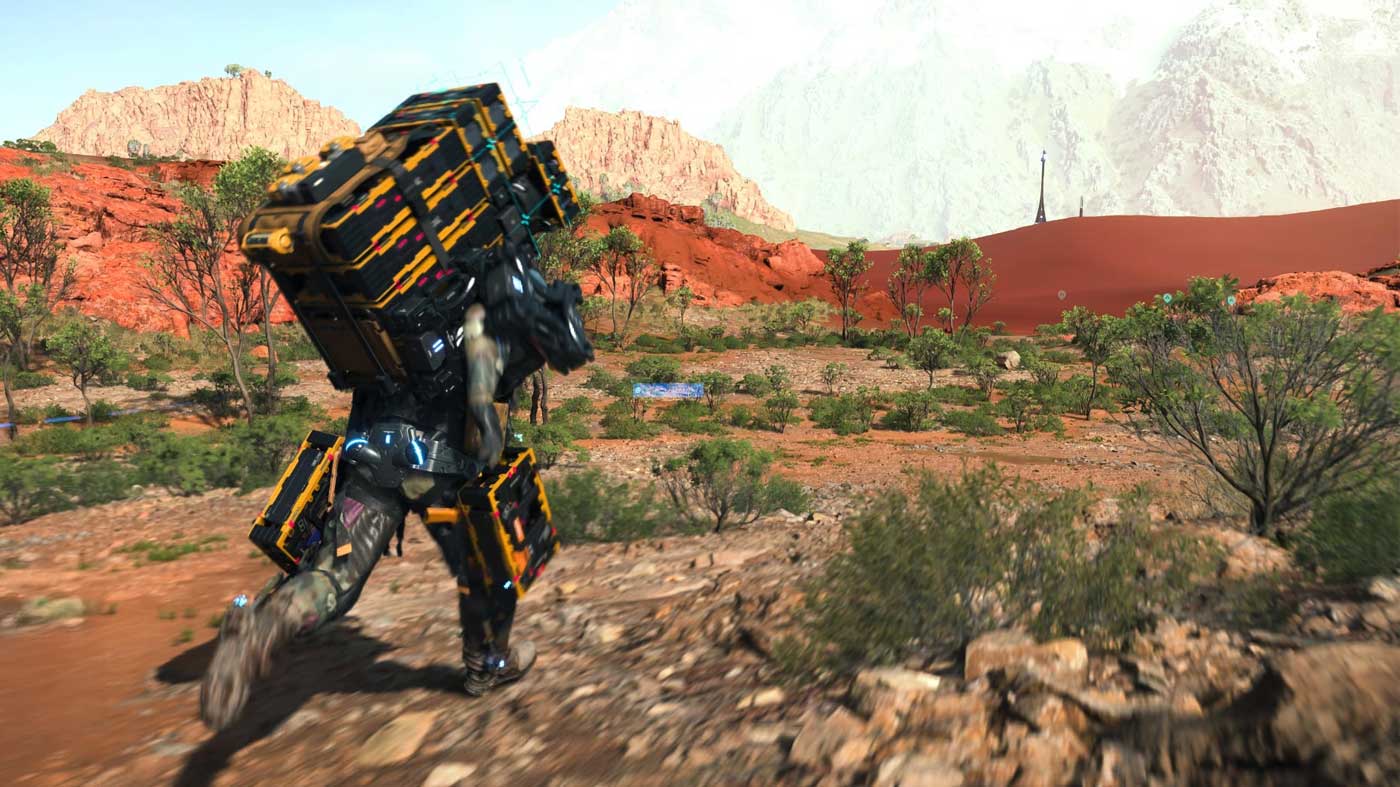
Death Stranding always asked something simple: Will you walk it? Here, that question has been sharpened. The environments remain vast, but carry intention. Mexico’s red dust, Australia’s searing heat, ghost towns, broken railways; all that terrain demands respect. One false step and fragile cargo breaks. Every sprint across a dunescape or slippery slope across a ruined highway tests balance, weight, and purpose. And boy, does this game look gorgeous. It’s one of those games where I found myself just standing and soaking it all in. Kojima is the master when it comes to creating those hauntingly beautiful landscapes, but he really outdid himself in Death Stranding 2. In a game where walking around is such an important element, it’s great to see how much time and love went into the creation of the world itself. I’m a PlayStation 5 owner since the very start, but this is the first game that really screams new-generation for me. It’s all so seamless and gorgeous that I found myself returning to the world of Death Stranding 2 over and over again.
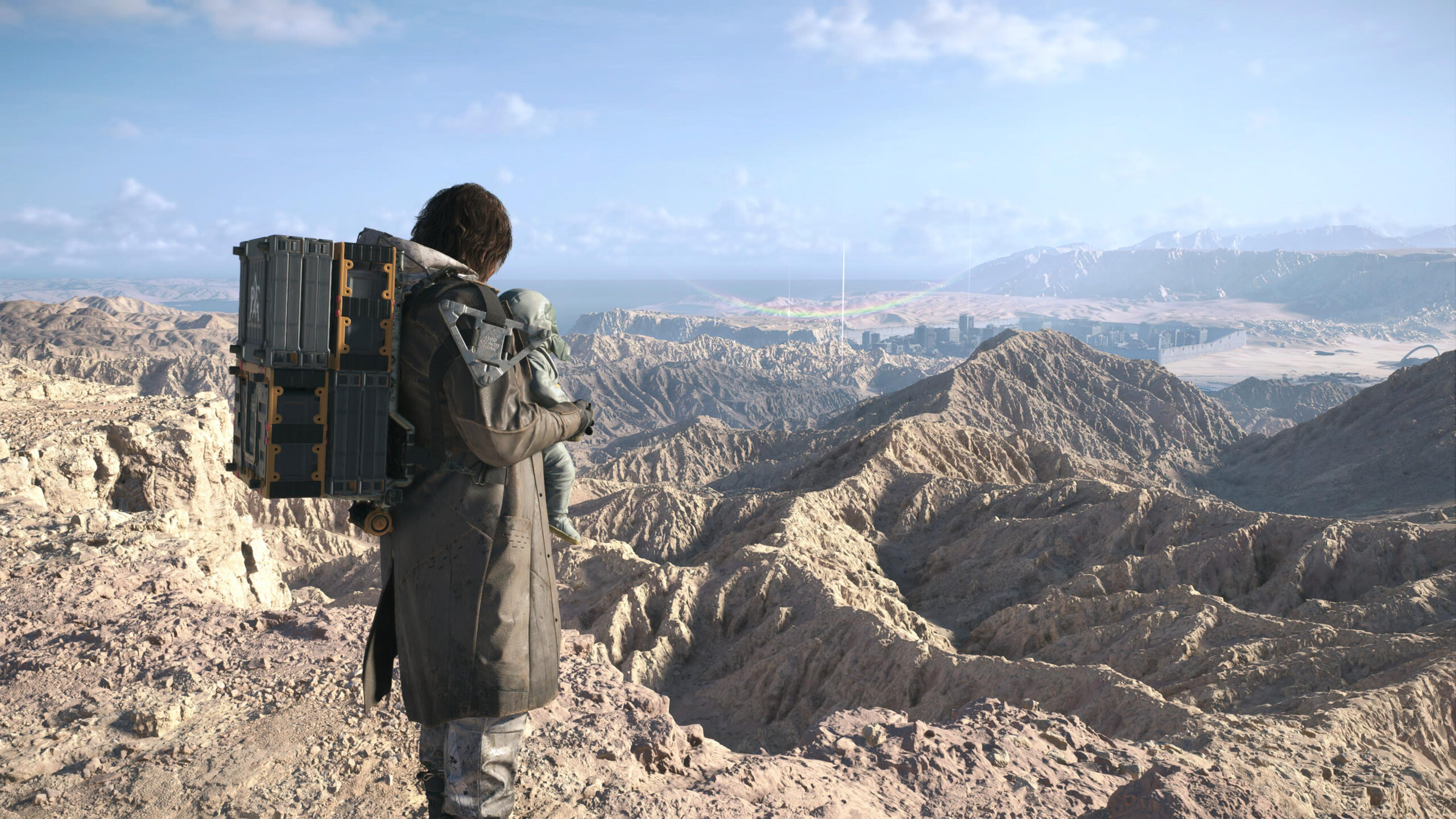
When I played the first Death Stranding, I liked it, but I needed some time to get really into it. In comparison, this second entry feels more welcoming, especially thanks to a couple of upgrades that reduce the levels of frustration I once had with this franchise. The upgrades feel earned and needed. You get new vehicles that don’t feel like toys, like a motorbike designed to eat up miles, a hoverbike that flirts with flight without breaking immersion. Drones that follow and scan what’s ahead. The skill tree is lighter, trimmed of bloat. You unlock practical improvements, better ladders, exoskeleton support, and cargo-carry upgrades. They make balance more forgiving, progress less brutal, but never trivial. Traversal becomes a contemplative act again, almost like a rite of passage you must respect, and that’s perhaps what I like most about this sequel. Kojima really listened to the fans and critics and managed to create an experience that might feel more forgiving while still staying true to what makes this franchise so powerful. Sure, you’ll get upgrades and the RPG elements are a bit more graspable, but the twists, the turns, and the unexpected encounters were never this bizarre. It’s hard to put into words if you never played Kojima games before, but if you did, this is definitely his magnum opus.
Storytelling by touch
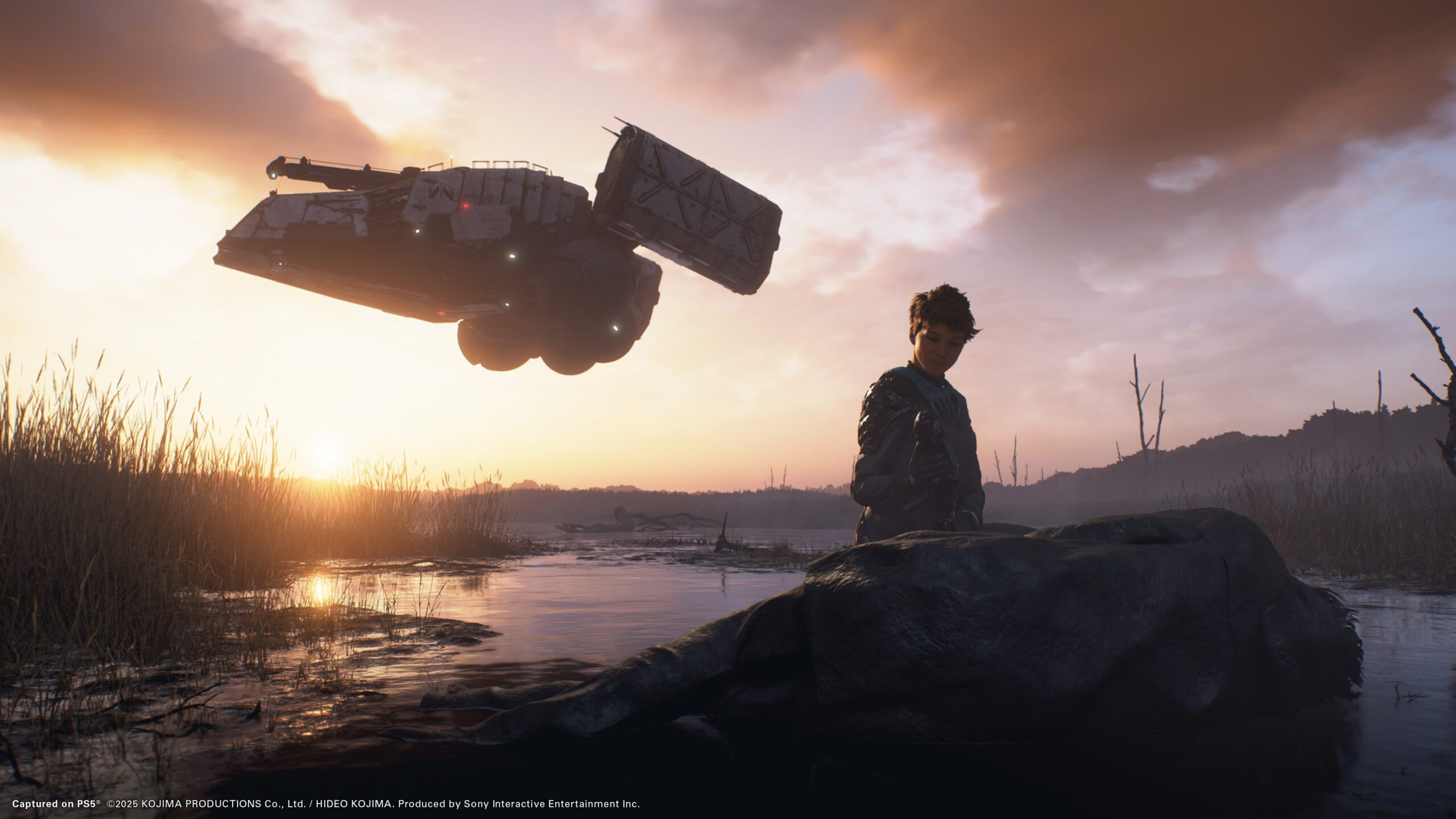
Kojima’s patience with his own pacing shows in how Death Stranding 2 unfolds. Sam returns older, more world-weary, and the interactions are quieter, layered with what’s unsaid. The story still pivots on connection, restoring communities, linking settlements, but the emotional stakes feel deeper. You’re no longer a savior. You’re someone who literally carries the stories and burdens of others. Every delivery reveals a sliver of domestic life: that broken fridge in a rural outpost, half-erased children’s drawings plastered on a wall, a text file declaring “I’m scared.” Those echoes linger. It’s here where the duality of the beauty also shines true. You’re constantly walking and running around in breathtaking landscapes, but underneath those gorgeous scenes lies a darker truth, a darker truth that still haunts humankind, and Sam often feels the weight of it all. There’s darkness underneath the light, and by interacting with the NPCs and by bringing back those connections, you start to make cracks so the light can once more shine through.
Talking about the improved NPCs, they deliver their humanity through small moments. A failed radio broadcast from a frightened operator. A lone outpost builder who simply wanted to finish his job. Their voices aren’t loud. They don’t need to be. The game respects silence. It pauses after a handoff. It makes you stand there and imagine the weight of the package you just delivered, not just on your shoulders, but in someone else’s life, and after I while, you start to carry those stories with you. It’s one of the most immersive experiences out their and the game really sinks its teeth deep into you, cursing (or blessing) you with stories that will linger for weeks to come.
Combat refined
Besides walking and delivering, Death Stranding 2 also offers higher-paced, more intense combat scenes. Combat has never been the strength of this series. Here, it’s still sparing, but it matters again. BT (Beached Things) moments feel genuinely tense, and stealth becomes essential again. The ghosts can’t be outrun until you learn their patterns. Later, you encounter Dodger drones and hunter-exos, and the fight mechanics finally follow that design. Every bullet shot feels crucial, and cover matters. When things escalate, you feel the collision between vulnerability and necessity. Gunplay doesn’t interrupt; you choose when conflict intrudes, and the game respects that enough to make each firefight feel consequential.
Boss encounters still lean into spectacle, old-school visual effects, and pattern cues that might feel dated to some, but even there, they land more softly. The game offers smart skip options, built seamlessly into the flow for players who would prefer to skip without feeling punished. In that balance, it respects your time and choice, keeping the emotional thread intact.
Conclusion:
Death Stranding 2 is a refinement of everything Kojima reached for the first time. It sharpens the tools, deepens the intimacy, and respects silence as much as spectacle. Some moments linger, not fireworks, but embers. That’s the kind of emotional perseverance that earns a perfect score in my book. If you can walk it, even for a mile at a time, this game will carry you forward. And when it ends, the world you built won’t disappear. It’ll stay with you.
