
Quadle was originally not intended for consoles but roughly four years after its initial release, Nintendo Switch owners can try out this jumping arcade puzzler. Fans who are wondering might be interested to know that Quadle for Nintendo Switch gets an extra world which adds 32 levels to the game.
Isometric puzzler
Those amongst you who played Q*bert in one of its many iterations might experience a déjà vu looking at Quadle. The design and concept are basically the same. You play as Quadle who has to jump from one platform to another in order to change its color. Once a platform changes to red, it will be destroyed. The purpose of Quadle is to hop around and make every platform disappear. Each level presents another layout which gets more and more challenging to complete each time you advance.
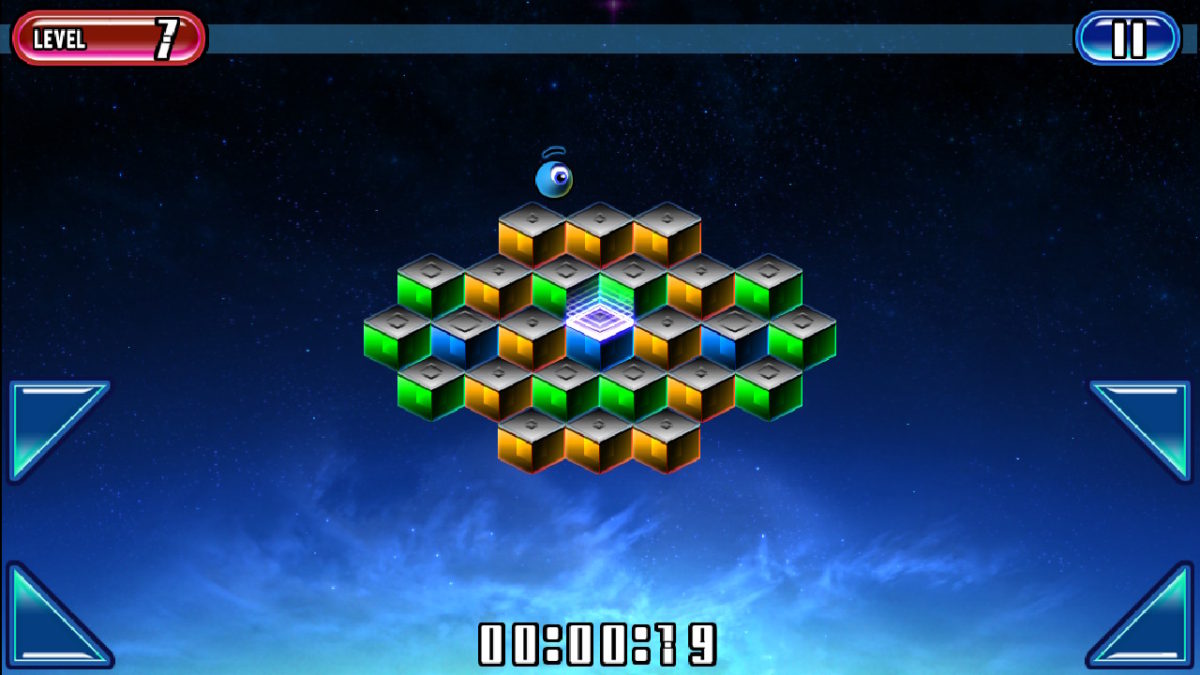
Unlike in Q*bert, Quadle doesn’t have enemies to get in your way. The way you fail a level is by getting yourself cornered after a platform disappears behind you. At first, this will happen a lot but after a while, you’ll recognize to use certain patterns to get around the level. The isometric layout adds another notch of difficulty since going up in the world of Quadle is actually up and to the left. I struggled with this concept until I figured out I could turn my controller 45 degrees…
Repetitive
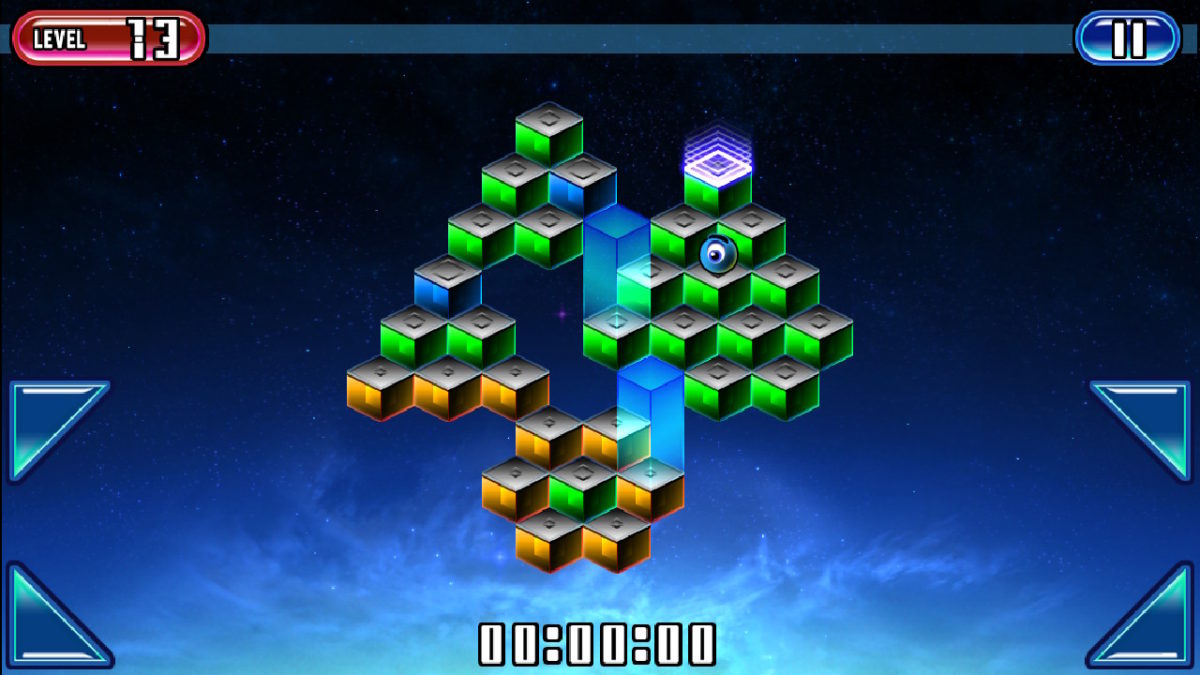
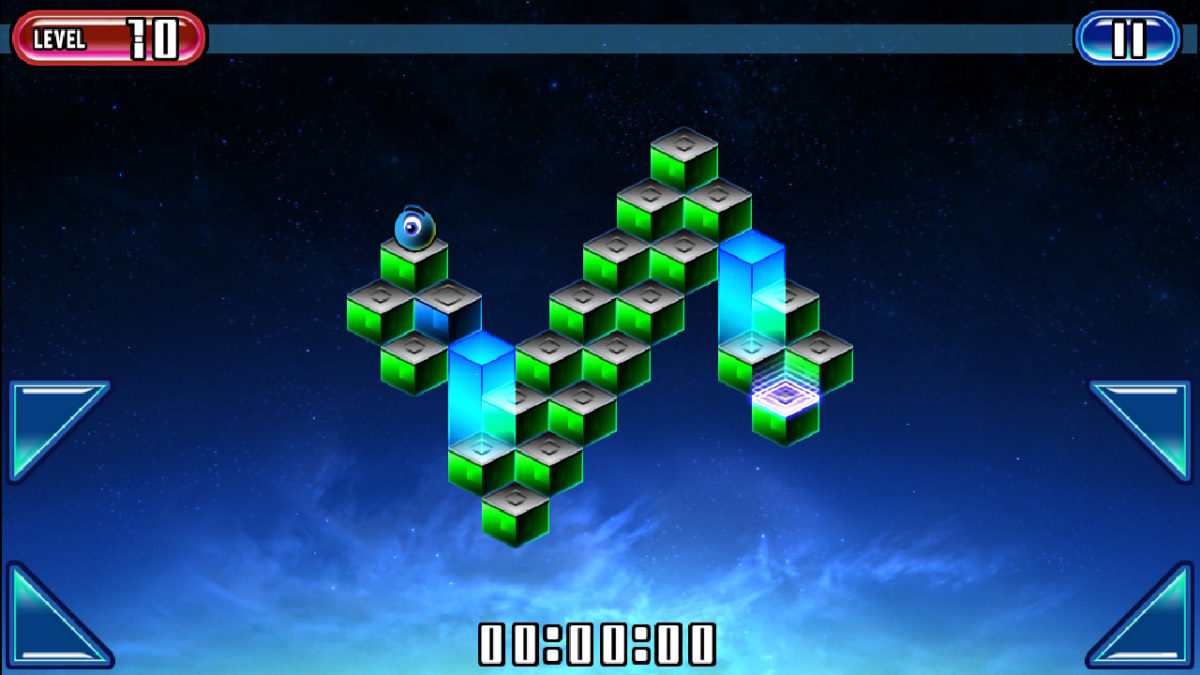
Once you get a feel of the basic concept and you figure out to work in small patterns to clear a level, you’ll start to feel Quadle gets repetitive. To counter the repetitiveness, the game adds new elements to the puzzles. New colored platforms are added which needs more jumps to disappear to break out of the known patterns. Later on, descending and ascending platforms are added to the mix to make for a more interesting puzzle. The first times these new elements get introduced you do feel a change is needed in tactic. Nonetheless, after figuring out the first level, the next ten or so pretty much rinse and repeat.
Unnecessary time attack mode
Quadle offers 128 levels in total. Completing one level opens up the next. To make things more interesting, a scoring element is made present. Completing the game as fast as possible and ending the level on a certain platform grants you higher scores. After each level you get rated with a 3-star system. Die-hard puzzle fans can go back and improve to get the 3 stars. Personally, I was fine just getting through the levels. Besides the normal mode, Quadle offers a time attack mode where you aim is to complete the levels one by one while never failing. If you fail, your time and score get calculated and added to a local leader board. However I didn’t feel the need at all to replay anything, let alone while being timed.
Conclusion
Quadle took the concept of Q*bert and made it into a puzzler. Jumping around on an isometric layout destroying platforms is fun up until the point you figure the patterns out. From then one, the added stuff can’t quite make the game challenging enough to uphold my interest. If you’re a true platform puzzle fan with some nostalgia for Q*bert you might enjoy this game. To me, it was a bit too repetitive to keep grabbing my attention.
