
Playing massive 60+ hours campaigns is all well and good, but sometimes those little quirky games are as immersive as their bigger counterparts. Energy Cycle Edge tries to be that quirky little nugget of a game. Sometimes You is a small studio who specializes in little quick paced puzzle games. Energy Cycle Edge is the newest low-cost game released for all the current gen consoles and PC.
A sequel with a new dimension
Energy Cycle Edge is the sequel to the 2016’s released Energy Cycle. In Energy Cycle you got a grid with glowing energy fields on it. Each energy field has a color and the purpose of the game was to “cycle” through different colors of the energy field until you match the whole grid in the same color. The catch was that each time you adjusted an energy field, each field in the same row or column would also change. This meant each action could potentially interfere with your previous work.

Energy Cycle Edge uses that exact same idea but adds an extra element. The first few levels stay true to the original to ease in the new players but after a few of those, a new dimension is added. You can now turn your grid 90 degrees and see a whole new playing field. The actions you took on the first grid have consequences to the other connected grid. You’ll need to think more ahead than ever before if you want to complete these new puzzles.
Tower of Hanoi Algorithm
The game doesn’t offer any explanation to what the goal of the game actually is. In the beginning, I just used some good old-fashioned trial and error until I got the “success” screen. From then on, I slowly got the hang of it. At first, the puzzles in Energy Cycle Edge seem almost impossible to solve. But just like with the Tower of Hanoi puzzle, once you get the algorithm right, you can breeze through the challenge. Adding new dimensions tries to add a challenge but only delivers more tedious work for a puzzle that is in essence already solved.
50 levels and some randomness
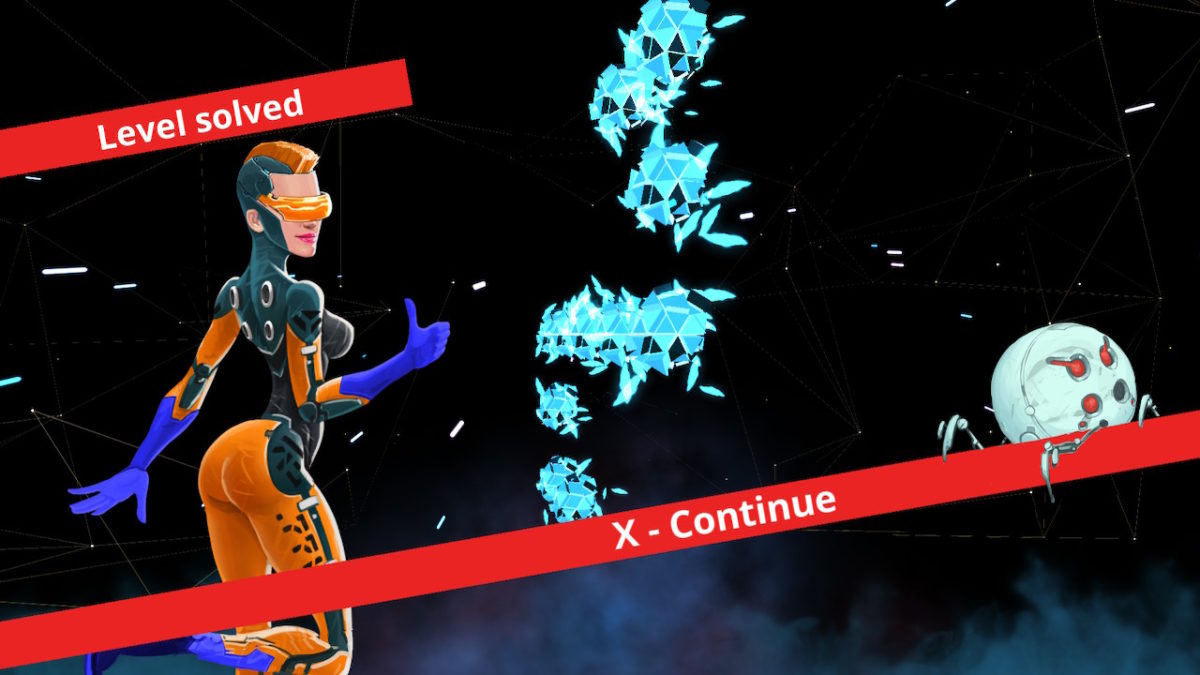
After about 50 levels you’ll already complete the entire game. Each solved puzzle shows how many steps and how long you took to finish. This could potentially trigger you into going for more efficient, less time-consuming runs at the puzzles. I, on the other hand, was glad I was done with it and don’t feel any need to replay the puzzles ever again. If you’re a diehard fan though, you could try out the randomizer option which changes the initial color setup of the puzzles. This adds some diversity to the game, but I would’ve rather seen some diversity in the game mechanics.
Minimalistic soundtrack
Energy Cycle Edge doesn’t look good and isn’t much fun to play. The only thing I liked was the soundtrack. The “Intelligent dance music” – or IDM for short – you’ll hear while puzzling away, almost made me forget I really didn’t like the game I was playing. So whoever made the soundtrack should be proud they are the only appeal this game has to offer.
Conclusion
Energy Cycle Edge might look like a mysterious puzzler but in essence is a simple concept once you get the algorithm right. The challenge loses all its appeal after that moment. There are better “quick-fix” puzzle games on most of our phones. Adding this to your console(s)/PC is a waste of Megabytes.
